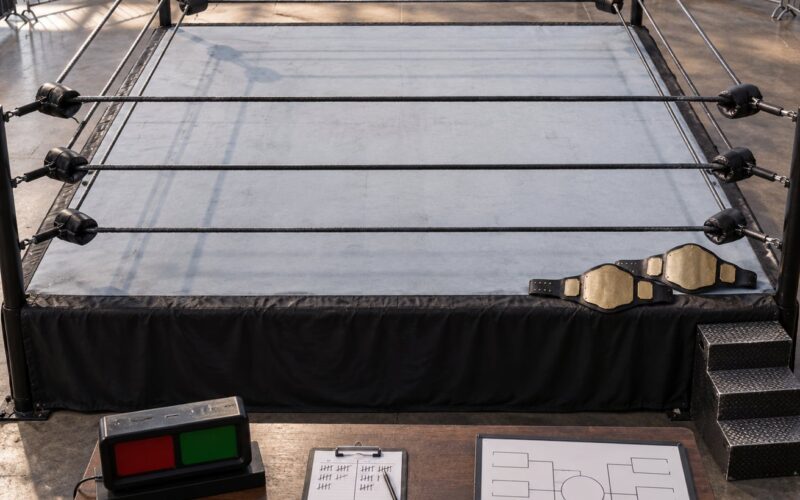
Weekly wrestling TV builds a story in installments. Specials are the payoff: shorter cards, longer matches, bigger stakes, and almost no new setup. That is the real dividing line when you ask how wrestling weekly TV differs from monthly specials, and it explains why a three-hour special might only hold four matches while a two-and-a-hour episode runs a dozen.
One correction before we go further. Specials are not monthly for most promotions right now. WWE runs roughly six to eight premium live events a year, All Elite Wrestling puts on about four major pay-per-views plus Grand Slam, and Saturday Night’s Main Event lands a few times a season rather than once a month. The monthly model belongs to the 2010s, when WWE stacked up twelve-plus branded pay-per-views a year and fans pushed back hard.
What follows is the structural breakdown: what each format is built to do, how cards get built, why results land differently, and where each show actually lives now. Streaming homes and event calendars move around, so treat the specifics as current as of October 2026.
Table of Contents
- How Wrestling Weekly TV Differs from Monthly Specials at a Glance
- Weekly TV vs. Monthly Specials: Purpose and Scheduling
- Specials run on compressed time
- The monthly label is out of date
- How Each Show Builds Storylines
- How a weekly show builds a story
- How a special builds a story
- Match Structure, Announcements, and Run Time
- Why Results and Consequences Feel Different
- Production Value and the Fan Experience
- Which Should You Choose?
- Frequently Asked Questions
- Are monthly wrestling specials better than weekly TV shows?
- Do monthly specials always feature longer and better wrestling matches?
- Should I watch the weekly TV show before a monthly special?
- Why do some wrestlers appear more often on weekly TV?
- Can a weekly TV show be considered a major event?
- Conclusion
How Wrestling Weekly TV Differs from Monthly Specials at a Glance

| Category | Weekly TV | Specials |
|---|---|---|
| Release rhythm | One episode per week, same night, taped or aired live | Roughly every four to six weeks, sometimes with a longer gap |
| Typical match count | Eight to twelve matches, including short-form and segment-based bouts | Four to six matches, each treated as an event |
| Run time | Roughly two to three hours of main-roster TV per show | Roughly two and a half to three and a half hours |
| Story function | Serializes. Advances feuds, introduces challengers, sets the next beat | Payoff. Closes arcs or forces a major transition |
| Match length | Six to twelve minutes is common, some bouts under three | Fifteen to twenty-five minutes, with rests built in beforehand |
| Results | Usually a temporary beat that the next episode responds to | Often a permanent change: a title change or a departure |
| Championship stakes | Rarely decisive; sometimes a match is advertised as unofficial | Built into the card from the announcement |
| Production scale | Arena or smaller venue, hard camera, tighter schedule, commercial breaks | Larger arena or stadium, bigger entrances, longer crew, live feel |
| Intended experience | Momentum. Follow along and the story keeps moving | Concentration. One night where several things resolve at once |
Read the table as a job description rather than a quality ranking. Neither format is the better product. They are built for opposite purposes, and the weekly show has to do the setup work that makes the special mean anything.
Weekly TV vs. Monthly Specials: Purpose and Scheduling
The clearest way to think about it is serialization against payoff. A weekly show is a chapter; a special is the season finale that a small number of fans get to see at full volume.
Weekly shows carry the burden of continuity. A feud can take a dozen episodes of promos, backstage attacks and staredowns before anyone throws a punch, because the writers need to keep the audience invested for next week. The show can afford to waste a fifteen-minute segment on a contract signing or a monologue, since the episode has to end eventually and the story survives to continue.
Specials run on compressed time
A special has no next episode. Once the night ends, the outcome is the outcome, so anything that needs weeks of development has to be compressed into promos, entrances and a handful of matches. That is why special cards run short and why matches run long. There is no room for a filler match that resets the crowd.
The scheduling reality underneath all of this is a touring bus. Promotions fill arenas most nights of the week, and a special is the one night the schedule bends. Weekly shows are taped in front of a few thousand fans and cut to fit a broadcast slot. Specials get a longer rehearsal window, which is why a champion can take a fifteen-minute rest before a title match and still be on the road by midnight.
The monthly label is out of date
For a decade, monthly pay-per-views were the industry default, and WWE’s one-brand-per-month experiment around 2019 showed fans would not accept them. Backlash in 2018 became shorthand for the problem: a monthly show with one brand’s main title on the line often felt like a weekly episode wearing a special’s badge. Current calendars run leaner, and that gap between the old monthly expectation and today’s four-to-six-weeks spacing is why the query keeps coming up.
How Each Show Builds Storylines
Weekly TV uses installments; specials use compressed time. That single difference produces two completely different writing methods, and the same rivalry will look different on each.
How a weekly show builds a story
Take a championship contender who has been climbing for months. On weekly TV, the climb is the product. Promos against the champion, allies getting involved, a match or two that establish the contender as credible, then a loss that does not end anything but raises the stakes. The audience learns who these people are because the show keeps returning to them.
A challenger works the same way in reverse. On the weekly show, a challenger usually has to earn credibility first, and the crowd has to boo them before they can be trusted to headline a special. That hostility is built in segments, one week at a time.
How a special builds a story
On a special, the contender and the challenger usually meet with the title on the line and no introduction needed. The storytelling happens in the ramp: a staredown, a cost, or a reason the loss will sting. A faction can turn in a single night as well, showing up to cost the champion the belt before a wrestler with no momentum gets their turn.
The practical consequence is that a special can move three or four threads in one night while a weekly episode may only advance one. But the special cannot start a new feud and finish it. Anything that begins there has to survive into the weekly shows that follow, which is why the roster usually gets reconfigured around what the special did.
Match Structure, Announcements, and Run Time
This is the section new fans usually notice first. A special with five matches can feel shorter than a weekly show with twelve, and it is not an illusion.
WWE’s Bruce Pritchard has said on record, as reported by PWTorch, that four to five matches on a card beats ten for the sake of the viewing experience. The reasoning is straightforward: a short card can be rehearsed in a way a long one cannot, and the audience stays with the whole show instead of drifting during the middle.
Weekly shows need the filler. Some bouts are squash matches that exist to give a newcomer television time under a name. Others are in-ring segments built around one idea rather than a contest, and promos between matches fill the runtime while a feud develops. In-ring promos, especially, are a weekly-show tool; specials rarely have room for them.
Special cards are announced in advance and the order is set days ahead, so the pacing is designed backward from the finish. Wrestlers are given time and told to rest in the middle, and entrances run longer because the crowd has paid for a night rather than a segment.
To see why the same match gets more or less time, check three things: was the match announced on the weekly show beforehand, does a title or a rivalry sit on the line, and is it the last match of the night. A weekly main event that was never announced often gets cut for time. An announced special match almost never does.
Why Results and Consequences Feel Different
Weekly results usually exist to set up the next beat. Someone wins, the show immediately reacts to it, and the storyline moves one step. Losses on weekly TV tend to be recoverable, which keeps the same feuds alive for months.
Special results are heavier because they close something. A title change ends a run. A heel turn or a faction breakup reorganizes the roster. When a special hands a title to a wrestler who has never held it, the whole weekly landscape behind them changes, which is why the following episode often feels like a new show rather than a continuation.
It helps to separate real consequence from advertised consequence. A weekly title match can be great television with nothing durable behind it, and a special can end in a disqualification that changes nothing at all. The format raises the odds, not the certainty.
Production Value and the Fan Experience
Specials get more room, and the room shows. Entrances run longer, pyro is bigger, the venue is larger and the production team is bigger too, with more camera operators, a dedicated graphics package, and commentary written around a story that will actually resolve.
The weekly-show constraint is scheduling. A taped episode has to land inside a fixed broadcast window, which means the hard camera stays on the wrestlers, commercial breaks come at set points, and matches get what is left over. The argument from veteran wrestler Lance Storm, reported by WrestlingInc, is that house shows have no clock at all, which is part of why their match reputation runs so high. Weekly shows sit somewhere between a house show and a special on that scale.
Crowd energy is another difference. The go-home show before a special is usually the loudest regular episode of the cycle, because the audience knows something is coming. And presentation does not guarantee a better show. Some specials deliver five forgettable matches; a strong weekly episode with a real story beat can be more satisfying. Fans in r/SquaredCircle have argued for years that a special should feel like a genuinely different product, not a weekly episode with the main title on the line.
Which Should You Choose?
If you are new and want a story you can follow, start with the weekly shows. They carry the continuity, and specials make no sense without it. Most major promotions keep weekly programming on a subscription streaming service while specials sit elsewhere, so you will want the weekly home before the special one.
If you already followed wrestling years ago and want the payoff without the season of buildup, go straight to specials. You will miss the details, but you will get the matches and the moments. The trade is that a great match means much less when you do not know why two people hate each other.
If you watch live in person, pick the special. The crowd is part of the product, the venue is built for one night, and the wrestlers know there is no next episode to fall back on.
The practical answer for most people is both, in that order. Follow the weekly show as it airs, treat specials as the destination, and skip anything you do not have context for. Weekly shows are also how you catch up on months of story in a weekend, which makes them the catch-up tool and the specials the reward.
Frequently Asked Questions
Are monthly wrestling specials better than weekly TV shows?
No. They serve different purposes. Weekly shows build feuds week by week and hold eight to twelve matches to keep a story moving. Specials carry four to six matches with bigger stakes and little setup. If you want to follow wrestling properly, watch the weekly show first, because the special only pays off if you know why the match matters.
Do monthly specials always feature longer and better wrestling matches?
Longer, usually. Better is subjective. Special cards get fifteen to twenty-five minutes per match and are rehearsed in advance, which some fans rate as the best wrestling of the year. But a special can still deliver five forgettable bouts, while a strong weekly episode with a real storyline payoff can be more satisfying. Format affects pacing, not guaranteed quality.
Should I watch the weekly TV show before a monthly special?
Yes, if you can. Weekly shows explain who the challenger is, why the title match was booked, and which faction is involved. Without that context a special is a series of matches with no reason to care about the outcome. Weekly shows also work as a catch-up tool, letting you get through months of story in a weekend before the big night.
Why do some wrestlers appear more often on weekly TV?
Because the weekly shows are where television debuts happen. A new signing usually runs a few short matches on the weekly card to introduce the character before earning a spot on a special. Veterans working a feud also need screen time to build audience investment. Appearing constantly on weekly TV is normal for an active roster member, not a sign that someone is being pushed toward a title match.
Can a weekly TV show be considered a major event?
Rarely in the promotional sense, but often in the fan sense. WWE’s Saturday Night’s Main Event is a weekly show treated as an event, running a bigger card and a longer runtime than Raw or SmackDown. Go-home shows before a big special also carry extra weight. All Elite Wrestling treats its weekly shows as its main product and reserves major events for a handful of nights a year.
Conclusion
Weekly TV and specials are two halves of one product. The weekly show builds the momentum a special cashes in, so start by figuring out which one a given broadcast is designed to do. If it is a weekly episode, follow the story as it runs. If it is a special, find out who the challenger is first, then watch the payoff with the context it was built for.