Wrestlers keep their hair and skin looking the same across five weeks of motels, gym showers, and back-to-back shows by treating grooming as maintenance, not a touch-up. The routine is a repeatable match-day sequence, a small travel kit that lives in a gym bag, protective styles for the bus and flights, and a cleanse-and-protect step after every appearance.
The interesting part is that almost none of this is secret. It comes from a handful of styling products used in a specific order, and from knowing what your hair and skin do when you sweat for three hours under arena lights.
Table of Contents
- How Wrestlers Maintain Their Hair and Look on the Road
- The four pressures that shape a road routine
- What Does a Wrestler’s Road-Grooming Routine Look Like?
- Before the show
- On the road
- After the appearance
- On rest days
- How Do Wrestlers Protect Their Hair During Travel?
- What Products Do Wrestlers Use to Maintain Their Look?
- The wet-look convention, step by step
- Where buildup comes from and how to clear it
- How Do Hotels, Venues, and Busy Schedules Affect Grooming?
- Skin on the road: sweat, sun, and SPF
- How Do Wrestlers Adapt Their Hair and Makeup by Style or Role?
- Short hair
- Long hair
- Curly hair and locs
- Stage makeup and close-up work
- Keeping hair long through a multi-week run
- Beards, mustaches, and camera-ready detail
- Frequently Asked Questions
- How often do wrestlers wash their hair while traveling?
- What is the best way for wrestlers to protect their hair on the road?
- Do wrestlers use makeup and hair products before every match?
- How do wrestlers handle sweaty or humid shows?
- Can fans use a wrestler’s grooming routine for everyday hair care?
- Why do some wrestlers change their hairstyle between shows?
- Conclusion
How Wrestlers Maintain Their Hair and Look on the Road
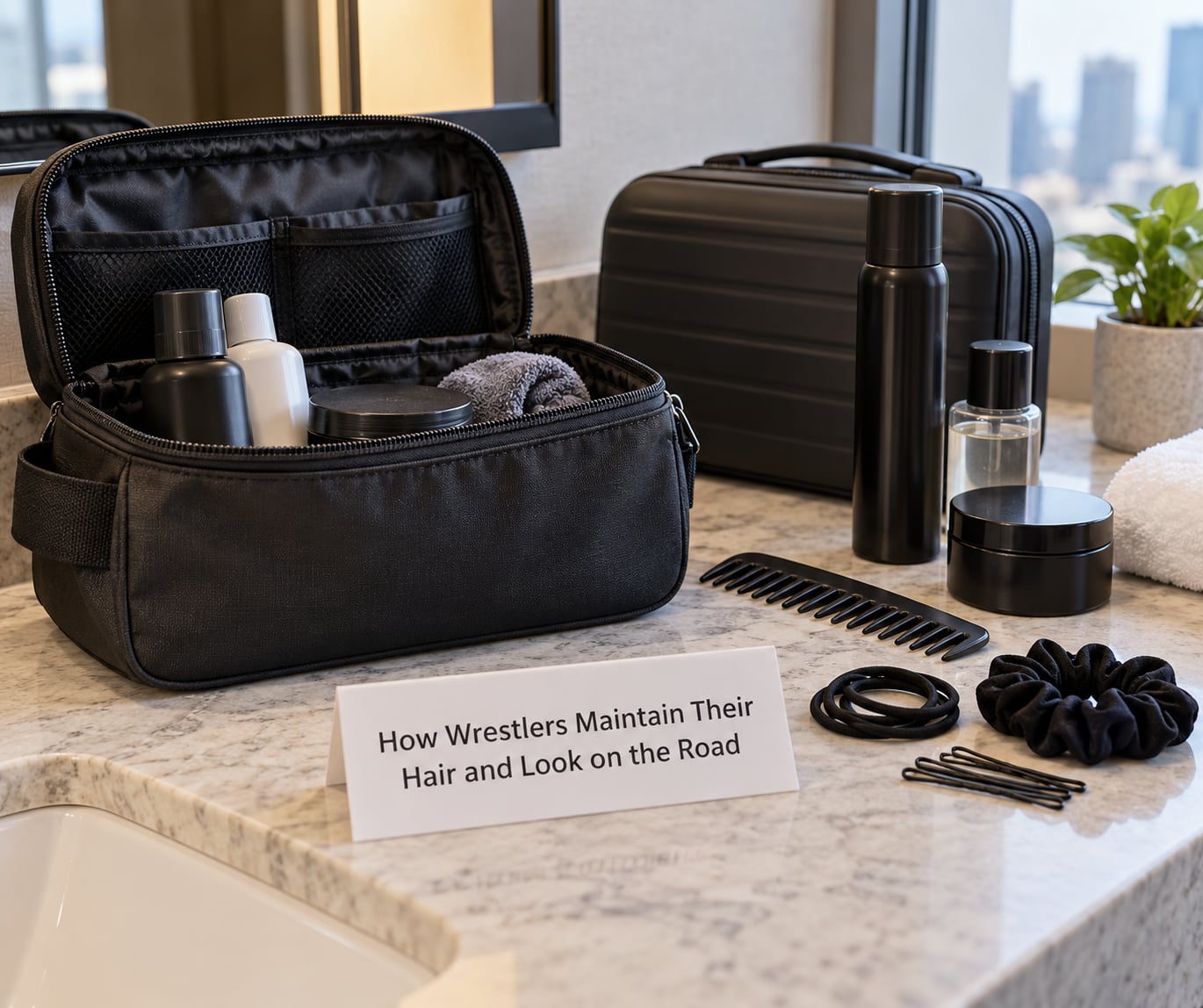
The four pressures that shape a road routine
Travel is the first pressure. A wrestler may wake up in one state and perform in another, and a good chunk of the week is spent in a van or on a plane rather than in a room with a proper mirror and a hot shower.
Sweat is the second. Back-to-back shows mean the hair gets wet, dried, restyled, and saturated again within about twelve hours, and the scalp rarely gets a full wash in between.
Light and camera work are the third. A televised match is shot under hard lighting from multiple angles at close range, and fans also see photographs and video clips for years afterward. Anything dry, frizzy, or dull reads on camera in a way it does not in a gym.
Wardrobe changes are the fourth. Between a match, an interview segment, a photo shoot, and a live appearance, the hair has to survive a costume change, a wipe-down, and a completely different lighting setup in the same afternoon.
What Does a Wrestler’s Road-Grooming Routine Look Like?
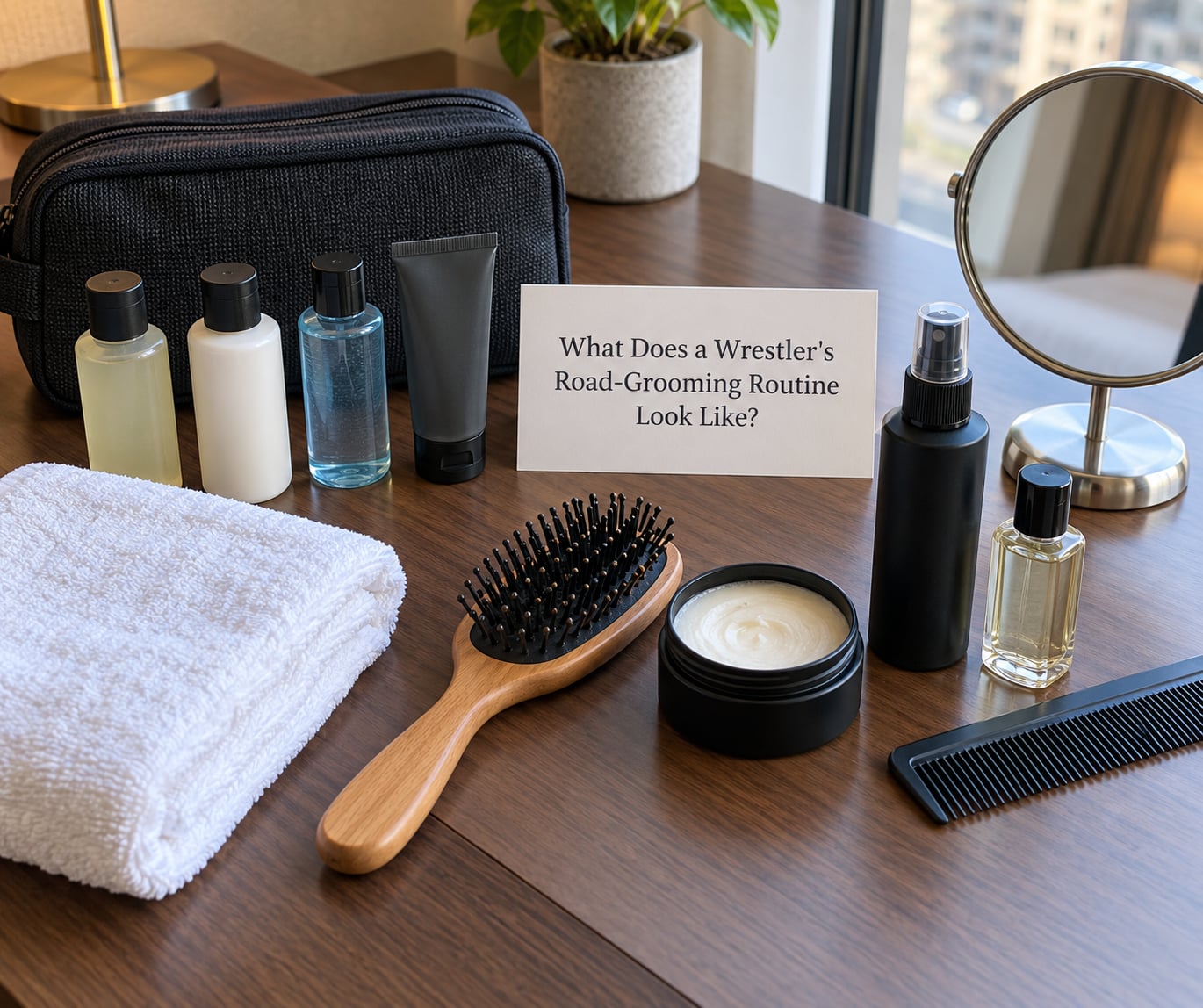
The routine is easiest to understand as four blocks: before the show, on the road, after the appearance, and on the days when nothing is scheduled.
Before the show
This is where the hair is actually set. The sequence usually starts with damp hair, not wet hair, working a strong-hold gel through the lengths, then smoothing with a fine mist of water to press down any flyaways.
A light gloss goes on the front and sides, and hairspray sets it. The whole thing takes fifteen minutes once your hands know the order, and it is the block that has to happen in a gym bathroom if the venue offered nothing better.
On the road
Travel time is where most hair damage happens, so the goal is low friction rather than a perfect style. A loose braid, a low ponytail, or hair pinned under a cap protects the set without crushing it.
On a bus or a flight, wrestlers commonly touch up with a travel-size spray bottle, a rat-tail comb, and a small can of the same spray they used in the morning.
After the appearance
The shower is the part most people skip and most regret. Heavy gel plus sweat plus a mat or gear pressing against your scalp means product stays in the hair long after the show ends.
Coaches and parents on the ChalkBucket gymnastics forum, which tracks the same high-sweat, high-hold problem, describe washing twice to get it all out. Their complaint is blunt: hair that feels like glue if you only rinse it once.
On rest days
Rest days are when the hair gets repaired. Long-haired wrestlers use them for a conditioner or a mask, a wide-tooth comb, and no heat. Short cuts need less, but they still need the scalp washed to clear the buildup that causes itch.
How Do Wrestlers Protect Their Hair During Travel?
Protection on the road is mostly about avoiding friction, tension, and heat while the hair is already coated in product and already damp from sweat.
- Keep the style loose. A low bun or loose braid shifts with you. A tight style set wet is the one to avoid, because braids and tight ponytails shrink and tighten as the hair dries, and that tension is what people describe as an ache that will not go away.
- Reduce fabric friction. Satin or microfiber around the pillow or over the head during a long drive keeps cotton from roughening the cuticle overnight.
- Skip heat when you can. A blow dryer on high after a sweaty show adds frizz to hair that is already sticky. Air drying, or a cool blast to speed it up, is kinder.
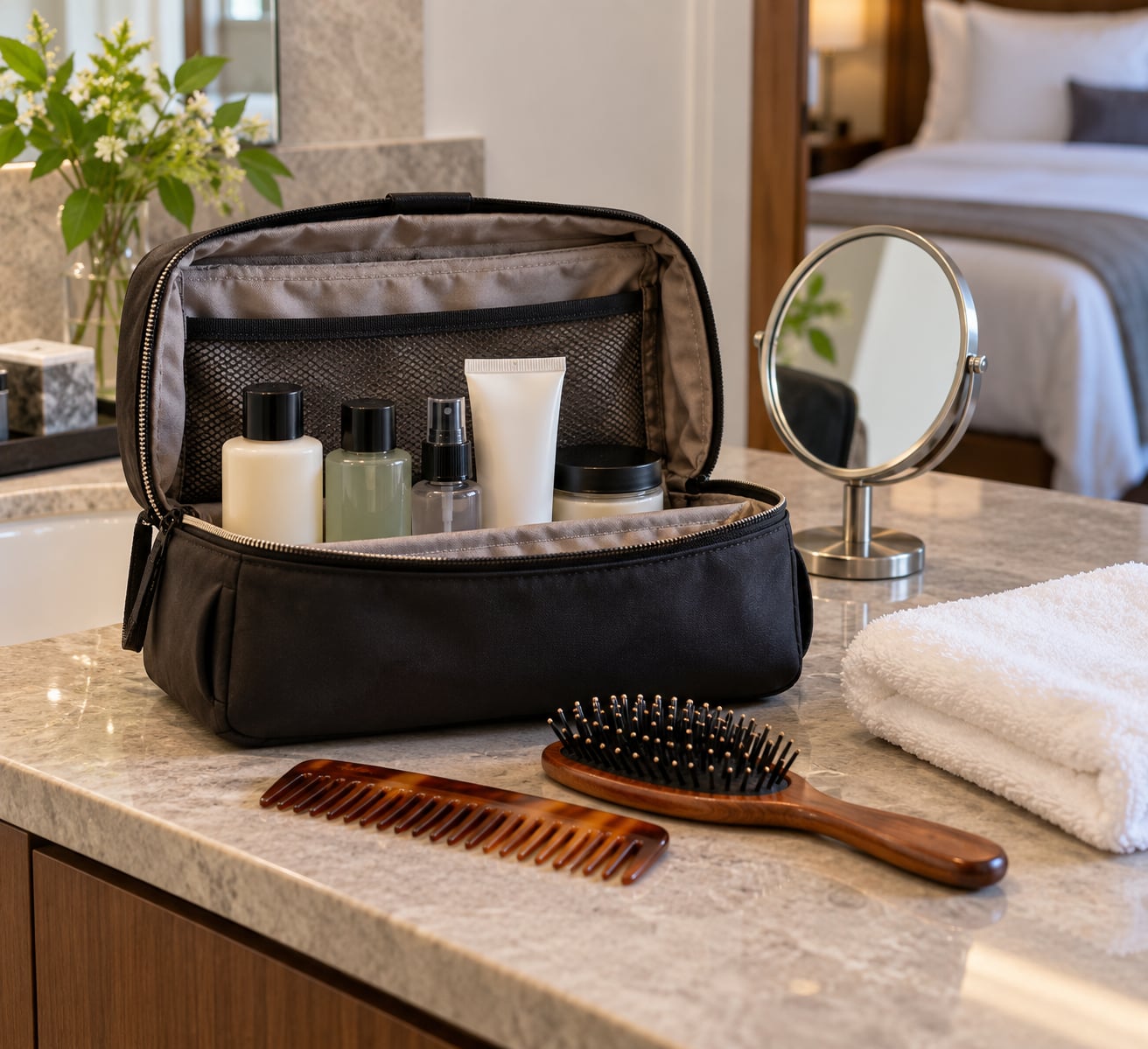
- Pack liquids separately. Styling bottles live in a separate pouch so a leaky gel does not ruin clothes, and so nothing is left behind in a hotel bathroom.
- Comb from the ends upward. Product plus repeated re-styling causes knots, and knots get pulled and broken. A wide-tooth comb removes more tangles with less force than a brush.
- Sleep on it loose or braided. A loose braid overnight is the cheapest way to wake up with a shape that only needs a spritz.
What Products Do Wrestlers Use to Maintain Their Look?
Wrestlers tend to buy in categories rather than by label, and the categories matter more than the brand: a cleanser, a conditioner or leave-in, a strong-hold gel, a light hold spray, a water spritz, a gloss for shine, and something for the skin.
The ordering is the technique. Gel holds, spray locks it in, water flattens what spray leaves too rigid, and gloss adds the reflective shine that reads as healthy on camera.
| Item | Why it earns its place | Hold or protection | Wash-out |
|---|---|---|---|
| Extra-hold gel | The base layer; nothing else holds this well in sweat | Very high | Hard, usually two washes |
| Freeze or curl-and-freeze spray | Best on coarser and curly hair that gel alone flattens | High | Medium |
| Light hold hairspray | Sets the shape after gel and water | Medium | Medium |
| Water spritz bottle | Knocks down flyaways and reactivates gel | None, reactivates | Rinses out |
| Gloss or shine serum | Wet-looking shine under lights and on camera | None | Easy, if used sparingly |
| Dry shampoo | Buys a second styling window without a wash | Absorbs oil | Rinses out |
| Leave-in conditioner | Keeps long hair from drying out between washes | None | Rinses out |
| Wide-tooth comb | Detangles with less pulling than a brush | None | Not a product |
| Broad-spectrum SPF 30 | Outdoor and barn shows mean hours of UV | Sun protection | Wash off nightly |
| Moisturizer and cleanser | Sweat plus sebum clogs pores across a multi-week run | Skin barrier | Wash off nightly |
The wet-look convention, step by step
Fans on r/SquaredCircle have noticed the pattern and argue about what it means. One line in that thread draws the distinction cleanly: wet hair reads as about to wrestle, while wet and greasy-looking hair reads as just wrestled.
- Dampen the hair thoroughly, or start from a fresh shower.
- Work extra-hold gel through the lengths, heavier than feels normal.
- Comb or finger-shape the style.
- Spritz with water to smooth the surface and flatten flyaways.
- Add gloss serum to the front and sides.
- Finish with hairspray, then check the part and the edges under real light.
That last step matters more than people expect. A bathroom bulb and an arena rig do not agree, and the wrestler who checks under both finishes sharper.
Where buildup comes from and how to clear it
Buildup is the top complaint in the practitioner thread, and the reason is mechanical: gel holds until it is washed out, sweat rinses down into the roots and sets there, and a shower after a long show is not the same as a wash the next morning.
The fix is unglamorous. Shampoo twice, use a wide-tooth comb on wet hair, and keep gloss serum to a small amount because oil-based products need a clarifying wash rather than more rinsing.
How Do Hotels, Venues, and Busy Schedules Affect Grooming?
Road grooming is shaped by what the day actually offers. Some shows have a dressing room with a mirror, a counter, and a hot tap. A Wednesday independent show in a small gym has a locker room, one working shower, and a wall-mounted dispenser.
That variability is why the routine has to be modular. The setting layer is gel, water, and comb, which fits in a pocket. The full layer adds gloss and spray, which needs a counter and about ten minutes.
Unfamiliar water is a smaller problem than people expect but a real one for long hair. Hard water leaves a film that makes coated hair feel dry and dull, which is usually read as damaged hair when it is only buildup.
Luggage space sets the limit. A wrestler who is already carrying boots, gear, and a costume case is packing a flat pouch, not a bathroom cabinet.
Skin on the road: sweat, sun, and SPF
The skin side of touring gets less attention than the hair, and it is where a multi-week run catches up with you. Dermatology guidance aimed at athletes tracks a few consistent points, and they transfer well to a wrestling schedule.
- Cleanse after every show. Sweat plus sebum plus gear friction is what drives clogged pores and breakouts over a long run.
- Use broad-spectrum SPF 30 or higher, and reapply every two hours when you are outdoors. Barn shows and parking-lot warmups in summer are not indoor days.
- Exfoliate once or twice a week to clear the dead skin that collects with constant sunscreen and sweat.
- Use salicylic acid for breakouts and niacinamide for redness, both of which are common recommendations in sports dermatology.
- Moisturize even when skin feels oily. Dehydrated skin produces more oil, which is the loop that drives the shine nobody wanted on camera.
Persistent irritation, a rash that spreads, or an infection that does not clear is a doctor visit, not a routine adjustment.
How Do Wrestlers Adapt Their Hair and Makeup by Style or Role?
There is no single wrestler hair care routine, because the character, the promotion, the climate, and the length of the hair all change the answer. A heavy, wet set that sells a character’s intensity is wrong for a character who is meant to look like they just got off a bus.
Short hair
Short cuts need the least product and the most consistency. The scalp shows sweat and buildup faster under a short cut, so the wash schedule matters more here than the styling.
Long hair
Long hair is a commitment measured in months, not shows. It gets snagged, chewed, and broken during matches, so many wrestlers keep it tied up or braided for the match and styled down for appearances.
Curly hair and locs
Gel flattens curl, which is why curl-and-freeze spray is the product that shows up in practitioner threads for coarser and curly hair. Locs need their own routine centered on moisture and scalp cleaning rather than hold.
Stage makeup and close-up work
When a wrestler is on camera at close range, the face becomes the same kind of detail problem as the hair. Makeup has to survive sweat and still read under a hard rig, and it comes off with a cleanser at the end of the night, not a wipe.
Keeping hair long through a multi-week run
Touring makes hair maintenance a scheduling problem. The sequence that works is simple: conditioner or mask on rest days, a full wash and detangle whenever the schedule allows, protective braids during travel, and a fresh set only on show days.
The mistake is styling on top of buildup for a week because there was never a good shower. Once gel has set at the roots for that long, no amount of spritzing fixes it.
Beards, mustaches, and camera-ready detail
Facial hair is part of the same system. Wrestlers keep beards trimmed for definition on camera, and trimming tools plus a beard oil are small items that belong in the same pouch. Body hair gets shaved for grip and for cleanliness under gear, and the close-shave bump that follows is a skin-care job rather than a grooming one.
Nails and cuts get the same attention from anyone doing close-up work. They show up in photos far more often than a wrestler expects.
Frequently Asked Questions
How often do wrestlers wash their hair while traveling?
Usually every other day at minimum, and every day on heavy back-to-back schedules. The reason is buildup rather than dirt: gel sets at the roots, sweat rinses down into them, and a shower after a long show leaves product behind. Practitioners describe coated hair as feeling like glue after one wash. Long hair stretches this out because the same amount of product spreads thinner.
What is the best way for wrestlers to protect their hair on the road?
Keep the style loose and low-friction. A loose braid or low ponytail shifts with you without crushing a fresh set, and satin or microfiber around the pillow reduces cotton friction overnight. Avoid tight styles set on wet hair, since braids shrink and tighten as hair dries and cause an ache that no amount of water fixes. Comb long hair from the ends upward.
Do wrestlers use makeup and hair products before every match?
Hair product, yes, in most cases. The match-day set is quick once you know the order: dampen, gel, shape, spritz, gloss, spray. Makeup depends on the wrestler. It is routine for anyone doing televised close-up work, and common for characters built around a look, but plenty of performers go without it and rely on lighting and expression instead.
How do wrestlers handle sweaty or humid shows?
They plan the set for the worst case rather than the average one, which means extra-hold gel as the base, a freeze spray for coarser or curly hair, and a water spritz on hand for reactivating the surface between matches. Humidity works against gel because it adds moisture the hold was never built for, so a light reapplication usually beats a heavier second set.
Can fans use a wrestler’s grooming routine for everyday hair care?
The travel habits are useful. Low-friction fabrics, loose overnight styles, detangling from the ends, and cleansing properly instead of rinsing once all transfer directly to normal life. The match-day product stack does not, because it is built for a few hours of extreme sweat and is hard to wash out. Hair type also matters more than the routine does.
Why do some wrestlers change their hairstyle between shows?
The look is part of the character and part of the schedule. A haircut between tours can mark a new chapter in a story, and a wrestler moving from an independent run to a bigger promotion often changes the look to match the presentation. Practically, cutting shorter also reduces the time spent drying and protecting hair on a heavier road schedule.
Conclusion
Wrestlers keep their hair and their look on the road through four habits, not through a miracle product: a repeatable match-day sequence, protective low-friction styling during travel, a small grooming kit that lives in the gym bag, and a proper cleanse after every show.
The wet look fans keep asking about is the visible result of that sequence, and the shine under arena lights is the part that photographs well years later.
If you want to try the habit that matters most, start with the wash. Most of what looks like damaged, dry hair after a heavy week is really product sitting at the roots, and two proper washes will tell you which problem you actually have.