Wrestling catchphrases become merchandise when fans repeat them back hard enough that a promotion’s merchandising team can attach the line to a licensed product. The phrase gets said in a promo or a match, the arena crowd picks it up, clips push it around social media, and once merchandising signs off, the words end up on a shirt, a hat, or a hoodie with the wrestler’s name on it.
The pipeline is much shorter than most people assume. A wrestler rarely sits down and pitches a slogan. The phrase has to prove itself in front of a live crowd first, and only then does anyone at the marketing department treat it as an asset.
Below is what that process actually looks like, why some phrases travel and others stall, and where the rights sit once a line stops being a joke and starts being a brand.
Table of Contents
- Why Wrestling Catchphrases Work as Merchandise
- How a Catchphrase Moves From Ring Moment to Product
- 1. The line lands in a segment
- 2. The crowd adopts it
- 3. Clips and social spread it
- 4. Merchandising and marketing review it
- 5. Design, licensing, and production
- 6. Release and reinforcement
- What Makes a Catchphrase Easy to Put on Merchandise
- How Wrestling Companies Decide What to Sell
- From Fan Demand to Shirt Design
- Factory Merch Compared With Independent Promotion Merch
- Why Some Catchphrases Sell Better Than Others
- What Happens When a Catchphrase Is Used Without Permission
- Frequently Asked Questions
- Do WWE wrestlers make money from merchandise?
- What are some of the most famous catchphrases in WWE history?
- What is John Cena’s tagline?
- What is a catchy slogan for wrestling?
- Who owns a wrestler’s catchphrase and merchandise rights?
- Why do some wrestling shirts sell out while others sit?
- Conclusion
Why Wrestling Catchphrases Work as Merchandise
A catchphrase is the cheapest branding tool a wrestler has. It costs nothing to say, it repeats every time the character appears, and it does the same job a logo would do if the wrestler had a design budget.
Five things make a line merch-friendly, and a phrase has to clear most of them before it prints well.
- Brevity. Anything past about four words starts to wrap badly across a chest and gets shortened anyway.
- Rhythm. Alliteration and hard consonants make a chant easy to shout in unison. That call-and-response quality is what pushes a line from a joke into arena folklore.
- Emotional charge. The best phrases carry an attitude, a threat, or a promise. Phrases that only describe what happened in a match lose their grip fast.
- A visual to attach to. A gesture, a pose, a taunt, or a walk gives designers something to print underneath the words.
- Audience ownership. Fans have to feel they discovered it, not that it was handed down in a marketing meeting.
It helps to separate three things that get lumped together. A catchphrase is spoken language the crowd repeats. A signature taunt is a physical gesture, and it can be sold on a shirt with no words at all. A moment is a single line that gets quoted once and never becomes part of the vocabulary. Only the first two travel reliably into product form.
How a Catchphrase Moves From Ring Moment to Product
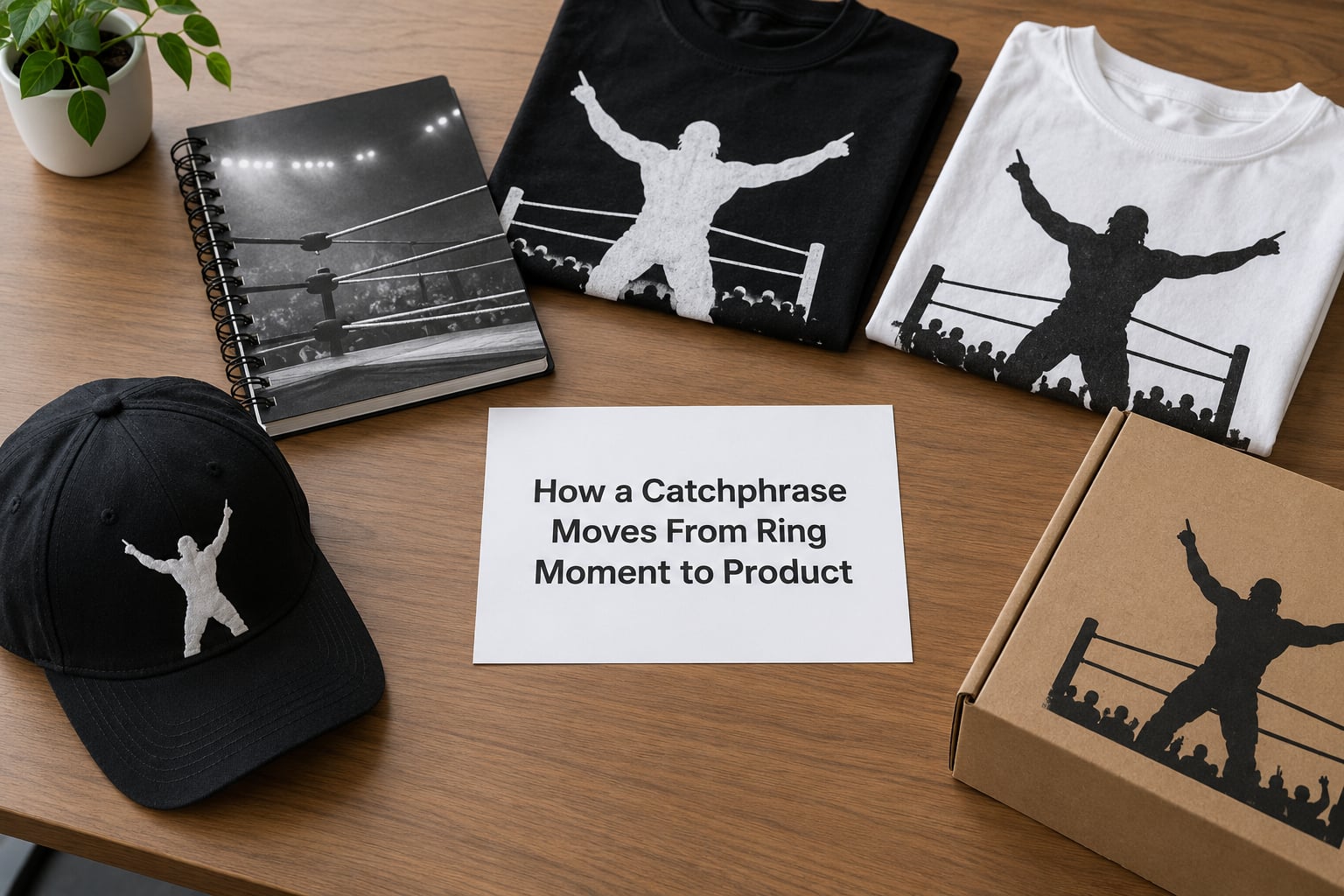
Here is how wrestling catchphrases become merchandise in practice: the sequence a line usually follows before it shows up on a garment, in roughly the same order nearly every time.
1. The line lands in a segment
It usually starts as ordinary cut-a-promo work or a fight promo. Nobody is designing a slogan. A wrestler says something that fits the character, and the segment either works or it does not.
2. The crowd adopts it
This is the only real test. If the arena starts finishing the wrestler’s sentences, the line has legs. If it needs to be explained, it does not. Fans posting about the phrase on r/SquaredCircle and r/Cultaholic is usually the first public signal that a line has landed.
3. Clips and social spread it
Highlight clips, entrances, and short video posts turn a live reaction into something searchable. Short phrases travel much better here because a clip caption has to hold the whole idea.
4. Merchandising and marketing review it
At a major promotion, the merchandising and marketing department looks at how much organic demand already exists before anyone commissions a design. A phrase with real crowd response behind it is an easy sell internally. A phrase the talent invented privately has no such track record. Gunther has been publicly blunt about having no interest in that pipeline, telling Slam Wrestling he leaves the merch-friendly phrasing to others.
5. Design, licensing, and production
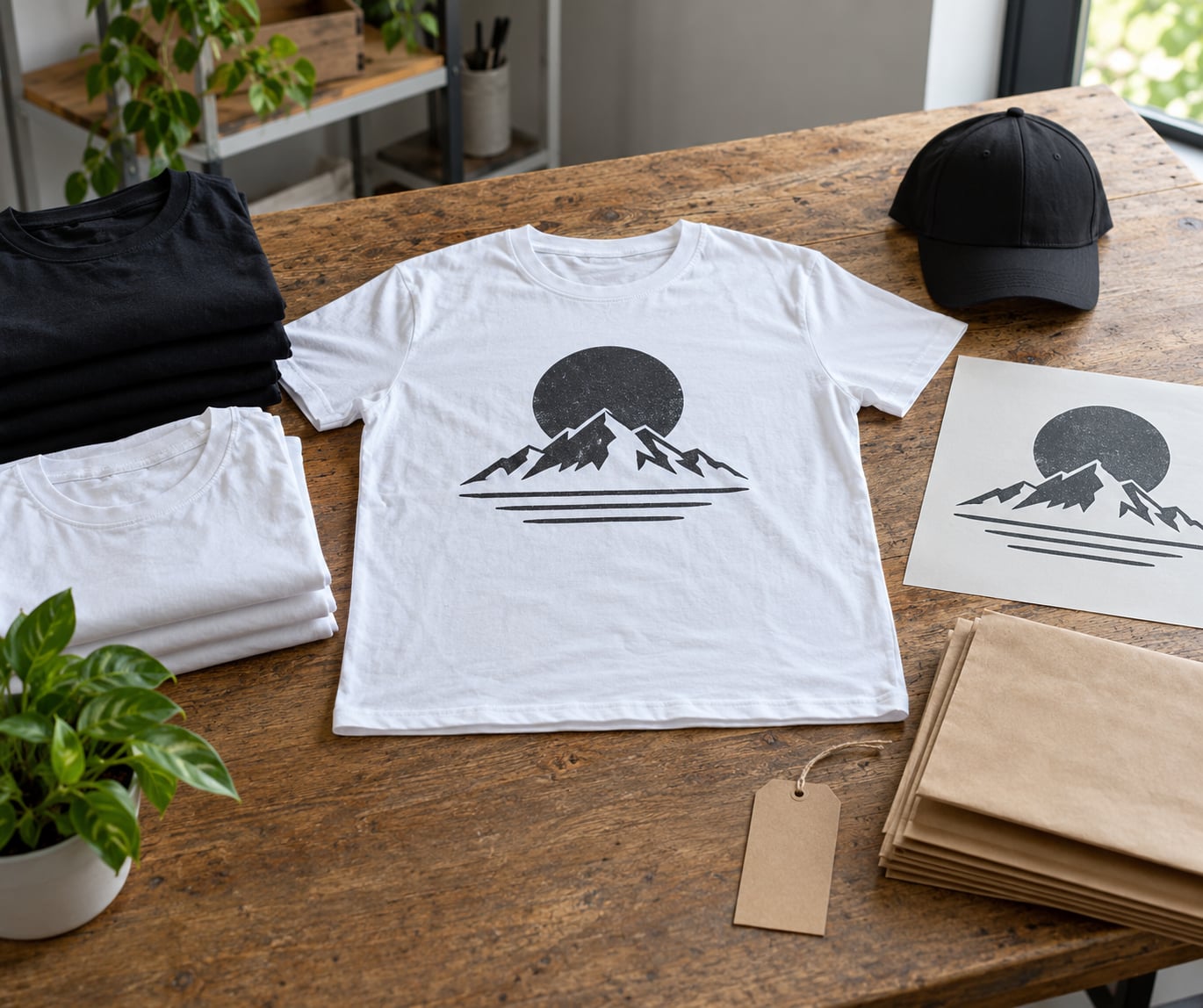
Approved phrases get turned into artwork, then into product formats: tee, hoodie, cap, and eventually a limited drop. Independent promotions run a tighter version of the same steps, usually with the promoter or the wrestler’s own name as the licensor.
6. Release and reinforcement
The product usually arrives on television before fans can buy it, often as a shirt reveal on Raw. Once the design is visible on screen, sales often move quickly at live shows, where buyers report NXT shirts clearing within about an hour of the doors opening.
What Makes a Catchphrase Easy to Put on Merchandise
Not every good line prints. Some phrases are wonderful in a promo and hopeless on a chest, and the difference is usually structure.
| Catchphrase | Wrestler | Form | Typical product |
|---|---|---|---|
| YEET | Jey Uso | Single word, crowd chant | Tee, hoodie, cap |
| Bored at Work | Drew McIntyre | Three words, tonal | Reveal tee, hoodie |
| The EST | Bianca Belair | Initials, lifestyle tie-in | Tee, cap |
| It’s Tiffy Time! | Tiffany Stratton | Full line, sing-song chant | Tee, youth tee |
| Stone Cold | Stone Cold Steve Austin | Two-word identity, gesture | Tee, cap, replica shirt |
| Suplex City | Brock Lesnar | Moment turned name | Tee, replica shirt |
| It’s My Yard Now | CM Punk | Short line, earned in a promo | Tee, hoodie |
| Austin 3:16 | Stone Cold Steve Austin | Time stamp, mythic | Tee, cap, throwback design |
Short phrases win on layout. Long call-and-response lines get cut down, and the shortened version often loses the joke. Entrance music phrases work when the tempo is part of the identity. Phrases tied to a specific match or feud can feel dated quickly, especially once the feud ends and the reason for the line disappears.
Some phrases cannot travel at all without the wrestler attached. A joke that only makes sense because of one person’s delivery or one specific story has nothing left once it is inked onto a garment in black and white.
How Wrestling Companies Decide What to Sell
Merchandising teams run a short list of checks before committing to a product, and most of the checks are commercial rather than creative.
- Audience size. Top-card performers sell reliably with almost any slogan. Mid-card talent needs a phrase that does the selling for them.
- Brand fit. Does the line match the character’s attitude, or does it sound borrowed from someone else?
- Ownership. Who actually owns the phrase and the name on the box, and is that clear before print runs are ordered?
- Interest signals. Search volume, clip views, and chant frequency tell the team whether demand already exists.
- Event timing. A push around a big match, a return, or a title win gives a product a reason to be bought this month rather than never.
- Unit cost. A complex all-over print raises the cost per item, so simple text-heavy designs get green-lit more often.
- Portrait independence. A phrase that works without a face photo on the front gives buyers a reason to own two versions of the same shirt.
A major promotion and an independent promotion approach this differently. The factory model scales: one merchandising operation handles many wrestlers at once, which keeps designs consistent and distribution wide. Independent shows usually run on a smaller budget with quicker, cheaper runs of one design tied to one event or one wrestler, which is faster but limits how much of a catalog exists at any time.
From Fan Demand to Shirt Design
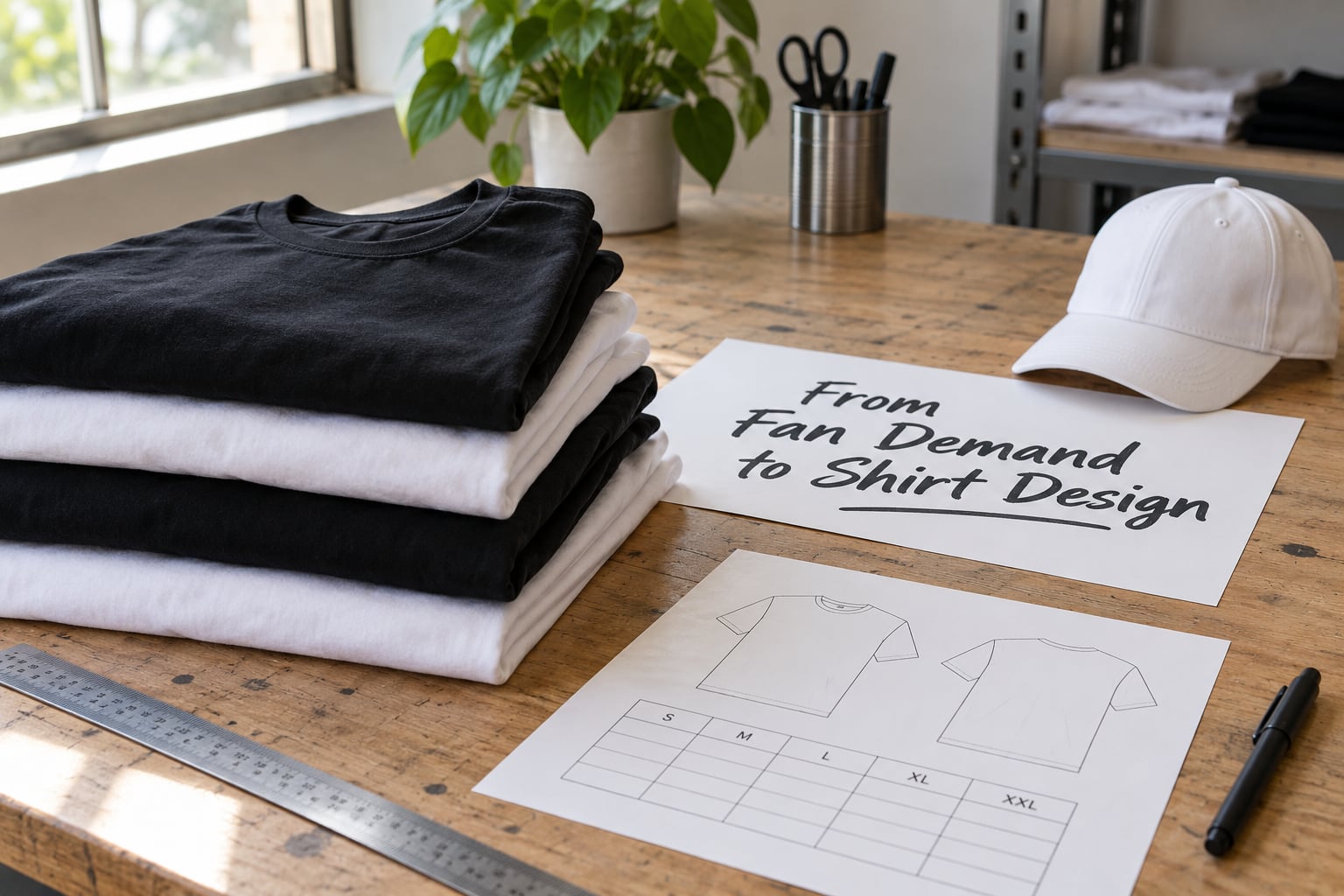
Turning a spoken line into wearable design is mostly a typography problem, and it is where the disconnect with fans often shows up.
The common complaints on r/midcarder and r/SquaredCircle are consistent. Fans argue that much wrestling gear is pretty much unwearable outside a wrestling show: a loud display font stacked on a black tee, or a slogan that reads like a wrestling graphic rather than a shirt. Vintage and retro designs get treated far more favorably because they look like clothing first and branding second.
Designers tend to handle the shift in predictable ways. Font choice gets narrowed to one heavy display style, the phrase sits above a logo lockup, and color is limited to whatever the character’s palette already is. Product formats expand outward from the tee into hoodies, caps, and youth sizes, which is how one good phrase becomes a small product family.
Sometimes the phrase gets translated into something the audience never asked for. A memorable line attached to a novelty item produces the reaction documented on r/SquaredCircle, where posters questioned who was actually in charge of merchandise after a catchphrase ended up in a baby-themed product.
Factory Merch Compared With Independent Promotion Merch
| Factor | Major promotion | Independent promotion |
|---|---|---|
| Who licenses the phrase | Promotion’s merchandising operation | Promoter or the wrestler’s own brand |
| Decision speed | Slower, more review layers | Fast, often event-driven |
| Typical range | Tee, hoodie, cap, accessories | Tee, occasional hoodie or cap |
| Distribution | Online storefront, live shows, live events | Merch table at the show, small online run |
| Main risk | Designs that feel generic | Small runs that run out quickly |
Why Some Catchphrases Sell Better Than Others
Words are only one part of it. The same line performs very differently depending on who is saying it, when they say it, and what is happening in the story around them.
Character popularity is the biggest factor. A hot storyline, a title run, or a long-awaited return gives any phrase a lift. Timing matters just as much: a slogan released alongside a big match has a reason to exist that a slogan released on a quiet Tuesday does not.
Repetition builds recognition too. The longer a phrase stays in rotation across segments and entrances, the more it becomes something fans say rather than something they read. Once a phrase retires, though, its secondary market changes character. A retired catchphrase shirt stops being everyday gear and starts being a collectible, which is where pricing confusion sets in for buyers trying to judge what a design is worth.
Not every phrase converts. Context-heavy lines, jokes that need the full story, and anything a wrestler resists publicly all tend to underperform. Wrestlers who decline the merch push do not lose fans for it, and on forums with a sharper audience they often gain credibility instead.
What Happens When a Catchphrase Is Used Without Permission
Independent designers and small sellers are the group most exposed here, and the risk comes from more than the slogan itself. A wrestler’s ring name, a promotion’s logo, a distinctive graphic treatment, and the combination of those elements with a specific phrase can all attract a trademark or trade-dress complaint. A performer likeness used without permission is a separate problem with separate consequences.
In practice, a takedown means the design disappears and the seller absorbs the cost. The safer route is original artwork that leans into the wrestling mood without borrowing names, likenesses, or protected marks. If you are unsure whether something crosses a line, an attorney who handles trademark work can answer in a short consultation, and that cost is cheap next to a run of shirts you cannot sell.
Buying from an authorized source has a second benefit: when a phrase is licensed, the wrestler is paid, which is part of why legitimate designs stay on sale and why the ones people actually trust are easier to find.
Frequently Asked Questions
Do WWE wrestlers make money from merchandise?
Yes, talent with licensed products receives a share of sales, structured as a royalty tied to units sold rather than a flat fee. The specifics are contractual, and terms vary by performer and by agreement, so public figures are rough indicators rather than reliable numbers. Merchandise income matters most for performers whose character, rather than their win-loss record, is what fans are buying.
What are some of the most famous catchphrases in WWE history?
Widely recognized examples include Austin 3:16 and Stone Cold from Stone Cold Steve Austin, Suplex City from Brock Lesnar, It’s My Yard Now from CM Punk, The EST from Bianca Belair, YEET from Jey Uso, and Bored at Work from Drew McIntyre. Community consensus repeatedly names the Austin and nWo designs among the most recognized wrestling tees ever produced.
What is John Cena’s tagline?
The best-known Cena catchphrase is U Can’t See Me, tied to the wave gesture he used on his way to the ring. It is one of the most printed phrases in wrestling merchandise. The accompanying line often used on shirts is Hustle, Loyalty and Respect.
What is a catchy slogan for wrestling?
Good wrestling slogans are short, rhythmic, and easy for a crowd to shout back. A strong one names an attitude rather than describing a match, and it survives being shortened to two or three words. Testing a candidate line by having a group say it out loud catches weak phrasing faster than any amount of written review.
Who owns a wrestler’s catchphrase and merchandise rights?
Ownership usually sits with the promotion under the talent’s contract, which is why a wrestler’s phrases and designs typically cannot be sold elsewhere without a license. A phrase a wrestler coined personally can sit in a murkier space, and ownership questions get more complicated when someone leaves a promotion. Trademark rules differ by country, so this is worth raising with a qualified attorney.
Why do some wrestling shirts sell out while others sit?
Demand tracks character popularity, event timing, and how often the phrase is used on television. Fans also respond to design: phrases that read clearly on a black tee tend to move faster than crowded graphics. Sell-out speed at live shows is the most honest signal, and buyers watching those reports treat them more seriously than promoter claims.
Conclusion
Wrestling catchphrases become merchandise through a short, unglamorous chain: the line lands, the crowd repeats it, clips spread it, merchandising approves it, and design turns spoken language into something wearable. Every step after the crowd can fail on its own, which is why some great lines never reach a product.
When you are judging a catchphrase, look at four things in order. Is it instantly recognizable to someone who watches once a week? Is it tied to a character people like? Does the design read clearly at a distance, in a photo, and outside a wrestling show? And was it produced by someone authorized to sell it? Those four checks explain most of what separates a lasting design from a shelf-filler.