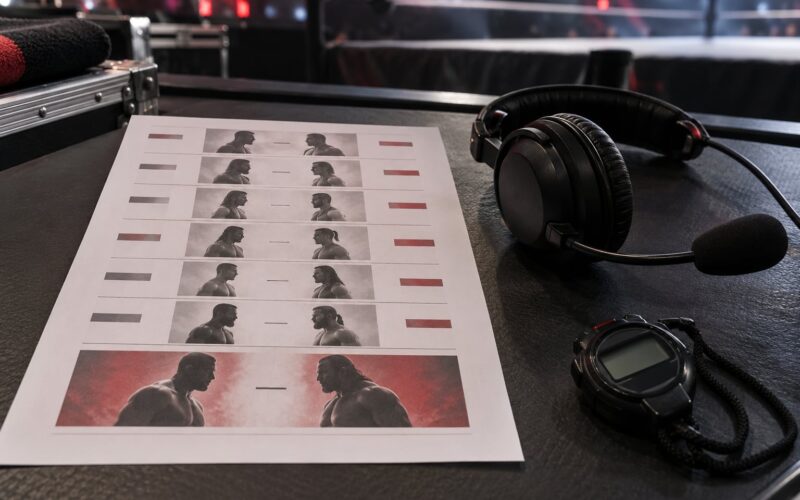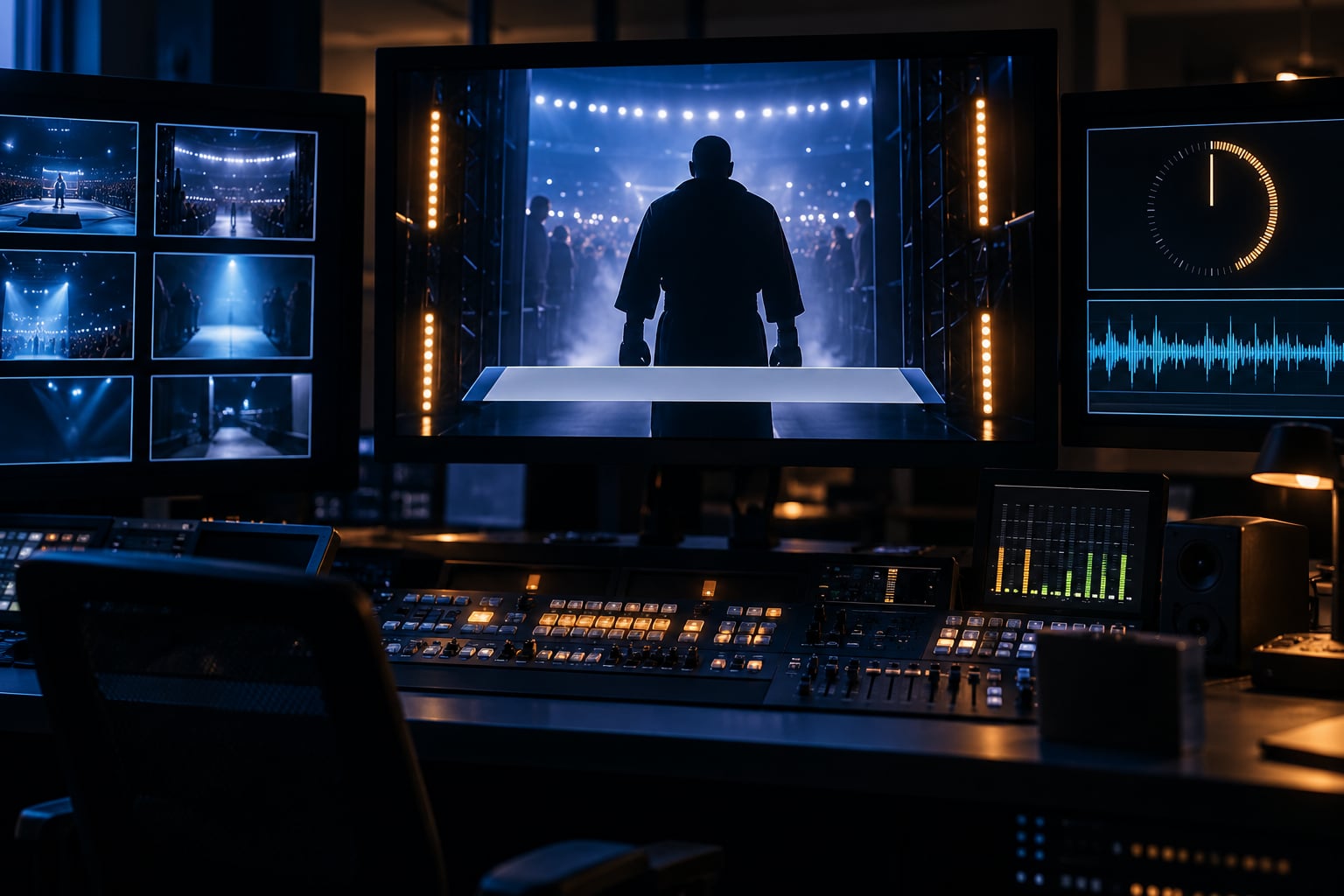
How wrestling debuts are teased on television comes down to a small set of repeatable tricks: a short pre-taped video package, a voice that has been processed out of recognition, a name on the graphic that says nothing, and a timer counting down to a show you already know the date of. Promotions rarely announce a debut outright. They show you enough to argue about and leave the part that matters unresolved, and the argument is the point.
I have watched more teaser campaigns than I care to admit, and the good ones all share a structure. Something is shown, something is withheld, and the show itself resolves it. Below is how that structure actually works, what the recurring clues mean, and how to tell a genuine debut tease apart from an ordinary story beat.
Table of Contents
- What Does It Mean to Tease a Wrestling Debut?
- Why Do Wrestling Promotions Hide a Debut on TV?
- How Wrestling Debuts Are Teased on Television
- 1. The pre-taped vignette package
- 2. The unnamed challenger profile
- 3. The countdown clock
- 4. Dark match and gym footage
- 5. The social media drip
- What Clues Do Wrestling Debut Teases Usually Use?
- How Do Vignettes and Interview Clues Work?
- How Can Viewers Tell Whether a Tease Is a Debut?
- What to check when wrestling debuts are teased on television
- How Do Promotions Reveal the Wrestler After the Tease?
- Frequently Asked Questions
- What is a wrestling vignette?
- Are wrestling promos and vignettes scripted?
- How long does a wrestling debut tease usually last?
- Why did promotions move away from long-form vignettes?
- How do AEW debut teasers differ from the traditional approach?
- Do teaser campaigns actually change viewership?
What Does It Mean to Tease a Wrestling Debut?
A wrestling debut tease is a piece of pre-debut television built to make you care about a wrestler before you see them work. It usually combines a video package, an anonymous interview, and a vague on-screen hint about when or where the appearance will happen.
The important word is tease. An announcement tells you a name, a date, and a match. A tease gives you atmosphere and a question. Wrestling boards have described vignettes for decades as the video packages used to introduce a wrestler before a debut or to hype a return, and that distinction between an introduction and a hint is exactly where the craft sits.
So a teaser may reveal the body, the costume, or the voice and still withhold the name. That is not a failed announcement. It is the format working as intended.
Why Do Wrestling Promotions Hide a Debut on TV?
Four reasons come up repeatedly, and they rarely conflict.
Speculation fills the space. A teaser that generates arguments in message boards and comment sections does the promotion’s job for free. Communities spend days decoding frames, comparing silhouettes, and ranking guesses, which keeps a name circulating long before anyone says it out loud.
The reveal stays a moment. If a debut is announced three weeks out with a graphic and a promo, the television night becomes an announcement reading. Hide the name and the same night becomes an event.
Importance reads higher. A wrestler who arrives without buildup is just a body in a match. A wrestler who arrives after weeks of questions is treated as a headline, and the crowd is louder for the debut itself.
The story stays flexible. Creative teams keep the door open on who the character actually is. A vague teaser can support a face turn, a heel run, or a faction reveal later without contradicting what viewers already saw.
How Wrestling Debuts Are Teased on Television
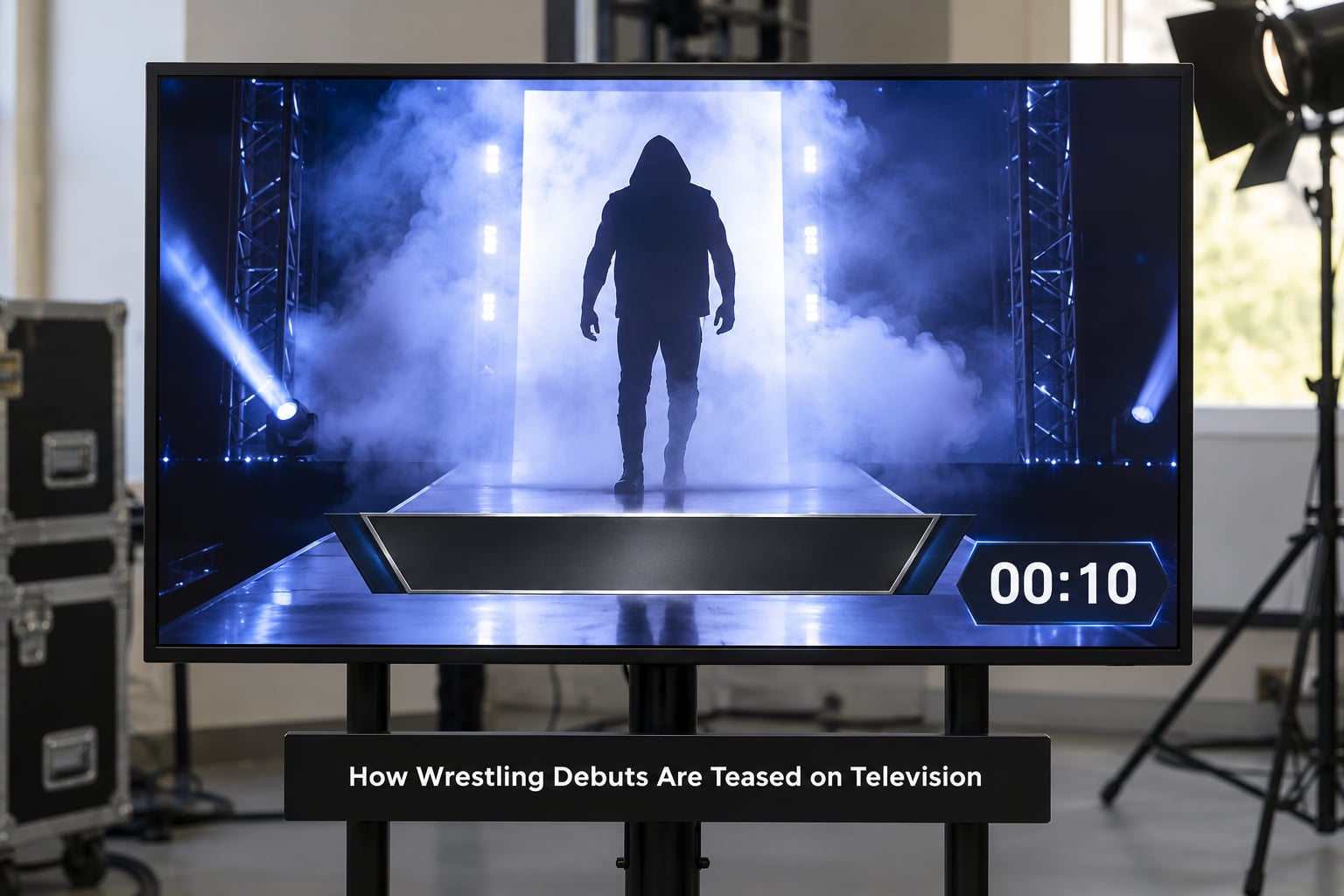
Five formats cover almost everything you will see. Each one carries a different clue, and they are often stacked across several weeks.
1. The pre-taped vignette package
A sixty-to-ninety second film shot specifically for television. It is the oldest format and still the one fans argue about most, because it is the only one where production choices carry as much weight as content. Fans still list favorites from decades back, which tells you how much they attach to these packages rather than to matches.
2. The unnamed challenger profile
A wrestler introduced only as a threat. Nobody will say who they are or where they came from, and the announcement is deliberately vague about whether they are a new arrival, a returning face, or a run-in. This is the format most likely to disappoint, because the promise it makes is about the person, not the fight.
3. The countdown clock
An on-screen timer paired with a date and sometimes an event logo. It gives the audience a hard landing point while keeping the subject hidden, and it is the format that most reliably converts a casual viewer into a tuner. Community reaction is mixed even so, because a clock sets a deadline the payoff then has to meet.
4. Dark match and gym footage
Unbroadcast or unannounced match clips, weight room shots, and training room material presented as leaked or incidental. This style sells physical ability without explaining character, which is why it usually pairs with a masked or hooded presentation.
5. The social media drip
Short vertical clips, cropped images, and accounts that appear for a few days and vanish. Modern campaigns use this to feed the television tease rather than replace it. Fans now examine frames and image metadata in real time, so a teaser posted online can be doing analytical work the broadcast never intended.
What Clues Do Wrestling Debut Teases Usually Use?
Each of these clues signals something different, and reading them together is most of the fun.
A processed or disguised voice. Altered pitch, a vocoder, a distorted speaker, or a narrator standing in for the wrestler. It signals that the person is known enough to be worth hiding, which is itself informative.
A face kept out of frame. Shot from behind, below the chin, in silhouette, or obscured by a mask or hood. Promotions hide a face when the face is the reveal.
A body shown without a name. The wrestler wrestles, poses, or walks in an unnamed arena segment, and the commentary deliberately avoids identifying them.
Familiar music used wrongly. A partial theme, a reversed track, a cover version, or a slowed-down stretch of a theme fans already know. The mismatch tells you the real entrance will differ, which sometimes proves true and sometimes does not.
Symbolic and stock imagery. Doors, crows, clocks, mirrors, empty arenas, and generic street scenes. This is the language of cryptic teasers, and it works precisely because it can be read several ways.
Background details that do not matter until later. A logo in the corner, a tattoo shown in close-up, a championship belt in a drawer, a license plate. Community members routinely catch these on the frame-by-frame pass, and being right about one is part of the reward.
Carefully worded commentary. Announcers say a name is coming without saying which name, or describe an opponent by condition rather than identity. That phrasing is a deliberate script choice, not laziness.
How Do Vignettes and Interview Clues Work?
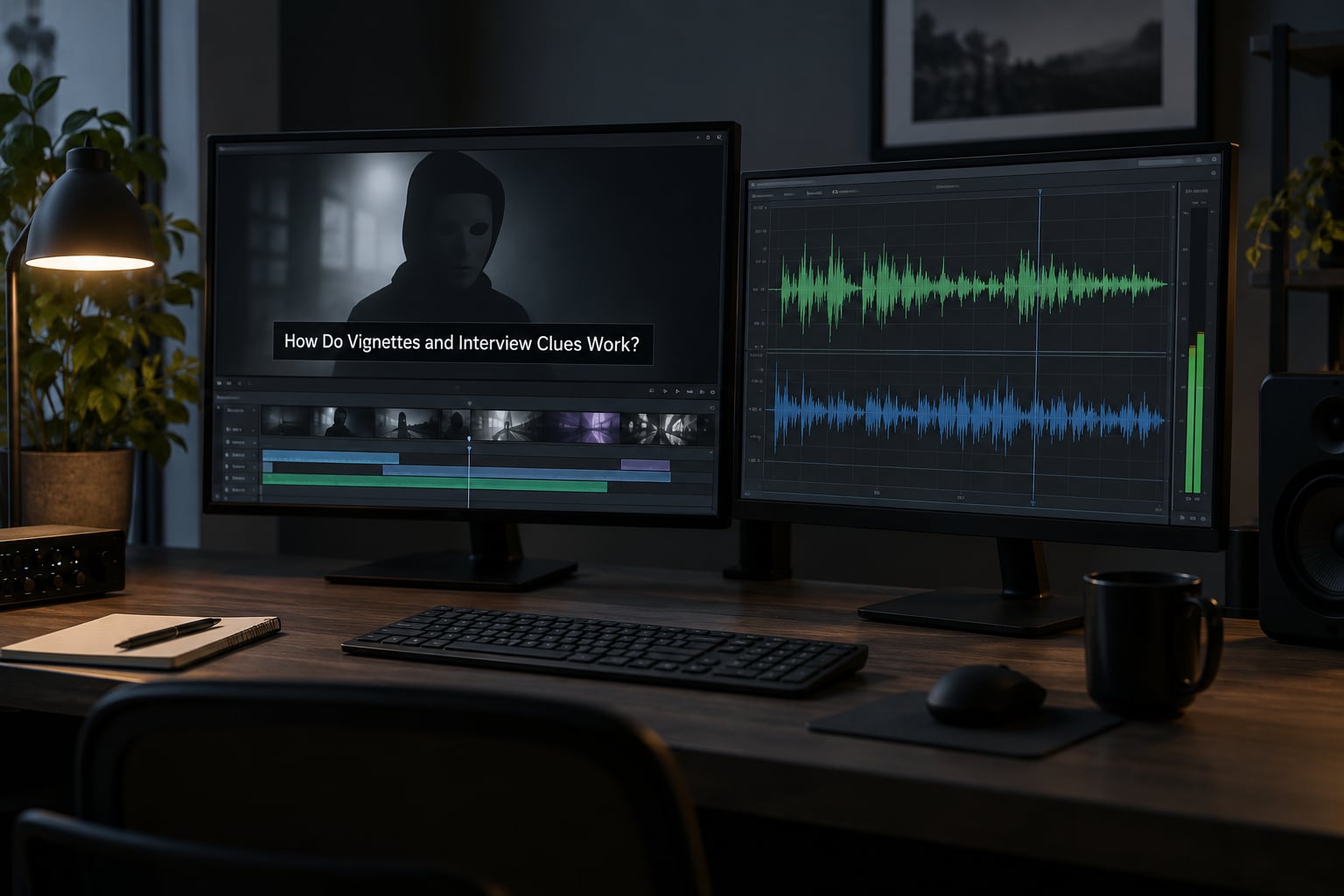
A vignette works in three layers, and viewers tend to notice only the first one.
The top layer is story. What the person is shown doing, where, and to whom. The middle layer is character: costume, posture, setting, and the things they choose not to say. The bottom layer is craft, and that is where a package either holds up years later or does not.
Craft starts with shot order. Promotions open on the widest, least informative image and tighten as the piece goes on, so the final beats land closest to the face or the signature gesture. Lighting runs dark and contrasty so shapes read on a small screen. Color grading often pushes a single hue, which makes a package instantly recognizable even with no logo attached.
Music does more work than most people realize. A cue hitting exactly on the cut is what separates a package from a clip reel, and the sting at the end is what makes the crowd noise in the arena feel earned when the person finally walks out.
Anonymous interviews carry the other half. The voice is hidden and the framing is deliberately empty, so the content has to do the work: a claim, a grievance, a promise, or a refusal to give a name. Producers will often let a sentence trail off on purpose, because an unfinished answer reads as withholding rather than as an editing mistake.
The strongest packages establish character without showing a single wrestling move. Fans routinely single out vignettes that did that, and they dismiss the ones that were generic footage with no personality behind it.
How Can Viewers Tell Whether a Tease Is a Debut?
Most confusion comes from treating every unnamed clip as a debut. Here is a short check.
What to check when wrestling debuts are teased on television
Ask whether the piece introduces a person, restores a person, or sets up a match. A debut is new: there is no prior on-screen history to explain and the material has to establish identity from scratch. A return already has an identity, so the tease is about motivation, usually with a threat or a target named.
A mystery participant is a third thing. The teaser sells the concealment itself, and the reveal is often a face the audience already knows rather than a new performer.
Then look at the follow-through. Debut campaigns escalate: the first clip is atmosphere, the second adds a voice, the third names a date. Storyline buildups tend to stay at one level for weeks without a date, because they are about the conflict rather than about an arrival.
One warning sign shows up constantly in fan discussion: a heavy tease for someone who has already appeared elsewhere in front of an audience. When a familiar name turns up under a hood weeks after a well-documented debut, the reveal lands as a work rather than a mystery.
How Do Promotions Reveal the Wrestler After the Tease?
The standard payoff runs in order. First the name appears, usually on a graphic or on commentary. Then the entrance music is played in full for the first time, on the same show the tease promised. Then the match assignment is stated out loud so nobody is confused about stakes. Then the wrestler actually wrestles.
Order matters, and it varies by promotion. One style announces weeks ahead with graphics and formal contract segments, then reveals the person at the end of a long-running storyline. Another gives almost no warning and puts the arrival in the middle of a broadcast unannounced. Both work when the moment is right.
Viewers judge the payoff against the tease, and that is the bar. If the package promised an intimidating presence and the debut delivered comedy, the community treats it as a failure regardless of how good the match was. A teaser that stays vague sets an easier bar, and it is telling when a long, hyped campaign ends somewhere nobody expected.
The most useful habit is simply to watch for the clues in order: voice, face, music, body, name. Whichever one arrives last is the reveal, and it is usually the one the entire campaign was built around.
Frequently Asked Questions
What is a wrestling vignette?
A wrestling vignette is a short pre-recorded video package aired on television to introduce a wrestler, hype a return, or repackage a character. It is filmed separately from match footage and edited to a script, usually running about sixty to ninety seconds. Vignettes use music, lighting and editing to establish a persona before the performer ever appears in a match.
Are wrestling promos and vignettes scripted?
Vignettes are scripted, and heavily so, because they are filmed like an advertisement rather than a live segment. Promos, however, run somewhere in between. Writers usually draft key lines and points, but the delivery is the performer’s own, which is why two versions of the same promo can feel quite different.
How long does a wrestling debut tease usually last?
Most television debut campaigns run between three weeks and three months. A single vignette on one show followed by a reveal the next week is common when a debut is treated as part of a larger angle. Campaigns stretch longer when the wrestler is expected to be a major signing, since extra weeks let the speculation build and the reveal feel like an event.
Why did promotions move away from long-form vignettes?
The short explanation is runtime. Weekly television gives a teaser a limited window, and a two-minute package that repeats what an audience already knows gets skipped. The longer explanation is that social platforms let promotions drip out material in small pieces for free, which fills the gap a long vignette used to cover. Fans still describe the older style as a lost art.
How do AEW debut teasers differ from the traditional approach?
The difference is mostly about disclosure. One style favors long campaigns, formal announcement segments and repeated vignettes before a name is confirmed. The other tends to protect surprise instead, minimizing advance warning and relying on an unannounced appearance to create the moment. Both still use vignettes, but the second style spends far less time building toward the reveal on television.
Do teaser campaigns actually change viewership?
There is no clean public figure for the effect of a single teaser campaign on ratings, since audience figures move with story quality, card size and competition from other shows. What is observable is behavior: commentary and reporting during a tease cycle tend to center on the unresolved name, which tends to pull viewers back to the following show. Precise claims about a numeric lift are hard to verify.
Start with the clue order. When a tease begins, watch for the voice first, then the framing, then the music, and notice when a name finally gets said out loud. That sequence tells you which one the promotion was protecting, and it is usually the answer everyone in the message boards was guessing at all week.