Overseas wrestling tours are routed by a promotion’s booking and logistics team working alongside a licensed local promoter in each country. They pick a lead market, lock venues and dates that are already available, clear work visas for everyone on the roster, then sequence the cities so flights stay short and time-zone shifts stay manageable.
That is the short answer. The longer version is that an international itinerary is a chain of dependencies, and one weak link moves everything else. If a wrestler’s work permit is delayed three weeks, the whole run shifts. If an arena cannot hold its date, a city gets swapped. Knowing how overseas wrestling tours are routed explains a lot that otherwise looks like bad luck.
This guide walks through the whole process for wrestlers, promoters and independent operators: what decides a route, who does what, how cities and venues get picked, where the travel days go, what visas and customs involve, how money shapes the final map, and what happens when something breaks.
Table of Contents
- What determines an overseas wrestling tour route?
- How overseas wrestling tours are routed from start to finish
- How overseas wrestling tours are routed step by step
- Who does what
- How are cities and venues chosen?
- How do travel days fit between wrestling shows?
- How are visas, work authorization, and customs handled?
- How do budgets determine the final route?
- How do promoters build the daily show schedule?
- What happens when an overseas tour plan changes?
- Frequently Asked Questions
- How far in advance should an overseas wrestling tour be planned?
- How do wrestlers avoid jet lag during an international tour?
- How many shows can a promotion realistically book in one foreign country?
- What should a promoter do if a venue cancels shortly before a wrestling show?
- How much recovery time should be scheduled between overseas tour dates?
- Should wrestling equipment be shipped ahead of the performers?
- Conclusion: Build the Route Before Announcing the Tour
What determines an overseas wrestling tour route?
The route is decided by five inputs, and they rarely carry equal weight. Which one is binding depends on the promotion’s size and the country being toured.
- Venue availability. The most common hard stop. A building only sells a date once its own calendar allows, so an arena’s existing commitments decide more of the itinerary than the promoters do.
- The local promoter’s calendar. The licensed partner on the ground supplies buildings, staff, ticketing and local knowledge. Their availability sets the window the tour has to fit inside.
- Work visa and work permit lead times. Every performer and crew member needs legal authorization to be paid for work in that country. Processing queues set the earliest legal departure date.
- Talent availability and contracts. Rosters have existing commitments, home dates, injuries and family schedules. The route bends around the people who can actually be there.
- Media and streaming rights. Markets that carry the show on television or streaming are worth a longer stay or a bigger venue, because the audience at home follows along.
Budget sits underneath all five, because every one of them has a cost attached. A promoter with more money can hold a city for a second night or fly a bigger crew. One working on tighter margins takes fewer nights per city and drops the long hops.
How overseas wrestling tours are routed from start to finish
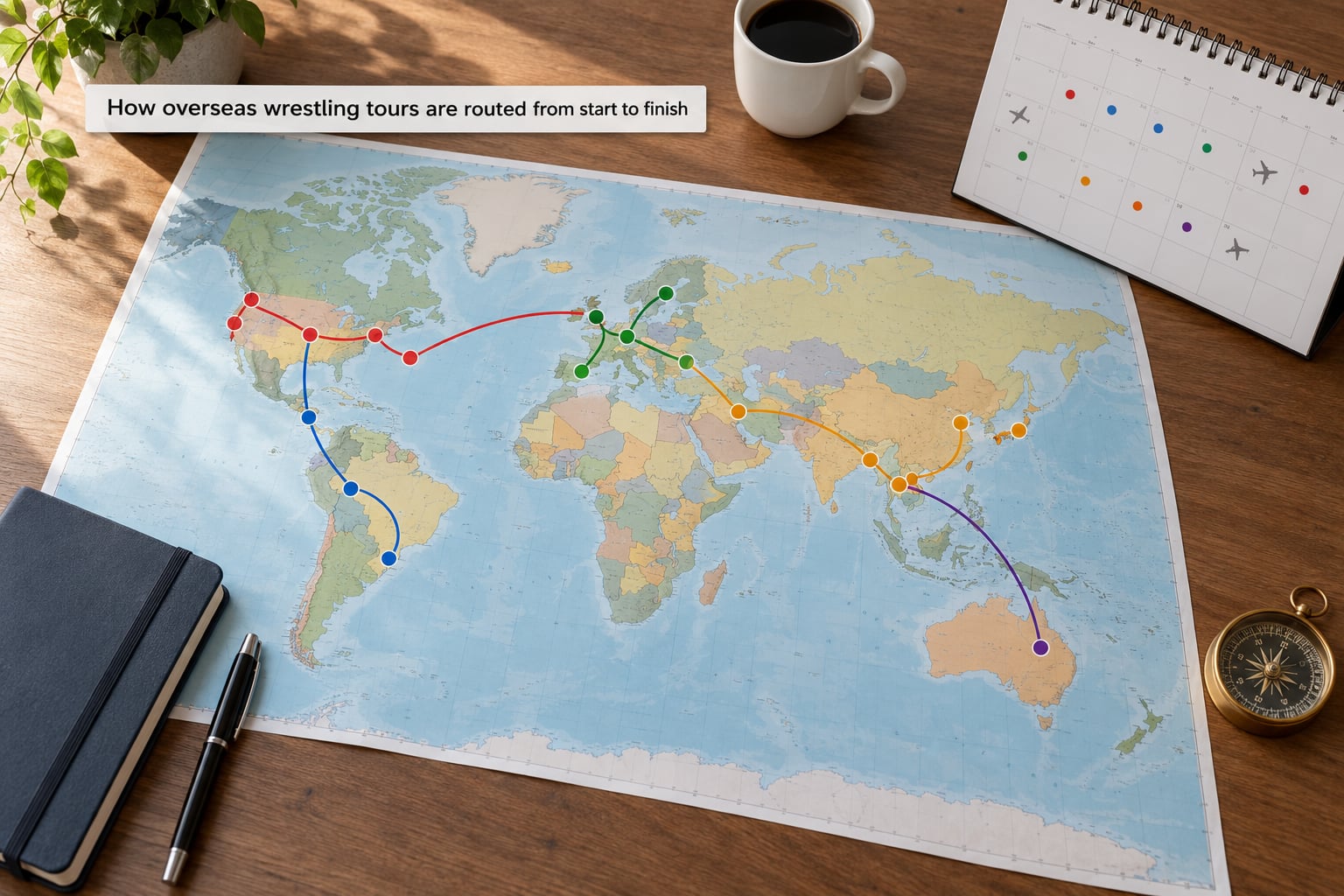
The planning runs in a fixed order. Each stage produces the inputs the next stage needs, which is why late changes are so expensive.
| Stage | Purpose | What it produces |
|---|---|---|
| Market selection | Choose the country and the lead city | A target window and an expected audience |
| Venue sourcing | Find buildings that will hold their dates | Hold dates, capacity estimates, contracts |
| Immigration | Open work visa or permit files early | Legal entry dates for talent and crew |
| Talent booking | Lock the roster to the dates that survived | Signed contracts and appearance fees |
| Route sequencing | Order the cities and place travel days | A draft itinerary with rest days marked |
| Logistics and freight | Book flights, hotels, transfers, ring and equipment | A costed, bookable schedule |
| Announcement | Publish dates, tickets and on-sale details | Tickets on sale, fans start planning trips |
How overseas wrestling tours are routed step by step
Start with the audience, not the venue. Look at who watched the last broadcast in that territory, what the local promotion sold last time, and whether anyone on the current roster has a name that carries there.
Then confirm the buildings. A promoter will sometimes announce dates they are still holding, so treat early announcements as provisional until contracts and visa dates line up.
Next, open the immigration files. This is the step most likely to dictate the calendar, and it has to start months ahead for some countries.
Lock talent to what survives those three steps. Assign the anchor shows first, usually the larger cities where the roster’s top names go, then fill in the surrounding nights.
Sequence the cities so the tour generally moves in one direction and in similar time zones. Place travel days where a wrestler gets a real recovery window rather than a red-eye and a match ten hours later.
Finally, cost it, then book it. An itinerary nobody can afford is not an itinerary.
Who does what
The promotion’s booking department owns the calendar and the roster. The local licensed promoter owns the buildings, the crew, ticketing and permits on the ground. Wrestlers and their agents negotiate appearances and fees, and larger operations keep a travel or production agency handling flights, freight and hotels.
At independent level the split is simpler and more personal. A promoter books a hall directly, negotiates with a hotel, and often handles flights for visiting talent out of pocket, which is why indies tend to run shorter routes with fewer cities.
How are cities and venues chosen?
Cities get compared on the same handful of criteria every time: existing audience interest, venue capacity against a realistic sell-out projection, how difficult ground transport is, local costs for hotels and food, and whether a gym or training space is reachable for recovery work.
Number of nights matters more than most promoters expect. A two-night stay in one city gives wrestlers a recovery morning and cuts travel legs by half. A one-night stop means fly in, load in, perform, load out, sleep, and fly out, which is fine occasionally but brutal in a loop.
Capacity is matched to expected demand rather than ambition. A 400-seat hall that sells out for four nights beats a 1,200-seat arena that runs at a third of capacity, because the second one costs more to rent, staff and light.
Route templates repeat. The single-city consecutive-nights run is the most common, then the hub-and-spoke pattern where one base city anchors short hops, then the multi-country coalition tour where partner promotions in several countries share one roster and split the dates between them.
That last model shows up in the Ring of Honor War of the Worlds format, where a kickoff event lands on a Thursday, the next night is a new city, and the run finishes somewhere it has never been before. That structure exists because fans who travel for the first show will book the following nights when the routing keeps legs short.
How do travel days fit between wrestling shows?
Travel days are placed where they cost the least performance. On a European or Japanese run that usually means a morning arrival, an afternoon soundcheck and load-in, an evening show, then an overnight flight to the next city.
The physics of flight matter. Short hops under about two hours leave enough of the day for a session. Long-haul legs usually cost a full day either for the flight itself or for the recovery after it, and the route reflects that.
Time zones are handled by direction of travel. A run heading west can gain an evening each time the clock shifts, which is why some promotions route west first. A run heading east loses time, so extra rest gets scheduled after the worst jump rather than at the end of the trip.
Customs and freight move on their own timeline. The ring, ropes, boards, cases and graphics often travel as cargo ahead of the wrestlers, and if that shipment is late the show date does not move. Promotions ship equipment forward weeks early for that reason.
Jet lag is a roster health issue, not just a comfort issue. Wrestlers report arriving functional but recovering across the first two or three nights, and unrecovered talent is an injury risk that affects the rest of the run.
How are visas, work authorization, and customs handled?
Performing and being paid for it usually requires permission to work in the destination country, and the category differs by nation. Some countries use a specific performer or artist visa, others a general work permit, and a few have routes designed for touring entertainers specifically.
Promotions typically handle this through an immigration partner who files in batches well ahead of travel, because the processing queues vary enormously. Lead times run from a couple of weeks in some markets to several months in others, and they are rarely negotiable once a file is submitted.
The same file covers crew, ring crew, camera operators and commentators. A roster cleared while the production team is not still leaves the show unstaffed.
Customs paperwork for equipment gets treated as its own workstream. Temporary import declarations, bonded warehousing and equipment values all need to line up, and the production manager usually starts that before the wrestlers travel.
Rules vary by country and change often. Anyone planning a run should confirm current requirements with the relevant official immigration authority or a qualified immigration professional rather than relying on a forum answer.
How do budgets determine the final route?
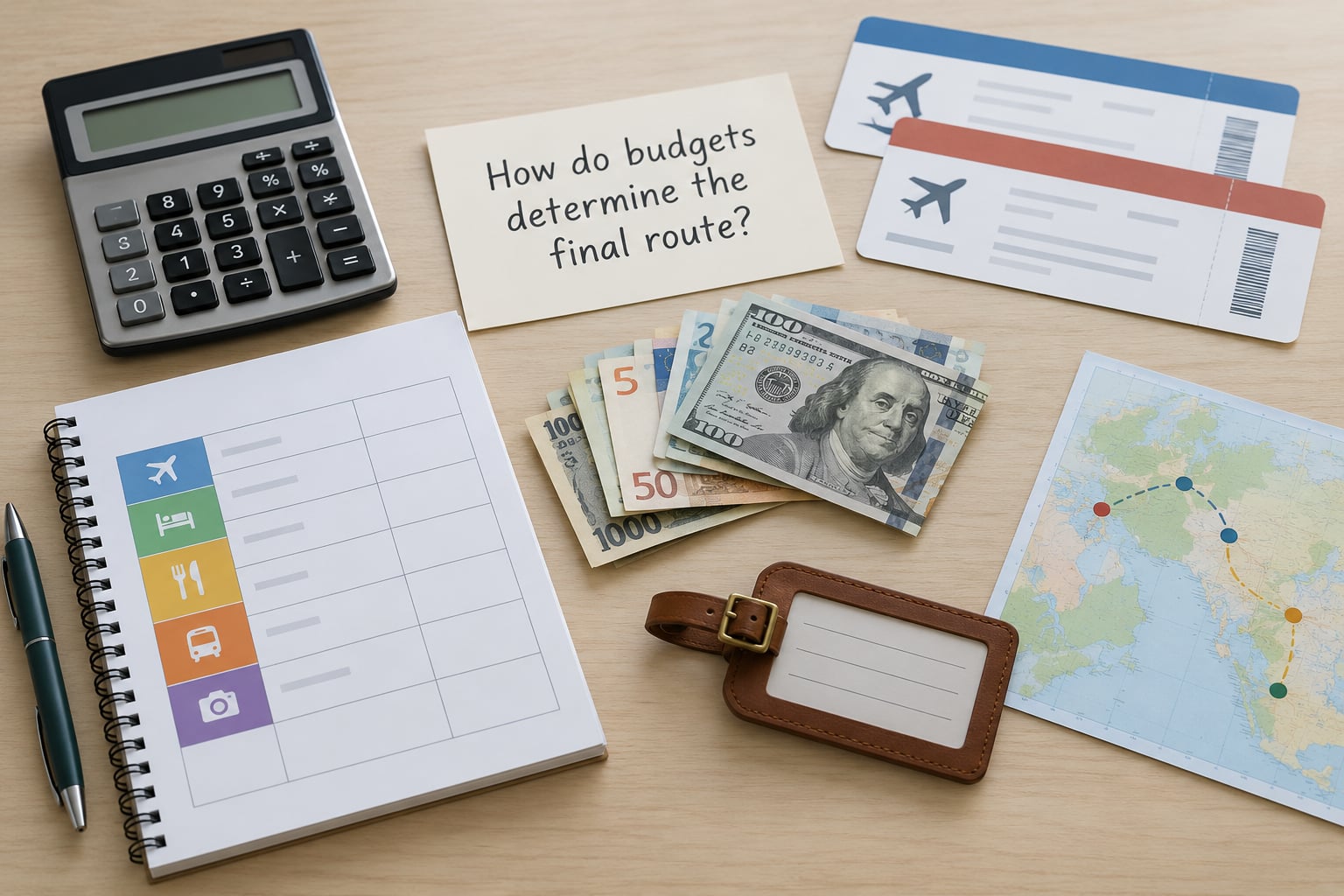
Tour budgets split into a handful of categories, and each has a lever a promoter can pull when a route gets too expensive.
- Air travel. Commercial flights are cheaper and need lead time; charter or private travel is faster and more flexible but costs dramatically more per hour of flight.
- Accommodation. Hotel blocks at a negotiated rate usually beat booking rooms individually, especially for a multi-week stay in one country.
- Ground transport. Private coaches let a whole crew move together on one schedule. Individual arrangements are common too, and wrestlers on independent contracts frequently arrange their own local transport and hotels.
- Venue rental and crew. Rent, staffing, security, production and load-in costs scale with capacity.
- Freight and customs. Ring equipment and production gear moving between countries is a real line item and often gets underestimated.
- Contingency. Anything from a delayed shipment to a cancelled show.
When money gets tight, the usual response is not to cut safety or staffing. Promoters drop a city, shorten a stay, run a smaller crew, or accept a smaller venue and rebuild the show around it.
Community discussion about indie runs often centers on exactly this: independent wrestlers who take overseas bookings sometimes find flights covered or reimbursed while hotels and ground travel fall to them, which is why per-wrestler cost matters before agreeing to a date.
How do promoters build the daily show schedule?
Once a city is locked, the show day has a fixed shape. Crew arrives mid-afternoon, ring setup and load-in take hours, soundcheck runs against an announcer’s pace, doors open early evening, matches run in a fixed block, and the crew strikes and loads out after the last match.
That leaves very little slack, which is why any travel the night before is a gamble. Promotions prefer an afternoon arrival on travel days and a full afternoon for setup, and they put a hotel block close to the venue so the transfer is short.
An illustrative two-city hop looks like this: day one is travel with no show, day two is load-in, show and load-out, day three is travel to the next city, day four is another load-in and show. Repeat that pattern and you have the standard overseas run.
Meals get built around the schedule rather than the clock. Wrestlers eat in the venue or the hotel, and load-out after the show is the single most common thing people miss when planning around an announced tour.
What happens when an overseas tour plan changes?
Runs get rebuilt for a handful of reasons: a flight cancellation, a venue that cannot honour its hold, a visa delay, illness, severe weather, political concerns, or a talent conflict that outranks the contract.
The chain of decisions usually goes like this. First, can the show move to another date or another building in the same country. Second, can the affected city be dropped without wrecking the rest of the run. Third, can the tour absorb a reroute if the replacement city is in a different time zone.
If none of that works, the show is postponed or cancelled, and the announcement goes out with as much detail as exists. Fans who bought travel plans are usually the hardest hit, which is why ticketing pages and promoter updates matter so much to anyone planning a trip.
Community threads routinely catch these changes before official channels do, and the corrections people post there are often the fastest picture of how a route actually changed. Treat any announced date as a plan with dependencies behind it, because that is what it is.
Frequently Asked Questions
How far in advance should an overseas wrestling tour be planned?
Plan a single-country run roughly three to four months ahead, and a multi-country coalition tour six to nine months ahead. Immigration lead times set the floor, because work visa files usually need to open well before venue contracts are signed. Promotions announce earlier than that, but announcement dates can move once permits and building holds are confirmed.
How do wrestlers avoid jet lag during an international tour?
Most wrestlers protect the first two nights with an earlier bedtime, daylight exposure soon after landing, and light training rather than a hard session. Routes also help: promotions schedule longer travel days after the biggest time-zone shift so nobody performs at their worst. Recovery tends to catch up by the third or fourth night of a run.
How many shows can a promotion realistically book in one foreign country?
Ten to fifteen nights is a common range for a compact single-country run, usually built as a kickoff event followed by consecutive nights in nearby cities. The limit comes from recovery time, venue availability and how short the travel legs can be kept. Stretching past that point adds jet lag and injury risk without adding much ticket demand.
What should a promoter do if a venue cancels shortly before a wrestling show?
Move the show to a backup building in the same city if one was held on standby, and only then look at a different date. Rescheduling a whole tour for one venue usually creates more problems than it solves, so the aim is to keep the date and change the room. If neither works, communicate early and clearly about refunds and travel, because buyers will have planned trips around it.
How much recovery time should be scheduled between overseas tour dates?
At minimum one full day between cities in the same time zone, and closer to a day and a half after a long-haul flight or a big time-zone change. Shows on consecutive nights in a single city are workable because the travel is minimal. Back-to-back nights in different cities is the pattern wrestlers complain about most, because it stacks travel, load-in and performance into one day.
Should wrestling equipment be shipped ahead of the performers?
Yes, normally well ahead. Ring frames, ropes, boards and production gear usually move as freight or cargo days before the roster arrives, and the load-in crew often travels separately and earlier. Shipping equipment ahead means a delayed bag delays one person, while a delayed shipment can stop the show itself.
Conclusion: Build the Route Before Announcing the Tour
Routing an overseas tour is a chain of dependencies, not a list of cities someone liked. Start with the audience you expect, settle on a realistic show count, work out how much travel and recovery time the roster can absorb, and keep a contingency budget in reserve.
Only then should venues be contracted and dates published. Get that order right and the route holds together when a flight gets cancelled or a permit runs late.