How sleep schedules affect touring wrestlers comes down to one number: the hours of opportunity sleep a schedule actually leaves them. A wrestler can get ten hours in a dark hotel bed and still finish a week running on accumulated sleep debt, because the travel, red-eyes, overnight drives and back-to-back shows never let the debt get repaid.
That debt shows up in the ring as slower reactions, flatter promos, injuries that take twice as long to heal and a hard crash once the tour ends. It is also the single part of a wrestler’s schedule they do not control, which is why promoters and agents matter to this story as much as the wrestler does.
This is general information about sleep and recovery, not medical advice. Anyone dealing with persistent fatigue or breathing problems during sleep should talk to a qualified healthcare professional.
Table of Contents
- Why Do Touring Wrestlers Have Irregular Sleep?
- How Does Sleep Affect Recovery From Matches?
- Weight cutting makes it worse
- What Happens When Touring Wrestlers Do Not Get Enough Sleep?
- How Sleep Schedules Affect Touring Wrestlers in the Ring
- How Do Travel and Jet Lag Disrupt a Wrestler’s Sleep Schedule?
- How Can Wrestlers Build a More Consistent Sleep Routine on Tour?
- Phase one: before the tour
- Phase two: travel days
- Phase three: arrival and the first 48 hours
- What promoters and agents can actually change
- What Should Wrestlers Ask a Doctor About Persistent Sleep Problems?
- Frequently Asked Questions
- How many hours should touring wrestlers sleep?
- Can jet lag seriously affect a wrestler’s performance?
- What is the best way to sleep after a late wrestling show?
- Do sleep supplements help wrestlers recover from travel?
- How can wrestlers sleep consistently in different hotels?
- When should a touring wrestler see a doctor about fatigue?
- Conclusion
Why Do Touring Wrestlers Have Irregular Sleep?
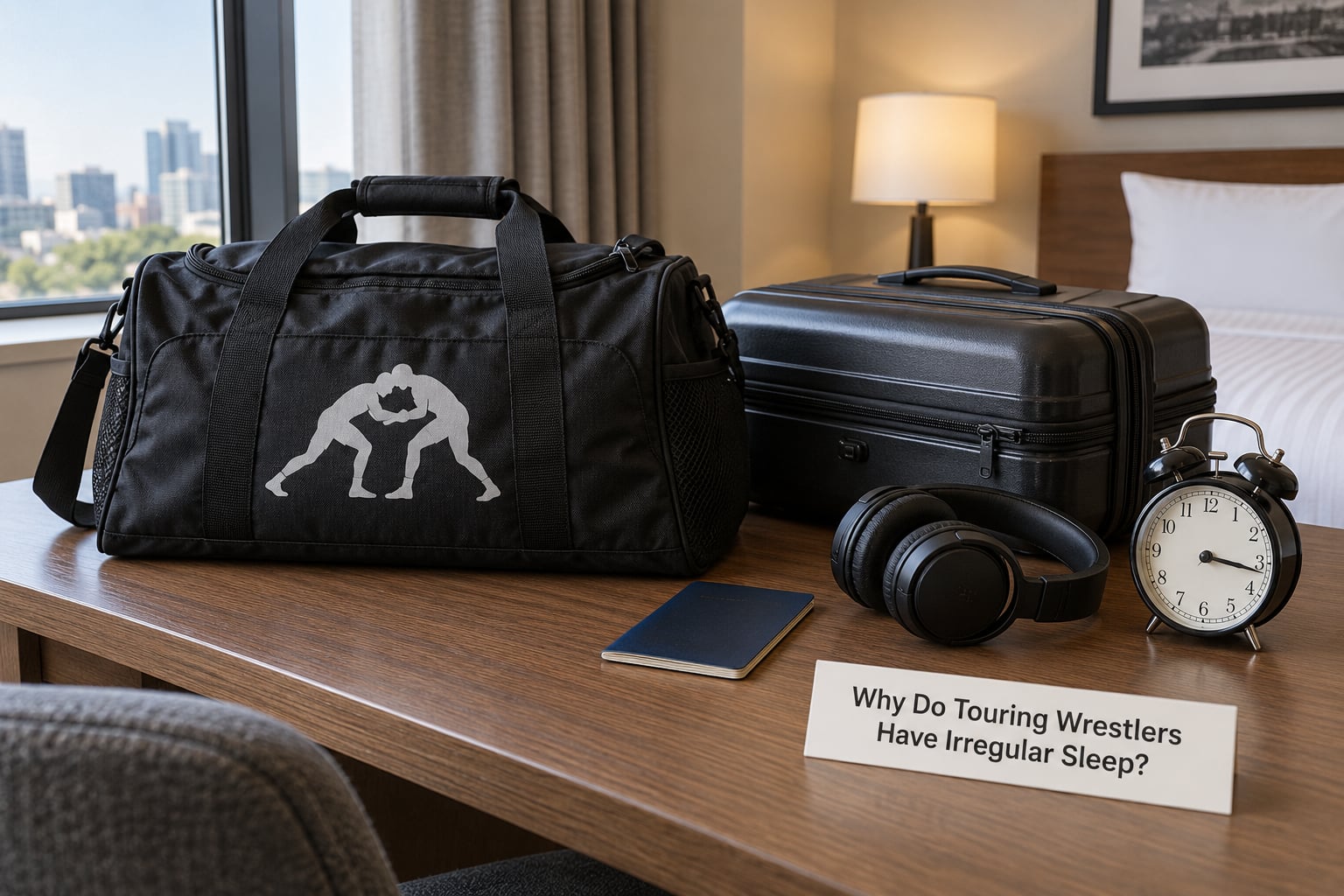
Because the schedule is built around venues, not around bodies. A promotion books buildings on dates that suit the market, and the roster fills in around them.
The result is a rhythm that looks roughly like this: travel, train, work the arena, travel again. A journalism profile of professional wrestlers describes that cycle in plain terms, and a performing artist’s tour diary captures the version that happens after a long flight, where rehearsals begin on arrival day with no adaptation window at all.
The structural reasons irregular sleep is common on the road:
- Tour volume. Four to six shows a week, often for stretches of months, with home treated as the place between dates rather than a place to sleep.
- Red-eyes and overnight drives. A bus rolling through the night or a flight with a middle-of-the-connection landing means the body sleeps in a seat, at the wrong altitude, with the wrong light.
- Time zone crossings. Overseas tours add clock shifts on top of everything else.
- The hotel and bus environment. Thin walls, hallway noise, street light through cheap blinds, a mattress that is never the same twice, and no control over the thermostat.
- Booking structures. Sunday work, drive-throughs, and back-to-back house shows leave no blank day on the calendar to reset on.
- Work outside the ring. Promos, sponsor appearances, autograph sessions and travel admin all land in the hours that were supposed to be recovery.
Research on work and health in professional wrestling by Fargiorgio and colleagues in 2014 looked at exactly this. Their findings noted that many wrestlers travelled the entire continental United States while making additional tours overseas, with different time zones affecting sleeping patterns. It is one of the few pieces of published research that connects wrestling schedules directly to sleep.
How Does Sleep Affect Recovery From Matches?
A wrestling match is a session of repeated high-intensity effort with impact loading on top of it. Sleep is when much of the repair work happens: tissue repair, hormone release, the consolidation of motor skills, and the clearing of metabolic waste from the brain.
Two terms make the rest of this article clearer. Opportunity sleep is the time a schedule genuinely allows you to be asleep, not the time spent horizontal in a bed. Sleep debt is the gap between what you needed and what you got, and it is repaid gradually rather than in one long night.
Here is the uncomfortable arithmetic of a typical road week. Seven nights at 5.5 hours is 38.5 hours against a need closer to 8 hours a night, which is 56 hours. That is roughly 17 hours of debt in a single week, and it rarely gets cleared before the next tour starts. A single 11-hour night recovers part of it, not all of it.
Hours are only half the story. Fragmented sleep counts for less than continuous sleep, so a wrestler woken six times in a bus night can end up worse off than someone who slept six unbroken hours. That is a bus-and-motel problem as much as a scheduling problem.
Weight cutting makes it worse
Cutting weight and losing fluid before a match degrades sleep quality even when the total hours look acceptable. A dehydrated body wakes more often, and the combination of restricted calories and interrupted sleep makes recovery from the match itself slower. For wrestlers, weight cutting and short sleep amplify each other, which is worth raising with a nutritionist rather than trying to solve with an extra hour in bed.
What Happens When Touring Wrestlers Do Not Get Enough Sleep?
Short and disrupted sleep affects a wrestler in three connected ways: the body, the ring work, and the character work. The order below roughly matches how often people notice each one.
- Slower reaction time. Attention and reaction speed are among the first things to drop with short sleep. In a match where a kick or a move is timed to the millisecond, that matters more than almost any other number on this list.
- Reduced strength and power output. Short sleep has been linked to lower perceived exertion and worse jump performance, which in a sport built on explosive movement and repeated sprints is a direct cost.
- Slower injury recovery. Tissue repair and muscle protein synthesis are less efficient when sleep is short, so a bad neck, a torn knee or a concussion lingers longer.
- Higher injury risk. Athletes sleeping under 7 to 8 hours have been reported at increased risk of injury. In professional wrestling, where chronic injury ends careers, this is the point that matters most.
- Mood and character consistency. Promos, crowd work and a persona that has to be the same in front of 8,000 people as it was the night before are harder when mood is unstable. Irritability is not a character choice, it is a symptom.
- Higher baseline stress hormones. Cortisol tends to rise while testosterone falls with insufficient sleep, which works against the recovery a wrestler is trying to protect.
- A harder comedown at the end of the tour. Once the schedule stops, the fatigue that was being propped up by adrenaline finally lands. Wrestlers describe a week of feeling physically wrecked once the dates stop, and some describe low mood that outlasts the fatigue.
How Sleep Schedules Affect Touring Wrestlers in the Ring
Watch a tired match and the pattern is easy to spot. Movement gets slower to start, which means spots get stiff. Selling looks like the wrestler is thinking about it. Between matches, the person on the mic is flatter and less willing to run long.
The cruel part is that fatigue also removes the margin for error. A healthy wrestler absorbs a bad landing. A sleep-deprived one with slower reactions has less room to adjust mid-move, and that is when things get hurt.
How Do Travel and Jet Lag Disrupt a Wrestler’s Sleep Schedule?
Your circadian rhythm is roughly 24 hours of internal timing, and light is the main signal that keeps it aligned. Cross a time zone and the clock your body is running no longer matches the clock on the wall, so you get sleepy at the wrong hour and wake at the wrong hour.
This is circadian misalignment. It is worth separating from plain travel fatigue, which is just being awake too long. A combat-sports coach puts it well: real jet lag is the sleep rhythm itself going off, not the tiredness you feel after two days without proper sleep. That distinction decides whether you need a nap or a full reset.
| Direction | Clock shift | Why it is harder | Light exposure timing |
|---|---|---|---|
| Eastward (e.g. US to Europe) | Earlier body clock | You need to fall asleep earlier than your rhythm wants, which fights the drive to stay up later | Seek bright light in the morning, dim light in the evening |
| Westward (e.g. Europe to US West Coast) | Later body clock | You need to stay up later and wake earlier, so bedtime gets pushed back each night | Seek bright light in the late afternoon or evening, dim light on waking |
Other things on the road hit the same clock. Check-in happens at midnight after a red-eye. Meals land whenever the flight lands rather than at the hours your body expects. And a wrestler working a show at 7pm in Tokyo may be starting his warm-up at a point in the afternoon that feels like the middle of the night.
Adjustment usually takes a few days, one to two hours per day depending on how many zones you crossed. A Japan tour puts a wrestler through that every few weeks. A combat-sports coach’s account of competition travel describes the pattern well: the rhythm comes off, and the fix takes days rather than one good night.
How Can Wrestlers Build a More Consistent Sleep Routine on Tour?
You cannot fix the schedule, but you can stop the schedule from doing further damage. Most of the value is in three places: before the tour, on travel days, and in the first 48 hours after landing.
Phase one: before the tour
- Build a sleep reserve. Get extra sleep in the nights before a long travel run. Some elite teams bank 10 hours for two nights before crossing the Atlantic, on the logic that a stored reserve covers the first night in a new zone.
- Decide your anchor now. Pick the wake time you will keep on this trip and write it down. Wake time anchors the body clock far more reliably than bedtime.
- Shift gradually for big moves. If you know a Japan run is coming, start moving bedtime earlier by 15 to 30 minutes every few days.
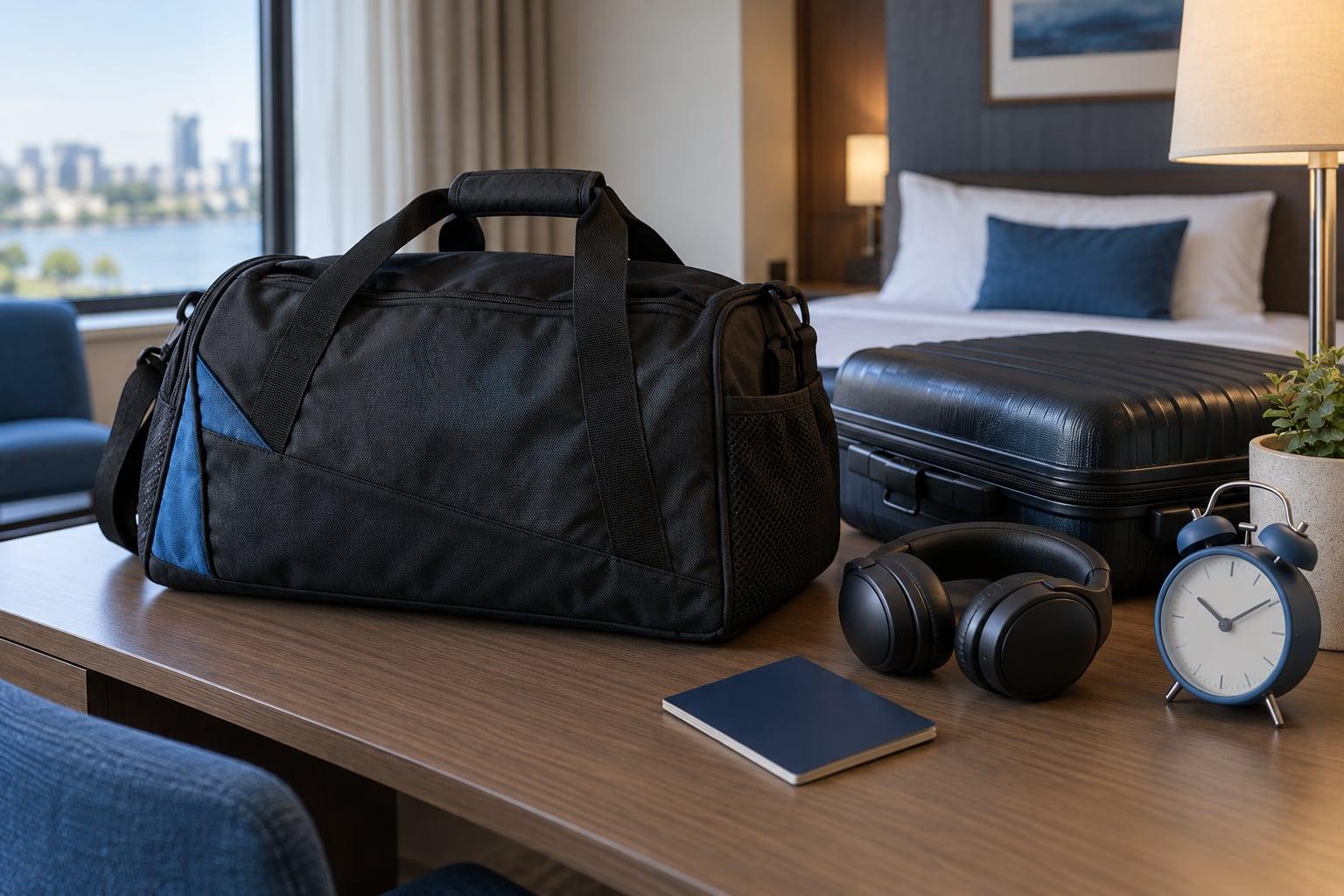
- Pack your sleep kit early. Eye mask, earplugs, a travel pillow, a white noise app or a fan track, and a light hoodie for waking rooms at 5am.
Phase two: travel days
- Time your nap to the destination. A 20-minute nap is the ceiling; longer than that and you risk grogginess. Nap early if you are heading east, later in the day if you are heading west.
- Coffee before the flight, not after. A caffeine hit roughly three hours before a long westward flight helps keep you awake until your destination bedtime.
- Stay hydrated. Dehydration fragments sleep later that night.
- Use the seat honestly. If you are sleeping upright, support the neck and let the legs stay long rather than curled up. Independent wrestlers sleeping in their own van face the same problem without a reclining seat.
Phase three: arrival and the first 48 hours
- Get outside light at the right time. Morning light after an eastward flight, evening light after a westward one.
- Eat and sleep on local time immediately. Even if it feels wrong. Meal timing is a strong cue for the body clock.
- Hold the caffeine cutoff. Stop around eight hours before your target bedtime.
- Build a quiet hotel room. Blackout first, then noise, then temperature. A cool room and a made bed fix more road nights than any supplement.
- Keep a short sleep log. Note bedtime, wake time and how you felt. Two weeks of entries is usually enough to see whether the schedule or the environment is the problem.
| Tour scenario | Typical opportunity sleep | What tends to go wrong | Practical fix |
|---|---|---|---|
| Weekly TV tapings | 5 to 6 hours on travel nights | Early starts, gym before the show, promo work after | Fix the wake time, protect the airport and hotel nap |
| Two-week arena loop | 6 to 7 hours, fragmented | Thin walls, unfamiliar mattresses, neck and back strain | Eye mask and earplugs every night, not just the worst ones |
| Japan, UK or Europe tour | 4 to 6 hours during the crossing | Six to nine hour clock shift landing on show day | Adjust in the week before, light exposure on arrival |
| Independent van life or carnival loop | Varies, often fewer than 5 | No blackout, no climate control, no mattress | Blackout hoodie, fan, ear protection, fixed wake time |
| Post-tour week | 8 to 10 hours if allowed | Debt comes due all at once, low mood | Do not fill the first week with more commitments |
What promoters and agents can actually change
Most of this article sits with the wrestler, but the schedule itself belongs to the promotion. If you are booking or representing talent, the useful arguments are concrete: a rest window after a red-eye, no Sunday-to-Monday drive-throughs, a dark room in the hotel block, and a gap between the last match and the next flight.
An independent wrestler on a Japan tour diary described spending the following week recovering after getting home, with the jet lag still unresolved while work and life reset immediately. That comedown is not a soft issue. It is the bill for a schedule that never allowed recovery to happen during the tour.
What Should Wrestlers Ask a Doctor About Persistent Sleep Problems?
General information has limits, and this is where yours start. A wrestler who is tired for a few weeks after a rough run is probably carrying a sleep debt. A wrestler who is tired for months has something else going on and should get it checked.
Raven has spoken publicly about a brutal sleep disorder, describing falling asleep easily and then waking roughly every 20 minutes for the next six to eight hours, about 15 to 20 awakenings a night, and using a CPAP machine. He attributed it to years of drug abuse and chair shots to the head and to abusing his body over a long career. The message is not that every tired wrestler has a disorder. It is that a wrestler’s head takes a lot of punishment, and symptoms that would be shrugged off in another job deserve a proper look.
Questions worth asking a doctor:
- I snore loudly and sometimes wake up gasping. Could that be sleep apnea?
- I fall asleep fine, then wake repeatedly all night. Why?
- I am exhausted during the day despite enough hours in bed. What should be tested?
- Could any medication I am on be affecting my sleep?
- I take a sleep aid when travelling. Is it affecting me the next day?
Be cautious with sedating sleep medication in this sport generally. Sedation can mask the headaches, fogginess and slowed reactions that come with a concussion, and untreated sleep apnea is easy to sleepwalk through with a pill. Talk to a doctor or pharmacist about anything you take on the road, and check anti-doping rules before adding a supplement.
Frequently Asked Questions
How many hours should touring wrestlers sleep?
Most athlete guidance points to 8 hours a night as a floor and 9 to 10 hours during heavy training blocks. A wrestler on a road schedule often gets 5 to 6 hours of opportunity sleep, which is not the same as 5 hours of sleep: interruptions in a bus or thin-walled hotel room reduce the quality of what you get. Treat the gap as debt, and try to repay it before the next tour rather than during.
Can jet lag seriously affect a wrestler’s performance?
Yes, and the adjustment usually runs one to two days per time zone crossed. Reaction time slows first, then power output and mood, which affects both the match and the promo. A wrestler landing in Japan and working the next night is performing before his clock has shifted at all, which is why teams try to adjust before travel rather than after landing.
What is the best way to sleep after a late wrestling show?
Get light on your feet after the match and keep the wind-down short. Have a small meal rather than a heavy one, shower, and set the hotel room cold and dark before you lie down. If you cannot fall asleep within about 20 minutes, get up and do something dull in low light rather than forcing it. Nap the next day for 20 minutes, not two hours.
Do sleep supplements help wrestlers recover from travel?
They can, but they rank below the basics of light, timing and a dark room. Melatonin is the best understood option for shifting the clock when timed correctly; magnesium and certain foods may help some people. Sedating prescription aids carry real downsides for wrestlers, including grogginess during the next show and masking signs of a head injury. Check anti-doping rules and ask a doctor first.
How can wrestlers sleep consistently in different hotels?
Bring the same kit every night: eye mask, earplugs, white noise or a fan track, and a travel pillow. Ask for a room away from the elevator and ice machine when the booking allows it, set the thermostat on arrival, and keep the same wake time regardless of the bed. A two-week sleep log will show whether the schedule or the room is the bigger problem.
When should a touring wrestler see a doctor about fatigue?
See a doctor if fatigue lasts more than a few weeks, if you snore loudly or wake up gasping, if you fall asleep during interviews or travel, or if you cannot get through a normal day on your normal amount of sleep. In a contact sport, get checked sooner if fatigue comes with headaches, vision changes or mood swings. A qualified clinician can rule out sleep apnea, insomnia and medication effects.
Conclusion
If you take one thing from this: choose a wake time you can actually keep, protect that many hours of opportunity sleep every night, and repay debt before the next run rather than after it. Everything else, light exposure, caffeine timing, nap length, the gear in your bag, all of it works to protect that one decision.
If you are booking talent, the equivalent one thing is a rest window after a red-eye and a dark room in the hotel block. It costs a promotion very little and buys the roster a lot.
And if the fatigue is not going away, do not keep pushing through it. Persistent exhaustion, loud snoring or breathing problems during sleep deserve a conversation with a qualified healthcare professional, because in this business the head takes hits that a healthy wrestler would normally have felt less tired through.