If you want a straight answer to what wrestling training costs for beginners: roughly $100 to $200 per month in club dues, plus a one-time gear bill of about $100 to $300 and an annual federation membership that can run from $35 to more than $600. Add private lessons, tournament entry, and travel, and a first season realistically lands somewhere between $600 and $2,500 for an amateur wrestler, or well above that if you are training for professional wrestling.
Those are typical US ranges. Wrestling fees vary by region, club, and season, so treat every number here as a starting point and confirm the fee schedule with the club before you buy anything. A parent in a wrestling Facebook group described the problem plainly: some clubs want a monthly rate, some want per session, some want a large sum up front.
This guide covers both kinds of training. Amateur and youth club wrestling is where almost everyone starts, and it is priced per season or per month. Professional wrestling school is a different product entirely, sold as career preparation, and it costs several times more. Last updated for the 2026 season.
Table of Contents
- What Wrestling Training Costs for Beginners at a Glance
- Typical training fees and equipment costs
- How much private wrestling lessons cost
- What professional wrestling school costs
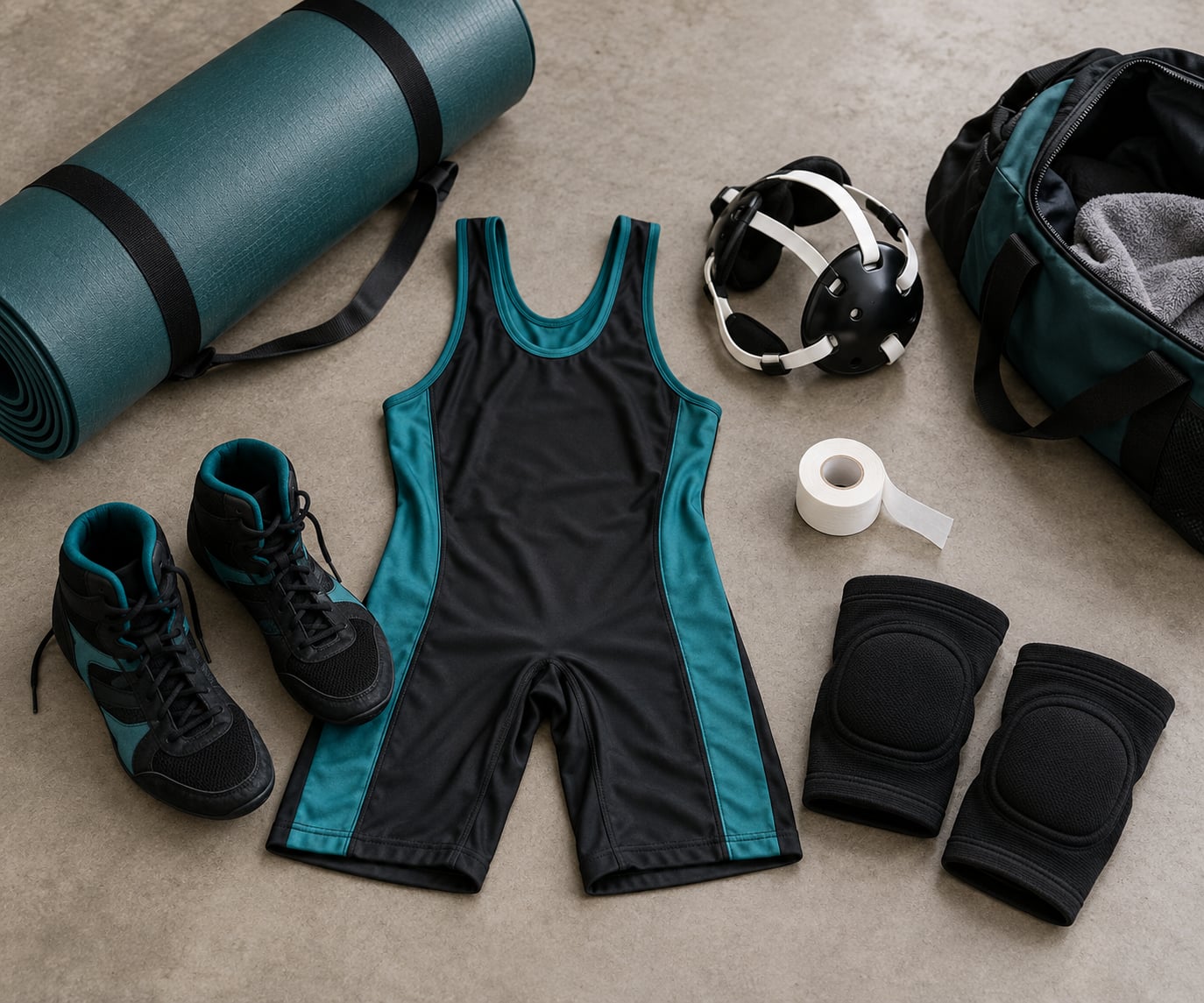
- How much gear a beginner needs
- What a first year actually costs
- What Affects the Price
- Ways to Save
- Questions to ask a club before you pay
- Frequently Asked Questions
- How much does beginner wrestling training cost per month?
- What equipment does a beginner wrestler actually need to buy?
- How much is a private wrestling lesson?
- How much does pro wrestling school cost?
- Do youth wrestling programs charge travel and tournament fees on top of dues?
- Can I learn wrestling on my own and cut the cost?
- Conclusion
What Wrestling Training Costs for Beginners at a Glance
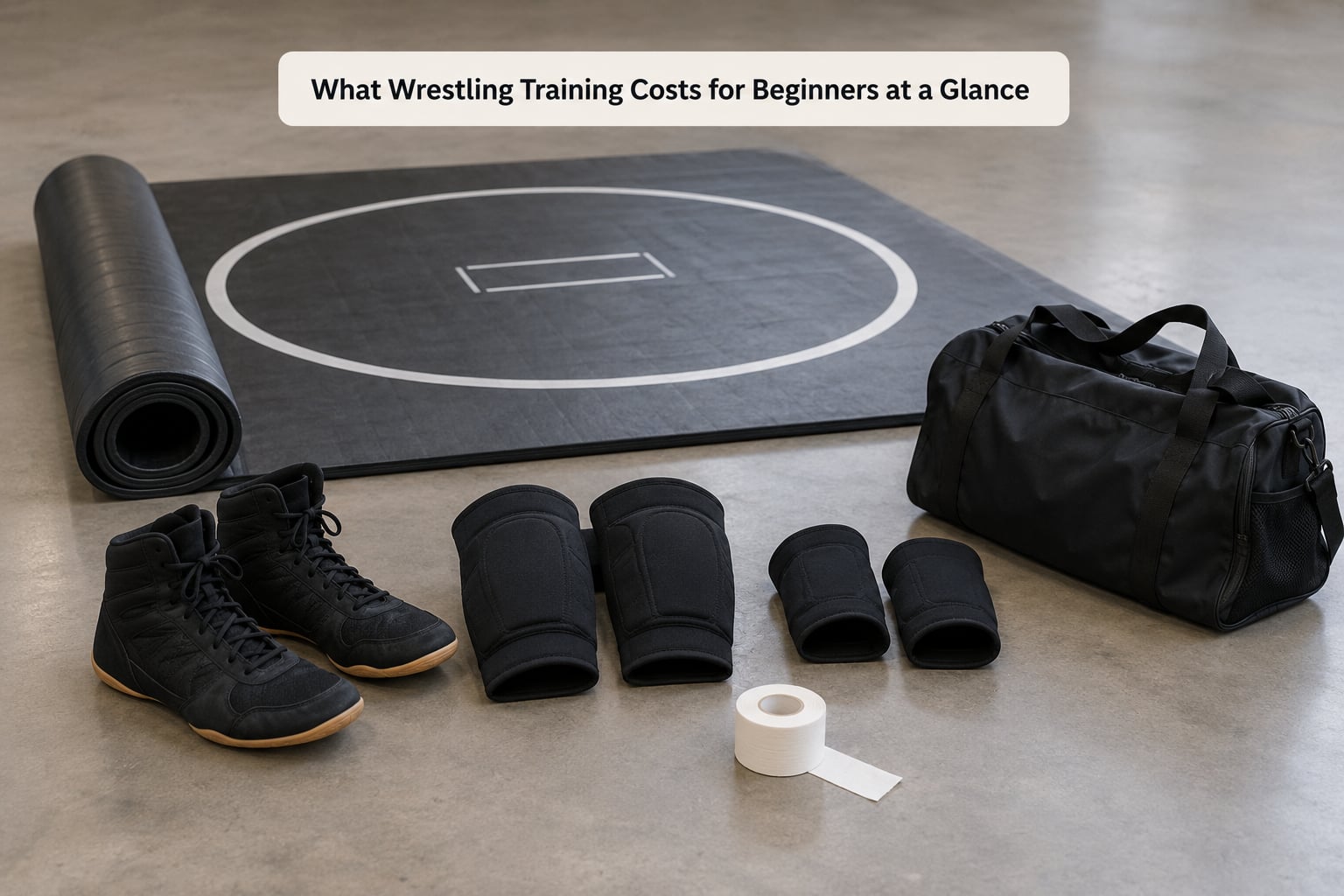
The table below is the fastest way to see where the money goes. Every entry is a typical US range gathered from published club rate cards and reports from parents and adult beginners, not a quote from any single program.
| Category | Typical US range | Billed how often |
|---|---|---|
| Youth or adult club dues | $60 to $160 per month | Monthly or by season |
| Drop-in class (one session) | $10 to $20 | Per visit |
| Annual federation membership | $35 individual to $600 per team | Once a year |
| Private lesson, one-on-one | $30 to $130 per hour | Per session |
| Private lesson, shared by 5 to 8 wrestlers | $25 to $40 per wrestler per hour | Per session |
| Beginner gear (singlet, shoes, headgear) | $80 to $250 new, $30 to $90 used | One time |
| Championship tournament entry | $15 to $45 per event | Per tournament |
| Summer camp, day rate | $150 to $400 per week | Per camp |
| Pro wrestling school program | $1,500 to $3,000 and up | Up front or monthly |
| Travel to regional competition | $100 to $600 per trip | Per trip |
The headline number parents see is almost always the monthly dues line. The line that surprises people is the one underneath it: gear, membership, and entry fees routinely add 40% to 60% on top of a first-year total that looked cheap in the fall.
Typical training fees and equipment costs
Club dues are the core recurring cost. A published beginner program I looked at ran $105 per month for children in kindergarten through fifth grade, with one practice per week and a choice of weekday sessions. One practice a week is a common beginner commitment, and it lands at the cheaper end of the range.
Clubs also price by commitment length. A tiered schedule posted publicly lists one month at $125, two months at $220, three months at $280, six months at $325, and a full year at $360. That structure is worth understanding: it means a year of training costs nearly three times a single month, but far less per month than paying month to month.
Drop-in classes are the cheapest way in. One club charges $15 per class for walk-ins and $10 for members, so attending four times a month as a non-member runs about $60. Drop-ins are useful for testing whether you like wrestling before committing to a season.
Used gear changes the entry bill more than anything else. Singlets that cost $60 new show up at resale and discount retailers for under $20, and that is genuinely fine for a first season. Shoes are the one item where cheap is a bad trade, because a poor wrestling shoe affects your feet, knees, and hips over a season of repeated hard drives.
How much private wrestling lessons cost
Private sessions are where rates spread out the most, because you are paying for the coach rather than the room. One published rate card prices by coach credential level and group size, and the pattern holds across the industry.
| Session format | Typical hourly rate | Per wrestler |
|---|---|---|
| One-on-one, top-tier coach | $110 to $130 per hour | Full rate |
| One-on-one, experienced club coach | $50 to $90 per hour | Full rate |
| One-on-one, developing coach | $30 to $50 per hour | Full rate |
| Shared by 2 to 4 wrestlers | $130 to $170 per hour total | $35 to $60 each |
| Shared by 5 to 8 wrestlers | $150 to $200 per hour total | $20 to $40 each |
The discount from splitting a session is where families find real savings. A session priced at $200 an hour for up to eight wrestlers costs $25 each if you fill it, against $120 for a top coach working alone. Members of one club noted sharing private sessions as the standard way to make the rate work.
Two details that affect the real bill: most clubs sell sessions in 60-minute increments with a 24-hour cancellation window, and many charge a higher rate for a beginner sitting in with an advanced high school wrestler as a training partner.
What professional wrestling school costs
Professional wrestling school is priced like a trade program, not a sport. Reported program fees sit in the $1,500 to $3,000 range, with some schools quoting around $3,000 up front and others offering a monthly plan near $100 to $150 a month so students can pay as they train. Nobody pays WWE directly for training, which trips up a lot of beginners searching for that number.
Costs stack on top of the fee. On Reddit’s r/WredditSchool, one trainee described an eight-week camp at roughly $1,500 per month, about $3,500 all in, and got $500 back at the end. Room and board, food, and travel to a second-weekend live show can exceed the tuition itself for out-of-state students.
Trial sessions exist for a reason. A three-hour trial camp priced at $100 has been debated as fair value by people trying to decide whether they want the commitment, and that is exactly what it is for: a low-cost test before you sign a longer contract. Ask whether the trial fee is applied toward tuition if you continue.
One more thing nobody warns you about: some schools will not take a beginner until a later class opens up. Practitioners have described a loop where you pay to train and then get told you are not ready to spar, which stretches the fee over more months than you planned for. Ask in advance how many beginners are in your cohort and how long before live work starts.
How much gear a beginner needs
Gear is the first purchase a beginner actually makes, and it is the category most cost guides skip. Here is a realistic first-season budget.
| Item | Required? | New price range | Used price range |
|---|---|---|---|
| Singlet | Yes | $45 to $80 | $10 to $25 |
| Wrestling shoes | Yes | $60 to $150 | $25 to $60 |
| Headgear | Club dependent | $25 to $60 | $10 to $25 |
| Wrist tape | Yes | $6 to $12 per roll | Buy new |
| Ankle brace | Optional | $20 to $45 | $10 to $20 |
| Team underlayer or compression shirt | Optional | $25 to $50 | $10 to $20 |
Headgear rules differ by level. High school freestyle wrestling often drops the headgear requirement, while folkstyle and most youth clubs keep it. Ask your club before ordering, because a beginner who buys the wrong type pays twice.
Knee and elbow pads for a young wrestler whose weight class is dropping are the classic optional spend. A pair of good kneepads runs $40 to $70, and they matter for a kid practicing takedowns six nights a week.
What a first year actually costs
Here is the arithmetic nobody publishes. A youth wrestler taking one beginner session per week at $105 a month, for nine months, pays $945 in dues. Add a $35 annual membership, $250 in new gear, three tournaments at $30 each, and $200 of local travel, and the first year lands at about $1,515.
Run the same year with cheaper choices: drop-ins instead of a membership at $60 a month for eight months is $480, used gear comes to $80, two tournaments cost $60, no travel, plus the $35 membership. That version is about $655, and it is a completely legitimate way to spend a first year.
An adult beginner on a standard club membership sits closer to $150 a month, with no federation membership required at many clubs. Twelve months of dues at $150, a $120 gear bill, and $150 in entry fees comes to roughly $2,070. Adults often add private sessions once they have basics down, and two hours a month at $75 adds another $1,800 a year.
What Affects the Price
Two clubs in the same metro area can differ by double. Knowing which variable is driving the number keeps you from overpaying by accident.
Location. Cost of rent, mat space, and coaching labor drives everything. A club in an expensive metro with high-income families prices above the national median. Regional cost of living explains most of the gap between a $70 month and a $160 month for the same one-hour beginner class.
Coach credentials. Rate cards tier by credential level, and the spread is real: a coach with national titles charges $120 an hour, a developing coach charges $60 for the same hour. You pay for a name on a resume, which is fair but worth noticing when the basics are identical at both levels.
Class size. A beginner program capped at twelve kids delivers more individual attention than a room of forty, and the price difference is usually $30 to $60 a month. Read the class size limit before enrolling, not after.
Format and frequency. One practice a week is the cheapest entry. Three practices a week in a program that includes competition is not a beginner cost, and you should not budget it until the sport keeps you. Private and small group sessions scale by headcount, as the table above shows.
Gear condition. New versus used moves the entry bill by $150 or more, and it is the easiest variable to control. Shoes are the exception.
Travel and competition. A club within driving distance of home can be run at $60 a month. A club that requires overnight travel for every tournament adds hundreds per trip, and that is usually the line that turns a modest sport into an expensive one for a family.
Season structure. Clubs bill either monthly or by season. A four-month folkstyle season priced at $400 works out to $100 a month, which is cheaper per month than most annual plans. Ask how the club defines its season before you compare totals.
One fee families consistently miss: the annual federation membership. Individual memberships can start around $35, but a team-level membership reported by parents for a recent season was $525 per team. If the club bills that once a year, it belongs in your budget even though it never appears in the enrollment headline.
Ways to Save
The biggest savings come from how you structure the first season, not from hunting deals. A few decisions carry most of the impact.
- Start with drop-ins. Four walk-in classes a month can run under $70 and tell you whether the sport holds your attention. Many parents treat this as a month-long trial before any enrollment.
- Buy used singlet and headgear, new shoes. This single swap saves $80 to $120 with almost no quality loss. Singlets under $20 are widely available and last more than one season.
- Share private sessions. Going from one-on-one to a group of six cuts your per-hour cost from $120 to $33. Fill the group and the savings are immediate.
- Take the longer commitment tier. A year priced at $360 versus $125 a month saves roughly $1,140, but only if you expect to train a full year. Do not buy a year to get a discount you will not use.
- Train offseason only. One club prices a three-month block at $280, which suits a family that wants wrestling from September through November and a break in spring.
- Use school programs and free resources. A school team season, a summer camp day rate, and fundamentals instruction from public wrestling resources can carry a beginner through the basics at near-zero cost.
- Ask about scholarships and grants. Clubs and regional wrestling associations frequently hold need-based funds that nobody advertises. Asking costs nothing and occasionally pays for a season.
- Choose a payment plan over a discount. Paying monthly at the same rate is easier on cash flow than a full season sum, and most clubs offer it.
Questions to ask a club before you pay
Get answers in writing before enrollment. These are the questions that separate a $900 year from a $1,600 one.
- What is the monthly dues rate, and what is billed separately?
- Is the annual membership individual or team-level, and when is it charged?
- Are tournament entry fees included or billed per event?
- Is travel required for any team obligation, and who pays for it?
- What is the cancellation and refund policy, and is there a trial period?
- Do you offer payment plans, and is there a commitment-length discount?
- Is headgear required in your program, and do you supply it?
- What is the drop-in rate if I miss a session?
Ask which fees are not included. Clubs that list clearly what is extra, and what a tournament trip costs, are usually the easiest to budget with. The ones that do not are the ones that produce the sticker shock parents complain about online.
Frequently Asked Questions
How much does beginner wrestling training cost per month?
Most beginner club programs run $60 to $160 per month for one to two practices a week, with a one-time gear bill of about $80 to $250 and an annual federation membership between $35 and several hundred dollars. Drop-in classes are the cheapest way to start, at $10 to $20 each. Private lessons add $30 to $130 an hour on top. These are typical US ranges that shift by region and season, so confirm the fee schedule with your club.
What equipment does a beginner wrestler actually need to buy?
Four items cover most beginners: a singlet, wrestling shoes, wrist tape, and headgear if your program requires it. That runs about $135 to $300 new, or roughly $50 to $130 buying singlet and headgear used and shoes new. Knee and ankle supports are optional and usually bought later. High school freestyle often drops the headgear requirement, so check club rules before ordering to avoid buying the wrong type.
How much is a private wrestling lesson?
One-on-one sessions typically cost $30 to $130 per hour depending on coach credentials, and sessions are usually sold in 60-minute blocks with a 24-hour cancellation window. Sharing changes the math fast: a group of 2 to 4 wrestlers pays $130 to $170 an hour total, and 5 to 8 wrestlers pay $150 to $200 total, which works out to $20 to $60 each. Members of clubs regularly share sessions for exactly this reason.
How much does pro wrestling school cost?
Professional wrestling school typically runs $1,500 to $3,000 for a program, or roughly $100 to $150 a month on a payment plan. Costs above that are common once travel, room and board, and weekend shows are included; one trainee reported about $3,500 for an eight-week camp and got $500 back. Short trial camps, often around $100 for three hours, are a sensible way to test a school before signing a longer contract.
Do youth wrestling programs charge travel and tournament fees on top of dues?
Usually yes. Tournament entry runs $15 to $45 per event, and travel to regional competition adds $100 to $600 per trip once fuel, lodging, and food are counted. Some clubs include entry in dues and others bill per event, so ask directly. A club that requires overnight travel for every tournament is a very different annual cost from one with meets within an hour, and that difference is the single largest budget item most families miss.
Can I learn wrestling on my own and cut the cost?
You can build real fundamentals on your own, but not safely or effectively alone. Wrestling is a contact sport where position, safe falling, and joint awareness are learned from a partner watching you. The affordable path is drop-in classes plus school team training, day-rate summer camps, and free fundamentals material for drills at home. Most beginners save the most by testing with drop-ins first, then enrolling only once they know they will stay.
Conclusion
A first season of amateur wrestling realistically costs $600 to $2,500 in the US once dues, membership, gear, entry fees, and local travel are counted, and professional wrestling school starts around $1,500 before travel and room and board.
The best first step costs almost nothing: visit one reputable local beginner class, watch a session, and ask for the full fee schedule in writing, including membership, tournament entry, and travel obligations. Buy gear after you know the club’s requirements, not before.