What to expect at your first live wrestling show: two to three hours of matches with no commercials, an entrance ramp you can see from your seat, a crowd that reacts in waves, and a merch table that gets busier the moment the final bell rings. Nothing about it requires you to be a lifelong fan. Arrive early, learn who is advertised, and you will have a good night.
Most people who buy a first ticket are not new to wrestling. They have watched for years and only just decided to go, which is exactly why the small logistics catch people out. Doors open well before the advertised start time, the running order changes at the last minute, and nobody minds you being there.
This guide walks through the whole night in the order you will live it: preparing, arriving, watching, eating, signing, and leaving. Updated for 2026, and it applies whether you buy a ticket for a major televised brand, a touring show in a civic hall, or a small independent promotion in a local arena.
Table of Contents
- How to Prepare for Your First Live Wrestling Show
- Research the actual event you are attending
- Pick your seat type before you buy
- Buy through the promotion, then check the confirmation
- Sort the journey before the day
- Decide what kind of show suits you
- What Happens When You Arrive at the Wrestling Venue
- How a Professional Wrestling Show Usually Runs
- What You Can Expect From the Matches
- Match formats you will see
- Live Wrestling Etiquette for First-Time Fans
- Signs and posters
- Phones and cameras
- Standing, cheering and reactions
- Ringside and the barricade
- Where you can usually let go
- Tickets, Merchandise, and Other Costs
- What to Bring and What You Can Usually Leave at Home
- How to Make the Most of Your First Live Wrestling Show
- Frequently Asked Questions
- How early should I arrive before a live wrestling show?
- Do I need to know the wrestlers before going to my first live show?
- Can I bring signs, photos, or a camera to professional wrestling?
- Are children welcome at live wrestling shows?
- What happens if the matches do not run in the advertised order?
- Should I choose a major wrestling event or an independent show for my first time?
- Conclusion
How to Prepare for Your First Live Wrestling Show
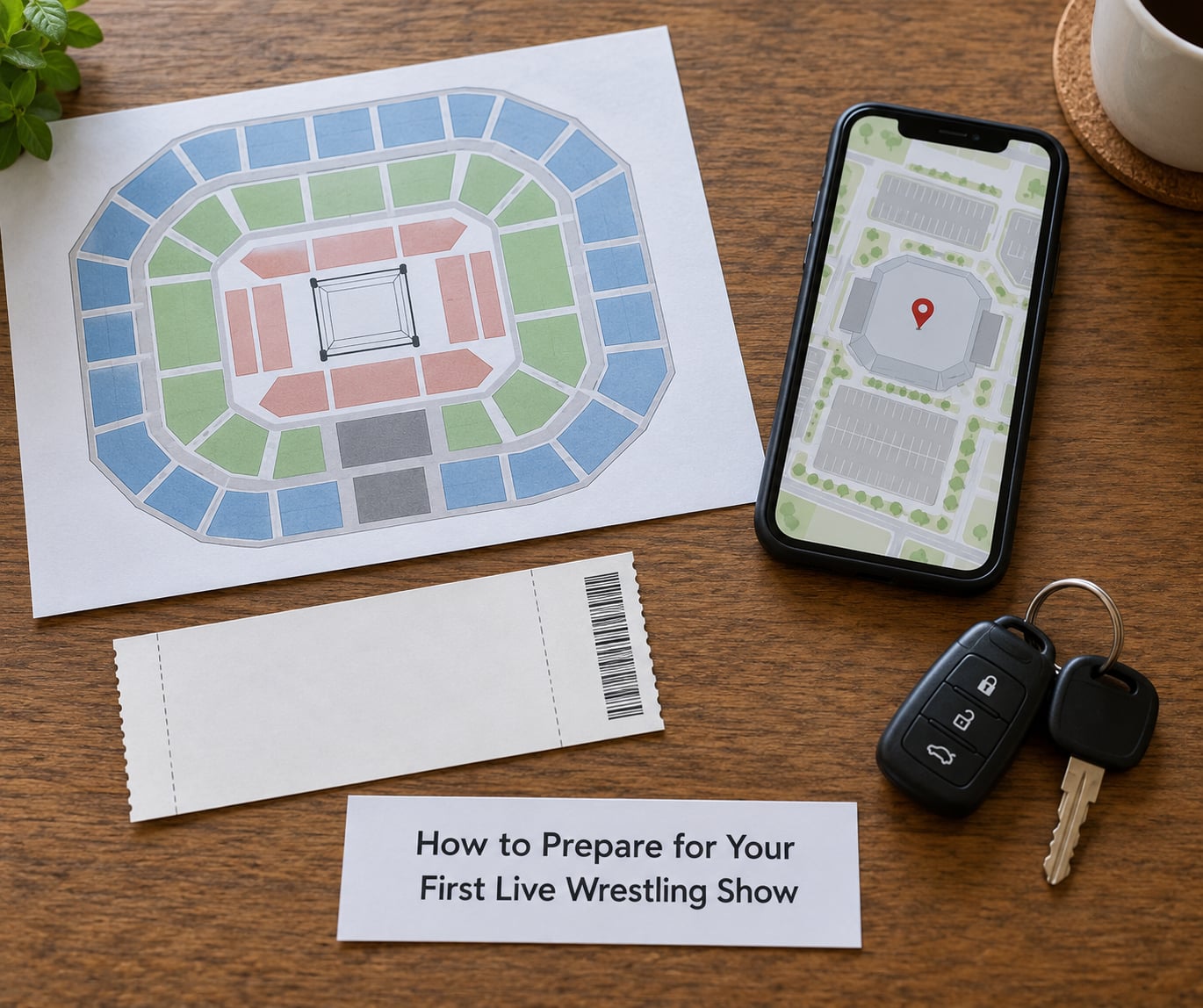
Preparation is about four things: the event, the seat, the timing and the journey. Get those right and the night takes care of itself.
Research the actual event you are attending
Look at the promotion’s own listings for the date and city, not just a resale site. Touring shows run a different card from a televised taping, and a show billed as one thing can change in the final week. Announced lineups are also promises, not contracts. On independent cards especially, a headline name can be injured or double-booked, and the undercard gets shuffled to fill the gap.
Pick your seat type before you buy
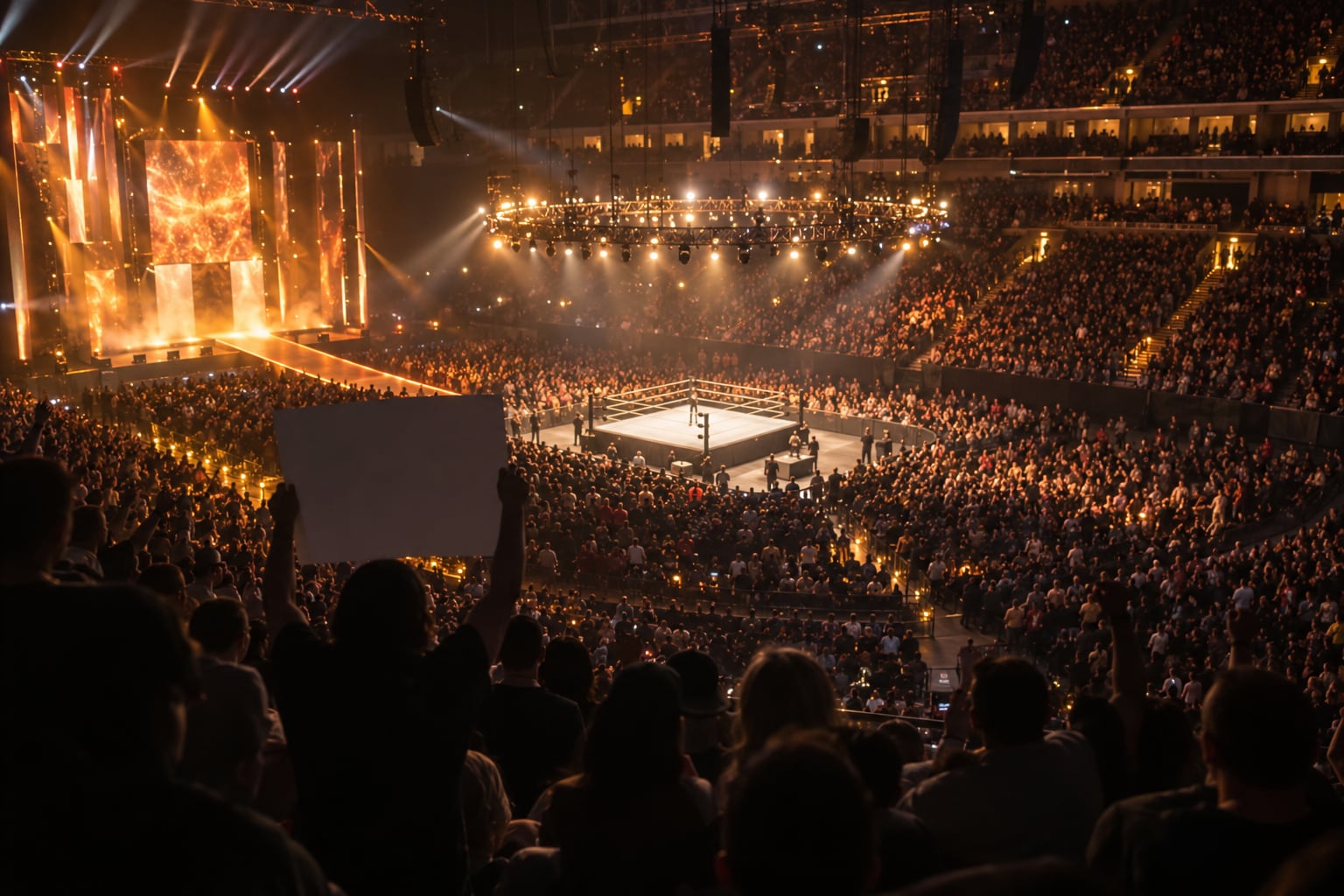
Ringside and floor seats put you close enough to hear a body hitting the mat and to see facial expressions during a promo. The lower bowl gives you the full production: lighting, entrance videos, the whole ramp. The upper bowl shows you the arena and the crowd, which sounds odd but is genuinely the best view for wrestling, because you can see the shape of the match instead of just the near side of the ring.
Floor seats mean standing for two and a half hours in an arena that gets warm. Balcony and upper-bowl seats are cheaper and easier. If you have never been before and you are not sure, the lower bowl is the safest bet.
Buy through the promotion, then check the confirmation
Official ticket sites and legitimate resale platforms both work. Resale prices swing hard for popular shows, and a face-value ticket that was never sold will sometimes appear on a resale site at several times the original figure. Buy from the promotion directly where you can, and read the confirmation email for the venue address, the real start time and the entry windows. That email answers most first-timer questions before they get asked.
Sort the journey before the day
Arena parking fills up and the surrounding streets close early on show nights. Public transport or a rideshare usually costs less and drops you nearer the doors. If you drive, screenshot the post-show traffic pattern, because the exit can take longer than the drive there. If you are staying overnight, book the room before you book anything else, because show weekends in the host city sell out first.
Decide what kind of show suits you
A major brand show in a big arena gives you production value, a full crowd and a longer card. A televised taping is a working show, which means cameras in your eyeline, crew talking through matches, and takes that may be redone. An independent or regional promotion in a 400-seat room gives you closer wrestling, easier autographs and a much smaller budget for lighting.
What Happens When You Arrive at the Wrestling Venue
Doors usually open 60 to 90 minutes before the first match. That gap is not padding, it is the part of the night where you queue, get searched and find your seat without rushing.
Outside, look for the queue for your section. Staff hand out wristbands at some events, and those wristbands control re-entry, so keep it on. At a televised show you may pass a camera crew and a production truck in the loading bay. If you see a camera pointed at the crowd, feel free to wave. That footage often ends up in the show’s opening segment.
Inside, security screening is routine. Bags are opened, oversized bags and drinks from outside are often refused, and the rules on signs and props vary by promotion. Venues that ban hard signs usually allow a poster board with a thin sheet of paper taped to it, but check the current policy on the event page rather than assuming.
Merch tables sit near the entrance and sell out of the popular items early. A first-timer who wants a shirt should buy it before the show, not after. Concessions are usually a long counter with a short menu and higher prices than a stadium, so eat before the first match or during the intermission rather than queueing at the top of the second.
Seating usually opens all at once, and ushers guide you to your row. If you bought floor seats, take your spot early and settle in, because standing room for the whole card gets tiring. If you are near the barricade, you will feel the wrestlers brush past during entrances and you may get pulled into a storyline moment. That happens to everyone in the first two rows.
Early fans often get more than the advertised show. Ringside fans at some televised shows get a dark match or a backstage segment. Hard-camera watchers on the floor occasionally get pulled aside for a segment too. You are not promised anything, but arriving early is how you give yourself the chance.
How a Professional Wrestling Show Usually Runs
A live show is a card of matches run back to back with short breaks, usually two and a half to three hours from bell to bell. There is no commercial break and no studio desk to reset the tone, so the wrestling carries the whole event.
Most events open with a presentation segment: a champion in front of a crowd, a challenger talking trash, or a manager cutting a promo. Then come the matches in ascending order of importance, and the top two or three bouts close the show.
Here is the typical shape of the night:
- Pre-show and entrances — the announced start time is when the first match begins, not when doors open.
- Opening match — often a fast singles bout or a tag team match designed to get the room reacting.
- Undercard matches — the middle of the card, where most of the in-ring work happens.
- Intermission — a 10 to 15 minute break for the bathroom and concessions, and the only good window for both.
- Main event — usually a championship match or a long-form rivalry bout.
- Post-show — talent often stays at ringside or at the merch table for a while afterward.
The advertised order is a plan, not a promise. Talent gets held back, injuries happen on the day, and promos get cut. A match you were promised can move to another date, and an unadvertised bout can replace it. Take the running order as a rough guide rather than a contract.
The production side is worth knowing about. At a televised taping you will see camera operators walking the ring apron and a referee wearing a headset, and the match may pause while a shot is set up. That is normal and not something to be alarmed by.
What You Can Expect From the Matches
Live wrestling mixes real athletic competition with scripted story and crowd work. The wrestling is genuinely dangerous and the performers genuinely trained, and the story they tell around it is written in advance.
Match formats you will see
Singles matches are the core format: two wrestlers working a story of escalating moves and reversals. Tag team bouts feature two wrestlers per side with partners waiting on the apron, which creates a different rhythm because anyone can tag in at any moment. Championship matches add stakes through presentation, with a title belt introduced, a formal challenge and a longer ending sequence. Multi-person and gauntlet matches stack several wrestlers into one bout and lean toward spectacle.
Mainstream promotion wrestling is presented as if it is real. A wrestler who has been betrayed demands a match, a manager talks on the microphone between segments, and the crowd is meant to believe it. That presentation has a name: kayfabe, the convention that the story inside the show is treated as genuine by everyone participating in it.
Most shows include promos, which are microphone segments where wrestlers talk to each other and to the crowd. Promos matter more than first-timers expect, because the story you just watched is usually explained, escalated or contradicted during them. Staying through the whole card pays off in ways that leaving at the undercard does not.
Match quality varies, as it does in any sport. Some bouts on an independent card are better wrestling than most televised matches, because the performers have more time and no one is scripting a commercial break. Some televised matches are short and obvious. The crowd knows the difference and their reaction tells you before the finish does.
Live Wrestling Etiquette for First-Time Fans
Wrestling crowds are unusually welcoming. There is no norm of silence and no expectation that you stay polite and neutral, so cheer, boo, chant and react. The main rules are practical ones about space and attention.
Signs and posters
Signage policy varies. Many major promotions restrict hard or rigid signs and allow poster board, while independent shows are usually more relaxed. Read the event’s rules first. If signs are allowed, keep it to one side of your body so it does not block the people behind you, never touch another fan with it, and never lean it over the barricade.
Phones and cameras
Filming is generally tolerated for personal use, but a phone held up for an entire match is a nuisance to the fans around you, and venues sometimes restrict recording during specific moments. The most repeated advice in fan communities is simple: put the phone away during the match and use it for entrances, moments you will miss later and the post-show. You get more out of the show when you watch it rather than record a version you will never rewatch.
Standing, cheering and reactions
Pop up for entrances, big near-falls, returns and anything with a crowd chant, and sit back down for the stretches between. Cheer for whoever you like, including the bad guy. Booing a heel is a compliment to the performer who earned the reaction.
Do not heckle the people around you, and do not argue with a stranger about who should win. A crowd that wants an argument will find one anyway, and you do not have to join it.
Ringside and the barricade
If a wrestler climbs the barricade, touches your shoulder or gestures at you, react like an excited fan. That interaction is part of the show and it is why front row is different. You are not obliged to do anything you are uncomfortable with though. A short smile and a raised hand is always enough, and nobody backstage keeps a list.
Where you can usually let go
Chants, signs and outfit choices are all fair game. What is not fine is blocking a view, pushing through a crowd, or grabbing a performer at the barricade after the show. If you want an autograph, ask calmly and accept a no without making a scene.
Tickets, Merchandise, and Other Costs
Ticket costs vary by location, event, seat tier and seller, and they change over time. The useful comparison is between show types rather than any single figure.
Major televised events in large arenas are the most expensive, and premium tiers at major shows cost meaningfully more than a standard seat at a regional promotion. Independent and regional shows are usually the cheapest way to see live wrestling, and they are often better value for a first-timer because the room is small and the wrestlers are close.
Beyond the ticket, a night out usually includes:
- Parking or transit — arena parking fees are common and public transport avoids them.
- Food and drink — arena concessions run higher than a normal takeaway, and lines spike at intermission.
- Merchandise — official shirts and tees are the usual first purchase, and prices depend on the promotion.
- Travel and accommodation — if the show is not in your home city.
A useful habit is to decide your ceiling before you go and stop buying at the merch table once you reach it. Fan communities keep repeating one piece of advice: buy the one shirt you actually wanted, not four you will never wear. Buy it before the show, because the popular sizes go first and the line doubles afterwards.
If you are travelling, check whether the event offers an official hotel block, which is sometimes cheaper than booking independently on a show weekend.
What to Bring and What You Can Usually Leave at Home
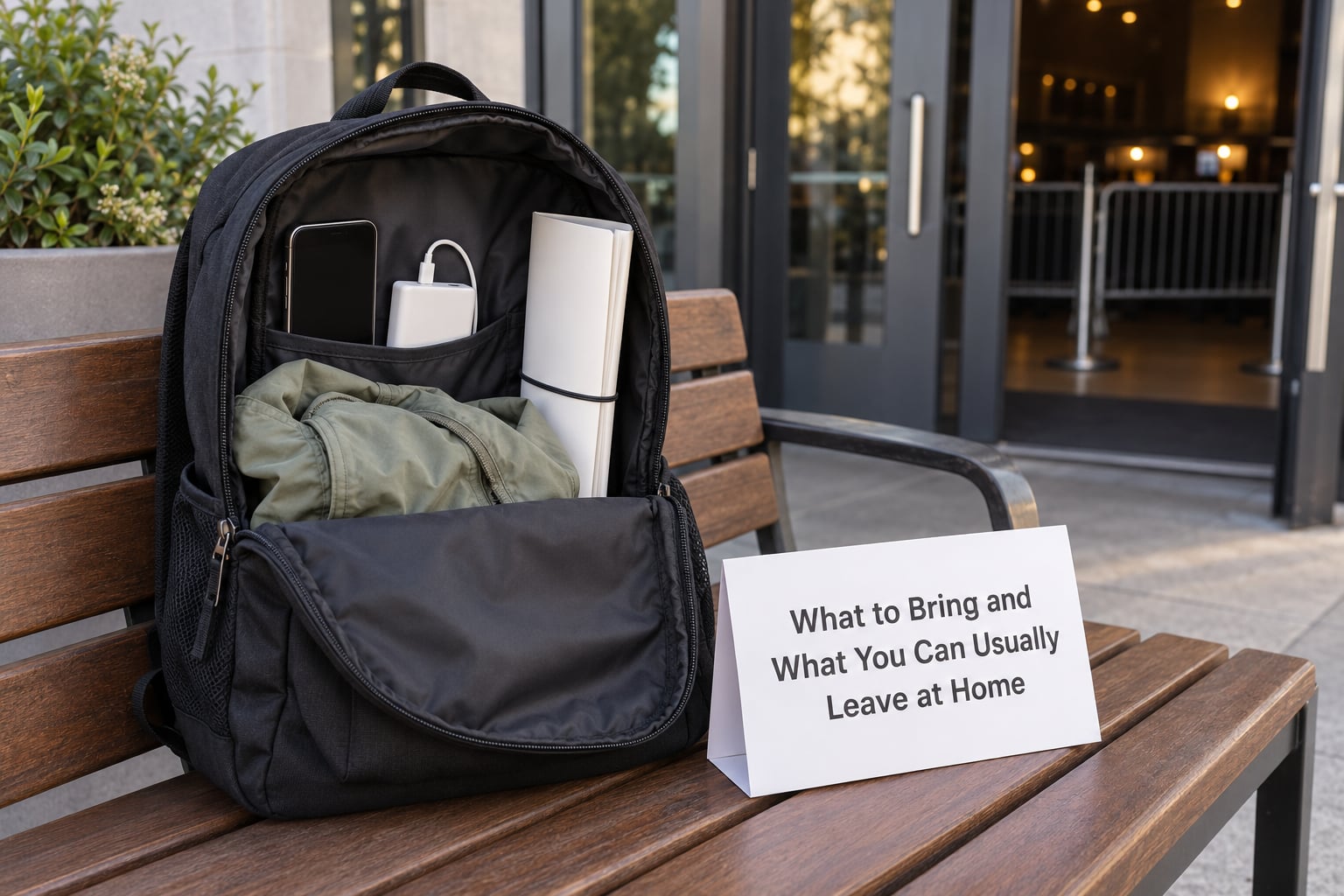
Bring less than you think. Venues restrict what comes in, and most arenas have a published policy you should read before you pack.
A short packing list covers almost every arena:
- Photo identification, and your ticket confirmation on your phone
- A payment method for merch and concessions
- A fully charged phone and a portable charger if you have one
- Comfortable shoes, which matters more than you expect on arena stairs
- A light layer, because arenas get warm once a few thousand people are inside
- Ear protection if you are sensitive to loud crowd noise
Large backpacks, outside food and drink, and professional camera gear are the items most often refused. Some venues allow clear bags only. If you plan to bring a sign, check whether poster board is permitted and pick up a marker that is not permanent.
Leave at home anything bulky you cannot carry through a crowd quickly, and leave the valuables in the car rather than in an unattended bag. Do not bring a large bag of merchandise back into the arena after the show either; that queue does not move with a bag.
How to Make the Most of Your First Live Wrestling Show
Learn who is advertised. Ten minutes on the promotion’s YouTube channel or recaps page tells you which feuds are live, who the champion is and why two people are arguing. You will get far more out of the story when the names mean something.
Stay for the full card. The main event is worth it, but the undercard often contains the best wrestling of the night, and leaving early is the most common first-timer regret.
Put the phone down for the matches themselves. The crowd around you is one of the best parts of the experience and you cannot feel it through a screen.
Respect the performers and the other fans. Independent wrestlers often work a full week of shows for modest pay, and the crowd response is most of what they take away from a tough night. Applause travels well.
If you go to a small promotion, tell people about it afterwards. Review sites, social posts and word of mouth are how independent wrestling survives, and a first-timer review from an honest perspective is worth more than a hype thread.
After the bell, spend a few minutes on your phone for photos while the energy is still high, then look for the wrestlers. Many stay at ringside or by the merch table for a while. Ask, wait your turn, and accept a polite no quickly.
Finally, plan a second show before you leave. First shows are often good but occasionally confusing, and the second time you will catch half of what you missed.
Frequently Asked Questions
How early should I arrive before a live wrestling show?
Aim for 60 to 90 minutes before the advertised start time, and earlier if you want merchandise or ringside. Doors opening is not the start of the show, so buying a ticket for a 7pm event does not mean arriving at 7pm. The extra time covers security screening, finding your section, buying a shirt and eating before the first match.
Do I need to know the wrestlers before going to my first live show?
You do not need to, and nobody will check. Knowing who is advertised and why two of them are arguing just makes the story easier to follow. Ten minutes of recaps on the promotion’s own channel is enough. A lot of first-timers are long-time television fans who have never watched the same promotion every week.
Can I bring signs, photos, or a camera to professional wrestling?
It depends on the promotion and the venue. Many major events restrict hard signs and allow poster board with thin paper, while independent shows are usually more relaxed. Phones are fine for photos, but filming every match annoys the people around you and some venues limit recording at certain moments. Always check the event rules page before the day.
Are children welcome at live wrestling shows?
Most main-brand and family-friendly promotions are fine for older children, though the loud entrances, crowd language and adult storylines vary. Independent promotions differ, so check what the show is known for. Bring ear protection for younger kids and pick seats away from the loudest sections. A first show is often a memory children keep for years.
What happens if the matches do not run in the advertised order?
The advertised card is a plan, not a guarantee. Talent gets held back, injuries happen on the day, promos get cut for time, and a bout can be replaced at short notice. The main event almost always still runs. Treat the running order as a rough guide and enjoy the matches that actually happen rather than the ones you planned around.
Should I choose a major wrestling event or an independent show for my first time?
A major show gives you the full production, a big crowd and a longer card, and it costs more. An independent or regional show is cheaper, the room is smaller, the wrestlers are closer and autographs are far easier. If your goal is the atmosphere and being near the action, a local show is a strong first choice. If you want a spectacle, go big.
Conclusion
A first live wrestling show is a straightforward night out once you know the shape of it. Check the event page for the doors time and the venue rules, buy the ticket from the promotion where you can, and plan to be there an hour before the first match.
Learn who is advertised, buy your shirt early, use the intermission for the bathroom and the food queue, and stay through the main event. Cheer for whoever you like, keep the phone in your pocket during matches, and do not worry about going alone. Then expect to book a second show before you get home.