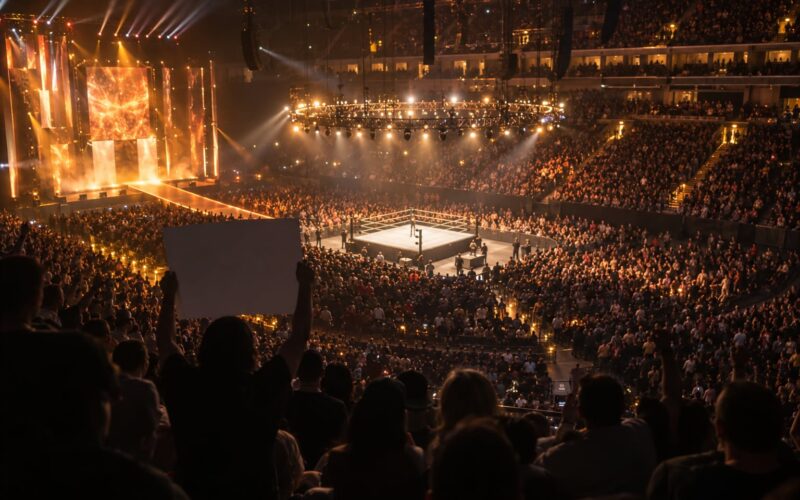
If you want to know how to get a sign on TV at a wrestling event, the honest answer is that nobody can promise it. Camera operators scan the crowd live and pick whatever reads fastest and cleanest on the lens. You can improve your odds a lot, though, by knowing the venue rules, making a sign that reads in two seconds, and sitting where the lens already is. Most of the work happens before the doors open.
The good news is that organic hand-made signs do get picked up. A poster on the WrestlingFigs forum held a VISCERA RULES sign at a SmackDown house event, forgot about it, and found it years later in a RAW Magazine spread. Their line was that it took them years to finally get on TV. Plan for a highlight, not a guarantee.
This guide covers the practical version: what to bring, how to build the sign, where to stand, when to raise it, and what to do if security takes it away.
Table of Contents
- What You Need
- How to Get a Sign on TV at a Wrestling Event: Step by Step
- 1. Check the Venue and Broadcast Rules
- 2. Make a Sign Cameras Can Read Instantly
- 3. Choose a Message That Fits the Moment
- 4. Position Yourself Where the Camera Can See You
- 5. Hold It Up Without Interrupting the Event
- 6. Have a Backup Plan for a Missed Shot
- Common Mistakes
- Frequently Asked Questions
- What size sign should I bring to a wrestling event?
- Can I bring any sign to a televised wrestling show?
- When is the best time to hold up a sign on TV?
- What wording is most likely to be readable on television?
- Where should I sit if I want my sign on camera?
- Will my sign definitely be shown during the broadcast?
- Conclusion
What You Need
You need very little, and most of it costs almost nothing if you have a printer or a pack of markers already at home.
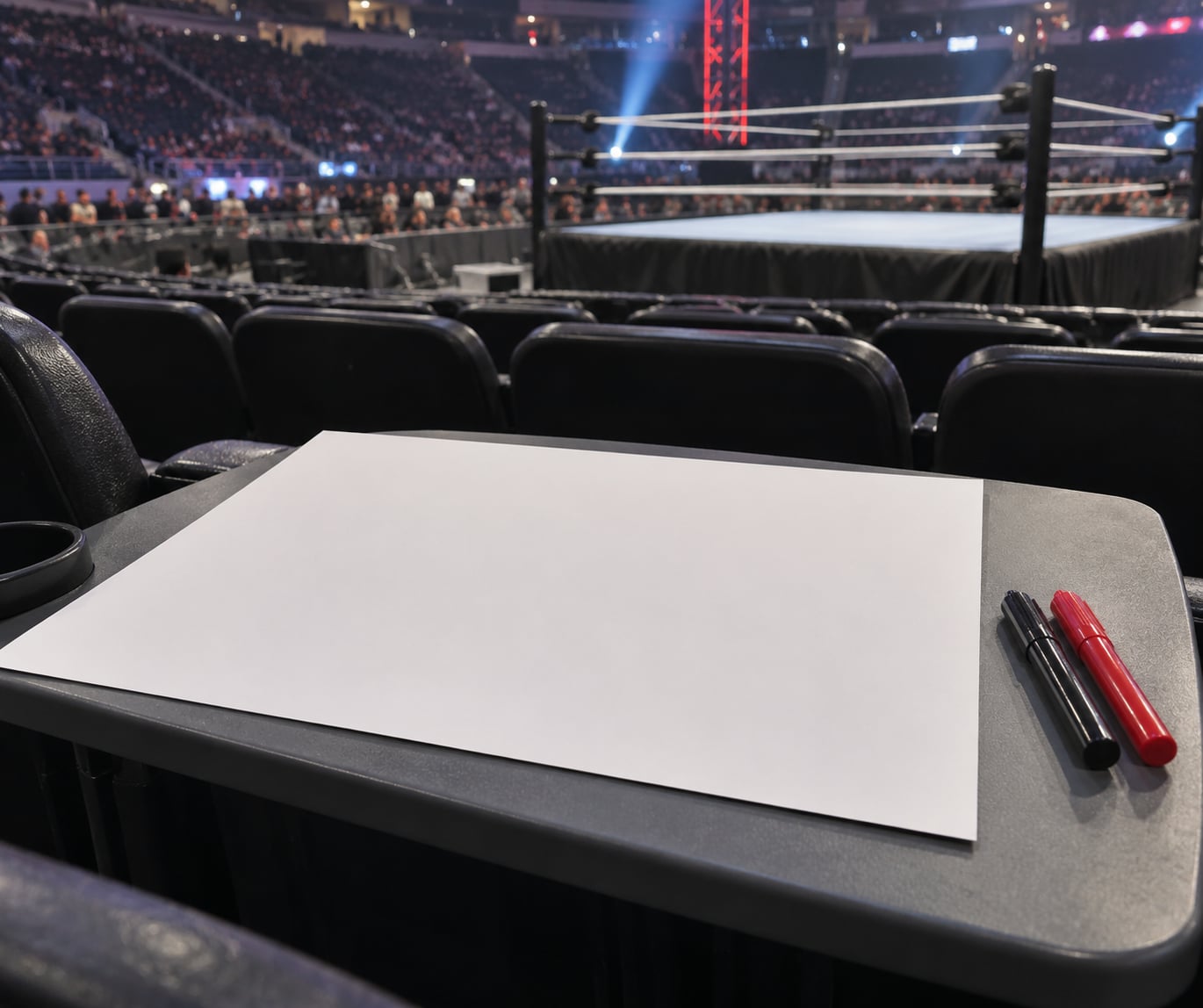
- A backing board. Flat poster board from a craft store is the standard. It is light enough to hold for two hours and rigid enough to keep the letters straight. Foam core is stiffer and more professional, but it is heavier and you can get stopped at the door for it.
- A thick permanent marker. A wide-tip Sharpie or a paint marker. Thin markers disappear at broadcast distance, and that is the single most common reason a good message never made the cut.
- A short message. Three or four words maximum. The lens gives your sign about a second and a half.
- Two colors minimum. One for the letters, one for the background or border. Contrast is what makes a sign readable from thirty feet away.
- A backup message. Bring a second small sign you can hold under the first one. If security blanks out your main message, or a wrestler in your section blocks the shot, you have a second card.
- A way to keep it flat. A cardboard backing sleeve or a poster tube for travel. Poster board bent in a car seat is a bent sign on the night.
What you do not need is anything oversized, glowy, or made of anything that could be read as a weapon-shaped object. Props get taken at the door and you will not get them back.
How to Get a Sign on TV at a Wrestling Event: Step by Step
1. Check the Venue and Broadcast Rules
Start on the arena’s own page, not on a forum. Every venue publishes a prohibited-items list, and the sign rules sit on it. Check it in the week before you travel, not at the gate.
Look for three things: the maximum sign size, the quantity limit, and the content restrictions. Most venues cap signs at a size that does not cover the face of the person seated behind you, and most limit you to one or two. Content rules are near-universal across promotions: no profanity, no obscenity, no competitor promotion names, no political content, and no trademarked logos you did not buy.
Every promotion also publishes a code of conduct, usually linked from the same page. Read the sign section specifically. Policies differ by company and they change between buildings, which is why the venue list beats any general rule of thumb.
2. Make a Sign Cameras Can Read Instantly
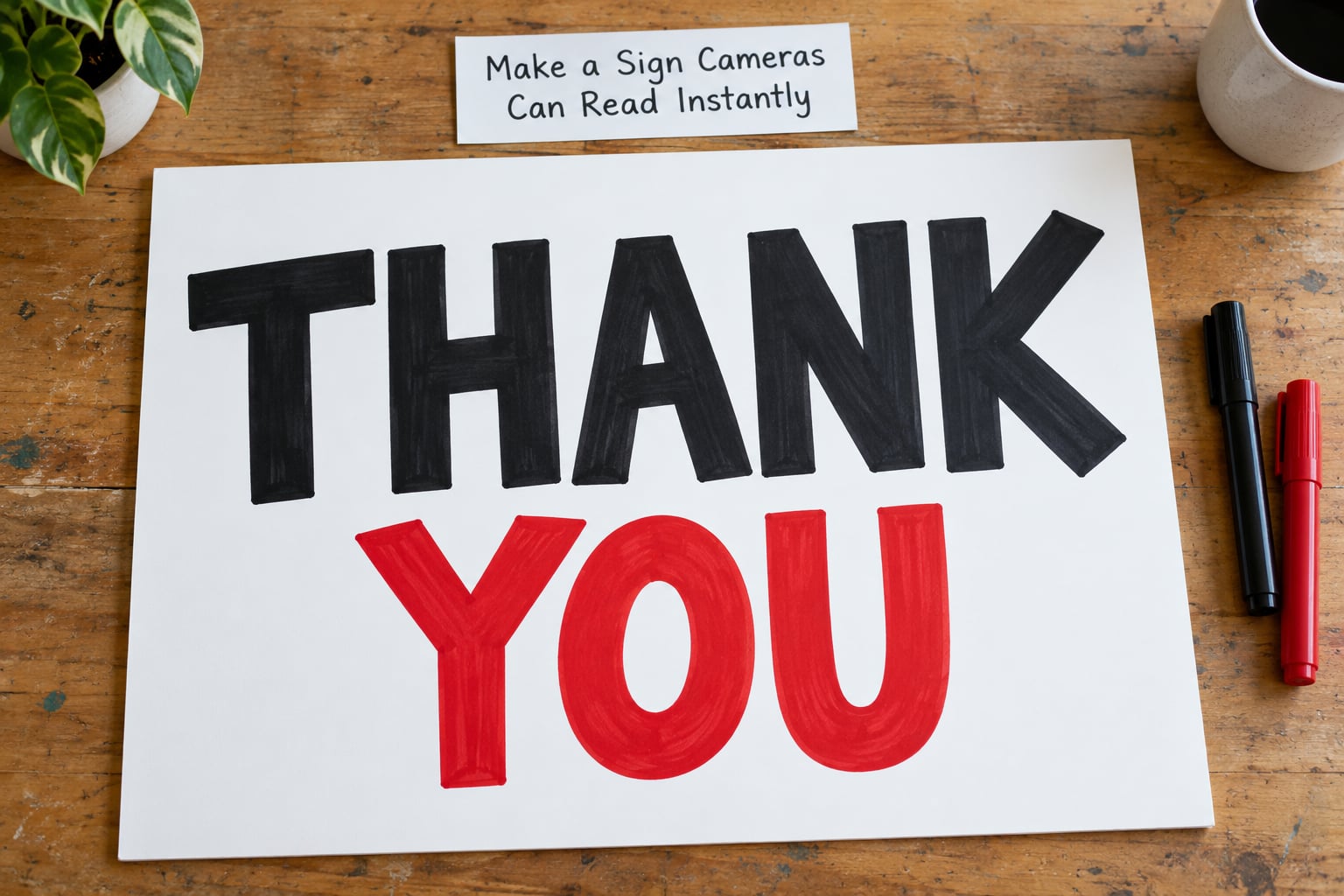
Block letters, one message, high contrast, and nothing else on the board. If the sign needs a second read, it will not get a second read.
A useful test: shrink the message to about a quarter of the board and hold it at arm’s length. If you can still make it out, a broadcast lens at forty feet will. Thick strokes, wide spacing between letters, and a border around the edge all help the lens separate your sign from the crowd behind it.
Skip anything that needs a pun resolved in your head. Signs that made television history worked because the whole message landed in one glance: Trish the Dish, read out loud on commentary at No Way Out 2001, and Where it Reigns, It Bores at Payback, which the broadcast digitally altered.
3. Choose a Message That Fits the Moment
A generic thank-you sign competes with forty other thank-you signs. A message tied to something happening in front of you has a better chance because the camera has a reason to be on that part of the crowd.
Entrances, promo segments, and the beat right after a big finish are the moments when the lens sweeps the audience instead of staying tight on the ring. A short chant-style line works in those windows because the crowd around you is already moving and your sign reads as part of the reaction.
Keep it about the show. Messages that insult a wrestler, argue about another company, or explain a long backstory get pulled from the broadcast or the edit simply never uses the shot.
4. Position Yourself Where the Camera Can See You
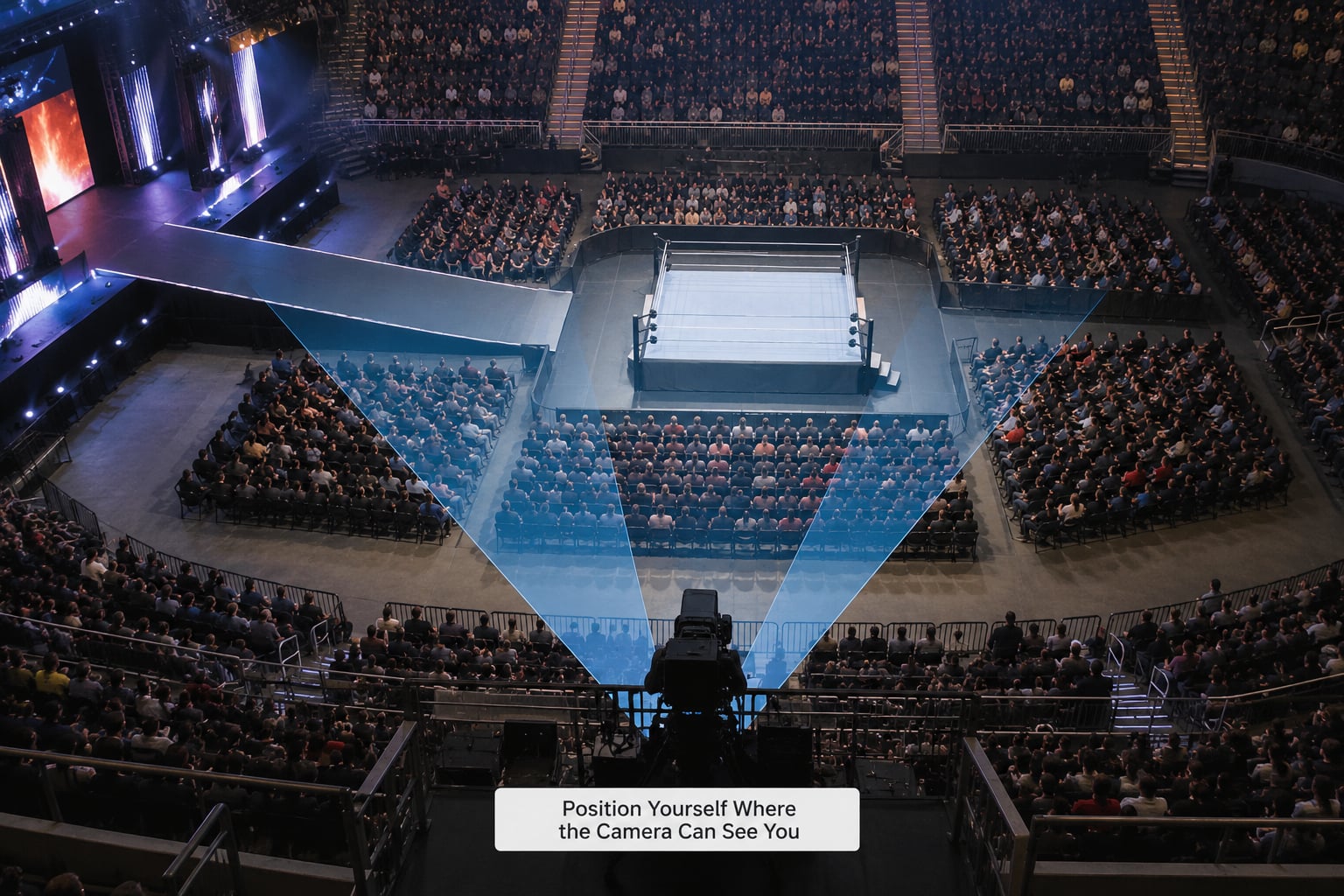
The hard camera is the main lens on the opposite side of the arena, and it is what you see on television. It shoots the ring from one fixed spot and pans the crowd when production wants reactions.
Camera-side floor seats, on the same side as that lens, give you the best odds in the building. You are already in the frame’s natural field, you are close enough that your sign fills a decent slice of screen, and you are near the barricade where production often looks for reactions. Front row behind the hard camera is solid too, but a fan sitting directly under the lens in the best seat of the house is not always the best spot. Being visible matters more than being close.
For entrances, the ramp matters more than your seat. Fans on the ramp and the aisle beside it appear in entrance shots. If your whole reason for the sign is one specific wrestler, position yourself for the entrance rather than the match.
5. Hold It Up Without Interrupting the Event
Hold the sign up during the crowd reaction windows, not during the action. Raise it as the camera comes off the ring, keep it high and still, and lower it before the next bell.
Two habits help. Move the sign slowly, since a sign waving across the lens reads as a smear rather than a message. And never lift it while someone behind you is trying to watch, and never turn your back on the ring for more than a moment. Fans who block the show get moved, and rightly.
There is a real payoff when a wrestler notices the sign. John Cena has held up a fan sign the wrong way and demanded a response in return, and Drew McIntyre points at signs he can see on the hard camera. When a wrestler reacts, production usually stays on the shot longer, which is the closest thing to a guarantee in this whole process.
6. Have a Backup Plan for a Missed Shot
If nothing happens, that is normal. One show is a single sample of a very low-probability event, and the same person can miss ten times and then hit on the eleventh.
Switch seats during a break if you can, because the hard camera pans a different section after each major angle. Bring out the second sign for the next entrance. Pay attention to where the camera actually lingered earlier in the night and move toward that part of the bowl. Most of all, stay for the whole card. The camera operators cannot pick a sign from a seat nobody is sitting in.
If security takes your sign at the door, do not argue with the policy. Ask politely what the problem was, because sometimes it is simply size, and the answer tells you what to change next time. Confiscated signs usually are not returned, so treat the sign as the cost of the ticket rather than something you own. Small boards that stay below shoulder height of the person behind you are the least likely to draw attention.
Common Mistakes
- A paragraph on a poster board. A long message reads as a colored rectangle from the lens. Fix: three or four words, and if you want context, put it on the back of the board.
- Thin markers on white poster board. Light-on-light disappears at distance and in a bright arena. Fix: dark ink, or white and yellow ink on black board.
- Skipping the venue list. Fans get stopped at the door for rules that were published three weeks earlier. Fix: read the arena’s prohibited-items page the week before you travel.
- Assuming the promotion plants every sign. Some promotions do place official branded signs on seats before doors open at televised shows, a practice fans have discussed for years. That does not mean organic signs never air, and it does not mean yours will.
- Timing the sign wrong. Holding it up through a bell or a promo does nothing. Fix: react with the crowd, which is when the camera is looking for faces.
- Blocking the person behind you. An oversized sign gets you moved or removed. Fix: check the size against the seat in front of you, not against yourself.
- Leaning over the barricade or aisle. Fans who move into the walkway during a live segment get escorted out, and the sign goes with them. Fix: stay in your seat.
- Putting a competitor’s name or a logo on it. It is the fastest way to have the sign edited out of the broadcast. Fix: keep the message about the show you are at.
A couple of quick reminders before you go. Check whether the show you are buying is even televised. Raw and SmackDown tapings, Dynamite, Rampage, and premium live events air; most house shows are recorded and may or may not ever be shown, so your chance of a crowd shot is close to zero in a building that never makes the cut. On independent shows, sign rules are usually looser and the crowd is smaller, which actually works in your favour because fewer signs compete for the same lens.
Bring a backup message, sit camera-side if you can, and do not leave after the undercard. The main event has more breaks, more crowd shots, and more wrestler reactions than anything before it.
Frequently Asked Questions
What size sign should I bring to a wrestling event?
Most venues cap signs at a size that does not block the view of the person seated behind you, which is usually smaller than the sheet of poster board people expect. Check the specific arena’s prohibited-items list before you travel, since limits vary by building and by promotion. A board that fits comfortably inside the seat in front of you is almost always safe, and staying below head height of the row behind you avoids arguments in the section.
Can I bring any sign to a televised wrestling show?
Hand-made signs are generally allowed at most televised wrestling shows, but the content is restricted everywhere. No profanity, no obscenity, no competitor promotion names, no political messages, and no trademarked logos you did not purchase. Rules also cover size and how many signs you may carry. Arenas publish their own prohibited-items list, so read that page rather than relying on general advice about wrestling crowds.
When is the best time to hold up a sign on TV?
Hold your sign up during the crowd reaction windows rather than during the action. Entrances, promo segments, the reveal of a result, and the beat right after a big finish are when production pans the audience instead of staying tight on the ring. Raise the sign as the camera comes off the ring, keep it high and still, and lower it before the next bell so you are not blocking the show.
What wording is most likely to be readable on television?
Short, high-contrast messages with thick block letters work best, ideally three or four words on a plain background with a border. Signs that made television history landed in one glance, which is the whole test: Trish the Dish and Where it Reigns, It Bores both read instantly. Test your design by shrinking it and holding it at arm’s length before you leave the house.
Where should I sit if I want my sign on camera?
Camera-side floor seats, on the same side as the main hard camera, give you the best odds in the building because you are already inside the frame’s natural field. Fans on the entrance ramp and the adjacent aisle appear in entrance shots, which is the better choice if your sign is aimed at one wrestler. Being visible on the broadcast matters more than being close to the ring.
Will my sign definitely be shown during the broadcast?
No. Camera operators pick signs live during the show, with no request process and no guarantee, so treat it as a highlight rather than a plan. Organic hand-made signs do get picked up, but it can take many attempts and a lot of shows. Sit camera-side, keep the message readable, stay for the whole card, and bring a second sign in case the first one does not land.
Conclusion
Confirm the arena’s sign rules before you leave home, make one short high-contrast message in thick block letters, and pick a camera-side seat you can stay in for the whole card. That is the plan. Everything after that is luck, and honestly, the odds are better than most people expect. Check the venue policy on October 2026 and take a board you would be happy to see on screen.