Learning how to get a wrestler’s autograph at a convention comes down to three things: find the signing on the published schedule, bring an item the wrestler will actually sign, and be in the right line at the right time. Most tables run first come, first served for a fixed window, and the popular names are gone hours before the session officially ends.
None of that is complicated, but almost every mistake people make comes from skipping the preparation. Someone shows up at the wrong table an hour late, holds a stack of eight items, and then watches a wrestler sign three things before the line is closed. Another shows up with a dry-erase marker and a soft paper photo and loses the signature to a thumbprint before reaching the car.
I’ve been to enough signings to know the pattern: the fans who walk away with what they came for are the ones who treated it like a scheduled errand, not a lucky encounter. A whole day at a convention can be planned down to the hour, and this guide walks through that plan from the packing list to the sleeve you put the signed item back into.
Table of Contents
- What You Need
- Step-by-Step
- Check the Wrestler’s Schedule and Signing Location
- Prepare an Item the Wrestler Can Sign
- Choose the Best Time to Join the Line
- Follow Booth and Signing Etiquette
- Ask for an Autograph on the Right Part of the Item
- Protect and Verify the Autograph
- Common Mistakes
- Frequently Asked Questions
- Do I need a ticket to get a wrestler’s autograph at a convention?
- What is the best item to bring for a wrestler’s autograph?
- How early should I arrive before a convention autograph signing?
- Can I bring my own marker for a wrestler’s autograph?
- Can I ask a wrestler to sign a specific message or personalize an item?
- What to Do First at Your Next Signing
What You Need
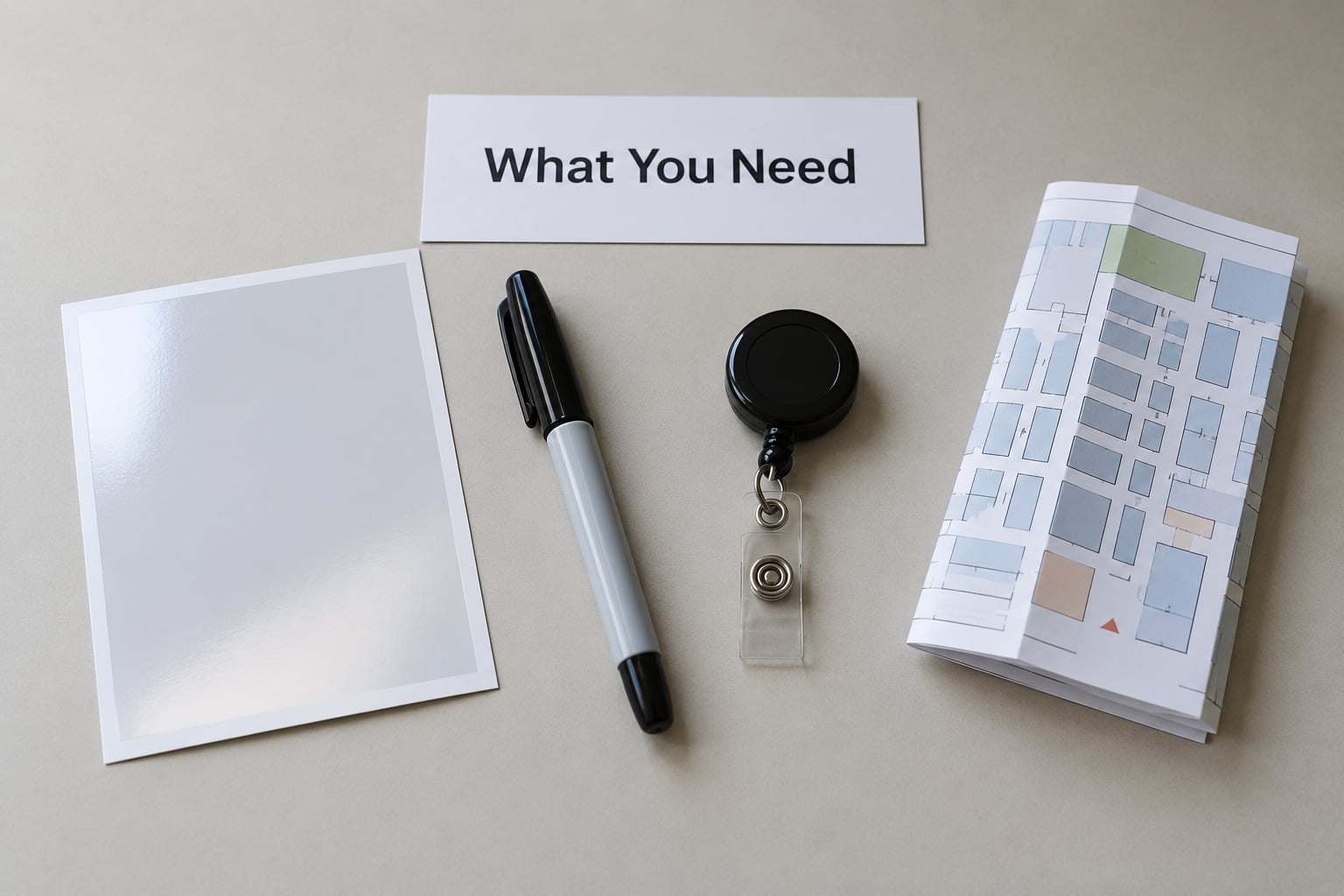
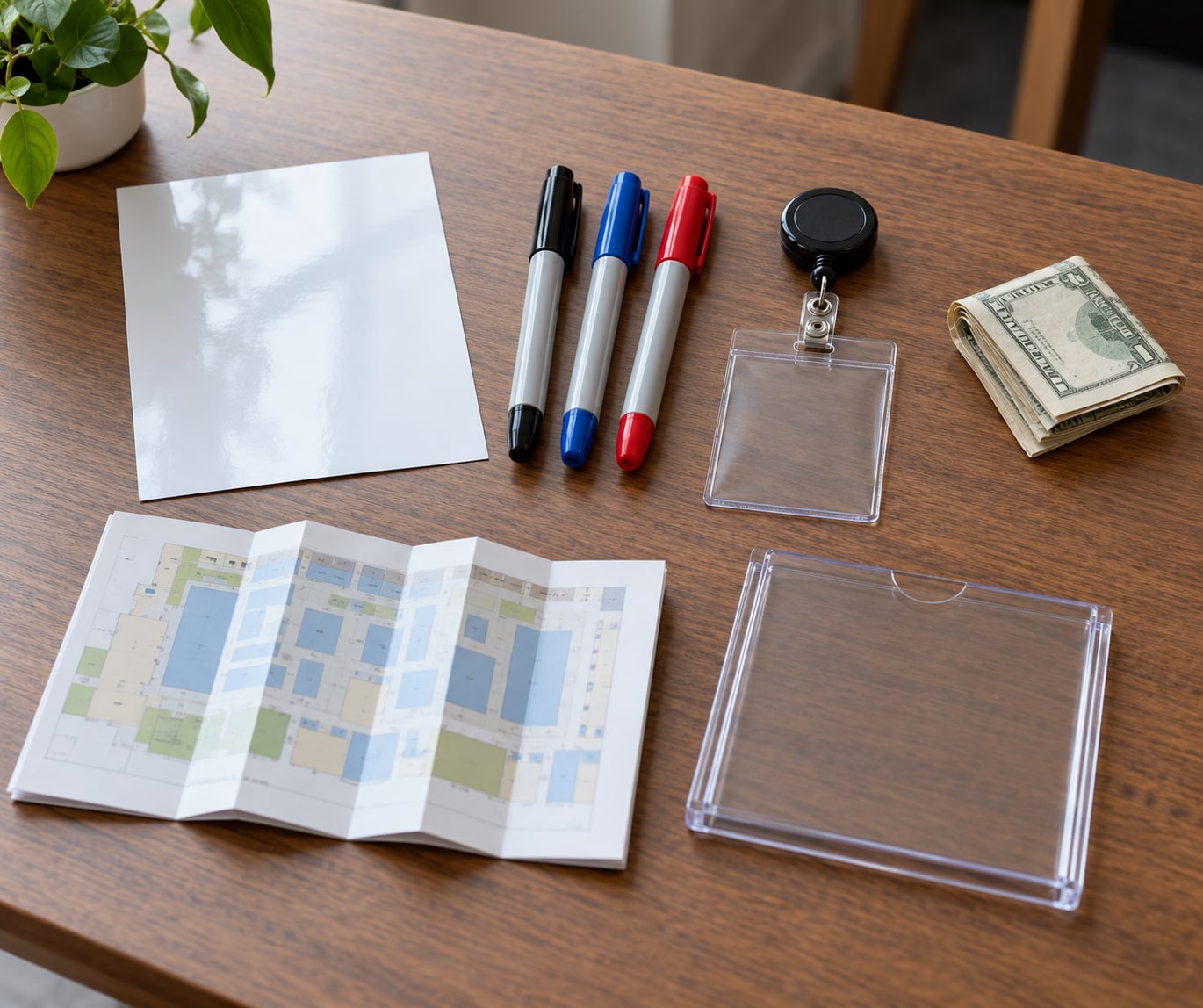
This is the kit that covers almost every signing table. Pack it the night before and keep it in one bag so you are not digging through a booth at 8am.
- One or two items to sign. A glossy 8×10 photo is the most portable option, but a card, a poster in a protective sleeve, or a piece of merchandise you already own all work.
- Two capped permanent markers. One in hand, one spare in the bag, because a dried-out marker at the table is a wasted trip.
- A rigid protector or a clean plastic sleeve for the photo so it does not bend while you are waiting in line.
- Cash in small bills. Many tables do not take cards, and the fee, if there is one, is usually settled right at the table.
- Your convention badge plus any wristband or pre-order confirmation for that specific signing.
- The printed schedule or the convention app, with the signing window and booth location marked.
- Photo ID if the signing is ticketed, pre-ordered, or age-restricted.
A budget note worth making: the cost of a signature varies widely by wrestler, promotion and convention, so carry more small bills than you think you need. Fan communities consistently report that some wrestlers sign at their table at no charge, some charge a flat table fee, and some only sign merchandise bought on the spot.
Step-by-Step
Check the Wrestler’s Schedule and Signing Location
Start on the convention’s official site, because the schedule posted online is the version the organizers are actually working from. Most events publish a grid of names, booth numbers and time windows, and the printed version on site is where late changes show up.
Booths move. A wrestler listed in the main hall on Friday can be relocated for a Saturday session, especially when a hall hits capacity or a celebrity-level name needs a larger space. Check the board near the entrance and the app when you arrive, and re-check before you walk across the venue.
Look for three details while you are on the schedule: whether a wristband or pre-order is required, whether the session has a hard item cap, and whether a photo op is bundled in. Fans on r/SquaredCircle ask repeatedly whether a photo op pre-order shortens the line, and the honest answer is that it depends on the table. Some booths move pre-order holders through a separate line, and some treat them identically to everyone else.
Ask at the information desk or the booth host. Staff will tell you plainly whether a name is signing today, in which hall, and whether the line is already forming. That thirty-second question saves an hour of wandering.
Prepare an Item the Wrestler Can Sign
Bring one good item, not a pile. Collectors report that asking for two or three signatures in one sitting is normal, but carrying a stack of ten changes the interaction into a negotiation, and tables that would happily sign a photo will pass on a bulky board game box or a full-size poster on a board.
Glossy 8×10 photos are the default for a reason. They are flat, quick to sign, easy to slip into a sleeve, and they show well next to others in a collection. Leave a blank margin rather than pointing at a tiny corner. Trading cards, foil cards and CD-sized items are also common, and a marker will not adhere to every foil surface, so test the surface on a duplicate if you have one.
For posters and prints, always sign inside a protective sleeve. Never hand over a bare poster; a marker bleed-through ruins it and the table cannot sign around damage.
On markers, use a permanent, oil-based, quick-drying style with a fine or medium tip. Water-based and erasable markers can rub off inside a jacket pocket within an hour, and thin tips fade on glossy surfaces where the ink sits on top rather than soaking in. Cap both pens before you reach the table, because a signed photo with a cap set down on it leaves a ring.
Choose the Best Time to Join the Line
Aim for the window when the line is shortest, and for the biggest names that means arriving before the doors open. Main-roster and hall-of-famer signings regularly draw multi-hour waits, and those queues are usually formed before the exhibit hall opens rather than after.
A reasonable working rule: allow 60 to 90 minutes ahead of the listed start for a headline name, 30 to 45 minutes for a well-known supporting wrestler, and 15 to 30 minutes for an independent or regional talent. Independent and local promotions are described again and again as the easy part of the weekend, both for the wait and for the interaction itself.
Mid-session breaks are the other window worth knowing. Signings pause for meals, panel appearances, and matches, and a table that was hopeless at 11am can empty out completely after lunch. The catch is that the break length is not published in advance.
Ask the booth host directly whether there is a second session or a later cut-off. Some tables will run a short second wave for people who were in line when the first window closed, and knowing that exists lets you plan the rest of your day instead of giving up on the whole list.
Worth knowing: a session ending early is normal, not a sign that you did something wrong. Tables close when the item cap is hit, when the next scheduled appearance starts, or when the promoter’s set time arrives. The staff announce it from the front of the queue, and they will sometimes take names for a later return slot. If that happens, keep your item, note the booth, and come back rather than arguing at the table. If a wrestler no-shows entirely, the convention usually posts a credit or a rescheduled appearance, so check the help desk and the official social accounts before you pack up for the day.
Follow Booth and Signing Etiquette
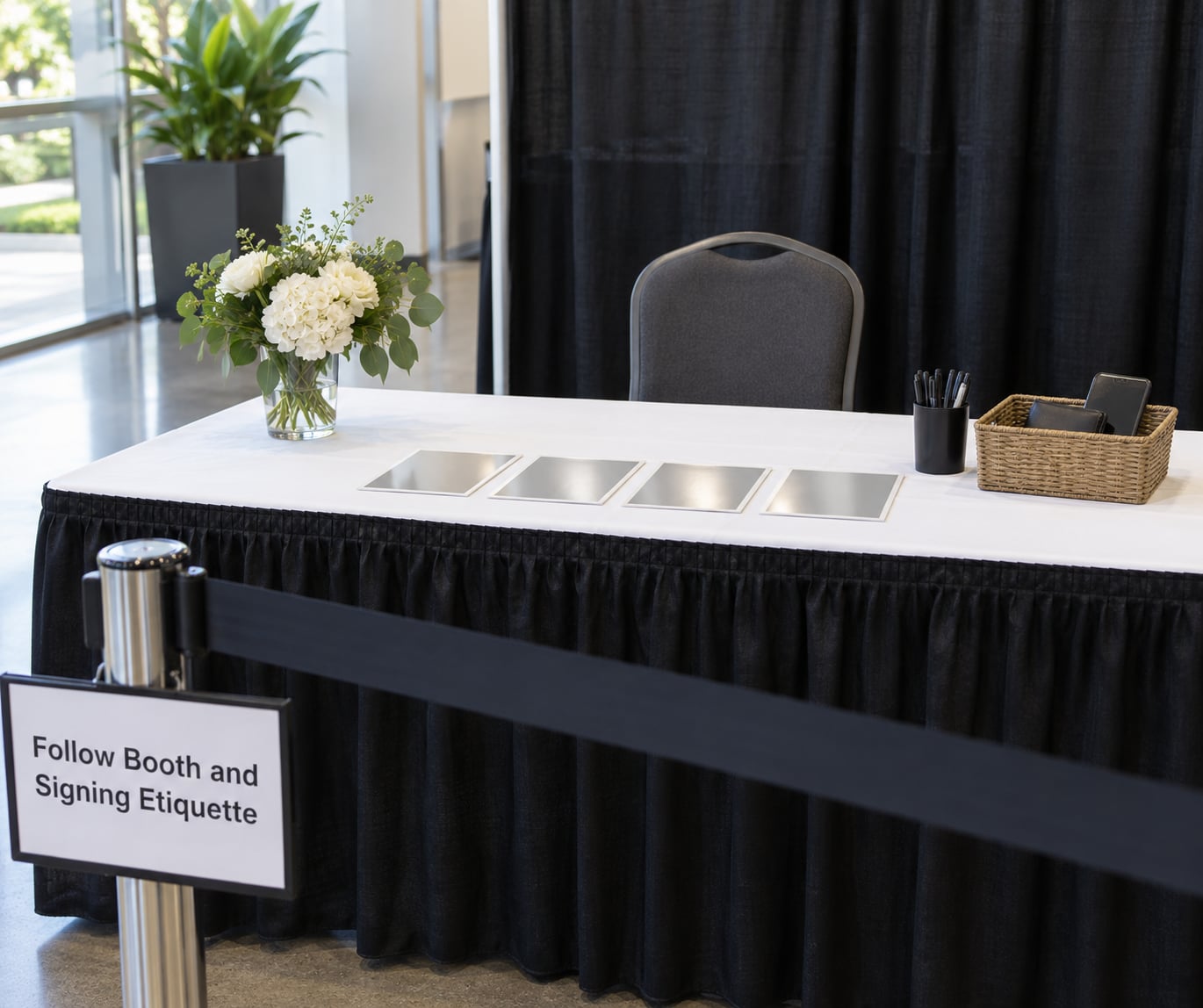
Presentation matters more than people expect. The most repeated advice across r/SquaredCircle signings threads is unglamorous and correct: shower, use deodorant, wear clean clothes, and show up looking like a person you would want to stand next to in a photograph.
Then keep the interaction short. Wait in the designated line, not beside it, and never reach past the person in front of you. “Do not hold up the line” is the single most repeated piece of etiquette advice in those communities, and it is also the fastest way to get disliked by staff and the other people behind you.
The accepted script is short and worth learning by heart. Greet with a simple “How are you doing?”, ask what you are asking for, present one item at a time, and close with a genuine thank you. A handshake is welcome when it is offered, not demanded, and it is fine to tell them it is nice to meet you in person.
Phones are the most common source of friction. Many tables operate a no-photos or no-phone policy because of the crowd, so check with the booth staff rather than asking the wrestler. When selfies are allowed, they are usually fine at the same rate as the autograph, and a table that says no is not negotiable.
Bring the item to the table already out of its sleeve and already pointed at a blank area. Fumbling with plastic wrap while a queue of twenty people waits is the thing everyone else in line is watching.
Ask for an Autograph on the Right Part of the Item
Point before you hand it over. A quick “anywhere good?” or a finger held just above a blank white margin gets a clean signature in a predictable spot, and it avoids the awkward outcome of a signature landing across printed text or half off the edge of a card.
Keep your own hands clear of the signing surface. Resting a palm on a photo while the marker moves is the fastest route to a smudge, and it is also the gesture that reads as pushy from the other side of the table.
If you want a personalized inscription, ask once, plainly, and keep it short. “Could you add a note to my kid, he watches you every week” lands far better than a paragraph read out loud, and it gives the wrestler something to write that is not already on the item. Have the recipient’s spelling and correct name ready, written on a scrap of paper if the name is unusual.
If the table sells a commemorative card, sign that card first, before the main item. It is the natural closing move and it produces a dated piece that reads as part of the event rather than an afterthought.
Protect and Verify the Autograph
Check the signature while you are still standing there. Is it complete, legible, and on the surface you wanted? Permanent marker on a glossy photo will be dry enough to handle in about a minute, so a quick inspection costs nothing. If it smudged or ran off the edge, ask politely for a redo on the spot, while the marker is still in their hand.
Then protect it for the rest of the day. Do not sandwich a wet signature against another surface and do not slide a signed photo into a tight pocket. Use a rigid acrylic protector, a plastic sleeve, or a clean sheet of card stock with the signed face held flat and something soft, such as a folded t-shirt, on either side of the stack.
Cards and foil cards want a toploader or a penny sleeve inside a binder page. A rolled poster is a bad idea; if you have one, lay it flat or carry it in a tube with tissue between layers. Collectors describe fresh signatures smudging or rubbing off within minutes, almost always because wet ink went into a bag with something pressed against it.
If you bought a photo op or certified authentication card, keep the certificate with the item permanently, not in a separate pocket. Half the value of those pieces is the documentation.
Common Mistakes
Every one of these is avoidable, and most of them show up in signing reports within a week of a bad weekend.
- Arriving when the schedule says the signing starts. The published time is when the wrestler sits down, not when the line forms. Fix: check the schedule the night before, note the booth number, and add a buffer.
- Trusting a schedule that is a week old. Booth moves and shortened sessions are common. Fix: re-check the board or app on site before you walk over.
- Bringing ten items. You will get fewer signatures and hold up the line. Fix: one or two good items, ideally already protected.
- Using a water-based or erasable marker. The signature fades and you cannot fix it later. Fix: permanent, oil-based, capped, plus a spare.
- Forgetting cash. Card readers fail, and tables that take cash only are the norm. Fix: small bills, kept in a front pocket.
- Skipping the wristband or pre-order step. The line moves past you and nobody apologizes. Fix: sort the wristband and any add-ons the night before.
- Cutting in or reaching past the person ahead of you. This is the fastest route to a bad reputation with staff and fans. Fix: stay in the marked line even if it looks disorganized.
- Talking for a minute per item. One short greeting, one request, one thank you. Fix: decide your words in line, not at the table.
- Asking for a selfie without checking the policy. Fix: ask the booth staff, not the wrestler, and accept the answer.
- Pocketing a fresh signature straight away. Wet ink plus a warm pocket equals a smudge. Fix: sleeve it flat and let it breathe for a minute.
Two habits separate the people who get what they came for. The first is keeping a simple list of targets with a firm cutoff time for each, so a two-hour line does not quietly eat the whole day. The second is treating the wrestler as a working professional: they are signing all day, and the people who are pleasant about it get more of their attention.
Frequently Asked Questions
Do I need a ticket to get a wrestler’s autograph at a convention?
Sometimes, and the schedule tells you which. Many main signing tables are open to anyone with a general admission badge, while ticketed appearances, premium tables and photo ops require a wristband, a pre-order or an add-on purchased in advance. Buy that wristband the day before, not at the queue, and keep the confirmation on your phone or printed.
What is the best item to bring for a wrestler’s autograph?
A glossy 8×10 photo is the easiest all-round choice: flat, quick to sign, easy to sleeve and simple to display. Trading cards and small memorabilia work well too. Bring one or two items rather than a stack, skip anything large, boxed or rigid, and put posters in a protective sleeve before you hand them over.
How early should I arrive before a convention autograph signing?
Arrive before the hall doors open for a main-event or legend name, and treat the listed start time as when the wrestler sits down rather than when the queue starts. A practical buffer is 60 to 90 minutes for the biggest names, 30 to 45 minutes for a well-known supporting wrestler, and 15 to 30 minutes for an independent talent.
Can I bring my own marker for a wrestler’s autograph?
Usually yes, and plenty of tables expect it. Bring a permanent oil-based marker with a fine or medium tip, capped, plus a spare. Avoid water-based, erasable and paint-style pens, which fade or bead on glossy surfaces. Some tables prefer to use their own markers, so ask the booth host and follow their lead.
Can I ask a wrestler to sign a specific message or personalize an item?
You can, and a short request is usually welcomed. Say it once, plainly, and keep it to a sentence, such as asking for a note to your kid or a dedication on the signing date. Have the correct spelling of any name written down. Do not read out a long speech, and remember that a personalized inscription still follows the table’s own rules.
What to Do First at Your Next Signing
Do this one thing before you leave the house: pull up the signing schedule for the wrestler you want and write down the booth, the window, and whether a wristband is needed. Everything else, the item, the marker, the cash, the early arrival, follows from those three details.
Once you are on site, re-check the schedule board, sort the wristband before the line forms, and keep your interaction to under a minute. That is the whole method behind learning how to get a wrestler’s autograph at a convention, and it works just as well at a big fan fest as it does at a small independent signing in a hotel ballroom.