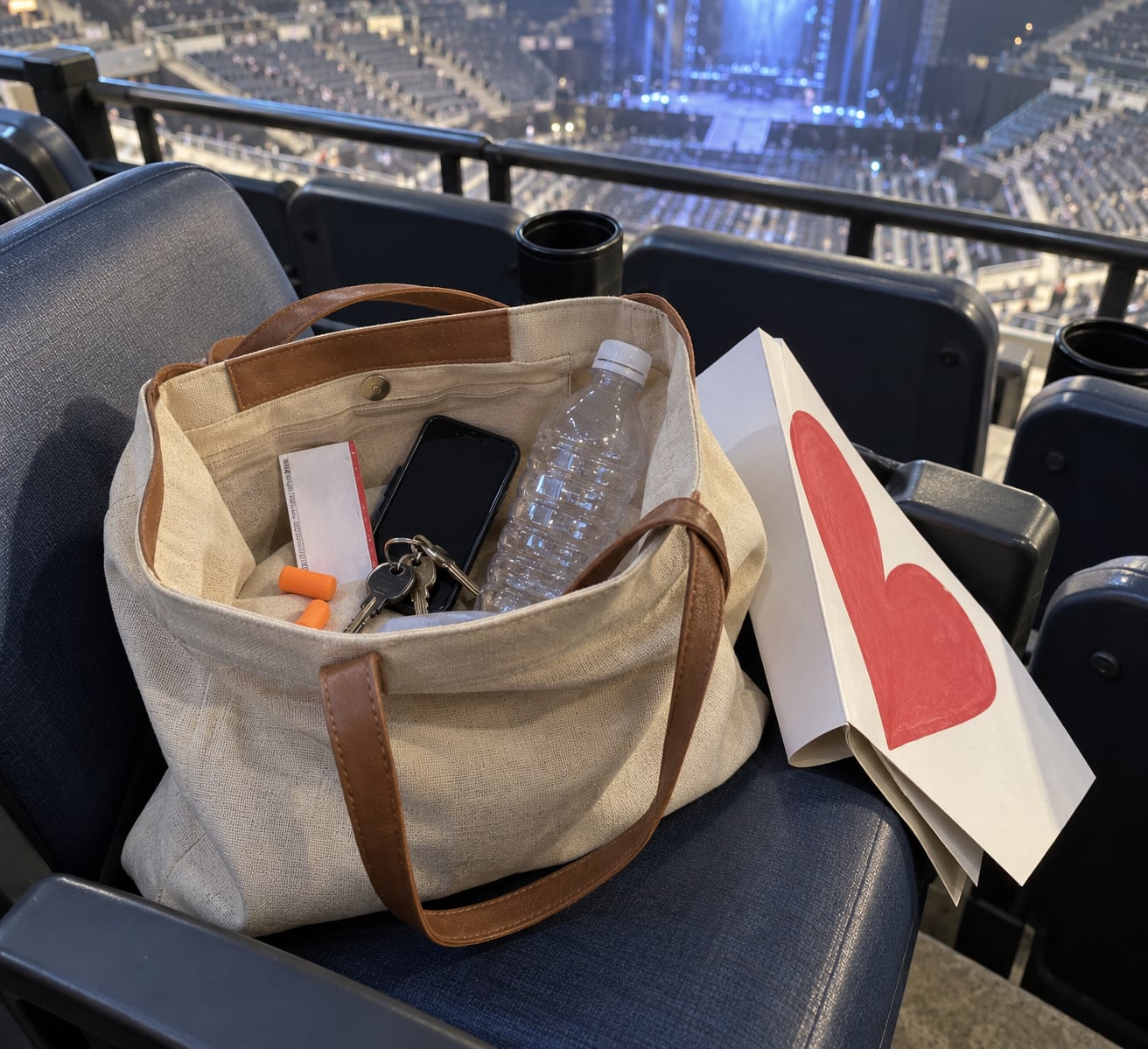
What to bring to a live wrestling event is shorter than most people expect: your ticket on your phone, a photo ID, a small clear bag, ear protection, comfortable shoes and a payment card. Everything beyond that depends on the venue, the promotion and how long you plan to be inside. Bring the wrong bag and you get stuck in a bag-check queue that can eat your dark matches.
I have watched enough first-timers get turned around at the gate to know the list by heart. The mistake is nearly always the same: a normal backpack, a low phone battery and a paper sign rolled up in a wooden stick.
This guide covers weekly TV tapings, stadium shows and small independent cards with the same core list, and it flags the parts that change from venue to venue. Policies shift, so treat every number below as typical and confirm the current version on the venue’s own page before you travel. Last reviewed for 2026.
Table of Contents
- What to Bring to a Live Wrestling Event at a Glance
- Essential: do not leave home without these
- Useful: the difference between surviving and enjoying it
- Venue-dependent: check before you pack
- Optional: only if it matters to you
- 1. Your Ticket or Digital Admission
- 2. A Government-Issued Photo ID
- 3. Your Phone and Portable Charger
- 4. Comfortable Clothing and Shoes
- 5. A Reusable Water Bottle
- 6. Cash and a Small Payment Backup
- 7. A Small Health and Comfort Kit
- 8. Earbuds or a Small Fan for the Queue
- 9. A Light Bag or Clear-Water-Safe Carryall
- 10. Optional Fan Extras
- How to Pack for Different Wrestling Venue Types
- Frequently Asked Questions
- What size clear bag can you bring to a wrestling show?
- Can you bring signs and replica belts to a wrestling event?
- Can you bring food or drinks into a wrestling show?
- Does a 3 year old need a ticket for WWE?
- Is WWE appropriate for an 8 year old?
- How early should you arrive at a wrestling show?
- What to Bring, In One Line
What to Bring to a Live Wrestling Event at a Glance
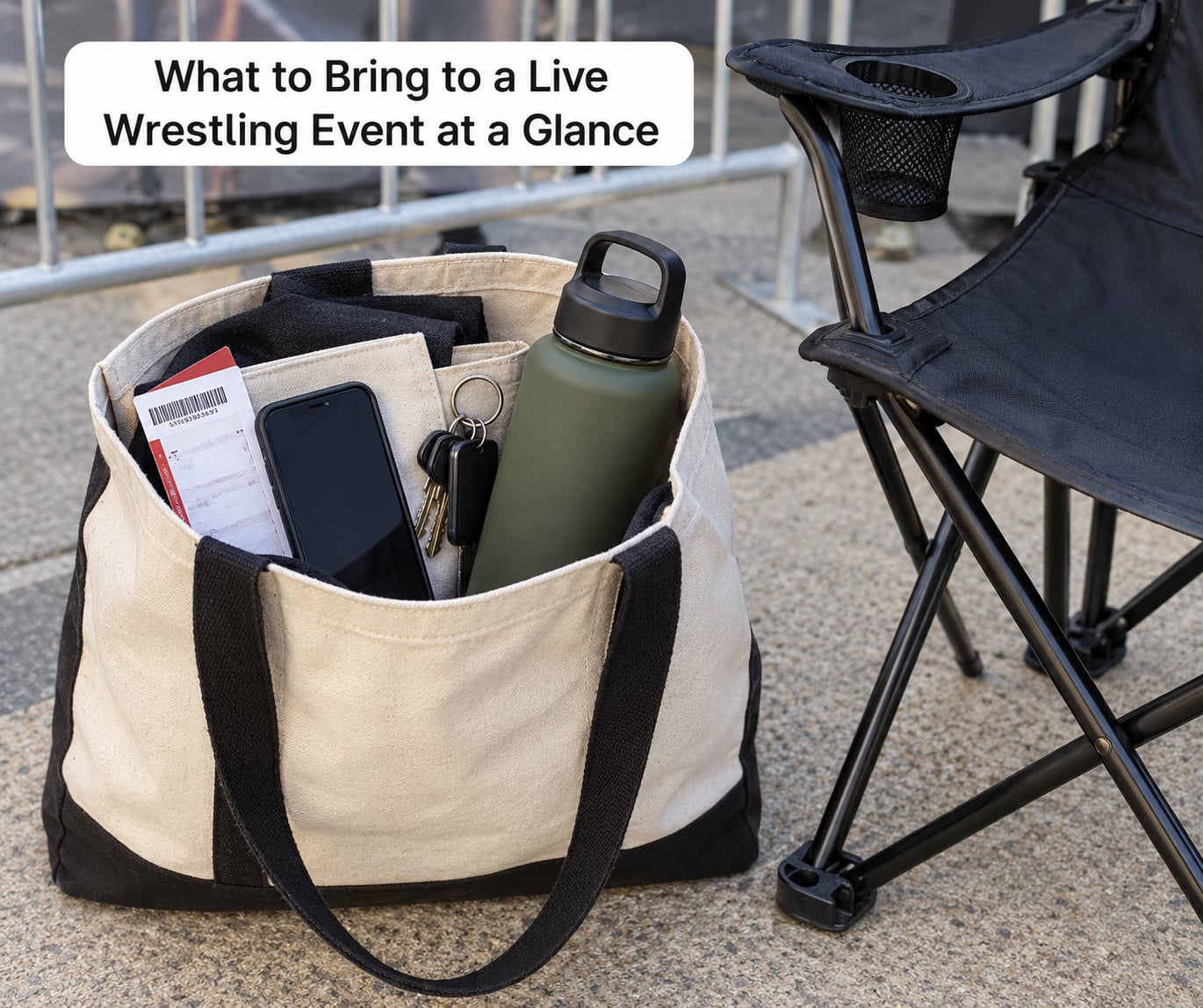
Start with the essentials, then add the useful extras. Groups one and two get you through the door; group three decides whether the night is comfortable.
Essential: do not leave home without these
- Ticket on your phone, screenshot as a backup, plus the order confirmation
- Government-issued photo ID with a matching name
- A compliant clear bag, or a small clutch if you carry no bag at all
- Your phone, charged, with a portable battery if you have one
- A payment card and a small amount of cash
Useful: the difference between surviving and enjoying it
- Foam earplugs or noise-reducing headphones
- Comfortable closed-toe shoes and a light layer for cold concourses
- An empty reusable water bottle
- Blister plasters, tissues and any medication you already use safely
- A paper or cardboard fan sign
Venue-dependent: check before you pack
- Rain poncho or warm layers for outdoor stadium shows
- Camera, binoculars or a hat, depending on the lighting and the rules
- Accessible seating details, a transferrable ticket or a meet-and-greet pass
Optional: only if it matters to you
- Printed event program or a card to protect during autographs
- A replica title belt, in a separate sleeve inside your bag
- Trading cards in a rigid holder, or a lanyard for your merch
1. Your Ticket or Digital Admission
Your ticket is the only item you genuinely cannot replace on site. Most modern shows run entirely on mobile admission, so the barcode on your phone is the actual credential.
Take a screenshot of the barcode before you leave the house and open the app once to confirm it still works. Venue wifi fails exactly when you need it, and a screenshot loads even with no signal. If someone transferred you the ticket, make sure it landed in your own account rather than sitting in the sender’s email as a pending transfer.
Keep the order email or confirmation number handy too. Gate staff use it when a scan fails, and it also tells you which entry door your section uses. Print a copy only if your ticket is genuinely paper, which is rare now but still common at independent shows sold through a box office.
2. A Government-Issued Photo ID
Bring a government-issued photo ID, and make sure the name on it matches the name on the order. Resold tickets frequently fail to scan because the buyer’s name does not match the ID at the gate, and a mismatch is a far bigger problem than a dead battery.
Keep it in a zipped pocket or a small pouch, not loose in the clear bag where a spilled drink gets it. A driver’s licence, passport or state ID covers most venues; a student card or library card does not. For travel, carry the physical card rather than a photo of it on your phone, because a screenshot of an ID is not an ID.
3. Your Phone and Portable Charger
A charged phone handles your ticket, the ride home, photos of the entrances and the group chat while you are separated in the crowd. Leaving it at 10 percent with three hours of show left is a common and avoidable annoyance.
Arena concourses rarely have outlets you can use, and the ones that exist are usually in inconvenient corners. If you own a power bank, bring it in the clear bag; most policies allow one. Cable management matters too, a loose cable in a dark concourse is a snag hazard.
Two details worth knowing: filming the entrances with your phone is generally fine for personal use, but selfie sticks are refused at the door at many venues even though they are cheap and popular. And if you are meeting someone outside the venue afterward, agree on a landmark and time in advance rather than relying on a phone that might be dead.
4. Comfortable Clothing and Shoes
Wear comfortable, closed-toe shoes. Arena floors are concrete, queues are long, and the walk from parking or a transit stop is part of the night. Sneakers you would happily walk five miles in beat anything you plan to look good in for four hours.
Build your outfit around layers. The bowl is warm and loud, then the concourse hits cold air, then you stand outside at midnight waiting for a rideshare. A hoodie or light jacket you can tie around your waist solves all three problems.
Skip anything with a hard frame, studs or a metal buckle chain if the venue runs a metal detector queue, because you will be asked to take it off and put it back on. For themed shows, a shirt or a replica belt over normal clothes reads better than a costume anyway.
5. A Reusable Water Bottle
Bring an empty reusable water bottle. Outside drink is usually prohibited at large arenas, but an empty bottle is almost always allowed in, and refill stations are common along the concourse. An empty bottle also survives the bag check better than a full plastic one.
A three-hour weekly show with entrances, matches and an undercard is a lot of sitting. Hydration matters more than people expect, especially if you are bringing kids or if the venue is hot and over-packed. Independent shows in small rooms are the same, just without the free fountains.
Check the venue’s page before you go, since a handful of buildings restrict refill stations or sell sealed bottles only. If the venue sells only sealed drinks, budget for that rather than assuming you can bring your own.
6. Cash and a Small Payment Backup
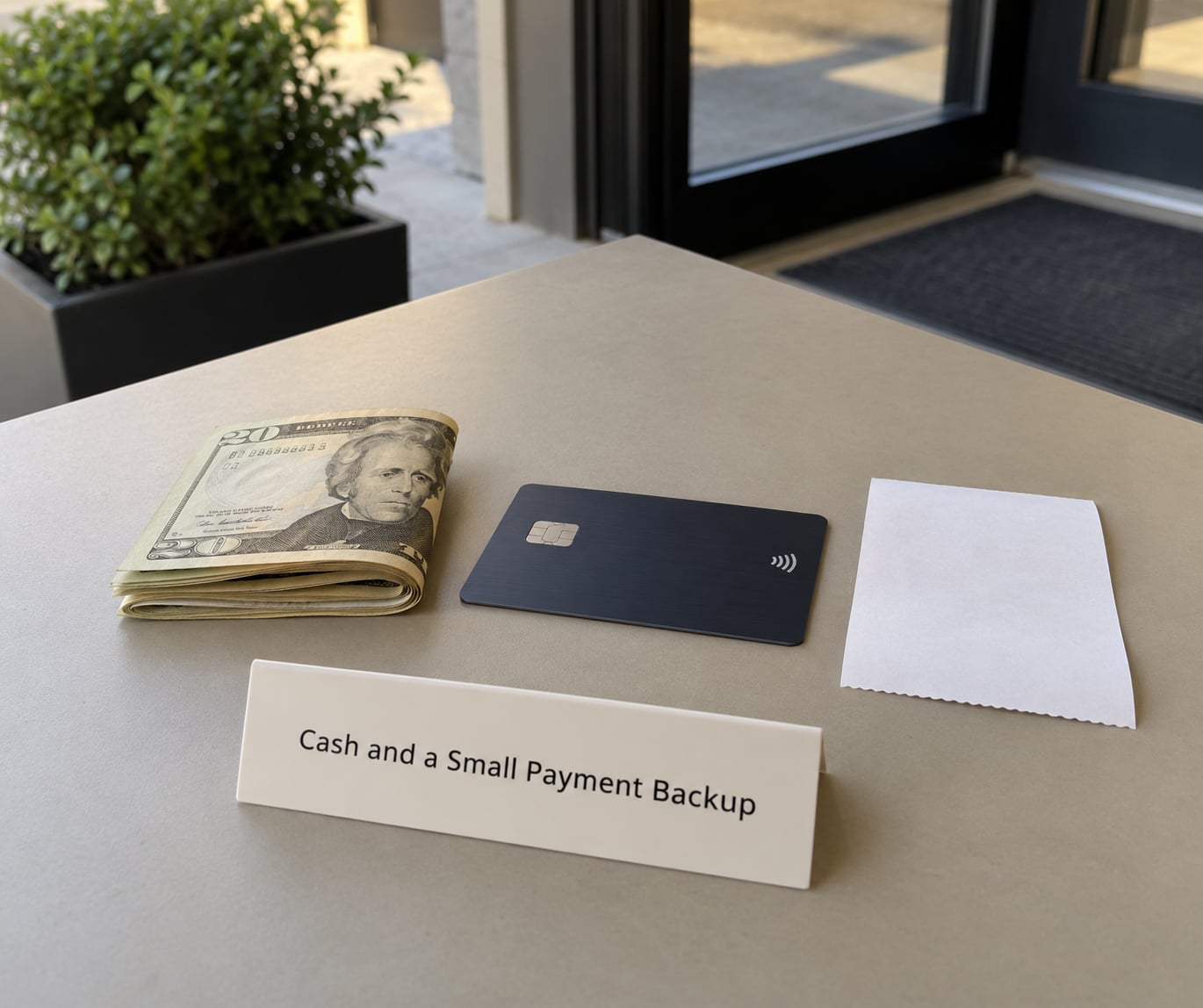
Carry a payment card for everything, plus a modest amount of cash as a backup. Large arenas are typically cashless, which is convenient until a parking meter, a food truck or a card reader at a small venue declines your card.
Cash matters most at independent shows, where the merch table may run a separate reader, and at stadium events where parking is paid in a lot far from the entrance. Split what you have across two pockets so a spilled drink or a pickpocket does not take your whole evening.
On cost, one tip covers most fans: merchandise is consistently more expensive in the building than online, and concessions add up quickly across a family. Eating a substantial meal before doors open is the single biggest saving available, and it beats trying to make a hot dog line last three hours.
7. A Small Health and Comfort Kit
Pack a small kit that fits inside your clear bag: blister plasters, a small packet of tissues, any pain relief you already use safely, a hair tie, and sunscreen if your seats are exposed or the show is outdoors.
Nothing here is medical advice. The point is to bring the things you would want in a four-hour seat that is not quite a chair: a backpack seam rubbing your shoulder, a heel blister starting at the two-hour mark, a dry throat in a warm room.
If you take any medication, keep it in its original labelled packaging and in an easy-to-reach pocket, not buried in the bottom of a bag that a bag check will have to be unpacked. For younger kids, include their usual comfort item and a spare change of clothes.
8. Earbuds or a Small Fan for the Queue
The live show is louder than the broadcast. Entrance music, crowd volume and pyrotechnics stack up, and front-row seats add a wall of sound bouncing off the barricade. Foam earplugs for a few dollars solve most of it.
For children and for anyone sensitive to noise, noise-reducing headphones are worth packing. Keep them in your bag rather than on your head so you can hear announcements, and take breaks in the concourse when someone needs to step out, it is quieter and it doubles as a reset.
A handheld fan is a useful addition at summer stadium shows, but check the venue rules first, because small handheld fans are restricted at some events. Battery-operated neck fans are treated differently from blade-style units, so read the policy page before packing one.
9. A Light Bag or Clear-Water-Safe Carryall
This is where most first-timers lose an hour. Arenas typically require transparent bags within a size limit, one per person, with small clutches and one-gallon zip-lock bags usually allowed as an alternative. What counts as a clear bag varies, which is why the table below matters.
| Venue type | Typical bag rule | Watch out for |
|---|---|---|
| Standard weekly TV arena | Clear plastic, vinyl or PVC no larger than 12 x 6 x 12 inches, one bag per person | A standard backpack will be refused even when empty of anything suspicious |
| Stadium premium live event | Same 12 x 6 x 12 inch clear bag limit, sometimes clear backpacks of that size only | Longer security lines, so arrive earlier and travel light |
| Large arena with under-seat storage | Bag must fit under the seat; oversized cutoff often around 22 x 14 x 9 inches | Cheaper and looser than TV arenas, but check your seat’s storage first |
| Independent club show | Often no formal policy, sometimes a small bag or no bag at all | Smaller room, fewer staff, less forgiving of a big rucksack in a tight row |
Treat these as typical figures rather than rules. Bag policies are published per venue and per event, and they change without much notice, so check the building’s own page for the date you are attending.
The prohibited list is long and mostly common sense. Selfie sticks, laser pointers, professional cameras, detachable-lens cameras, large flags, weapons, outside food and drink, smoking and vaping are refused at most major events. Items left at a bag check rarely arrive on time, and some venues do not offer bag check at all.
A few venue-specific rules are worth knowing in advance: whether you can step outside and re-enter, whether strollers are checked or refused, and whether an empty water bottle is permitted. These three details change more often than anything else on the list.
10. Optional Fan Extras
Signage is optional and welcome, with limits. Paper, poster board and corrugated cardboard are usually fine; wood, metal, magnets and anything with a rigid pole are commonly rejected at security. Check for a rule against offensive or political language, and keep the sign small enough to hold in your lap without blocking your own view or anyone’s behind you.
Replica title belts are generally permitted at major promotions, though briefcase-style accessories are usually sold inside the building rather than admitted from outside. If the belt matters to you, buying it at the merchandise stand is the safer bet.
Other extras worth a thought: a printed program if you want notes on the card, trading cards in a rigid holder so they survive being shoved into a bag, and a soft folder for anything you want signed. WWE’s published meet-and-greet rules bar personal items from being signed and prohibit physical contact such as handshakes, fist bumps and hugs, so plan on a photo and a signature instead of a conversation.
On autographs generally, set expectations honestly. Free in-person autographs are rare at major arena shows, and premium sessions often sell out long before the event. Independent shows are the exception, where wrestlers share the building and the parking lot with the crowd.
How to Pack for Different Wrestling Venue Types
The core list holds everywhere: ticket, ID, clear bag, phone, card, shoes, earplugs. What changes is the weight of the pack and how early you need to arrive.
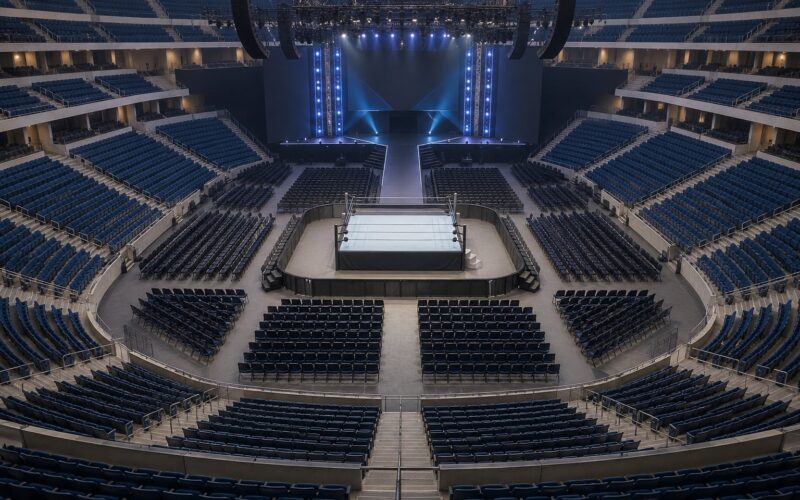
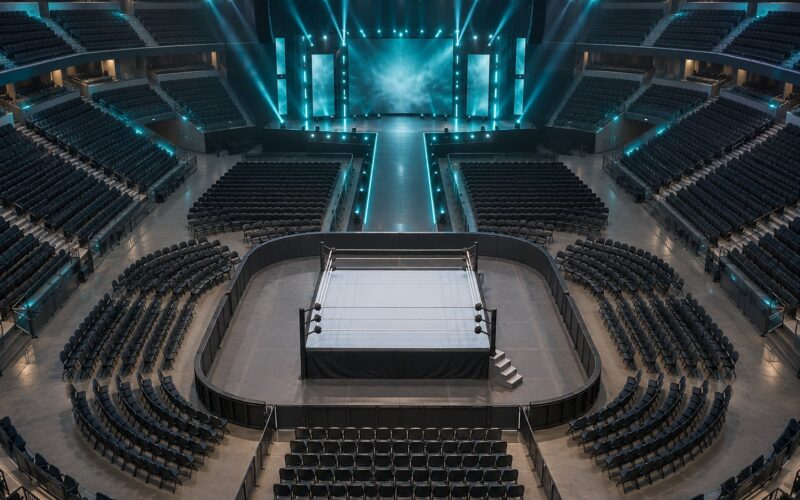
Weekly TV taping in an arena. Doors usually open well before the advertised start, and arriving 60 to 90 minutes early gives you time for security, finding your section and catching at least one untelevised match that nobody watches on TV. Full power bank, light layer, earplugs, sign if you want one.
Stadium premium live event. Everything above plus patience. Security queues are the longest of the night, weather exposure is real if the venue is open-air, and merch lines after the show are enormous. Bring the same small bag, put a poncho in a pocket rather than a coat you will carry all evening, and buy the shirt you want online if you are not desperate to have it that night.
Independent show in a club or armory. Much lighter rules, sometimes no bag policy at all, and a crowd that can be louder and rowdier than a televised arena. Fans describe independent crowds as more likely to throw things into the ring, so keep a clear exit path and stay near an aisle rather than wedged against a wall. The upside is proximity: wrestlers are often mingling in the building before the doors open.
Outdoor or festival-style card. Add sun protection, water and a poncho, and keep your phone dry. Clear bags that get rained on become an argument with the screen at the gate, so a small zip pouch for the ticket and ID is worth carrying.
One timeline ties it together. A week out, check the venue’s bag and prohibited-items page. The day before, confirm the ticket in your own account, screenshot the barcode and charge your battery bank. On the day, eat before doors, arrive early and go through the line with your ID already out.
Frequently Asked Questions
What size clear bag can you bring to a wrestling show?
Most weekly TV arenas allow one clear plastic, vinyl or PVC bag per person, typically no larger than 12 x 6 x 12 inches. Small clutches and one-gallon zip-lock bags are often accepted instead. Venues with under-seat storage use a larger cutoff, sometimes around 22 x 14 x 9 inches. Check the specific building’s policy page before you pack.
Can you bring signs and replica belts to a wrestling event?
Paper, poster board and cardboard signs are usually fine as long as they stay within size limits and carry no offensive or political language. Wood, metal and rigid poles are commonly rejected at security. Replica title belts are generally permitted at major promotions, though briefcase-style accessories are typically sold inside the building rather than admitted.
Can you bring food or drinks into a wrestling show?
Outside food and drink are prohibited at most major arenas, so plan to eat before doors open and use the concourse stands. An empty reusable water bottle is usually allowed in and can be refilled inside. Independent shows in small rooms are often more relaxed, so check the venue’s rules before assuming.
Does a 3 year old need a ticket for WWE?
Most major promotions require a ticket for every attendee regardless of age, though the price for small children is usually reduced. Some venues admit very young children free when held on a lap. The rule varies by event and city, so confirm the specific show’s policy on the promotion’s site rather than assuming.
Is WWE appropriate for an 8 year old?
Most families take children that age, and the show is rated for a general audience. The loud entrances, pyrotechnics and crowd energy can be overwhelming, so bring noise-reducing headphones and plan breaks in the quieter concourse. There is no formal minimum age; suitability depends on your child.
How early should you arrive at a wrestling show?
Aim for 60 to 90 minutes before the advertised start at a weekly TV taping, which covers security and lets you find your seat without rushing. Stadium premium live events deserve even more time because the entry queues are longer. Arriving early also catches untelevised matches that run before the main show begins.
What to Bring, In One Line
If you pack nothing else, bring your ticket on a charged phone with a saved screenshot, a photo ID, a clear bag inside the size limit, a payment card with a little cash, and foam earplugs. Add comfortable shoes and a layer, and everything else on this list is a comfort upgrade rather than a requirement.
Confirm the venue’s bag policy a week out and on the day of the show, because the rule that changes your packing is the one you did not read. Everything else is detail, and detail is what separates a long night in a good seat from a night spent in a bag-check queue.