Wrestlers build usable strength and stay inside their weight class by lifting few reps at a high percentage of their max, resting long between sets, and training only two or three times a week. Total weekly volume stays deliberately low, protein supports recovery, and during the season the goal shifts from building to maintaining. The adaptation you get is neural strength, joint tolerance, and rate of force development rather than muscle size.
That is the short answer, and it is the single idea separating wrestlers who fill out a weight class from those who blow right past it. Here is the framework in full:
- Reps: 3 to 5 per work set on the main lifts.
- Intensity: roughly 70% to 85% of a one-rep max, which means two reps in reserve at the top end.
- Rest: 2 to 4 minutes between work sets, more on heavy pulls and squats.
- Weekly volume: 2 to 3 lifting sessions, not 5, and never more than about 12 hard sets per week on any one lift pattern.
- Nutrition: protein in the 1.6 to 2.2 grams per kilogram of bodyweight range, spread across the day, with total calories held near maintenance instead of running a surplus.
- Season dose: off-season you build; in-season you maintain. You do not add load and volume at the same time.
Everything below unpacks those six variables into a plan you can actually follow, whether you wrestler in a high school room, in a Division I program, or in an independent promotion on Tuesday nights.
Table of Contents
- What You Need Before You Start
- Step-by-Step: How Wrestlers Train Strength Without Getting Too Bulky
- Step 1: Establish a Performance-Focused Base
- Step 2: Use Compound Lifts for Total-Body Strength
- Step 3: Keep Repetitions and Rest in a Strength Range
- Step 4: Control Training Volume Instead of Chasing Size
- Step 5: Train Wrestling-Specific Power Without Imitating Ring Impact
- Step 6: Use Conditioning That Supports Recovery
- Step 7: Support Results With Recovery and Nutrition
- Step 8: Reassess Strength and Body Changes Every Few Weeks
- Common Mistakes That Add Unwanted Body Mass
- Frequently Asked Questions
- How many reps should wrestlers lift to get strong without getting bulky?
- Does lifting heavy make wrestlers bulky?
- Why do wrestlers sometimes look bulky between seasons?
- How much protein does a wrestler need while lifting and cutting?
- Can I build strength at home without a full gym?
What You Need Before You Start
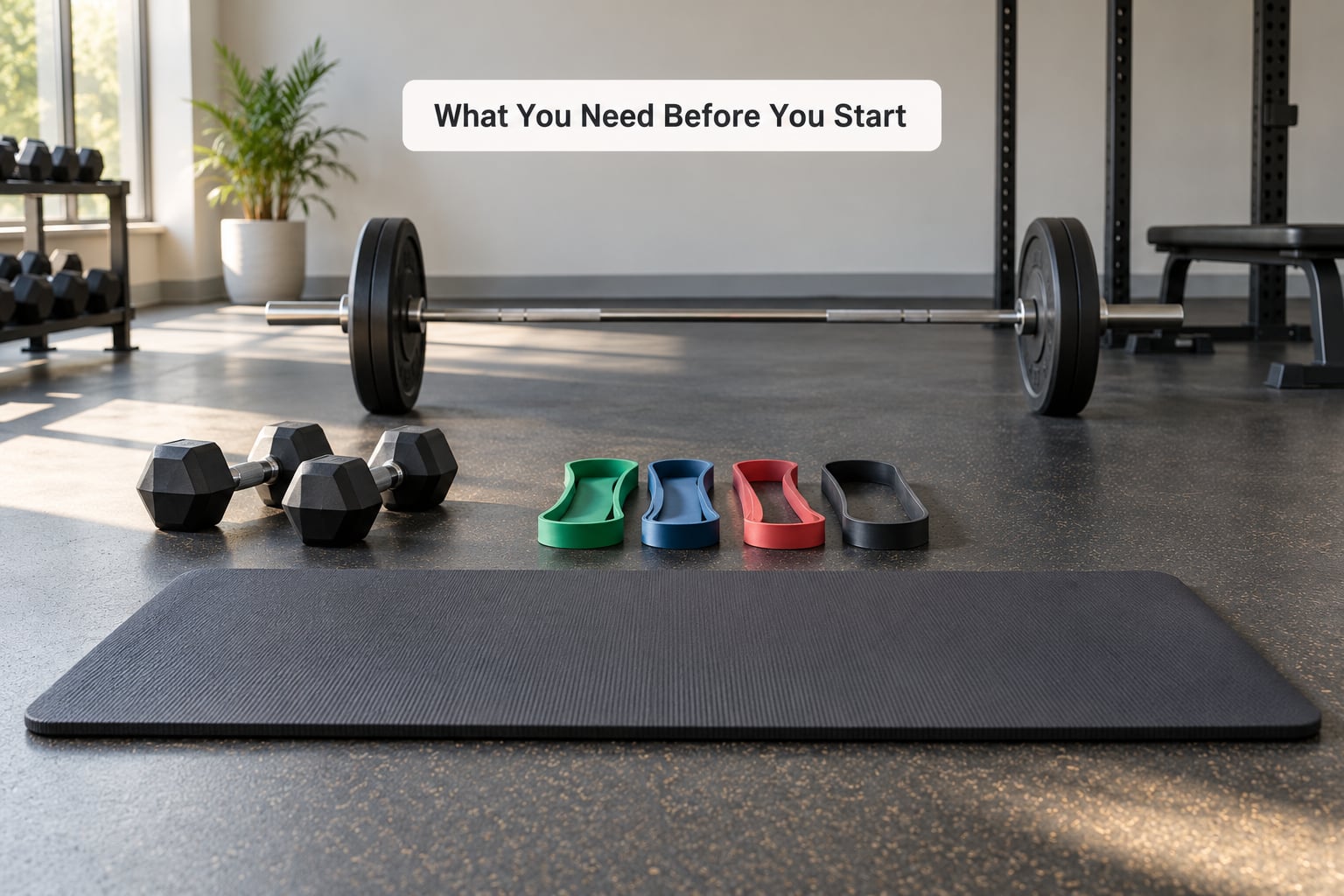
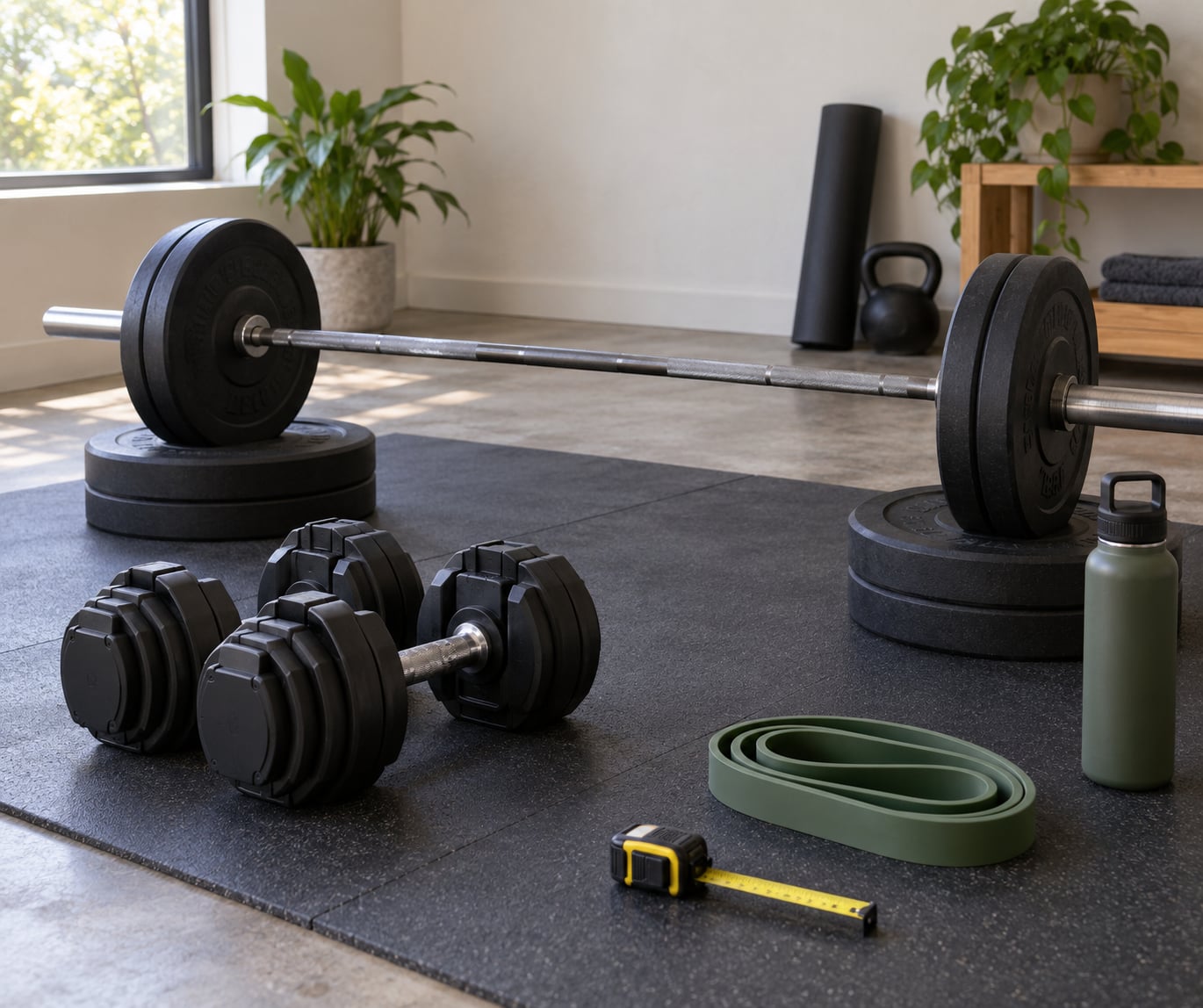
You need less than most people expect. A barbell, a rack or at least a set of bumper plates you can load and unload safely, adjustable dumbbells for accessory work, and a pull-up bar are the core of it. A rack of plates and a bench fill out a home setup. Everything else is optional, and a wrestling room at a school usually has most of this already.
You also need a baseline before any of it. Find your current training max for the back squat, bench press, and a hinge movement such as the trap bar deadlift. A rough estimate is fine; what matters is that you write down a number and retest it under the same conditions later.
Recovery habits count as equipment here. Seven to nine hours of sleep, food that meets your protein target, and at least one full day off from lifting are what make the plan work. A session done on four hours of sleep produces worse strength gains and more soreness than a session skipped entirely.
Beginners should start with bodyweight patterns and basic barbell technique rather than copying a professional wrestler schedule. A Division I wrestler might train four days a week alongside two-a-day practices. If you are lifting three days a week and also wrestling six, halve the volume and keep the intensity.
If you are under 18, dealing with an injury, or returning from a long layoff, get a certified strength and conditioning specialist involved. A CSCS-credentialed coach or a wrestling coach with documented programming experience will catch issues a generic program misses.
Step-by-Step: How Wrestlers Train Strength Without Getting Too Bulky
Step 1: Establish a Performance-Focused Base
Start with movement quality before weight. Wrestlers need to squat, hinge, push, pull, and brace without pain, and they need to do those things while standing on one leg or breathing through contact. Spend your first two to four weeks on the Olympic weightlifting foundational movements, goblet squats, dumbbell presses, push-ups, rows, and carries.
The test is simple: can you control a squat through a full range with a neutral spine, and can you hold a brace through a set of pull-ups without your back arching? If not, you do not have a base yet, and adding plates will not fix it.
Step 2: Use Compound Lifts for Total-Body Strength
Six movements cover nearly everything a wrestler needs: a squat variation, a hinge, a press, a pull, a carry, and a single-leg exercise. Good options are the high bar squat, trap bar deadlift, power clean, strict press or dumbbell bench press, pull-ups or weighted pull-ups, and farmer carries or a sled drag.
Run a full-body session two or three times a week. For example: trap bar deadlift for 3 sets of 4, pull-ups for 3 sets of 6, and a squat variation for 3 sets of 5, then two or three accessories such as single-arm dumbbell press, single-leg RDLs, and anti-rotation pressing. Full-body work spreads the load without a four-day split, which matters when practice already eats your schedule.
Step 3: Keep Repetitions and Rest in a Strength Range
This is where the answer to the bulk question lives. Three to five reps at 70% to 85% of a one-rep max produces most of its adaptation through the nervous system rather than through mechanical tension volume.
Your body gets stronger in that range by recruiting more motor units, improving coordination between muscles, and teaching rate of force development. Muscle growth is driven mostly by accumulated mechanical tension across many hard sets over many weeks. Low-rep heavy work delivers high tension per set but very few total sets, so the growth stimulus stays modest.
That is not a licence to train to failure. Leave two reps in reserve on the big lifts. Grinding a single at your max in an off-season block produces soreness and neural fatigue that eats wrestling practice for days.
Long rest is the other half. Three to five minutes between sets means each set is performed with full motor unit recruitment. Two minutes is enough for accessories and not enough for a heavy hinge at the end of a session.
Step 4: Control Training Volume Instead of Chasing Size
Volume is the variable that quietly adds body mass. Most athletes trying to avoid bulking still accumulate 20 or 30 hard sets per muscle group per week because they copied a bodybuilding split. That is a hypertrophy program wearing a wrestling program’s name.
To control it, count hard sets rather than exercises. Twelve hard sets per week on the squat pattern and twelve on the hinge pattern is plenty while you are lifting for strength. When you add a lift, ask what comes out. Three accessories on top of a full-body day should be short, 6 to 10 reps, and stopped well shy of failure.
To work out whether the approach is landing, track load and weekly total hard sets together. If your squat max is climbing 5 pounds or so every two to three weeks while your bodyweight and waist measurement hold steady, the plan is working. If strength stalls and bodyweight climbs at the same time, the volume is doing more work than you wanted it to.
Progressive overload still applies. Add 2.5 to 5 pounds, or one rep across the set, only when the current scheme is clean for two sessions in a row.
Step 5: Train Wrestling-Specific Power Without Imitating Ring Impact
Wrestling is explosive, and explosive work can be trained without the collisions. Farmers carries, sled pushes and drags, medicine ball throws against a wall, kettlebell swings, and jump variations build rate of force development without loading your spine with impact.
Olympic variants such as the power clean are useful too, but technique comes first. The most common mistake is pulling the bar off the floor with momentum, which teaches a pattern that does not transfer to a takedown.
One clear warning: do not try live takedowns, suplexes, or slam work without a qualified coach. Injury in that area is common and often ends a season. If your wrestling exposure is limited to gym training, keep the power work simple and heavy.
Step 6: Use Conditioning That Supports Recovery
Wrestlers need work capacity, but the classic mistake is stacking long aerobic sessions on top of heavy lifting. Forty minutes of steady state running after squats will flatten your next two practices and will not make you stronger.
Short and hard works better. Sled work, bike intervals, and circuit-style mat drills of 20 to 30 seconds with full rest between efforts give you the conditioning effect in 15 to 20 minutes without eating into the lifting recovery window. Keep those sessions off the day after heavy squats and hinges.
Step 7: Support Results With Recovery and Nutrition
This is where a strength block turns into a body-mass problem. A typical failure mode is a wrestler who lifts well for six weeks, decides to reward himself with a surplus, and comes back ten pounds heavier at the first weigh-in.
Protein is the one place where going higher helps. A range of 1.6 to 2.2 grams per kilogram of bodyweight per day protects against muscle loss during a weight cut and supports recovery from heavy lifting. Spread it across four or five feedings rather than one enormous dinner.
Calories matter more than any supplement. During an off-season block, eating near maintenance keeps the weight class you are in. During a cut, stay above a sensible floor and remember that the sharpest drops in the last week of a cut are mostly water and glycogen, not fat, and they come back within days of a good meal. That rebound is a large part of why a wrestler at the end of a season can look far bigger than they did at weigh-in.
Carbohydrates matter for mat output. Wrestlers who cut hard and train hard often under-eat and then wonder why practice feels terrible. Timing carbs around practice and weigh-in is a question for your own coach and, if you are cutting, for a registered dietitian or your team physician.
Creatine is well studied and generally safe for healthy adults at 3 to 5 grams per day, but it adds water weight inside the muscle, which some wrestlers dislike. Athletes under 18, or with any medical condition, should ask a doctor before using it.
Step 8: Reassess Strength and Body Changes Every Few Weeks
Every four weeks, retest your three main lifts under the same conditions. On the same schedule, record bodyweight, waist measurement, and a morning resting heart rate or a simple recovery check. Consistency of sleep and appetite matters more than any single number.
Change one variable at a time. If strength is flat and bodyweight is rising, cut volume before cutting calories, and drop the two lowest-priority accessories first. If strength is climbing but bodyweight has risen 2 to 3 pounds, you may simply be sitting at a new weight class, which is a legitimate move if it fits your long-term plan.
Some muscle gain is not failure. Adding a few pounds of lean tissue that helps you hit your tackles harder is a fine outcome. The goal is not zero size, it is size that serves the athlete.
Common Mistakes That Add Unwanted Body Mass
Copying a bodybuilder split. Five or six days a week with 20 hard sets per muscle group is a muscle program. Fix: full-body work three times a week with about 12 hard sets per pattern.
Chasing the heavyweight look. If your goal is power at your weight class, a heavier build in a lighter class can make you slow. Fix: judge progress by your lifts and by how the weight feels on the mat, not by appearance in a mirror.
Training to failure on everything. Failure produces fatigue far more reliably than it produces a better wrestler. Fix: reserve genuine max attempts for a few scheduled singles in the off-season, and stop accessories two reps early.
Adding load and volume in the same week. That is how the off-season block turns into a recovery problem by week four. Fix: raise intensity on one lift while keeping weekly sets flat, or add an exercise while keeping the load steady.
Judging progress by the scale alone. Weigh-ins are one data point from one morning. Fix: pair bodyweight with waist measurement and lift numbers, and look at the trend across a full cycle.
Ignoring flexibility and mat work. The recurring theme in wrestling communities is that flexibility and mat technique matter as much as barbell strength. A program that squats you heavy but leaves you unable to sit into a proper stance has missed the point. Fix: treat flexibility as part of the training week, not as an afterthought.
Bulking through the season. Community advice consistently points the same direction: during competition, maintain rather than build. Fix: cut sets, keep intensity, keep the habits.
Frequently Asked Questions
How many reps should wrestlers lift to get strong without getting bulky?
Three to five reps per work set on the main lifts, taken at roughly 70% to 85% of a one-rep max. That range builds strength mostly through neural adaptation rather than mechanical tension volume, which is why it adds very little muscle mass. Rest 2 to 4 minutes between sets and stop with about two reps in reserve.
Does lifting heavy make wrestlers bulky?
Not on its own. Heavy low-rep lifting spends less total time under tension than bodybuilding-style work, so the growth stimulus is small. Body mass usually creeps up from total weekly volume and from eating more than you need while training harder. If your lifts climb and your bodyweight and waist measurement hold steady, the lifting is doing what you wanted.
Why do wrestlers sometimes look bulky between seasons?
A large share of that is water, glycogen, and sodium rather than new tissue. Athletes often rebound quickly after a cut, and some of that weight is lean mass regained along with it. This is also where muscle memory works in your favor: a wrestler who trained seriously in the off-season usually regains size and some strength faster than a complete beginner would.
How much protein does a wrestler need while lifting and cutting?
A common range is 1.6 to 2.2 grams per kilogram of bodyweight per day, spread over four or five meals. Higher intakes help protect muscle during a weight cut. Stay above a sensible calorie floor while cutting so you are not removing tissue along with fat. Anyone cutting weight for competition should work with a registered dietitian or team physician.
Can I build strength at home without a full gym?
Yes, within limits. Dumbbells or a barbell with plates, a pull-up bar, and a mat cover most of the program described here. Banded or loaded carries, goblet squats, push-ups, split squats, and controlled tempo work all translate to the mat. You will progress more slowly on the main lifts, and Olympic lifting technique really does need a coach.
Start this week by picking three lifts, finding your training max on each, and writing down a number you can beat in four weeks. Everything else in how wrestlers train strength without getting too bulky comes down to keeping the rep count low, the rest long, the weekly volume small, and the food honest.