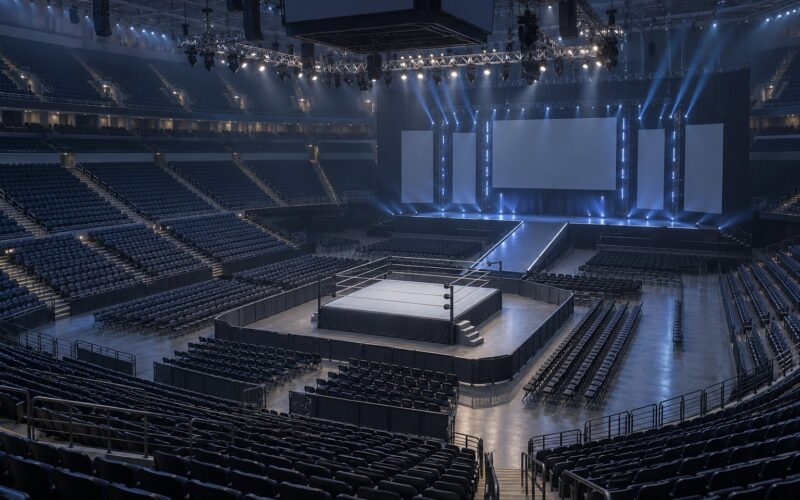
Almost every wrestling attendance figure you read is an estimate, not a head count taken at the door. The numbers come from ticketing platforms, arena configuration, promoter statements and licensing records, and they rarely agree. Learning how wrestling attendance figures are estimated is the difference between reading a number and simply repeating it.
Three figures usually compete for the same show: what the promoter announced, what an independent audit of the seating chart says, and what the turnstile recorded. They are not different versions of one measurement. They measure different things, at different moments, using different definitions.
This guide walks through each source, the arithmetic behind a seat-map audit, and the specific reasons the numbers drift apart, including the municipal record that shows how large the gap can get on a show that sold out.
Table of Contents
- What Is a Wrestling Attendance Figure?
- Where Do Promoters Get Attendance Numbers?
- How Wrestling Attendance Figures Are Estimated
- How to run a seat-map audit yourself
- How Do Ticket Sales, Turnstiles, and Capacity Differ?
- Why Are Wrestling Attendance Numbers Often Rounded?
- Confidentiality and reporting periods
- Uncertainty in the inputs
- Complimentary allocation and papered houses
- Different events count different things
- How Can You Tell Whether an Attendance Claim Is Credible?
- Frequently Asked Questions
- Are wrestling attendance figures exact?
- Why does a wrestling event sell out but report lower attendance?
- What is the difference between tickets sold and attendance?
- How do wrestling promoters estimate attendance from venue capacity?
- Does a sold-out wrestling show always mean the venue was full?
- Why do different sources report different attendance totals?
- What Should You Check First?
What Is a Wrestling Attendance Figure?
An attendance figure is a number describing how many people were in the building. In practice the term covers at least five separate measurements, and wrestling coverage tends to use them interchangeably.
- Announced attendance — the figure a promotion states publicly, usually read out on television or issued in a press release.
- Tickets distributed — the number of seats removed from public sale on the venue’s primary ticketing platform, whether paid or complimentary.
- Paid tickets sold — the count of tickets that generated money, which excludes comps and house-allotted tickets.
- Turnstile count — admissions recorded by scanners or counters at the building’s doors on the night of the event.
- Setup capacity — the number of seats in the specific configuration the room has been arranged in for that show, not the building’s headline capacity.
Gate is a separate concept again. Gate means ticket revenue, and a show can produce a strong gate from a partial house, or pack a building with comps and earn less than expected.
Only one of those five is a physical count of people. Everything else is a paperwork number, a snapshot, or a claim.
Where Do Promoters Get Attendance Numbers?
Promoters start from what they know internally: what the room was configured to hold, what the box office recorded, and what the production department blocked off for camera positions and staging. Public announcements are then rounded, adjusted for tone, or drawn from advance sales rather than actual admissions.
Auditors go somewhere else entirely. They open the venue’s ticketing page, note the seating configuration in place for that date, count what is still purchasable, and compare that against the promoted configuration. The promoter and the auditor are working from the same underlying sale, so their figures should sit close together when the promoter is being straight.
A useful illustration is a Revolution event where the promoter cited more than 9,000 in the building with 8,000 paid, while an independent tracker had a setup capacity of 10,824. Both numbers were internally consistent: about 83 percent of sellable inventory had gone, and roughly 8 percent of distribution was complimentary. Read that way, the claim is unremarkable.
The fourth source is the least glamorous and the most trusted: municipal and licensing records. Where an event needs a venue licence or an attendance declaration for a licensing body, admissions get counted and filed. Those documents are not produced for wrestling audiences, which is precisely why they are hard to spin.
How Wrestling Attendance Figures Are Estimated
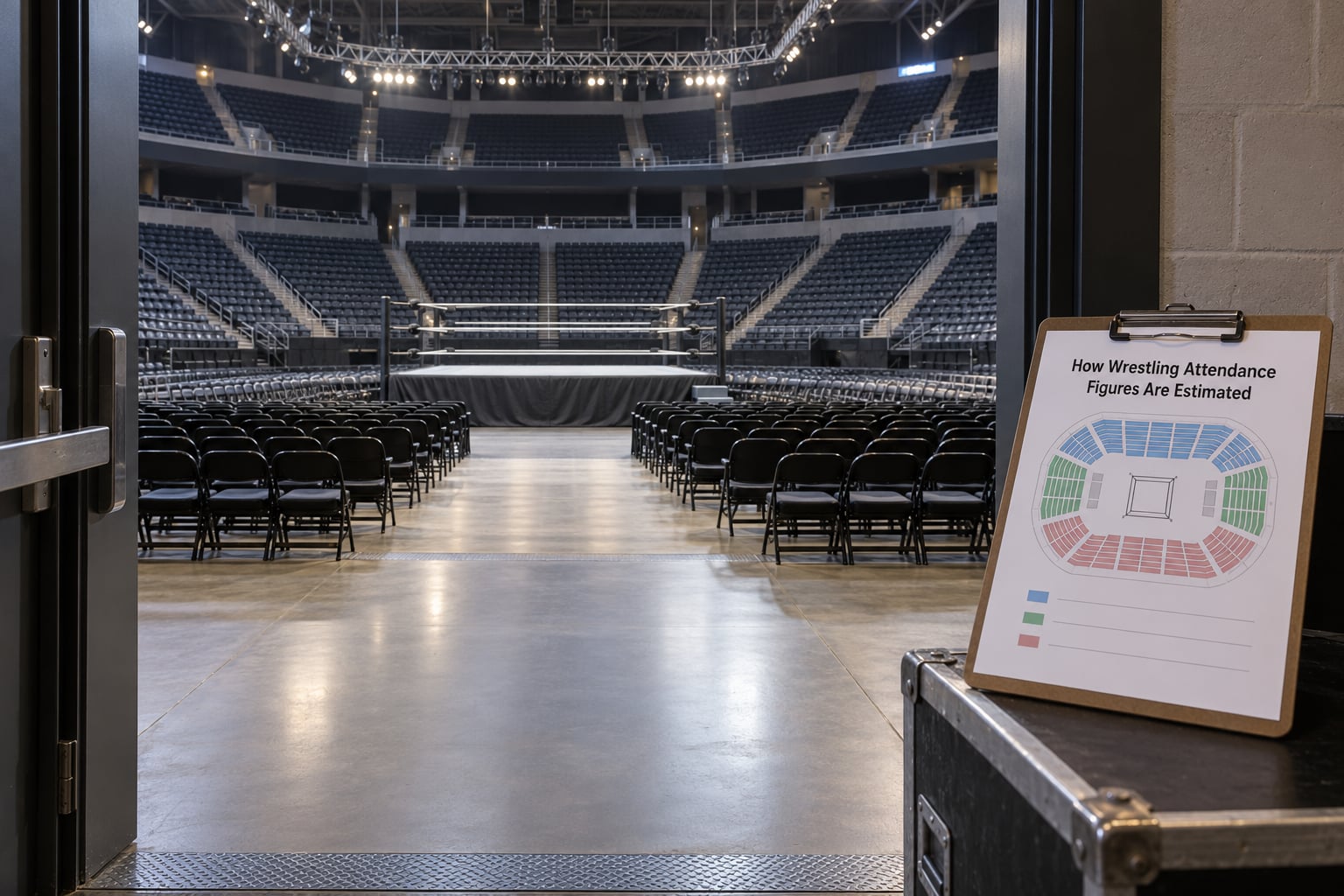
The core estimation method is subtraction. You establish how many seats the room is configured to sell for this show, count the seats still available for purchase, and take the difference. That difference is tickets distributed.
Tickets distributed = current setup capacity − available inventory
Everything difficult about this method is in the two inputs. Setup capacity is not the arena’s published capacity for a basketball game, because a wrestling show changes the room. Available inventory is a moving target, because inventory is added and removed daily.
How to run a seat-map audit yourself
The method is public. Any fan with a browser and some patience can do a version of it, and that is what makes it hard for a promotion to move a number very far without someone noticing.
- Establish a baseline. Find the venue’s configuration for that specific event date and event type, not the building’s all-purpose figure. A televised taping setup is frequently smaller than a live event setup at the same building.
- Identify production holds. Seats removed for the hard camera position, sightline blocks, staging, or merchandise tables are not sellable inventory and must be excluded from capacity.
- Read the live chart. Note available, sold and held sections. Primary sellers such as Ticketmaster and AXS show the chart; resale marketplaces like SeatGeek, StubHub and Vivid Seats show how much of it is in secondary circulation.
- Snapshot on a schedule. Readings taken 60 days out, two weeks out and inside the final 72 hours mean different things, because holds get released and configurations get trimmed as showtime nears.
- Compute and sanity-check. Subtract, then compare with the promoter’s announcement. A large unexplained gap is a reason to distrust one of the two numbers, not to pick whichever one you prefer.
Aggregators such as Wrestletix and Cagematch publish derived figures rather than raw turnstile data, so treat them as estimates with a method attached. The Wrestling Observer Newsletter and PWInsider mix reporting with reported numbers, which means individual figures need sourcing before they mean anything.
How Do Ticket Sales, Turnstiles, and Capacity Differ?
These four numbers form a chain, and each link sits below the one above it. Confusing a link with another is the source of most arguments about whether a show was actually packed.
| Figure | What it counts | Who produces it | Where it usually sits |
|---|---|---|---|
| Announced attendance | What the promotion says the crowd was | Promotion, announcers, press releases | At or above tickets distributed |
| Tickets distributed | Seats removed from public sale | Ticketing platform chart audit | The baseline figure |
| Paid tickets sold | Tickets that generated revenue | Box office ledger, company reporting | Roughly 3 to 8 percent below distributed |
| Turnstile attendance | People admitted through the doors | Venue scanners or licensing authority | Roughly 5 to 15 percent below distributed |
The gap has three parts. Some tickets are complimentary and never expected to sell. Some are bought by people who never arrive. And some are sold but never collected, because a resale buyer fails to pick up or a will-call ticket is never claimed.
Municipal records for AEW All In 2026 put this in concrete numbers: 41,102 admissions through the turnstile against an estimated 46,987 tickets distributed. The difference is 5,885 tickets, and the ratio works out to about 87.5 percent. Read against a full setup, the crowd was nearly nine in ten of distributed tickets, which is a normal breakage rate for a large outdoor-adjacent show with a heavy complimentary allocation.
The interesting part is not the shortfall. It is that the shortfall was published at all, from a source with no stake in the promotion’s marketing.
Why Are Wrestling Attendance Numbers Often Rounded?
Rounding is not automatically dishonest. There are four legitimate reasons a figure comes out as a clean 5,000 or 10,000.
Confidentiality and reporting periods
Promotions report attendance in company results as totals for a quarter, not per event. An individual show’s number often never exists as an official figure at all.
Uncertainty in the inputs
If capacity is uncertain to within a couple of percent and inventory readings move daily, a precise-looking number is false precision. Public estimates work better as ranges.
Complimentary allocation and papered houses
Comps typically run 3 to 8 percent of tickets distributed. When a room is papered to protect an announced figure, distributed and admissions can separate further, and the promoter has no incentive to publish the internal breakdown.
Different events count different things
A house total at a live event and a pay-per-view buy number are separate measurements of the same card, and they are frequently quoted interchangeably. They answer different questions about how many people watched and how many people were in seats.
Historical figures carry their own distortion. Attendance figures quoted for the 1980s and early 1990s were announced figures produced for television drama, and the people compiling them now note plainly that those numbers were exaggerated and their origin is unknown.
How Can You Tell Whether an Attendance Claim Is Credible?
Run any figure through seven checks. If it survives them, it is worth repeating.
- Name the source. A number with a stated method is usable. A number posted as a rumour with no method is not.
- Check the date. Snapshots from 60 days out and snapshots from show week measure different worlds.
- Establish the configuration. Compare the claim with setup capacity for that event type, not the building’s headline capacity.
- Look for corroboration. Government or licensing records outrank any promotional statement, and a primary ticketing chart outranks an aggregator’s summary.
- Test consistency. Does the paid figure sit below the distributed figure? Does admissions sit below paid? A claim that inverts the chain deserves suspicion.
- Define the metric. Attendance and gate are different things, and so are admissions and distributed.
- Ask what the number excludes. Comps, holds and no-shows do the quiet work in most inflated claims.
| Source | What it measures | Reliability |
|---|---|---|
| Municipal and licensing records | Admissions through the doors | Highest — an independent physical count |
| Audited company reporting | Paid attendance and gate over a period | High, but aggregated across events |
| Primary ticketing seat map | Inventory removed from sale | Moderate — method and snapshot date matter |
| Promoter statements | Attendance as the promotion frames it | Self-reported, check against the chain |
| Hand-counted ticket maps | Reserved seats on a physical chart | Moderate — a skill, and only pre-sale |
| Announced television figures | A promotional number | Lowest |
Independent promotions sit outside this hierarchy, which is worth stating plainly. A small show’s figure usually comes from the promoter’s own count of the room, with no ticketing audit and no licensing filing behind it. Those numbers get averaged into quarterly industry tallies anyway, so an indie average is a collection of self-reported claims rather than a measurement.
What you can do is triangulate. Compare the promoter’s figure against the ticket platform, Cagematch listings and what WrestleTix shows for that venue’s configuration. When three independent readings cluster within a few percent of each other, the number is probably sound. When only one source has it, treat it as a claim.
Frequently Asked Questions
Are wrestling attendance figures exact?
Only one of the common figures is a count, and that is the turnstile. Tickets distributed, tickets sold and announced attendance are either estimates built from seat inventory or promotional claims. Even a turnstile number records admissions rather than attendance, since it cannot tell you who was actually in their seat for the match. Treat any confident exact number with suspicion until its method is stated.
Why does a wrestling event sell out but report lower attendance?
Because a sellout describes inventory, not the crowd in the room. Once every seat in the event’s configuration is sold, the show is a sellout even if a meaningful share of buyers never arrive, and tickets that were bought but never collected still count as sold. Admissions then land below tickets distributed. Municipal records for AEW All In 2026 showed 41,102 admissions against roughly 46,987 tickets distributed, about 87.5 percent.
What is the difference between tickets sold and attendance?
Tickets sold counts every ticket paid for or handed out, including complimentary tickets and any ticket later resold. Attendance counts people actually admitted through the doors. Between those points sit no-shows, unclaimed will-call tickets and comps nobody collected, and those losses normally run 5 to 15 percent of tickets distributed. Paid tickets sold sit slightly below distributed again, since comps are distributed but not sold.
How do wrestling promoters estimate attendance from venue capacity?
They work from the configuration capacity of the room for that show, then subtract what remains unsold, and add back the difference between distribution and admissions when they want a crowd number. Auditors run the same arithmetic in reverse, taking tickets distributed as current setup capacity minus available inventory on the live seat map. If the promoter’s announcement sits far above that figure, the gap itself is the useful information.
Does a sold-out wrestling show always mean the venue was full?
Not even close. Producers curtain off the upper deck with blacking, remove seats behind the hard camera, block sightlines for staging, or hold a block for internal use, and every one of those changes shrinks sellable capacity. A show can sell out a 9,000-seat wrestling configuration inside a building that holds far more for basketball, and the announcement then reads like a full house. Always check which configuration the number is measured against.
Why do different sources report different attendance totals?
Because they measure different things at different moments. A ticketing platform counts inventory removed from sale as of a snapshot date, a promoter counts what it believes it sold, and a licensing authority counts admissions through the doors. Group holds released late, seats killed for production and dynamic pricing reclassifications all shift a platform’s number between snapshots, so a figure from a week out can legitimately differ from the same figure on show day.
What Should You Check First?
Start by asking what the number actually measures. Announced, distributed, sold and turnstile are four different measurements, and a figure without that label attached is not usable.
Then match the figure to its context: the venue and its configuration for that event, whether it was a live event, a televised taping or a pay-per-view, what the ticket listing actually said, and where the original reporting came from. Once you know the metric and the configuration, the gap between two published numbers stops being mysterious and becomes arithmetic.
That is the whole method behind how wrestling attendance figures are estimated. It is not complicated, and any reader can run it — the numbers only stay murky because the labels usually do not come attached.