Learning how to follow a wrestling promotion as a new fan comes down to three habits: pick one promotion, find out where its weekly show airs or streams, and keep a small written record of who won what. That is genuinely all it takes. You do not need a back catalogue, a wrestling vocabulary, or an opinion about anybody’s booking before you start.
The mistake most newcomers make is treating wrestling like a sport with a season. It is closer to a weekly serial. A rivalry that starts in January can still be running in June, which means a show you watch out of order feels like noise until you know the two or three storylines running underneath it.
So here is the honest version. Choose one promotion and stay with it for two months before adding another. Learn the small group of wrestlers whose matches interest you, not the whole roster. Watch the most recent handful of episodes of its main weekly show rather than starting at episode one. Then write down what happened, because a five-line weekly log is what turns background noise into a story you have opinions about.
Everything below builds that routine. It should take about twenty minutes a week once it is set up, and most of the work happens in the first week.
Table of Contents
- What You Need
- Step-by-Step: How to Follow a Wrestling Promotion Week by Week
- Step 1: How to Follow a Wrestling Promotion as a New Fan (Pick One)
- Step 2: Learn the Roster and Key Roles
- Step 3: Start With the Promotion’s Most Recent Essential Shows
- Step 4: Build a Lightweight Weekly Routine
- Step 5: Track Results, Titles, and Important Feuds
- Step 6: Separate Storyline From Match Reality
- Step 7: Join the Wrestling Community Safely
- What Separates the Fans Who Stick Around
- Common Mistakes New Fans Make (and the Fix for Each)
- Frequently Asked Questions
- Which wrestling promotion should a complete beginner start with?
- Do I need to watch old wrestling episodes to understand the current storylines?
- How many wrestling promotions can I realistically follow at once?
- How can I tell whether a wrestling storyline is scripted or a result is real?
- Where should a new fan find reliable weekly results and news?
- Conclusion: What to Do First
What You Need
You need five things, and none of them cost money or a special subscription to start with.
- One promotion. Not three. Choosing a single company for your first two months is the single biggest reason people keep watching.
- Access to its current programming. Every promotion has a home for its weekly show, and that home moves between streaming services from time to time. Check the promotion’s own website or its official social accounts for where the current episodes live rather than trusting an old listicle.
- A way to catch up or catch up on results. On-demand episodes are the easy version. If your schedule will not allow live viewing, a results article written the morning after each show is a perfectly good substitute.
- A small tracker. A notebook, a notes app, a spreadsheet. Whatever you already write in. It needs four columns: date, champion, what changed, and what is unresolved.
- Curiosity about the matches themselves. You do not have to love the in-ring work. Plenty of committed fans follow the characters and promos. But you should be willing to watch two full matches before deciding the wrestling is not for you.
That is the whole shopping list. The tracking part is what people skip and then wonder why they feel lost two months in.
Step-by-Step: How to Follow a Wrestling Promotion Week by Week
Step 1: How to Follow a Wrestling Promotion as a New Fan (Pick One)
Pick your promotion based on four things: how big the roster is, when its weekly show airs, how easy it is to watch where you live, and whether the style suits you. Get those four right and the rest is habit.
Roster size matters more than reputation. A large promotion with several shows has more wrestlers to learn, which sounds like an advantage until you realise you are trying to hold twenty-five names in your head. A smaller company with one weekly show and fifteen regular performers is far easier for a first-time follower.
Compare the two obvious starting points. A weekly television brand airs a long-running flagship show plus a second show and a monthly premium live event, with years of episodes behind it and a deep back catalogue you will never finish. A streaming-first promotion puts nearly everything in one place, has a shorter archive, and often runs a tighter single show with more matches per episode.
Accessibility decides more than taste does. If the weekly show airs at three in the afternoon on a weekday where you live, you will fall behind within a month. Pick a promotion whose show lands in your evening, or one that puts full episodes on demand the next morning.
How do you know the choice worked? After two episodes you should be able to name the two or three people the show revolves around and say roughly what each of them wants. If you cannot, the promotion is not wrong, the fit is.
Step 2: Learn the Roster and Key Roles
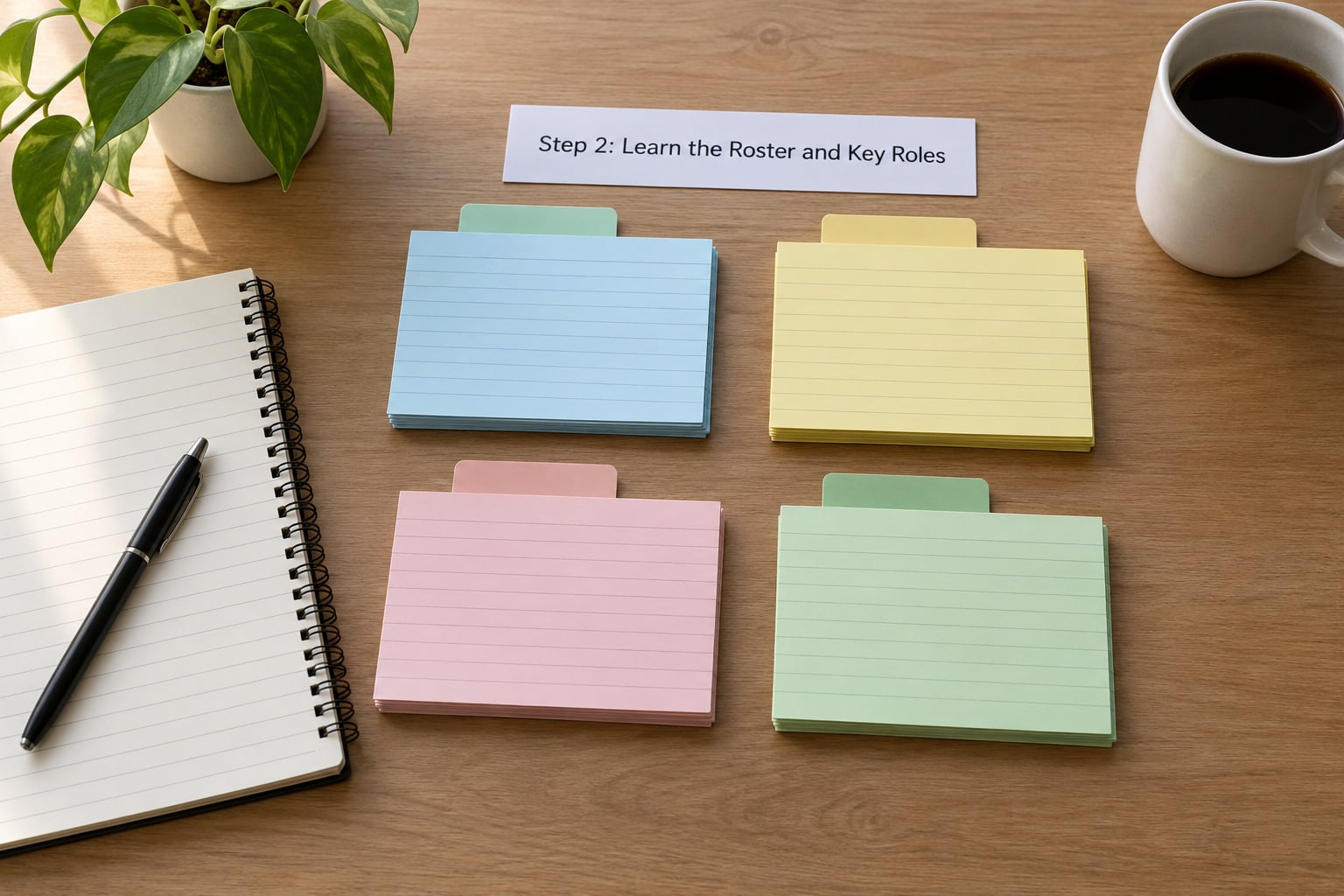
Learn the roles, not the roster. Every promotion has a handful of positions, and once you can label the people filling them, the shows stop being a blur of unfamiliar names.
- The champions. Usually one to three people holding a belt. Their challengers are the roster’s active main eventers, so the title picture tells you who matters right now.
- The top of the card. Wrestlers booked in the main event and featured matches. They are the storyline carriers.
- Factions and stables. Groups of two or more with a shared name, entrance theme, and usually a leader. Group membership explains why people appear together and why rivals target the whole group rather than one person.
- Managers and second-in-command figures. The person at ringside with a microphone who talks through the match.
- Role players and rookies. Wrestlers who lose often, work short matches, or exist to make someone else look good. These are not bad roles. A promotion that builds a roster gives its new performers something to do.
- Commentators. The voices. Their framing is often the clearest explanation of why a match mattered.
Start with alignment. A face is the hero the crowd cheers, a heel is the villain they boo, and a tweener sits in the middle, cheered by some and hated by others. Newcomers often worry about getting this wrong. Cheer whoever you enjoy. The alignment exists so the crowd has a reliable guide, not so fans have to pass a test.
Watch for the turn, which is when a heel starts behaving like a face or the reverse. It is the most common payoff in wrestling and it only lands if you noticed which side they started on.
You have done this step properly when you can sort eight names into four groups without checking. Nobody memorises a roster in a week.
Step 3: Start With the Promotion’s Most Recent Essential Shows
Start with the four most recent episodes of the main weekly show, not the archive. New fans who begin at episode one usually quit before the current storylines even begin.
Promotions have a clear structure of must-watch and optional material. Must-watch: the flagship weekly show, its monthly or quarterly flagship event, and any special that resolves a long-running angle. Optional: pre-shows, recaps, second-brand shows, and older episodes.
Four recent episodes is enough because wrestling recaps heavily. By the time you reach the current show, the announcers have already referenced the last two months of angles in single sentences, and watching that run fills in those references without you digging.
If you want more depth, backfill by storyline rather than by date. Pick one rivalry you now understand, find where it started, and watch the matches that built it. Do not queue a hundred episodes in order. Nobody finishes that queue, and it is the single most common way new followers talk themselves out of the hobby.
You know step three worked when you can describe what the promotion is currently building toward. That is the goal, not the episode count.
Step 4: Build a Lightweight Weekly Routine
Build a routine you can survive a bad week with. Wrestling is serial television; the shows keep running whether you watch or not, and a schedule you abandon after three weeks is worse than a loose one you keep.
- One viewing slot. Watch the weekly show live if you can, or the on-demand episode within a day or two.
- A ten-minute results check. If a match happens on a show you did not get to, read the results rather than avoiding the news entirely.
- One recap per week. A written recap or a podcast of the same show gives you the story beats in five minutes and picks up anything you missed.
- Optional discussion. One thread or one community space, after you have watched, so you are reading opinions with context.
Busy weeks get trimmed, not skipped. Watch the last twenty minutes of the show on your phone, skip the two matches that do not involve anyone you follow, and read the recap for the rest. You stay current, you do not stay stuck.
The opposite failure is watching nothing but the weekly show and missing the monthly events entirely. Those are where title changes and the biggest payoffs land. Put the flagship event dates in your calendar the week the storyline sets them up.
Step 5: Track Results, Titles, and Important Feuds
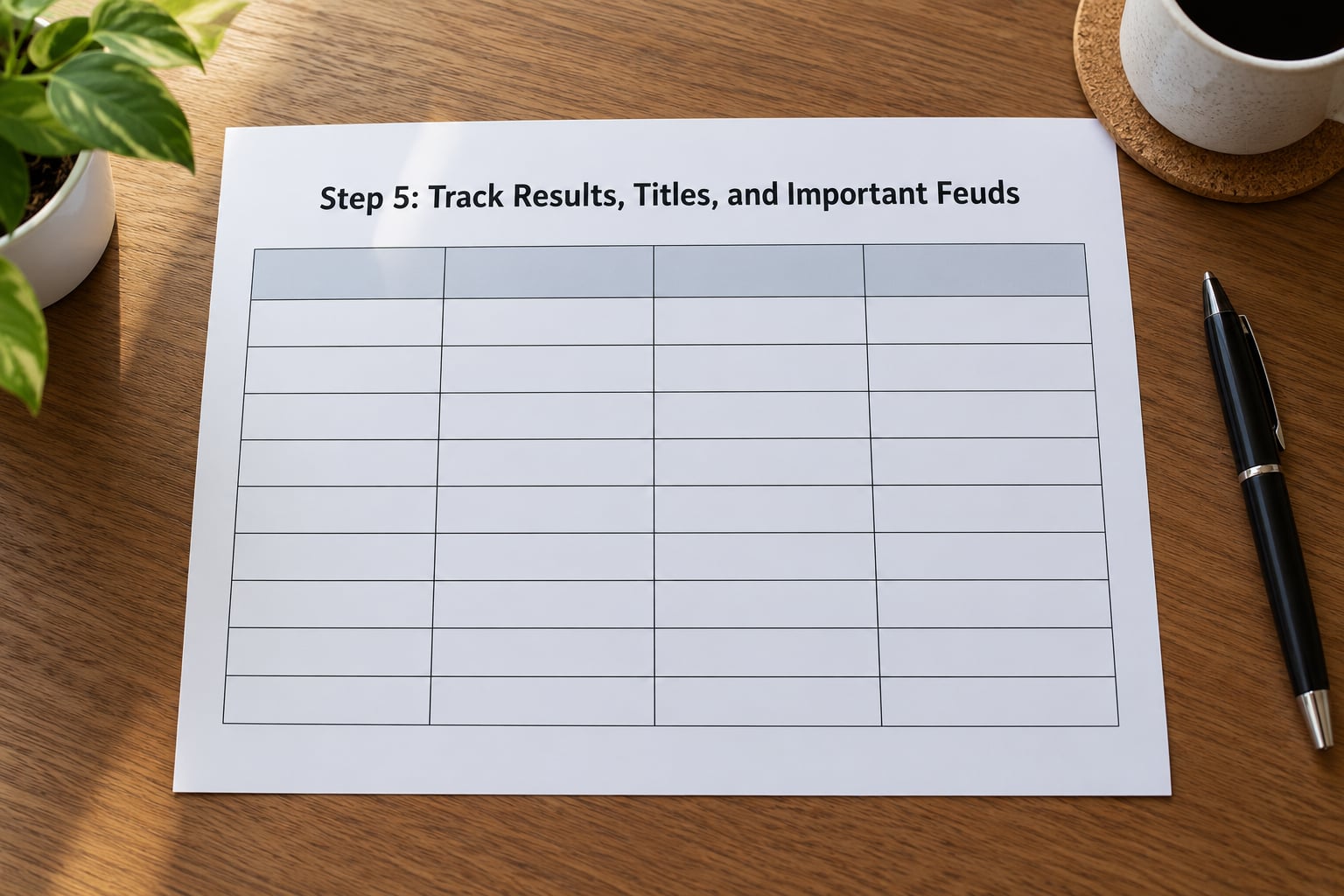
Track results in writing, even if the record is four lines long. Writing is what turns a show you watched into information you can use later, and it takes under two minutes per episode.
A useful weekly log has five columns:
- Date and show. So you can find the episode again when a payoff lands three months later.
- Match winner. Especially when you did not watch it live.
- Champion and title situation. Who holds what, and who is scheduled against them next.
- What changed. A turn, a debut, a faction split, an injury, a disqualification.
- What is unresolved. The one line that tells you what to expect next week.
Record injuries and eliminations too. When a wrestler misses six weeks with a knee injury, your log explains why the main event of this week is not the main event you expected. That one habit is the difference between feeling lost and feeling caught up.
Faction developments deserve their own note. When a group splits or adds a member, five separate storylines change direction, and nobody in the crowd will explain it to you. Your log will.
After eight weeks you should have a column of unresolved threads you genuinely want to see resolved. That list is your viewing plan.
Step 6: Separate Storyline From Match Reality
Separating storyline from reality takes about ninety seconds of vocabulary. Kayfabe is the agreement that a wrestler behaves as though everything is real: they do not wink at the camera, they accept the injury, they blame the other wrestler and not the booking.
Scripted means the finishes and the broad arcs are planned, which every promotion will confirm openly. Promos, entrances, and post-match interviews are worked in the same way: written, rehearsed, and adjusted live depending on the crowd. What is real is the injury, the recovery, the travel schedule, and the months of training behind a match you enjoyed.
Here is how it works in practice. Suppose a wrestler loses a championship after a long angle built over six weeks, and the on-screen explanation is a hand injury that forced them to withdraw. The finish, the promo, and the injury explanation were all written. The hand is also genuinely hurt, and the wrestler genuinely needed the match to sell that story. Both things are true, and neither cancels the other.
This distinction stops two common problems. You stop treating a botched finish as incompetence, and you stop thinking the whole thing is meaningless once you know it is planned. Nobody in the crowd knows which finish was decided that morning either.
Step 7: Join the Wrestling Community Safely
Joining a community is where new fans most often burn out, usually because they walk into a tribal argument on day one. Approach it as a research trip, not a debate.
Look for spoiler-aware spaces first. Communities with a spoiler tag, a no-spoiler rule, or separate threads for post-show talk let you choose when you read. Search for discussion boards with the promotion’s name plus the current year and check the rules before posting.
Podcasts are the low-risk option. A weekly show podcast gives you the whole episode’s story in audio form, and you can listen on a commute without ever opening a spoiler feed. Several wrestling podcasts also run beginner-friendly back episodes that explain the promotion’s history.
Official social accounts are useful for one thing only: knowing when episodes air and who is scheduled. Everything beyond that is opinion. Rumour accounts recycle the same unverified injury and departure claims constantly, and following a few of them is how people end up convinced something happened that never did.
Two habits keep it comfortable. Never open a highlights feed for a promotion you are behind on, because a thirty-second clip carries a whole storyline’s payoff. And when a thread turns into name-calling about performers, leave it; the culture tolerates a lot of strong opinions and very little personal abuse.
What Separates the Fans Who Stick Around
Across beginner threads, the fans who convert into long-term followers tend to share three habits. They follow two or three specific wrestlers rather than trying to enjoy everyone. They attend one live show, usually local, because a room reacting to the same beats you watched on a screen changes the medium entirely. And they watch match playlists when they want to enjoy the craft, instead of waiting for a storyline to hand them one.
Nobody is born knowing that the wrestling is scripted. Fans on community boards describe the same path almost identically: one clip pulled them in, a few weeks of weekly shows turned it into a habit, and a live show made it a thing they plan their weekends around. Live events also tend to come with an independent feel that televised wrestling does not have, and local shows are a genuinely good way into the whole scene.
Common Mistakes New Fans Make (and the Fix for Each)
Mistake one: starting at the first episode of the archive. Promotions have decades of content and the early years rarely match your taste. Fix: start with the four most recent episodes, then backfill by rivalry when something interests you.
Mistake two: following every promotion at once. Three promotions means three weekly shows, three sets of names, and three sets of factions in your head. Fix: one promotion for two months, then reassess.
Mistake three: opening social feeds before you watch. Fifteen seconds of a payoff does the work of six weeks of setup and nothing lands. Fix: mute or unfollow the accounts you use for clips, and read spoilers only after your viewing slot.
Mistake four: skipping the results when you miss an episode. This is how you fall two months behind while still feeling current. Fix: a ten-minute weekly results read, logged in the same tracker as everything else.
Mistake five: treating predetermined finishes as proof that the wrestling does not matter. Structure is the whole craft. A planned finish can still be built around thirty minutes of legitimate athletic work. Fix: watch a few famous matches with no storyline attached and judge the in-ring work on its own.
Mistake six: arguing about which promotion is better before you have a baseline. The WWE-versus-AEW debate reaches newcomers and swallows them whole. Fix: stay out of it for two months. Your own opinion will be worth more once you have something to compare.
Mistake seven: quitting during a stretch of unmemorable episodes. Every promotion has four or five weeks in a row that go nowhere, right before a payoff. Fix: decide in advance that you will watch six consecutive episodes before deciding, because the streak almost always ends in something worth the wait.
The habits that keep momentum simple are unglamorous. One show, one log entry, one recap. Repeating that for two months does more for your enjoyment than any amount of research beforehand.
Frequently Asked Questions
Which wrestling promotion should a complete beginner start with?
Start with whichever one has the smallest roster whose weekly show fits your schedule, not the one with the biggest name. Larger brands spread storylines across several shows and give you more names to hold in your head. Whichever you choose, watch four consecutive episodes of its flagship weekly show before judging it. If you can explain what the two main characters want after four episodes, you picked well. If you cannot, switch without guilt.
Do I need to watch old wrestling episodes to understand the current storylines?
No. Promotions recap their own angles constantly, and four recent episodes of the weekly show fill in most of what you missed. Watch old episodes only when a specific rivalry interests you, and then backfill that one storyline rather than the whole archive. Trying to watch a promotion in order from its founding is the fastest way to talk yourself out of it, because the first few years rarely match a beginner’s taste.
How many wrestling promotions can I realistically follow at once?
One for your first two months, two after that if your schedule allows. Each promotion has its own roster, factions, title picture, and vocabulary, so adding a third means holding three sets of names while juggling three weekly shows. If your week is already full, use recaps for one promotion and on-demand viewing for the other. Many settled fans watch one closely and only glance at results for the rest.
How can I tell whether a wrestling storyline is scripted or a result is real?
Match outcomes, story arcs, and promos are planned and adjusted, and promoters do not hide that. Kayfabe is the convention that performers behave as though it is real. What is genuinely real: injuries, recovery time, travel schedules, and the training behind the matches. So when a champion withdraws with a stated injury, the reason is written and the hurt knee is real. Both can be true at once.
Where should a new fan find reliable weekly results and news?
Use the promotion’s official website and its verified social accounts for schedules, title changes, and match listings. For written results and context, look for established recap sites and podcasts that cover the promotion weekly, since they have to stay accurate to keep listeners. Be careful with accounts that post unverified injury and departure claims, and never open highlights feeds for a promotion you are still catching up on.
Conclusion: What to Do First
Pick one promotion this week and check where its main weekly show airs or streams. Watch the four most recent episodes of that show in order, then spend ten minutes writing down who the champions are, who the two main characters want, and what is unresolved. Add one weekly results log and one recap, and leave the community forums alone until you have finished the four episodes.
That is the whole job. Everything else, the rivalries, the title lineages, the live shows, and the arguments, arrives on its own once the weekly habit exists. Updated for October 2026.