Professional wrestlers get from one arena to the next in a small number of familiar ways: commercial flights, private or charter aircraft, tour buses, rented cars, and their own vehicles or motorhomes. Which one a wrestler uses comes down to distance, show frequency, contract terms and who is paying. On most U.S. promotions, that answer surprises people, because much of the travel is booked and paid for by the wrestler rather than the company.
That surprise is worth sitting with. The idea that every wrestler rides a company jet between shows is one of the most persistent myths in the sport, and it shapes how fans think about the job. The reality is closer to a business trip that most people would find difficult to sustain, repeated for months.
Table of Contents
- How Wrestlers Travel Between Shows in the United States
- Do Wrestlers Travel by Bus, Plane, or Car?
- What Makes Travel Between U.S. Wrestling Shows So Demanding?
- How Do Wrestling Companies Plan a Road Schedule?
- How Wrestlers Travel Between Shows in the United States
- How Much Gear Does a Wrestling Company Have to Move?
- How Do Wrestlers Manage Rest, Meals, and Recovery on the Road?
- What Do Wrestlers Pack for a U.S. Road Run?
- Can Wrestlers Bring Family or Travel With a Partner?
- How Do Wrestlers Stay Safe While Traveling?
- Frequently Asked Questions
- Do wrestlers travel every day on a professional wrestling schedule?
- How early do wrestlers arrive before a wrestling show?
- Do wrestling promotions provide buses and hotel rooms for everyone?
- How much luggage does a wrestler take on the road?
- Do wrestlers pay for their own travel between shows?
- Can wrestlers travel with their families between U.S. shows?
- Conclusion: Start with the Schedule
How Wrestlers Travel Between Shows in the United States
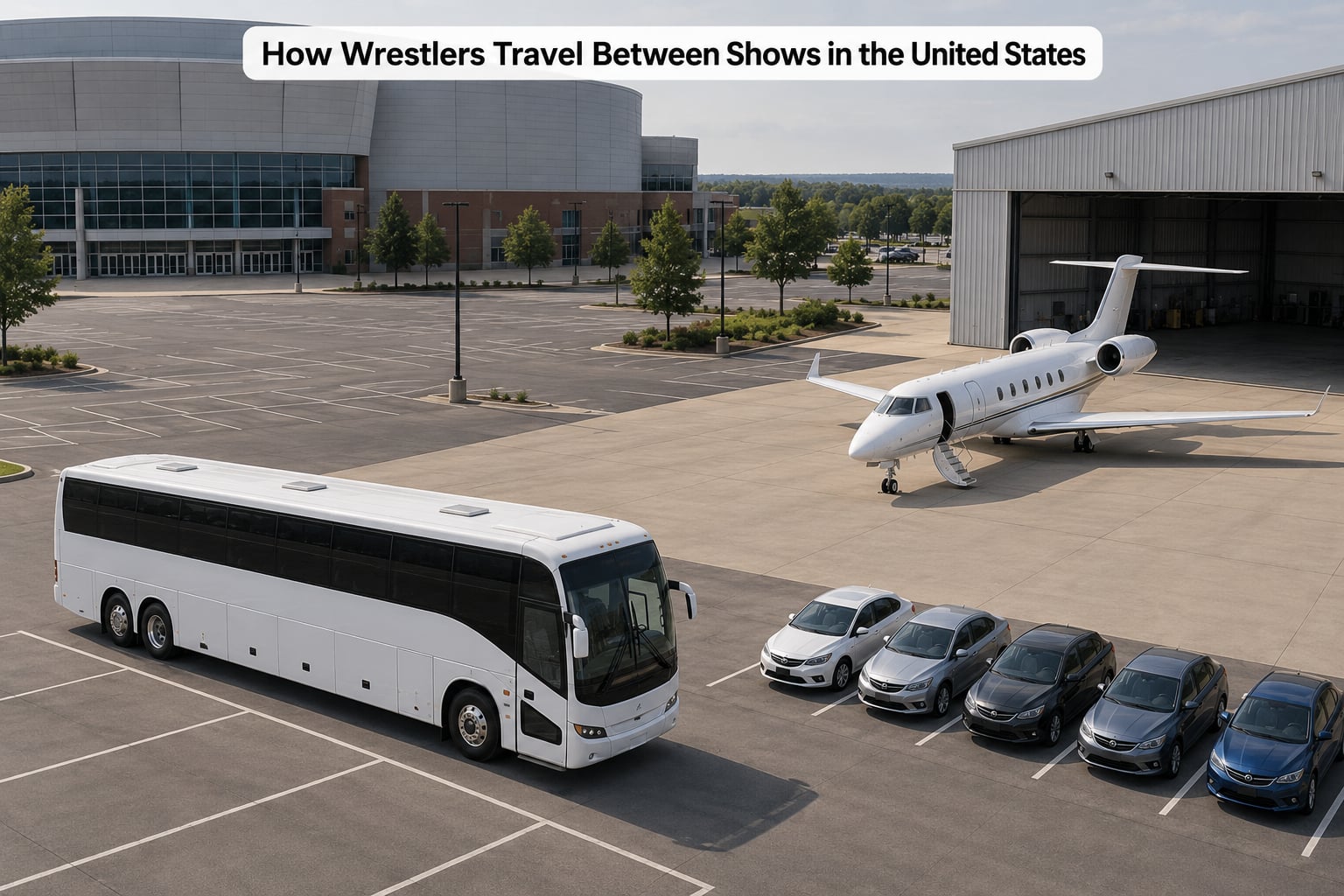
The short answer is that distance decides most of it. A wrestler working a run of shows inside one region often drives or takes a rented car. A wrestler on a national televised card usually flies. A wrestler with a booking several hundred miles away may take a private aircraft rather than spend six hours in a terminal. The promotion usually supplies the hotel room and sets the schedule, but the mode of transport is frequently the talent’s own call, because talent are contracted as independent contractors rather than employees.
There is also a difference between talent and everyone else on the roster. A wrestler working a weekly television show has a production team around them. A valet or a manager may have different travel needs. Officials, production crew, camera operators, ring crew, announcers and the person who sells merchandise each have their own routes, and the bus that carries one group is not necessarily the bus that carries the others.
Over one weekend, the same wrestler might drive two hundred miles on Saturday to a small gym show, then fly on Sunday for a televised event in another state. Consistency is less common than people expect.
Do Wrestlers Travel by Bus, Plane, or Car?
Five modes cover almost every trip, and each one suits a different situation.
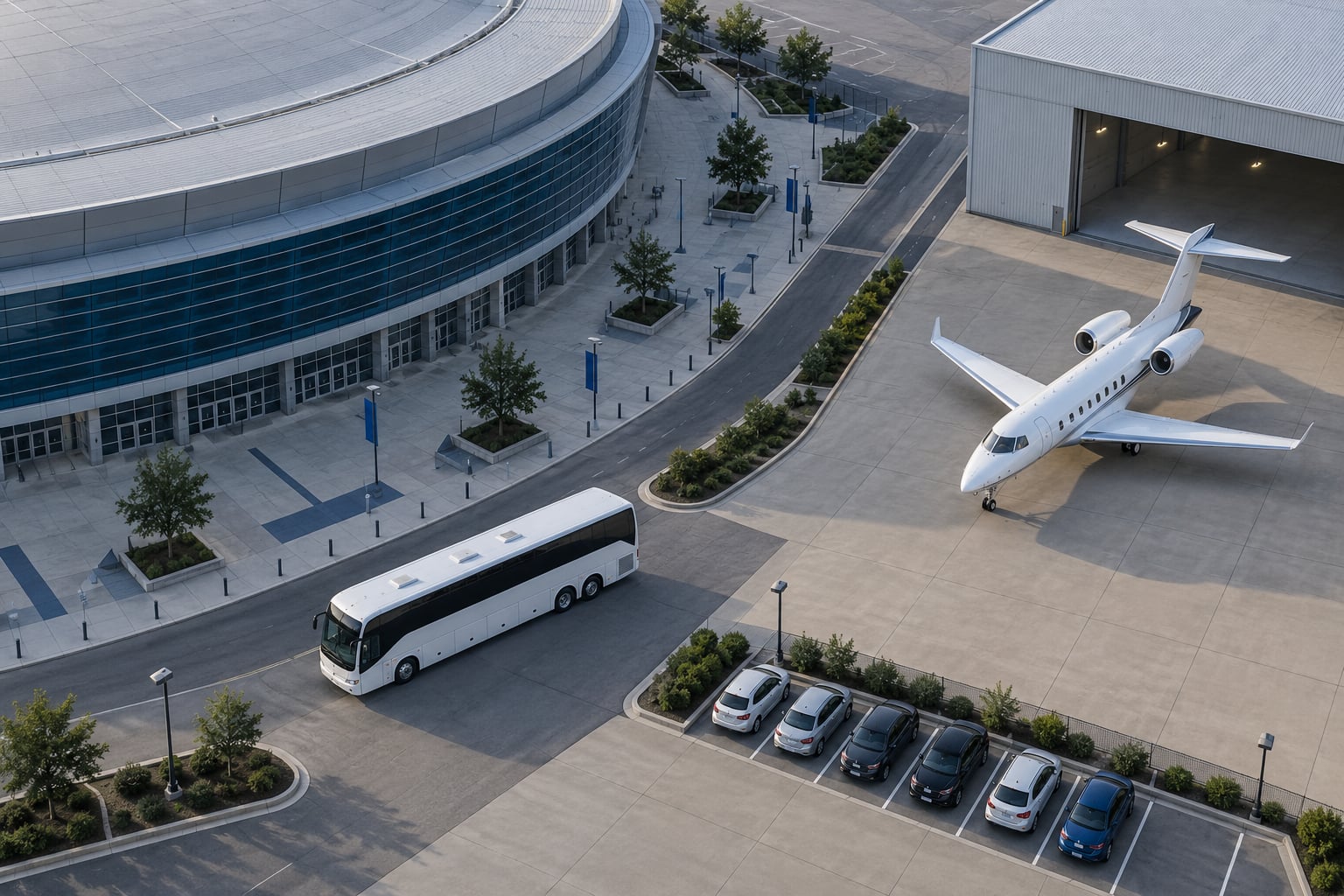
- Commercial flights handle the bulk of long domestic legs. Wrestlers on a major roster typically book and pay for their own tickets, take a standard seat, and add a rental car to get from the airport to the hotel and the hotel to the arena.
- Private and charter aircraft are reserved for schedules that commercial service cannot cover, such as a same-day international hop or a show scheduled on very little notice. Big shows are the usual occasion for them.
- Tour buses move the largest groups at once and are the only mode where the company, the crew and the luggage all ride together. Availability is limited, which is why they turn up far less often than fans expect.
- Rental cars and personal vehicles handle short regional runs and give talent control over their own schedule. Many wrestlers driving this route take a second car so they are not stuck waiting on a ride from a partner or teammate.
- Motorhomes combine sleeping and transport in one vehicle. Driving one of these on U.S. roads requires a commercial endorsement for the heavier units, which is a small administrative step many wrestlers take specifically so the road can double as a hotel room.
The crew travels differently again. Ring equipment, cameras, lighting, a stage and racks of costumes move by truck, usually ahead of the wrestlers, and those trucks follow their own routing because they need building access rather than airport access.
Wrestlers describe the ground legs as the part nobody sees. A flight from Atlanta to St. Louis is easy. The rental car pickup queue at the St. Louis airport at one in the afternoon is where the day actually starts to wear down.
What Makes Travel Between U.S. Wrestling Shows So Demanding?
A wrestler’s schedule and a promoter’s production schedule are two different calendars layered on top of each other. The promoter is working backward from broadcast deadlines and venue contracts. The wrestler is working backward from arrival time, travel time, and how much sleep that leaves.
On the production side, there is a load-in window where the ring, the staging and the video equipment go into the building, and there may be a sound check and a production meeting that happen well before the doors open. Press obligations, sponsor appearances and promotional interviews are usually scheduled in the middle of the day, which can put a three-hour drive and an interview on the same afternoon.
Arrival windows are tighter than the bell time suggests. Talent typically report several hours ahead of a televised show so there is time to make wardrobe changes, run through match cues, hit the gym or meet with production. The practical result is that a short drive from one city to the next can take a full afternoon, and the day before a show is frequently less restful than the show itself.
Seth Rollins has talked about this directly, saying he does not think people see how bad the travel is. Shinsuke Nakamura described the schedule as insane. Those comments come from wrestlers who had every option available to them, which tells you something about the ones who do not.
How Do Wrestling Companies Plan a Road Schedule?
Road scheduling is a routing problem solved months ahead of time. Promoters pick a market, check that a suitable venue is available on the right date, then work backward to build travel days around the show. Spacing is not arbitrary. Two shows in the same state on the same weekend may work for one promotion and be impossible for another, depending on who is on the card and whether a television slot is attached.
Venue access shapes the plan as much as geography does. An arena with a scheduled load-in window means the truck has to arrive early in the day, and the wrestlers have to be nearby at a time that matches. An armory show with a mid-afternoon bell means a very different arrival pattern than a televised event with an 8 p.m. start.
Local transportation is part of the booking conversation. Promoters often discuss where talent will be staying, because the hotel location decides how early someone needs to leave for the airport. When several wrestlers on the card live in different markets, someone still has to pick them all up, and that someone is usually company transportation or a pair of rental cars.
That scheduling also explains why talent appear to travel on days they do not appear to work. A wrestler listed on a card can fly in the morning, appear in one segment, and fly out the same night, because the production only needs them for a short window. Not every wrestler on the roster works every show.
How Wrestlers Travel Between Shows in the United States
Here is the sequence most domestic road runs follow. The wrestler checks out of the hotel in the morning, having already paid for the room personally and often secured a comp ticket for later. Bags get loaded, either into a trunk or onto a bus that is already parked outside.
Ground transport to the airport or the next city comes next, and this is the leg that gets oversold as the easy part. A two-hour flight is a small piece of a day that has already started with a hotel checkout and a lobby wait. On a drive, the same trip is four hours of highway with a stop for food and no chance to lie down.
Arrival at the venue happens with time to spare, before the arena opens. Talent check into the second hotel if the first one is far from the building, hit wardrobe, and meet with whoever needs a decision made. Match work runs through the afternoon, the show happens in the evening, and then the wrestler waits out the crowd before leaving.
After the show, the recovery window is short. If the next city is close, the wrestler might drive straight through to the next hotel and sleep there. If it is far, the flight is booked for the next morning and the hotel room becomes the important part of the trip. Then the whole cycle starts again, and the number of shows in a week is really a measure of how many times that cycle fits.
How Much Gear Does a Wrestling Company Have to Move?
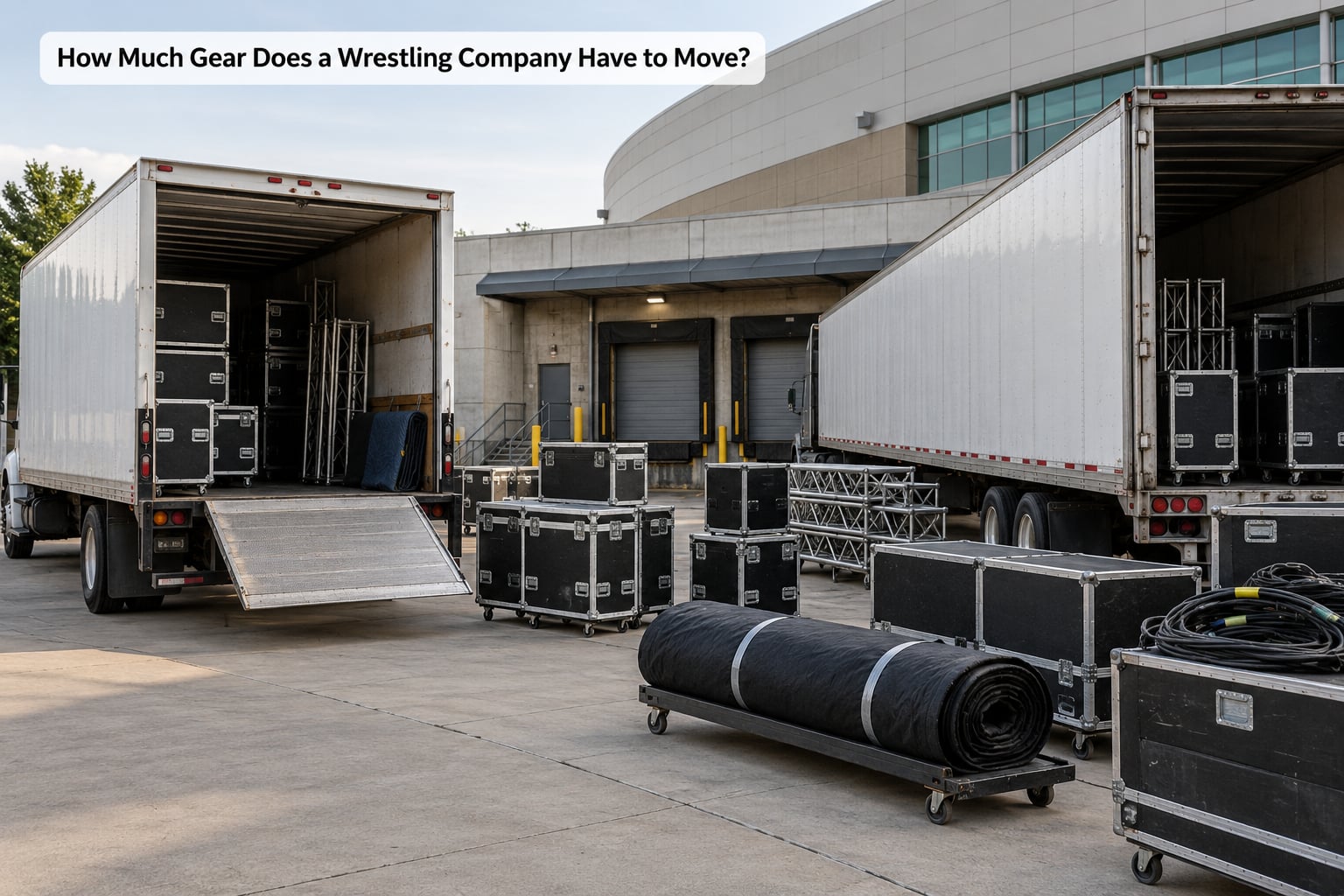
Almost nothing that makes a wrestling show look like a wrestling show travels with the wrestlers. The ring arrives as a set of panels, posts, cables and skirts, built and torn down at every venue. Truss, lighting, video wall, camera platforms, microphones, monitors and the production trailer all move separately, and they usually start their day before the talent wakes up.
On the talent side, the volume is smaller but the sensitivity is higher. Costumes travel in garment bags and get steamed and repaired on site. Entrance music, pyro effects, props, weapons, championship belts, entrance gear and autograph items each need a secure place, and a wrestler who owns a title belt travels with it in hand rather than in a shipping case.
Freight and specialty transport handle the bulk of this work. Trucks use their own routing and their own access windows, and a show that starts at 8 p.m. may have had a truck at the loading dock at 6 a.m. Merchandise moves separately again, usually on a schedule set by the venue’s vendor arrangements rather than by the wrestling card.
For a small independent promotion, none of that exists. The ring is rented locally or the venue owns it, the lights come from a folding truss, and a trailer full of gear may belong to the same person who wrestles in the main event.
How Do Wrestlers Manage Rest, Meals, and Recovery on the Road?
Sleep is the resource that runs out first. A typical domestic road day can take up ten or eleven hours of door-to-door movement between the hotel in one city and the hotel in the next, and that figure does not include match work once the wrestler arrives. Building a schedule around a consistent bedtime matters more than most fans would expect.
Meals are planned around the schedule rather than around hunger. A wrestler eating before a match wants something they have eaten many times before, which is why hotel restaurants and grocery stops near the venue are a normal part of the day. Dinner before a show is usually a question answered by the bell time, not by preference.
Recovery work happens in hotel gyms when a venue does not have one, and it is the first thing squeezed when a schedule is tight. Many wrestlers prioritize sleep over a workout on a road day, which tells you how limited the recovery time actually is.
Downtime is part of the schedule design. The traditional weekly rhythm described on wrestling discussion boards before the streaming era put Raw and SmackDown talent on the road from Tuesday to Saturday or Wednesday to Saturday, with one genuine day off and a travel day either side. That rhythm changed when the shows moved and the schedules consolidated, but the principle held: a wrestler with zero consecutive days off in a multi-week run will not stay healthy, and the schedule has to reflect that or someone gets hurt.
Independent wrestlers have less room to build in recovery. A booked weekend might mean three shows across two days, and the drive home after the last one is unpaid time nobody budgets for.
What Do Wrestlers Pack for a U.S. Road Run?
Packing for a road run is a balance between repetition and weight. Most wrestlers keep a rolling bag rather than a suitcase, because a bag moves easily through airports and car trunks.
- Clothing for the days on the road plus one change for any appearance, since a wrinkled outfit on a sponsor shoot is a wasted trip.
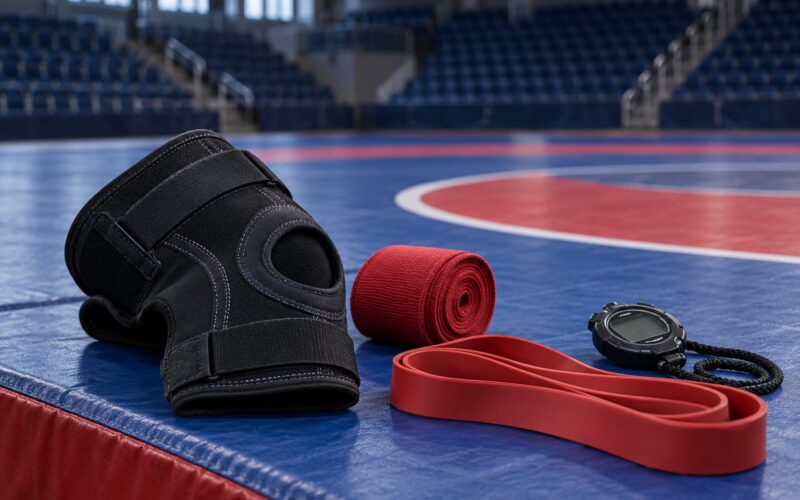
- Ring gear in separate bags for each match, plus boots, kneepads, elbow pads, wrist tape and a change of everything in case something tears mid-card.
- Skin care such as sunscreen, a non-greasy moisturizer and anything a wrestler has used before. A new product tested in a hotel bathroom on a Tuesday is a bad bet.
- Personal medication in original packaging, carried rather than checked. Anyone with prescriptions should ask a pharmacist or doctor what to carry and how to store it, and keep a copy of the prescription details available.
- Documents including identification, a work authorization, insurance information, emergency contacts and the promotion’s contact details.
- Electronics with chargers, a long cable for a bus or hotel room, headphones, and a power bank for days when the schedule wins over the outlet.
- Small personal items such as a phone mount for the car, a refillable water bottle, snacks, and whatever a specific wrestler treats as essential.
Independent wrestlers add a second layer that televised talent rarely think about: tape, tool kits, a sewing kit for gear, spare boot laces and cleaning supplies. Their equipment travels in the car because there is no production truck to carry it.
Can Wrestlers Bring Family or Travel With a Partner?
Sometimes, and it changes the travel plan significantly. A partner, child or pet who travels with a wrestler adds a person to every booking decision, every hotel arrangement and every flight. Promotions that cover talent travel generally do not extend the same arrangement to family members, so a wrestler traveling with a partner is often handling those costs personally.
Pet travel is the version with the most rules. Airlines and hotels each have their own requirements, and moving a same-day schedule around a pet is a genuine constraint on which trips a wrestler can take.
The bigger effect is on scheduling. Talent with a traveling family are frequently more selective about runs that cross multiple time zones or include very short turnaround times, which is one reason a promoted wrestler with a family at home may pass on an opportunity that a single wrestler takes without hesitating. Every promotion and every contract handles this differently, so there is no single rule to point to.
How Do Wrestlers Stay Safe While Traveling?
Road life is mostly ordinary risk management rather than drama, and the sensible habits are the same ones any frequent traveler uses.
- Use reputable carriers for flights and hotels, and check the carrier’s baggage policy before a trip with ring gear or a title belt in the case.
- Keep identification and payment methods in the same place, not split across a bag and a jacket.
- Secure luggage in the trunk of a personal vehicle and never leave equipment visible in a parking lot.
- Manage fatigue honestly. Drowsy driving is the largest single risk on this kind of schedule, and a wrestler finishing a night show has worse judgment about driving home than a rested one does.
- Keep a communication channel open with the promotion for the whole travel day, so a delayed flight does not turn into a missed call time with nobody aware.
- Have a backup plan for the leg that can go wrong, which on a U.S. road week is usually the rental car pickup or an airport shuttle.
For independent wrestlers, a second phone and an emergency contact who knows the schedule is the practical version of that plan, because nobody else knows where they are on a given Saturday.
Frequently Asked Questions
Do wrestlers travel every day on a professional wrestling schedule?
It depends on the promotion and the booking. A televised weekly show usually runs on a rhythm where talent are on the road most weekdays with one day off, plus travel days on either side. Independent wrestlers often work every weekend and drive between shows on those same days. Long international tours are a different pattern again, with bus travel replacing flights for whole weeks.
How early do wrestlers arrive before a wrestling show?
For televised shows, several hours before the bell is normal, which covers wardrobe, production meetings, match cues and any rehearsal. House shows and small independent cards can be much looser, sometimes a couple of hours. Talent arriving early also lets a promotion push a schedule change without turning into a missed flight.
Do wrestling promotions provide buses and hotel rooms for everyone?
Not for everyone. Hotels are usually provided by the promotion and booked centrally, which is the most consistent part of the arrangement. Buses are limited and often available for a subset of the roster or the production crew. Cody Rhodes has spoken publicly about buying his own tour bus, which tells you how some wrestlers arrive at private transportation.
How much luggage does a wrestler take on the road?
Less than fans expect for most televised talent, because gear is packed in small bags that fit in a trunk or a gym bag. The volume comes from repetition: extra ring gear, boots, protective pads and clothing for each day. Independent wrestlers pack heavier, because they often carry tools, spare parts and repair supplies their show depends on.
Do wrestlers pay for their own travel between shows?
On most major U.S. promotions, wrestlers are contracted as independent contractors and book and pay for their own flights and rental cars, while the company generally covers the hotel. That arrangement has been part of the wrestling business model for a long time and is still widely reported. Contract terms vary, so the details are not identical for every talent.
Can wrestlers travel with their families between U.S. shows?
Many do, and it shapes the itinerary. Hotels, vehicles and flights need to accommodate extra people, and those costs are often handled by the wrestler rather than the promotion. Family travel also limits which runs are workable, particularly short-notice international trips and same-day arrivals. Policies differ by contract, so there is no universal answer.
Conclusion: Start with the Schedule
The transportation plan follows the schedule, not the other way around. Promotions build road schedules months ahead around broadcast dates and venue contracts, then work backward to decide how long talent need to be in each city. Wrestling talent move between U.S. shows by plane, bus, rental car or their own vehicle depending on that distance, that window and what the contract covers, and on most shows the wrestler is booking and paying for much of it directly.
If you are a fan, event listings will give you dates and cities, and travel arrangements will rarely be part of that information. If you are booking talent, or you are on the road yourself, the useful takeaway is simpler: figure out the show times first, then work backward through the drive or flight, the arrival window and the sleep that has to fit somewhere in there.