How wrestlers cut weight for television is mostly a two-stage job. Over several weeks they run a controlled calorie deficit while lifting heavy to protect muscle, and in the final 24 to 48 hours they shed water weight by cutting fluids and salt and overheating in a sauna or hot tub. The result is a leaner, more defined physique under ring lighting, and most of the last two pounds comes back within a day or two.
Professional wrestling weight cutting is not the same thing an amateur wrestler does to make a weight class, and the two get mixed up constantly. Making a class is a rule-bound, hours-long contest against a scale. The television version is about changing how a body looks on camera over weeks, with a short dehydration finish.
Table of Contents
- How Wrestlers Cut Weight for Television
- Why Do Wrestlers Cut Weight for TV?
- What Happens During a Weight Cut?
- How Wrestlers Cut Weight for Television Safely
- How Long Before a TV Taping Should a Wrestler Start?
- What Do Wrestlers Eat and Drink During Weight Cuts?
- What Are the Risks of Rapid Weight Cutting?
- How Do Wrestlers Rehydrate After a Weigh-In?
- Can Wrestlers Make Weight Without Losing Muscle?
- Frequently Asked Questions
- How do wrestlers cut so much weight so fast?
- How do wrestlers cut weight in 2 days?
- How much weight do wrestlers usually cut?
- How do wrestlers lose 10 pounds in a week?
- How do actors cut weight so fast?
- How can someone cut 3 pounds in 1 hour?
- Conclusion
How Wrestlers Cut Weight for Television
A wrestler cutting weight for television does it in two stages: fat loss through a calorie deficit over weeks, then water loss through dehydration in the last day or two. The fat loss is what changes the physique, and the dehydration is what makes the change show up faster than the timeline suggests.
- Fat loss over weeks. A moderate calorie deficit, usually alongside continued resistance training, so the weight comes off slowly enough that muscle stays attached to it.
- Carbohydrate and sodium reduction. Both hold water in the body, so cutting them in the final days frees up a few pounds that reappear at rehydration.
- Fluid restriction. Stopping drinking drops body water in a fairly predictable range, and it comes back just as fast.
- Sauna, hot tub, steam room or sweat suit. Sitting in heat to sweat off more fluid, usually in the hours before a televised appearance rather than on the day of a match.
- Monitoring. Weigh-ins, body composition checks, hydration markers and blood work, all under a sports medicine professional rather than guesswork.
Everything above the third item is the part wrestlers discuss openly and the part that carries real risk. I would treat the first two as the plan and the last three as medically supervised territory.
| Type of weight lost | Speed | Share of the number on the scale | Comes back after | Main risk |
|---|---|---|---|---|
| Fat | Pounds per week | The whole number, gradually | Stays off if eating is maintained | Energy loss, slowed recovery |
| Water | Hours to days | Several pounds at once | One to two days after drinking | Dehydration, electrolyte imbalance |
| Muscle | Slow, and unwanted | Hard to separate from fat on a scale | Slowly, if at all | Strength and performance loss |
One thing worth keeping in mind: a scale tells you a total, not a breakdown. A wrestler who drops eight pounds in a weekend has mostly lost water, and the visible leanness is real while the endurance is not there.
Why Do Wrestlers Cut Weight for TV?
Television magnifies everything about a physique. Ring lighting is bright and unforgiving, and a defined look reads as athletic and fast in a way that a heavier frame does not.
Promotions have also shifted the ideal over time. The 1990s mainstream look was often a mass-oriented frame; from the 2010s onward, lean heavyweights became the preferred aesthetic, and getting a wrestler there frequently starts with a conversation about weight. A leaner performer is easier to repackage, easier to move into a different role, and easier to photograph for a photo shoot or a network graphic.
There is a business layer too. In 2022, reporting tied to the Wrestling Observer Newsletter and Dave Meltzer described a former champion being told to lose weight under Vince McMahon, with the preference for leaner talent on television framed as the reason. Around the same period, coverage of Gunther’s run in NXT UK and on SmackDown focused on a reported loss of roughly 30 pounds, transforming him from a superheavyweight into a 6 foot 3 powerhouse look. Treat the precise figure as a reported number rather than a measured one.
What most readers miss: promotions rarely run a true weigh-in for pro wrestling. There is no scale at the arena and no recorded weight like there is in amateur wrestling. That is why the roster weight listed online is often a billed or listed figure, and why fans in wrestling forums rarely trust it. The cut happens against a mirror, a camera and a promoter’s expectation.
What Happens During a Weight Cut?
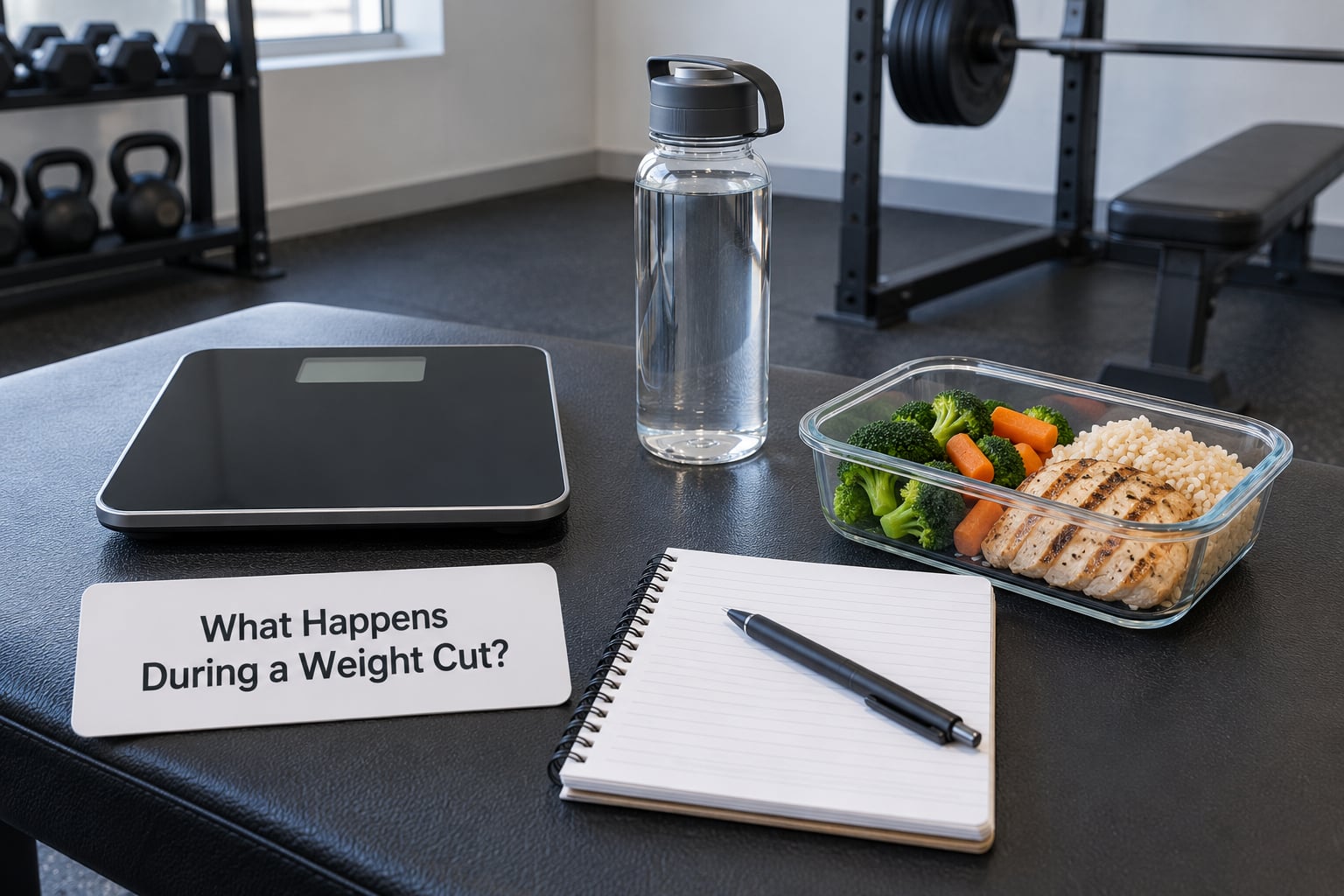
It starts long before anything dramatic. A wrestler gets a medical assessment and a baseline: weight, body composition, blood markers, hydration status and any history that changes the plan. From there it is mostly measurement over months.
Most of the loss is gradual fat loss, planned at a rate most dietitians would consider modest. Then, in the final window before a televised taping or photo session, the plan shifts from weeks to hours.
Protein and resistance training are held steady through that phase so the lean look comes with strength intact. Some wrestlers will adjust carbohydrate intake in the last few days, because carbohydrate stores carry water with them and lowering them drops the number without the appearance of losing condition.
The weigh-in itself is usually informal. For a taped show, the target date is the day the footage is shot, which is not the day the episode airs. That gap matters, because a wrestler who dehydrates on Monday for a Tuesday taping looks different on the Thursday broadcast.
How Wrestlers Cut Weight for Television Safely
Safely means not doing the fast part alone. A qualified physician or registered dietitian who knows the athlete should set the target, the rate and the stop rules.
Protein intake and adequate micronutrients stay in place rather than being sacrificed for a lower number, and hydration status gets monitored rather than assumed. Labs matter here too, because kidney and electrolyte changes can show up in blood work before they show up in how someone feels.
Anyone considering a cut should have a doctor involved, particularly with a history of heart, kidney or blood pressure issues. Amateur wrestling coaches have published guidance on making weight that reaches the same conclusion: gradual fat loss is the safe path, and dehydration is not necessary to get there.
For anyone reading this who is not a contracted wrestler: talk to a doctor or a registered dietitian first. This is general information about a professional practice, not a plan you should run on your own.
How Long Before a TV Taping Should a Wrestler Start?
Plan backwards from the shoot date, not the air date. A visible, believable change takes weeks of body composition work; the dehydration finish takes hours and is not where the visible leanness comes from.
| Point in the plan | What happens |
|---|---|
| 8 to 12 weeks out | Medical clearance, baseline measurements, calorie deficit begins, resistance training volume maintained |
| 4 weeks out | Loss rate trimmed, weekly weigh-ins, hydration and lab checks, look of the physique assessed honestly |
| 7 to 10 days out | Carbohydrates and sodium adjusted, fluids managed, shoot date confirmed against the tape schedule |
| 48 hours out | Any dehydration work happens here at most, under supervision, with the weigh-in or shoot as the deadline |
| Day of the taping | Weigh-in if there is one, shoot, then rehydration and eating with the same seriousness as the cut |
How far ahead a wrestler starts depends on how much needs to come off, the starting body composition and the athlete’s history. A five-pound water adjustment is a different project from a twenty-pound body composition change, and treating them the same is how people end up in trouble.
What Do Wrestlers Eat and Drink During Weight Cuts?
The pattern is consistent even when the details differ: adequate protein, controlled carbohydrate intake, controlled portions, and attention to fluids and electrolytes rather than aggressive restriction.
Protein is the priority most dietitians insist on, because it protects lean mass during a deficit. Carbohydrates usually come down rather than disappearing, since they fuel training and matches. Fats stay in for palatability and satiety, which matters more when you are eating less overall.
Fluids get planned rather than cut blindly. Some wrestlers load water several days out and then reduce intake in the final 24 hours, a pattern combat-sports athletes describe on r/bjj and r/MMA as the standard approach: drink heavily earlier, then taper, then rehydrate fast after the weigh-in.
On the electrolyte side, the honest answer is that this is a supervised area. Sweating heavily without replacing sodium and other electrolytes is how a wrestler ends up with blood in their urine or worse, and nobody should be improvising that at home. If a promotion is asking for a cut, that is a conversation with a doctor attached to it.
What Are the Risks of Rapid Weight Cutting?
Rapid cutting trades a number on a scale for real physical cost. The known ones:
- Dehydration and reduced plasma volume. Blood volume drops, which raises heart rate at rest and makes a hard match harder to recover from.
- Electrolyte problems. Sweat replaces sodium, potassium and magnesium, and low levels affect muscle function and thinking.
- Kidney strain. Dehydration concentrating urine is a known mechanism, and r/bjj regulars describe it as the reason they consider dehydration cuts riskier than short fasting.
- Fatigue and impaired concentration. The kind of mental fog that matters when a match is scripted and calls are on.
- Impaired thermoregulation. A dehydrated wrestler in a hot ring sweats less and holds heat, which is a genuine problem on a long match under lights.
- Injury risk. Fatigue, depleted electrolytes and slower reaction time in the first minutes after a cut.
- Rebound weight gain. Weight lost as water comes back within a day or two, and repeated cycles are where the health cost accumulates.
Stop and seek medical care for dizziness, confusion, fainting, chest pain, very dark or bloody urine, or being unable to keep fluids down. Those are not toughness signals.
How Do Wrestlers Rehydrate After a Weigh-In?
Recovery starts immediately, and it is planned rather than improvised. Drinking begins quickly after the weigh-in, often with an electrolyte solution, followed by food within a short window.
Weight does not fully return on the spot, which surprises people. A wrestler may rehydrate several pounds over the first day or two and still not be back to the pre-cut number for several days, because some of what came off was carbohydrate-bound water that returns with eating rather than drinking.
That gap is also the performance window to plan around. If a wrestler’s competition is hours after the weigh-in, the rehydration is incomplete by definition, which is why taped shows, where the shoot is separated from performance, are easier to manage than same-night bouts.
Can Wrestlers Make Weight Without Losing Muscle?
Mostly, and it comes down to rate. Loss that happens slowly enough to measure and adjust tends to come off fat, while loss that happens fast enough to surprise you tends to include muscle.
Resistance training is the anchor, because a muscle that is still being loaded is a muscle the body protects. Protein intake does the same job on the nutrition side, and sleep matters more than most people expect during a deficit.
Body composition checks, rather than the scale alone, tell you whether the plan is working. If lean mass is dropping while the scale barely moves, the deficit is too aggressive and needs easing.
The short version: you can make weight without losing muscle, but you make it slower, and the speed everyone finds on television is not coming from that part.
Frequently Asked Questions
How do wrestlers cut so much weight so fast?
Two stages with very different timelines. Weeks of controlled calorie deficit with resistance training produce the fat loss, and the last 24 to 48 hours of fluid and sodium restriction plus heat exposure produce the water loss that makes the scale move quickly. The number drops fast; the visible leanness is real but most of it is not fat.
How do wrestlers cut weight in 2 days?
The two-day version is dehydration, not fat loss. A wrestler typically reduces fluids and sodium in advance, then uses a sauna, hot tub, steam room or sweat suit in the final hours to sweat off additional water before a weigh-in or shoot. It reverses within a day or two of rehydrating and carries real kidney and electrolyte risk.
How much weight do wrestlers usually cut?
The reported figures vary widely by context. Coverage in 2022 described Gunther losing roughly 30 pounds for a leaner NXT UK and SmackDown look, while most gradual body composition work shows a smaller number over a longer window. Amateur wrestlers making a class typically target five to ten percent of body mass.
How do wrestlers lose 10 pounds in a week?
Most of that ten pounds is water, not fat, and the two behave very differently afterwards. Fat loss at a sensible rate shows up in body composition measurements over months. Water loss returns within a day or two of rehydrating, which is why the same number reappears on the roster a week later.
How do actors cut weight so fast?
Actors preparing for a role often use similar physics in a shorter window, frequently under a doctor or nutritionist who manages fluid, heat exposure and rehydration. The difference is that a film role has a defined end date, while a wrestling contract keeps asking for the look week after week, which makes the cumulative health cost higher.
How can someone cut 3 pounds in 1 hour?
Three pounds in an hour is water, and the usual methods are hot bathing, sauna or sweat suit wear. It is not a fat-loss method and it is not something to attempt without supervision. Anyone considering it should talk to a doctor or registered dietitian first.
Conclusion
The first step for anyone asking how wrestlers cut weight for television is not a dehydration trick. It is setting the actual target with a qualified clinician or dietitian, then building a gradual plan that protects muscle and gets measured over weeks.
Television weight cutting is a supervised performance decision, not a do-it-yourself test. The last two pounds come off fast and come back fast, and they are the least interesting part of the process anyway.