Why wrestling crowds in some arenas are louder comes down mostly to how full the building is, not how many people it can hold. The same 6,000 fans packed into a 7,000-seat bowl produce more noise than 6,000 fans scattered through a 10,000-seat one, and the roof, the shape of the seating and what is happening in the ring decide the rest.
That is the short answer, and it settles most of the arguments you see online about which arena, which era or which promotion has the best crowd.
Table of Contents
- What Makes Some Wrestling Crowds Louder?
- Seat-fill ratio: why wrestling crowds in some arenas are louder
- How Arena Design Changes Crowd Volume
- How Audience Culture Shapes Wrestling Noise
- Why Some Matches Make Fans React More
- Do Promos, Chants, and Entrance Music Matter?
- How to Tell Whether a Crowd Is Actually Louder?
- Frequently Asked Questions
- Why are wrestling crowds in some arenas louder than others?
- Is a sold-out arena louder than a half full one?
- Which wrestling arenas have the best acoustics?
- Is piped crowd noise used on wrestling television?
- Conclusion
What Makes Some Wrestling Crowds Louder?
A loud wrestling crowd is never one thing. It is a group reacting to a moment, amplified by a building that holds the sound, an audience that knows how to make noise, and a booking decision that gave them something worth shouting about.
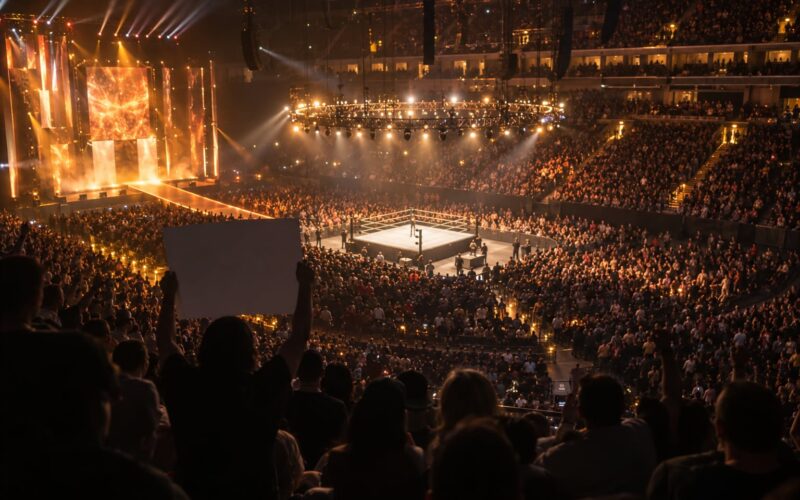
Brian Cage put the arithmetic plainly when he explained why AEW scales down to smaller buildings: six thousand people in a seven-thousand-seat arena is louder than six thousand people in a ten-thousand-seat arena, because everyone is contained closer together. The seat-fill ratio, not the headline attendance number, is the single biggest lever.
- Seat-fill ratio. Density beats capacity. A bowl at 90% sounds bigger than one at 55% with the same number of people in it.
- Arena acoustics. Roof height, hard surfaces and bowl geometry decide how much of the noise comes back down as echo.
- Crowd composition. Who is in the seats changes how much noise comes out. Adults without children in the bowl are a different crowd from a family-heavy arena.
- Distance and seat spread. People seated close together and close to the ring react together, and reactions feed each other.
- Emotional investment. Stakes, long feuds and callbacks turn a quiet reaction into a collective roar.
- Surprise. A return nobody expected produces a sharper, louder burst than a booked main event.
- Local fan culture. Hometown crowds, UK and Japanese touring audiences and independent territory rooms all have their own noise habits.
Seat-fill ratio: why wrestling crowds in some arenas are louder
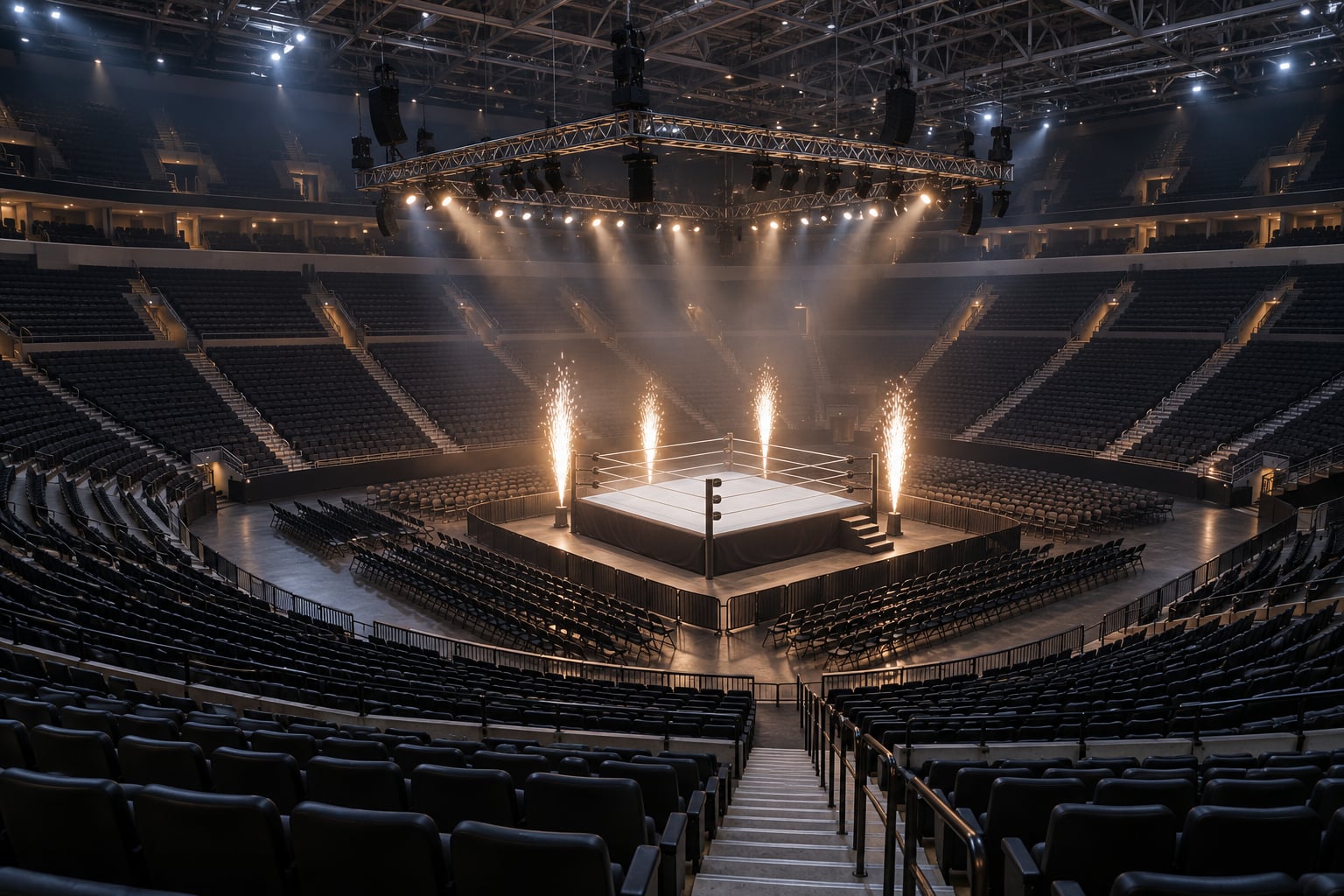
Think about what a half-empty bowl does to sound. Empty rows above and behind the crowd break the group apart, so you get a loud patch and a silent gap instead of one wall of noise. Fill the same building and the reflections come off a solid mass of bodies rather than bare concrete.
This is why promoters talk about a residency model and why the same tour slot feels different in different cities. A 15,000-seat building in a market that only draws 6,000 loses. A 7,000-seat building in that market sells out and sounds twice as big.
How Arena Design Changes Crowd Volume
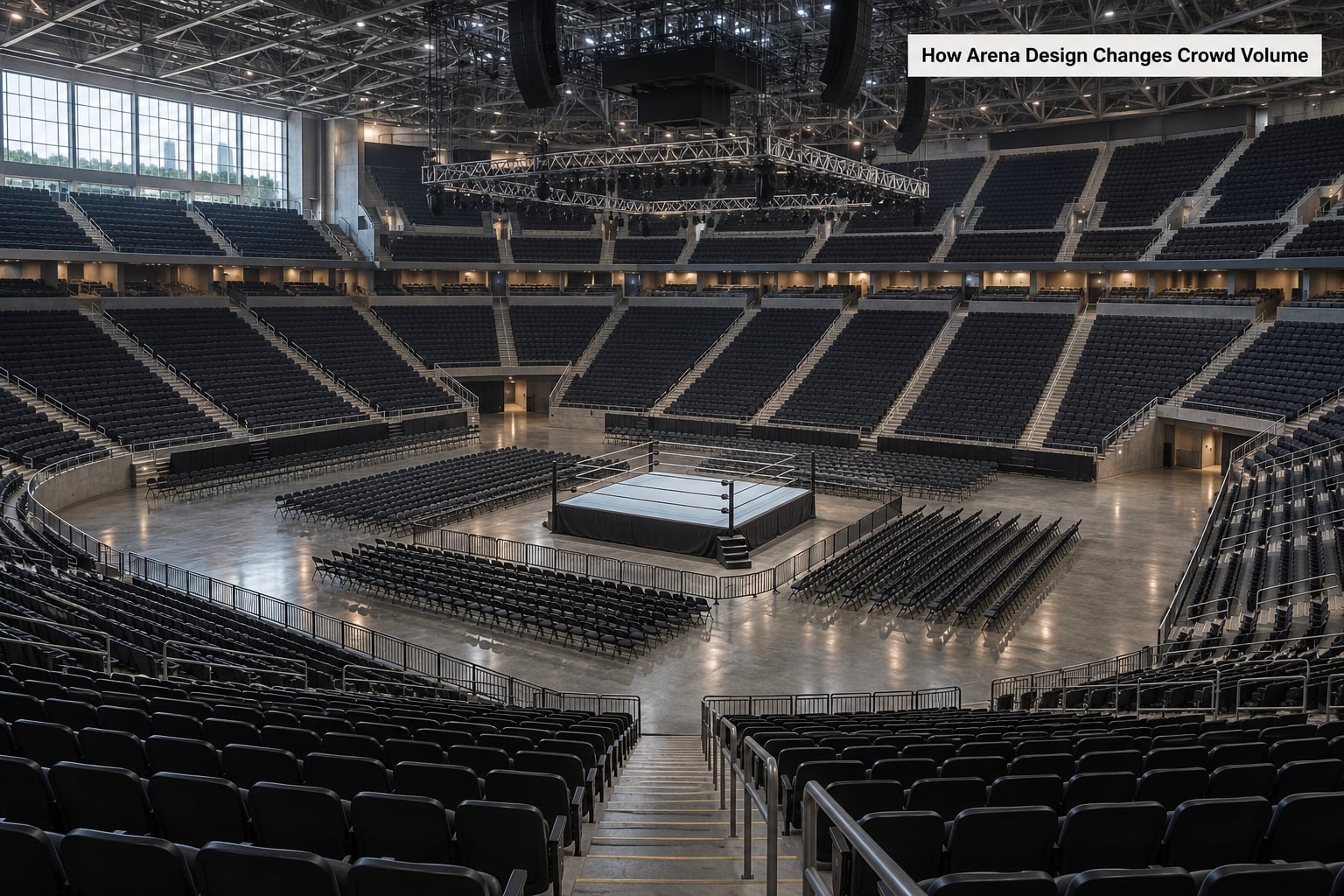
Buildings do not all carry sound the same way. A room with a low, flat roof and hard surfaces sends noise back down and holds it; a room with a high ceiling and absorbing upper decks lets it escape.
Concrete, glass and metal in the ring area reflect sound toward the seating, which is why an arena can feel like an echo chamber at the moment a big pop lands. Fightful specifically named Montreal’s Bell Centre and Chicago’s United Center as venues that funnel sound straight toward the cameras, which helps explain why those buildings feel so loud on a broadcast as well as in the seats.
Open-air venues work differently. Sound disperses instead of reflecting, so a stadium crowd can hit enormous peaks during a single moment without ever building the sustained roar an indoor bowl produces over twenty minutes.
Bowl geometry matters just as much as height. Steep seating means spectators sit closer together vertically, so reactions travel up the rows faster. A flat floor bowl spreads people out and kills that effect.
Distance to the ring sets the ceiling on personal volume too. The first ten rows are inside the noise, in the splash zone where a dropkick lands and the ring shakes, and they carry the rest of the bowl with them.
Approximate capacities shift with each event, so treat these as scale references rather than exact seat counts.
| Building | City | Setting | Approx. capacity | Why it gets loud |
|---|---|---|---|---|
| Hammerstein Ballroom | New York | Indoor | about 3,500 | Tiny room, low ceiling, steep bowl, everyone within earshot of the ring |
| Madison Square Garden | New York | Indoor | about 19,800 | Flat bowl spreads the crowd, but a full building is a wall of sound |
| OVO Arena Wembley | London | Indoor | about 12,500 | Roof reflections plus an audience that chants through whole segments |
| Bell Centre | Montreal | Indoor | about 21,000 | Often described as an echo chamber that funnels sound toward the hard camera |
| United Center | Chicago | Indoor | about 23,500 | Same reputation for carrying noise and pushing it toward the cameras |
| Kia Center | Orlando | Indoor | about 18,800 | Modern bowl with hard seating surfaces and strong upper-deck reflection |
| US Bank Stadium | Minneapolis | Open-air | about 65,000 | No roof reflection, but huge shared peaks that carry across the venue |
How Audience Culture Shapes Wrestling Noise
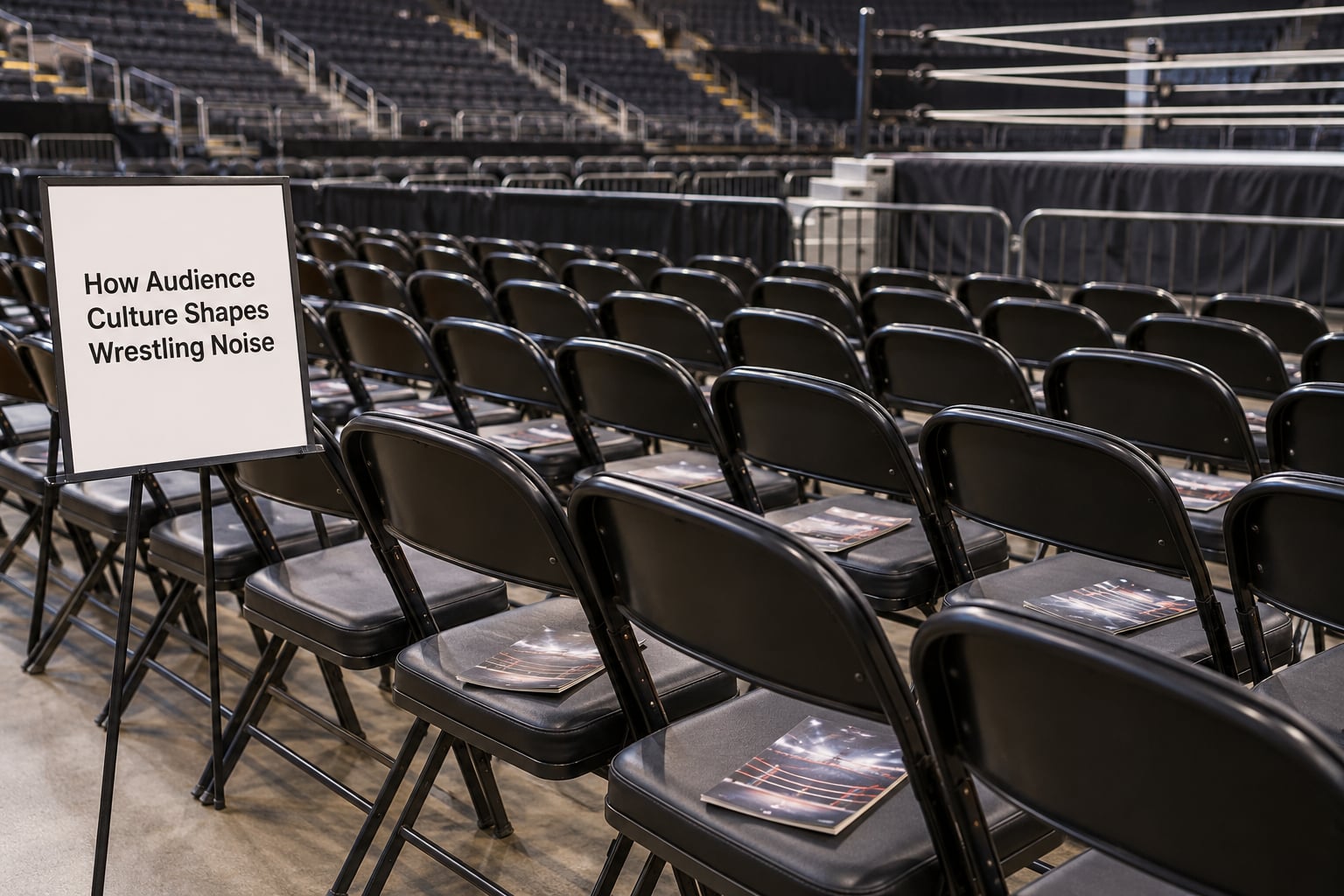
Crowd noise in wrestling has its own vocabulary. A pop is a single burst of reaction, and a chichone is the fan who leads it, usually with a sign, a hat or a chant. Those few people set the volume for everyone behind them.
Composition is the part almost nobody writes down. On r/SquaredCircle the consensus is blunt: a room full of drunk twenty-something men is going to be louder than a mixture of that same group with children and women in it. Families cheer in bursts and then talk, because they have to hear each other.
Region matters as much as demographics. UK arena crowds and the big European stadium shows are widely reported as being louder far more often than a comparable US arena night, and Japan tours carry a very different rhythm again, with a steadier, more conversational noise that spikes hard at the right moments.
Travel distance adds the hometown effect. The closer the show is to a fan base, the bigger the proportion of people who travelled, and travelling fans are more likely to be there for the moment rather than for the wrestling.
Why Some Matches Make Fans React More
The same arena is quiet during a squash match and unbearable during a title change. What changes is how much the crowd cares about the outcome.
Near falls do the heavy lifting. A kickout at 2.99 that nobody saw coming produces a sharp collective gasp, and a sharp gasp makes more noise than a minute of steady cheering.
Callbacks do the rest. When a wrestler walks out to a moment from fifteen years ago, the crowd recognises the story and reacts to two things at once, the return and the memory.
Pacing matters too. Wrestling builds toward silence before the big move, and that deliberate quiet makes the following pop land harder. A crowd that is never allowed to settle never gets to the highest volume it can reach.
Modern fans on r/WWE voted a top-ten list of recent pops: AJ Styles’ Royal Rumble debut, Cody Rhodes’ return at WrestleMania 38, Alexa Bliss at the Royal Rumble, the Undertaker’s WrestleMania 40 return, the Hardy Boyz return, John Cena at Money in the Bank 2021, Edge at Royal Rumble 2020, Bad Bunny at Backlash 2023, Carlito at Backlash 2023 and CM Punk’s WWE return. The same thread deliberately excluded heavily rumoured returns as predictable, which is the point.
Do Promos, Chants, and Entrance Music Matter?
Entrances generate their own noise, separate from anything happening in the ring. The titantron video, the lighting blackout and the first bars of the theme music give the crowd something to build on before the wrestler is even visible.
Pyrotechnics and a hard camera angle aimed at the crowd matter for the audience watching at home rather than in the building. They add volume to the room and shape how the moment looks on screen.
Call-and-response is where a crowd becomes a single noise source. Catchphrases, stadium-style songs and chants let thousands of people shout the same words at the same time, which is far louder than the same number of people reacting individually.
Promos work the same way in reverse. A heel cutting a promo in front of a hot crowd generates heat, and heat is volume just as much as a pop is.
How to Tell Whether a Crowd Is Actually Louder?
Some of the difference you notice is real acoustics and some of it is broadcast processing. Telling the two apart is the fastest way to stop arguing about shows you only watched.
Measured loudness is sustained. A crowd that is genuinely loud holds a roar through a whole exchange, not just one entrance. Perceived intensity is different: a quiet arena can produce a sharper, more exciting reaction for ninety seconds than a loud one produces for twenty minutes.
Participation is the other tell. Watch how many arms go up on a catchphrase. If most of the bowl is moving, the crowd is doing this together, and that is the mechanism that produces real volume.
Broadcast audio flattens the difference. Television mixes compress the dynamic range of a crowd so the commentary always sits on top of it, which makes a loud arena sound about the same as a quiet one. On top of that, wrestling broadcasts have long used added crowd noise, a practice reporter Dave Meltzer has confirmed is still in use, so some of what you hear at home never happened in the building.
That gap is the source of the endless argument. A home viewer hearing a piped, compressed bed of noise cannot tell a great crowd from a polite one.
Frequently Asked Questions
Why are wrestling crowds in some arenas louder than others?
Because of fill density and building design, mostly. Six thousand people in a 7,000-seat bowl sit shoulder to shoulder and generate more noise than six thousand spread through a 10,000-seat arena. Roof height, hard surfaces and bowl shape decide how much of that noise reflects back down. Add emotional investment in the match and a building that can carry it, and you have the loudest rooms on the circuit.
Is a sold-out arena louder than a half full one?
Yes, and the gap is larger than most people expect. A sold-out bowl concentrates every reaction into a solid mass of bodies, and reflections come off people instead of empty concrete and bare seats. A half-full arena usually produces a loud section and quiet gaps, because reactions cannot travel across empty rows. Promoters keep citing this when they scale a building down to the size of their actual audience.
Which wrestling arenas have the best acoustics?
Small indoor buildings with low or mid-height ceilings and steep seating tend to carry crowd noise best, which is why venues like Hammerstein Ballroom are described as intimate and hot. Large rooms with hard concrete and glass, including the Bell Centre and United Center, are often called echo chambers that funnel sound toward the cameras. Open-air stadiums produce bigger peaks but no sustained indoor roar.
Is piped crowd noise used on wrestling television?
Added crowd noise has long been part of wrestling broadcasts, and reporter Dave Meltzer has confirmed it is still used. Broadcast audio is also compressed so the commentary always sits clearly on top of the crowd. The practical effect is that a home viewer cannot reliably tell a great live crowd from a polite one, which is why arena comparisons so often end in disagreement.
Conclusion
Wrestling crowds in some arenas are louder because of a combination, not a single cause: a dense fill ratio, a building that reflects sound back at itself, an audience that knows how to react together, and a match or entrance that gave them a reason to.
Start with the fill ratio when you compare two buildings, then look at the moment rather than the night. Comparing a quiet squash in a half-full arena against a title change in a sold-out one tells you nothing useful.