The short answer: a wrestling match and a wrestling broadcast are two different products built from the same event. In the arena you get one continuous view chosen by where you bought a seat, and in the building you hear everything at once. On television a director and a camera team decide when to cut, when to zoom and what you get to see.
That gap explains most of what fans find strange. A move that shakes the ring in front of you arrives on screen as three seconds of a close-up from a low angle. A two-minute rest on the mat lasts about nine seconds. A finish you watched from the twentieth row is replaced by a replay you did not see live.
None of that means anyone is cheating. It means coverage is a construction, and construction has rules. Below is how those rules work, camera by camera, cut by cut, and why the live experience is not a degraded copy of the broadcast. It is the original.
Table of Contents
- Why Wrestling Matches Look Different on Camera Than Live
- How television editing changes the pace of a wrestling match
- Why camera angles make moves look different
- What the hard camera is for
- Why the same move looks different on camera than live
- Who actually decides what you see
- Where the impact comes from
- How the live arena crowd changes what you hear
- Why moves and impacts may seem safer or harder on television
- How sold and half-full arenas affect the atmosphere
- Why wrestlers and promoters perform for the camera
- What changes between live viewing and television coverage?
- Frequently Asked Questions
- Are professional wrestling matches choreographed?
- How do cameras make wrestling moves look more dangerous?
- Why does live crowd sound seem louder in an arena?
- Does television editing change the outcome of a match?
- Why can a great match feel slower or faster on television?
- Can you tell from television footage whether a wrestler was genuinely injured?
- What to Watch First
Why Wrestling Matches Look Different on Camera Than Live

Why wrestling matches look different on camera than live comes down to production, not performance. A live match runs start to finish in one continuous sequence, and a broadcast shows you a directed version of it, shaped by a fixed wide shot, a dozen camera angles, live cutting, replays, commentary and a mixed audio track.
The main reasons, in the order they usually catch your attention:
- The hard camera. One fixed wide shot anchors every match, and it frames the ring for a viewer who has never seen the venue.
- Live cutting. A director switches shots in real time, so quiet stretches disappear and important beats get skipped.
- Zoom and close-ups. Moves read bigger when the lens is tight, and the tight shot hides body positioning that gives away the timing.
- Angle selection. A low ringside angle makes a landing look heavier than the same landing from the hard camera.
- Audio. The broadcast mixes crowd volume, ring impacts and music to a level you cannot reproduce in the room.
- Lighting and stage design. Truss lights, LED boards and pyro change the look of a wrestler before the bell rings.
- Replays and packages. Slow motion and pre-taped segments change how you understand a moment after the fact.
- What the camera misses. The match keeps going while the shot changes, so at home you genuinely miss things that happened.
How television editing changes the pace of a wrestling match
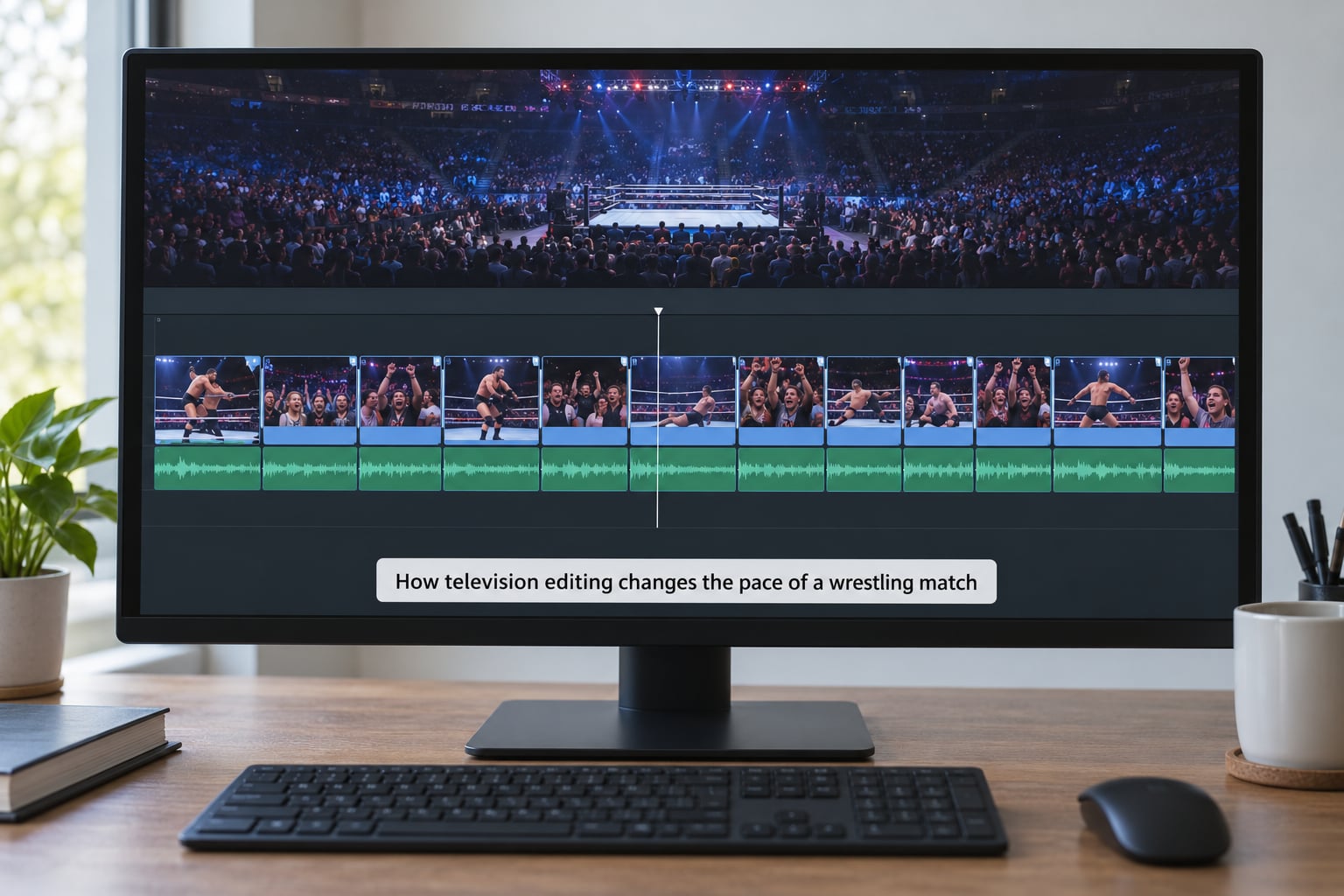
Editing changes the pace of a match by removing the parts where nothing happens. Wrestlers spend a lot of time on the mat, talking, catching their breath between sequences and waiting for the other person to move. In the arena that dead time is part of the rhythm, and it can be the most entertaining stretch of the match.
On television it rarely survives. A cut to a close-up of a wrestler’s face, a shot of the announce desk or a cutaway to the crowd fills the gap, and eight seconds of mat wrestling arrives at your screen as two. The result is a match that feels quicker and more eventful than the one in front of you.
Editing can also slow a match down in the other direction. When a director holds on the hard camera through a long exchange instead of cutting to close-ups, a match that looks nonstop on television can feel surprisingly measured compared with what the crowd felt in the building.
One thing worth knowing: wrestling is not shot in pieces and stitched together like a film scene. There is no reshooting of match action and no second unit filming the match itself. That means the director is choosing from cameras that are all live at the same moment, and every cut is a genuine loss of a few seconds. Fans have pointed out for years that you can predict the pattern on a WWE show, counting down from three and knowing when the shot will change. The predictability is part of why it draws complaints.
Why camera angles make moves look different
The angle decides what the audience can see. A move involves weight, leverage and timing, and a camera pointed from one spot can hide all three while a camera pointed from another exposes every part of it.
What the hard camera is for
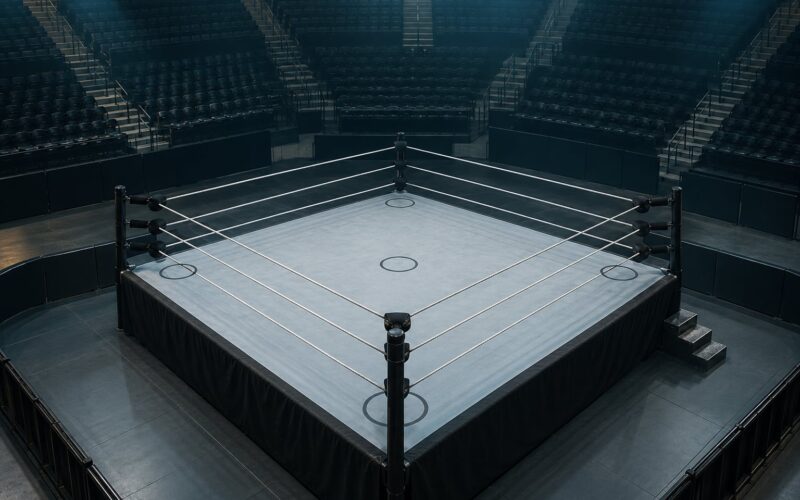
The hard camera is a fixed position, usually on the announce-table side, holding a wide shot of the entire ring. Its job is orientation: you always know where the wrestlers are and where the barricades are, even in a stadium with sixty thousand people in it.
Because it never moves, the hard camera also has a flat, consistent look. That is its strength as an anchor shot and the reason some fans complain when the broadcast leaves it too quickly. A director who stays on the hard camera for a long exchange lets the match breathe, which is why AEW’s production has picked up a reputation for steadier camera work among fans on r/SquaredCircle.
Why the same move looks different on camera than live
Cut on impact is the technique that changes a move most. The director switches to the closer angle a fraction before the landing, so the first thing you register at full size is the contact. In the building, your eyes have to find the action, track it and work out what just happened.
Zooming has a similar effect and a common problem. Pushing in tight on a submission hold removes the wider context, and without seeing the legs or the shoulder, the leverage disappears and the move can look weightless. Fans describe exactly this when they say zooming in and out during a hold makes it look fake.
Who actually decides what you see
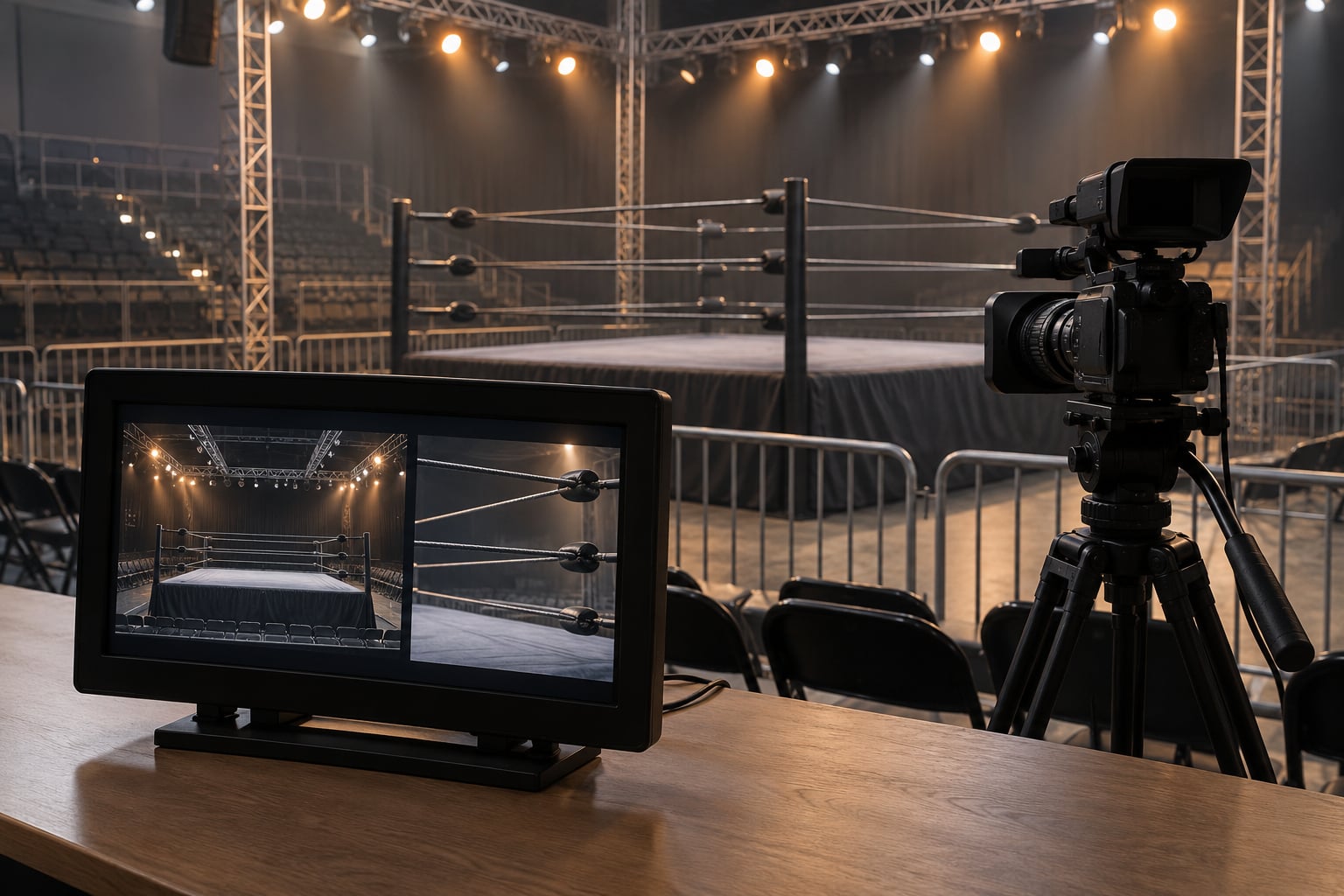
It is worth naming the roles, because most fans credit or blame a single person and the reality is a small crew with one decision-maker. The hard camera operator holds the wide shot and keeps it framed. The iso cam operator works a low angle at floor level for close, dramatic coverage. A second or third operator roams ringside, sometimes on a handheld rig, to follow a wrestler out of the ring or into the crowd. A replay operator runs the instant replays and cuts them together after the fact.
Above all of them sits the director, usually in a production truck, choosing which feed you see and for how long. Fans are more inclined to trust an explanation that names these jobs than one that says they edit it, because the specific detail can be checked against what you saw on screen.
Where the impact comes from
Low ringside and floor-level angles exaggerate height. When a camera sits near the mat, a wrestler falling toward it fills the frame and the fall looks like it travels further than it did from the hard camera side, where the same fall is compressed by distance and by the ropes and the ring post cutting across the view.
Close-ups are used the same way for a face, a taped shoulder or a hand gripping a mat. They are emotional shots, not informational ones, and the trade is that you stop being able to see the whole exchange.
How the live arena crowd changes what you hear
Live arena audio is a single unmixed environment where everything arrives at once: three thousand people reacting, the bell, the announcer, the entrance music, boots on canvas and a body hitting the floor. There is no fader and no operator deciding what you should hear.
A broadcast mixes that into separate channels. The announcer sits in front, the crowd is pushed back and then swelled, and ring impacts are given their own level. When the camera cuts to a wide shot the mix can lift so the arena feels huge, and when it goes to a close-up it can pull down so you hear a breath.
You also lose the parts of the room the microphone does not reach. A conversation three sections over, someone slapping a chair, or a chant that starts away from the ring simply does not exist in the broadcast mix. Sound is the biggest single difference between being in the building and being at home, and it is the one fans mention most often as the thing television cannot replace.
Why moves and impacts may seem safer or harder on television
Television changes how hard a move appears through three separate things at once: the angle you watch it from, the impact sound in the mix, and slow motion. Which one is doing the work is almost impossible to isolate while you are watching.
A punch that lands as a dull thud in the building can be paired on television with a clean, hard sound effect timed to the frame, and the same motion that looked like a lean into the ribs on the hard camera looks like a full swing from a low angle. Slow motion then stretches the contact by a factor of several, and a two-second impact becomes a sequence you can study.
The reverse happens too. A heavy-looking slam from an oblique angle can lose all sense of force on a flat wide shot, and people at home often read that as the move being soft when the live crowd read the opposite.
One limit is worth stating plainly. Television footage cannot tell you whether an injury was real. Slow motion shows you where a head landed, not how hard, and no camera angle gives you the internal information. What footage can show is sequence and position, which is genuinely useful when the question is whether a hold was applied correctly or released on time.
How sold and half-full arenas affect the atmosphere
A full room and a half-full room are two different products, and the production reacts to both. In a sold arena the noise is continuous, so reactions land harder and quiet moments are rare. In a half-filled room, the same moment can get a cheer in one section and silence in another, and that uneven response changes how a director picks shots.
Seat distribution matters too. Hard camera side seats get the cleanest wide view. Floor seats near the barricade get the loudest impact and the worst angle for seeing the whole ring. Upper bowl seats see the wide shape of everything but lose the small details. The broadcast, by contrast, has one clean view of the whole ring and can move to any of the other angles on demand, so some seats are genuinely a worse deal than television.
Scale changes production again. Independent shows are often shot by one or two people on a tripod, which is why their coverage feels raw and occasionally loses the action. Major stadium shows have a full crew, dedicated replay operators and enough angles to show a match six different ways. Same match logic, wildly different camera budget.
Why wrestlers and promoters perform for the camera
Wrestlers know where the hard camera is, because almost every match begins positioned so the camera side gets the better angle. Taunts, poses and holds are timed to point at the lens, and eye contact that would be meaningless to a wrestler directly across the ring reads as intensity on a screen.
Entrances are built the same way. The ramp, the LED boards, the lighting change and the video package all exist to give the camera something to cut to. A wrestler walking to the ring under a spotlight in a dark arena is a broadcast image first and a live one second.
The live-show detail that explains the pacing gap best is this: wrestlers at independent shows and on the smaller WWE cards are often observed to wait for the camera to come back before moving on. When the camera is on someone else in the crowd, the action can pause. In the building you can hear that pause as hesitation. On television it has already been edited out.
A cutaway to the crowd works the same way in reverse. It borrows a few seconds from the match to buy a reaction shot, and the reaction becomes the memory you keep of that moment instead of the move. Tracking shots that follow a wrestler across the floor stretch a physical action that took two seconds into eight, which makes a chase or a post-match brawl read as an event rather than a scuffle.
Promotions make these choices on purpose. WWE’s head of NXT has said publicly that NXT deliberately uses fewer camera cuts and less zooming than Raw and SmackDown, describing it as part of the show’s identity and listing lighting, set design, movement and camera feel among the differences. AEW’s production has drawn praise for holding the hard camera longer. Different shows, different ideas about what a wrestling match should look like on a screen.
What changes between live viewing and television coverage?
| Element | In the arena | On television |
|---|---|---|
| Shot selection | One continuous view from your seat | Chosen live by a director |
| Cutting | None, the match runs in sequence | Frequent, sometimes several per minute |
| Zoom | Fixed, you choose when to lean in | Constant push-ins and pull-backs |
| Angles | Your seat angle only | Hard camera, iso cam, ringside, overhead |
| Sound | Unmixed, everything at once | Levelled crowd, impacts and commentary |
| Replays | You see each moment once | Slow motion after the fact |
| Lighting and stage | Room lighting, seat dependent | Designed lighting, ramp video, pyro |
| Entrances | However long the walk takes | Trimmed to fit the segment |
| Missed moments | Only what is behind you | Anything during a cut |
| Running time | As long as it takes | Fitted to a broadcast slot |
Frequently Asked Questions
Are professional wrestling matches choreographed?
Broadly, yes. Outcomes, major spots and finishes are planned in advance with the performers, while the connecting work, pacing and many strikes are improvised in the ring. The camera does not change that arrangement. It shows a planned sequence, and it can hide timing or emphasise contact, but it does not create moves that were not part of the agreed plan.
How do cameras make wrestling moves look more dangerous?
Mostly through angle and timing. A low ringside lens exaggerates height and travel, cutting to a close shot just before impact puts the contact at full size, and a clean impact sound in the audio mix gives the landing weight the room may not have produced. Zooming out during a hold does the opposite, removing the context that made the move look heavy.
Why does live crowd sound seem louder in an arena?
Because in the room the crowd is not recorded, mixed or limited. You hear every section reacting at once, plus the bell, the announcer and the ring, with nothing pushed back for clarity. A broadcast balances those elements separately and can swell the crowd on a wide shot or pull it down on a close-up, so the noise level you hear is designed rather than natural.
Does television editing change the outcome of a match?
No. The finish is decided before the match starts and is not altered in editing, which is why no cut can turn a loss into a win. Editing only changes pacing, framing and which beats you see. It can make a close match feel longer or shorter, and it can hide a missed moment, but the result on screen is the result that happened in the ring.
Why can a great match feel slower or faster on television?
It depends on how the match is covered. A director who cuts to close-ups every few seconds removes mat work and rest holds, so a twenty-minute match can play in twelve and feel packed. A director who stays on the hard camera through long exchanges keeps the rhythm intact, and the same match can feel measured. The live crowd experiences neither version, because nothing is removed.
Can you tell from television footage whether a wrestler was genuinely injured?
No. Slow motion shows you position and sequence, and that is genuinely useful, but no camera angle reveals how hard a landing was or what a wrestler felt. Footage can show whether a hold was applied or released correctly. Anything beyond that is inference, and confident claims either way, that it is completely real or completely worked, are both oversimplifications.
What to Watch First
Next time you watch a match on television, follow four things in order: the cuts, the reactions on the faces of the wrestlers, the sound of the impact, and the timing of each zoom. Once you can see those decisions, the gap between the broadcast and the building stops being a mystery.
Keep the honest framing in mind. The televised version of a match is an edited presentation of a live performance, built for clarity and drama, and it leaves out plenty. The match in the arena is the whole event: continuous, unedited, loud in a way a mixing desk cannot reproduce, and different again depending on where you were sitting. Both are real. They are just not the same thing.