Accessible accommodations for wrestling fans with disabilities are the seating, entry, communication, and sensory supports a venue or promoter can arrange so you can attend the show: wheelchair spaces with companion seating, transfer or folding-chair seating, step-free routes, service animal access, and quieter or early-entry options. Getting them takes one specific written request, sent early, to the right desk.
Here is the honest version. How wrestling fans with disabilities get accommodations is mostly a contact process, not a negotiation. Arenas have accessibility pages and box office staff trained to handle these requests. Independent wrestling shows often have a person, a folding table, and good intentions. Either way, the fan who prepares ahead gets what they need far more often than the fan who waits in line at the gate.
Allow 15 minutes to research a venue and 20 minutes to write and send a request. Most replies come back within a few business days, so the window to act is usually weeks before the event, not the night of it.
Table of Contents
- What You Need
- How Wrestling Fans With Disabilities Request Accommodations
- How to Choose Accessible Seating and an Access Route
- How to Address Sensory and Communication Needs
- How to Bring a Service Animal or Support Person
- What to Do When an Accommodation Is Unavailable
- Common Mistakes
- Waiting until you arrive
- Messaging only on social media
- Failing to name the event
- Asking for a vague accommodation
- Assuming a seat is guaranteed
- Sharing more medical information than needed
- Frequently Asked Questions
- Can I request wheelchair seating at a wrestling arena if I do not use a wheelchair?
- Do I need to provide a doctor’s note to get an accommodation?
- Can I bring a service animal to a professional wrestling event?
- How do I request a quieter seat or early entry?
- What should I do if the venue says my accommodation is unavailable?
- Conclusion: Contact the Venue Early
What You Need
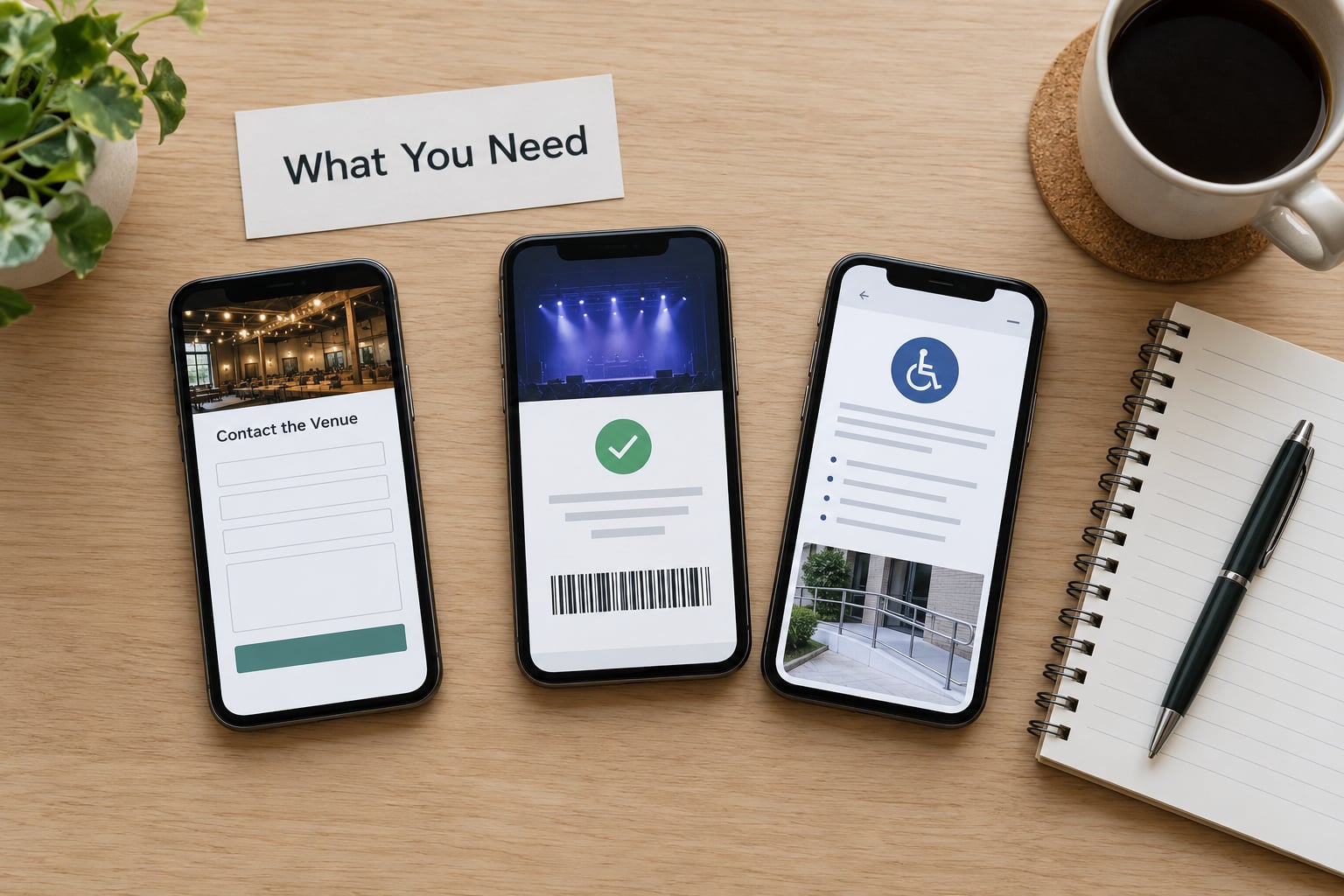
Gather four things before you contact anyone: the exact event name and date, the venue name and city, the ticketing platform you used, and the specific accommodations you want. That last one matters most. “I need accessible seating” gives a ticket clerk nothing to act on.
You also need a way to be contacted that actually gets answered. Email creates a written record, which is worth having later. A named accessibility contact, if the venue publishes one, beats a general customer service queue.
On documentation, the default is simple: you do not have to disclose a diagnosis to most venues. Arenas ask for what you need, not why you need it. If a venue does ask for documentation of disability-related support, it will usually say so up front and tell you what it needs. Send only what is asked for, and nothing more.
How Wrestling Fans With Disabilities Request Accommodations
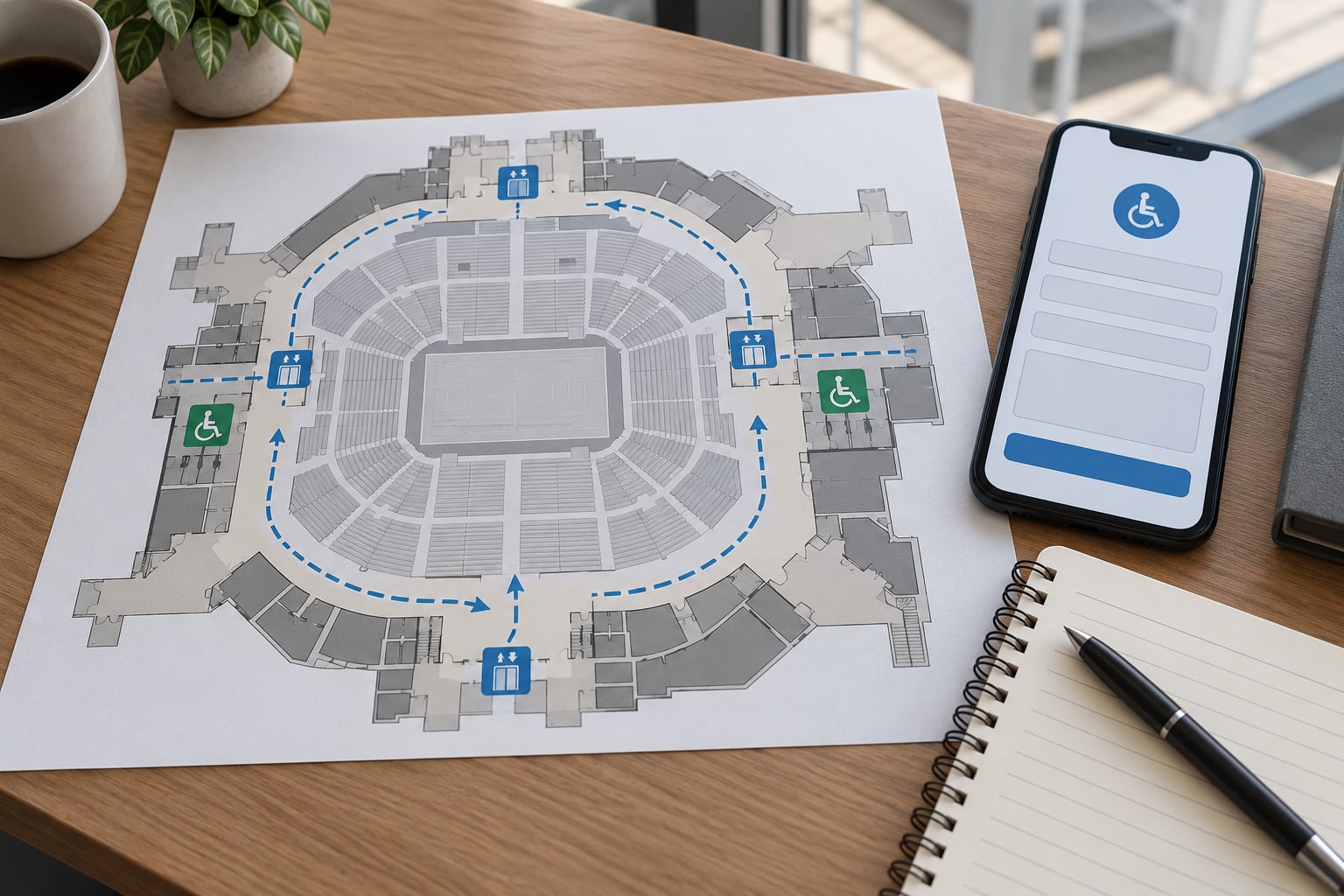
Start with the venue, not the ticket site. Public seat maps rarely show which wheelchair spaces have companion seating, how many rows back from a concourse, or whether an elevator is the only route in.
- Identify the four parties. The promotion, the arena, the ticketing platform, and any third-party promoter running a giveaway. Each one controls a different piece, and only the venue can move a seat.
- Read the accessibility page. Most arenas publish one. Look for an accessibility coordinator’s name or email, and for anything about wheelchair spaces, companion tickets, and sensory accommodations.
- Contact the correct department early. Guest services, the box office, or the accessibility coordinator. For a major card, aim for three to six weeks out; for a smaller show, as soon as tickets go on sale.
- State the specifics. Event, date, section or seat preference, access route you need, companion ticket needs, parking or drop-off, and any service animal.
- Ask for written confirmation. Get the section, row, and seat numbers in an email or a confirmation email from the ticketing system. A verbal assurance at the window is not a record.
- Reconfirm a few days out. Elevators break, seating gets reconfigured for a different production, and staff change shifts.
- Arrive early. Accessible entry lines are usually shorter, but the seating bowl fills fast at a popular show.
There is a fourth, less obvious option: a ticket giveaway or sponsor contest. In July 2024, a wheelchair-using fan named Mike Ashkewe won Money in the Bank tickets through a Toys “R” Us Canada contest, disclosed his access needs, and was told accessible tickets were sold out and offered the cash value instead. WWE intervened within a day, secured accessible seating, and covered his transportation. His point stands for anyone who wins tickets this way: the promoter running the contest controls the ticket, and only the venue can release a held-back accessible seat.
How to Choose Accessible Seating and an Access Route
Ask for the seat location in plain detail, because “wheelchair accessible” gets used loosely. A fan in a r/SquaredCircle thread about an NXT show for a mother who had two back surgeries and could not stand for a full show drew exactly the right community consensus: go to the venue box office directly rather than the ticket site, and verify the seats are genuinely accessible.
Useful specifics to request or confirm:
- Wheelchair space with companion seating. Confirm the companion seat is in the same row and not behind a support column.
- Aisle or transfer seating. If you use a cane, walker, or scooter, or can transfer out of a chair, ask for a fixed seat near an aisle instead of a wheelchair space.
- Distance details. Rows back from the concourse, restroom, and nearest exit. A seat technically accessible but forty rows from a restroom is a long trip on a bad night.
- A step-free route. Which entrance, whether it stays open for the whole event, and whether an elevator is required.
- Accessible parking and drop-off. Where the accessible spaces are, and whether a drop-off zone lets you avoid parking entirely.
- Accessible restrooms on your level. Worth confirming before you buy, not after you arrive.
Independent shows deserve their own paragraph. A small wrestling venue may have no fixed wheelchair spaces at all. What usually works is asking the promoter directly, arranging a transfer chair or a spot for your own folding chair, and confirming the venue floor is clear of cables and equipment cases. A TechSideline message board user described exactly this arrangement being granted when pre-arranged, with ADA-designated seating placed at the top of the section so the concourse was reachable.
One more fallback is worth knowing before you buy anything: watching at home. Streaming platforms for major promotions carry captioning and, on some devices, audio description or a separate commentary track. Settings differ by platform and app version, so check the playback options menu before the event rather than during the opening match. Fans who rely on captions for the commentary can also request them directly from the promotion’s support channel, which is a separate request from anything on the ticketing side.
How to Address Sensory and Communication Needs
Sensory and communication requests are the least discussed in wrestling fan spaces and among the easiest to make in writing. Wrestling is loud, sudden, and visually intense: entrance pyrotechnics, strobe and flash effects, a crowd that rises as one. Some fans also need communication support for ring announcements and crowd noise.
Requests worth making:
- Early entry, which gets you in before the doors open and lets you settle before the house lights go down.
- Advance notice of strobe lights, flash effects, and pyrotechnics, including which entrance and seating area has them.
- A lower-sensory seating section away from entrance ramps and hard-camera positions.
- Captions or a visual summary of ring announcements for fans who are deaf, hard of hearing, or simply cannot hear over the crowd.
- An assistive listening device if the venue offers them at guest services.
- An ASL interpreter for a show where the announcement matters. Ask early; interpreters need scheduling lead time.
- Ear protection, and permission to leave and re-enter during the show.
Frame these as reasonable requests rather than demands, and put them in the same email as your seating request so you deal with one person. The social model framing used by accessibility statements in wrestling, that barriers sit in the room rather than in the person, is a good tone to borrow in writing.
How to Bring a Service Animal or Support Person
In the United States, a service animal is trained to perform tasks directly related to a disability, such as mobility support, alert work, or deepening handler awareness. An emotional support animal, comfort item, or well-trained pet is not covered by the same rules, and most venues will not treat one as a service animal.
Two practical points. Generally, no doctor’s note is required to bring a service animal into a public place of public accommodation, though individual venues may have their own rules and documentation policies, so ask. And your support person is a separate matter from the animal: a companion ticket is usually provided at no cost or a reduced price when the accommodation requires someone to assist you.
Ask both questions in writing before the event, and bring your animal’s ID tags and any documentation you already keep. If the venue’s animal rules conflict with your needs, the accessibility coordinator is the right person to sort it out.
What to Do When an Accommodation Is Unavailable
Keep it calm and keep a record. A short, factual email chain moves further than an argument at the window.
- Ask for an alternative first. A different section, a transfer seat, a companion seat at a different price level, or released held-back accessible inventory.
- Go to the venue’s accessibility contact or guest services lead, not the general queue, and reference your earlier email by date.
- Document the problem. Dates, names, what you were told, and what you asked for. Screenshots help.
- Request a manager’s response in writing. Ask for the response to be emailed rather than given at the counter.
- Use ADA or state-law channels when needed. Title III of the Americans with Disabilities Act covers places of public accommodation and requires reasonable modifications to policies, practices, and procedures. State and local civil rights codes can go further, and an advocacy organization or disability rights agency can tell you where you stand.
The venue’s limit is a real one: a modification that would cause an undue burden or fundamentally alter the event does not have to be made. That is why bringing a specific, workable alternative matters. “Seat me in section 118, row 4, with my companion next to me, entered through the north accessible door” is easy to say yes to. “Make it accessible” is not.
Common Mistakes
Most problems fans have at wrestling shows come from timing and vagueness, not from bad luck.
Waiting until you arrive
Accessible inventory is limited and often held back rather than sold on the public site, so the good seats are gone by the time the doors open. Fix: contact the venue when tickets are released, not on event day.
Messaging only on social media
A reply to a promoter’s public post is not a request, and it leaves you with no record. Fix: send one email to a named department and keep it. A 2024 case ended with a call from a wrestler and a covered cab fare, but it started with a written complaint reaching the right people.
Failing to name the event
Box offices handle many shows. “I need accessible tickets” invites a follow-up question; “I need a wheelchair space with companion seating for the July show in the lower bowl” gets handled the same day. Fix: event name, date, venue, and section in the first line.
Asking for a vague accommodation
“Accessible seating” can mean anything from a wheelchair space to a seat near an exit. Fix: describe the seat location, the access route, and the support you need. A WrestleMania attendee in a ManiaClub thread described arenas that handle ADA movement around the venue well while the seating experience itself fell short, which is usually a specification problem you can solve in advance.
Assuming a seat is guaranteed
Nothing is guaranteed until you have written confirmation with section and row. Fix: treat any arrangement without that confirmation as unresolved and follow up.
Sharing more medical information than needed
Volunteering records to a box office puts your information in more hands than the request requires. Fix: state the accommodation you need; provide documentation only if the venue asks for it and explains why.
Two more that come up constantly. Buying through a giveaway organizer without asking whether accessible seats exist in that prize pool is how the Money in the Bank situation started. And waiting too long to request an interpreter, because interpreters are scheduled, not summoned on the night.
Frequently Asked Questions
Can I request wheelchair seating at a wrestling arena if I do not use a wheelchair?
Yes. Wheelchair spaces are one option, not the only one. If you use a cane, walker, or scooter, or can transfer into a fixed seat, ask for an aisle seat or transfer seating near an accessible entrance instead. Fans who simply cannot stand for a full show because of pain, fatigue, or recovery from surgery have requested exactly this and been accommodated. Describe the support you need rather than asking for a wheelchair space by name, and request it from the venue box office or accessibility contact in writing.
Do I need to provide a doctor’s note to get an accommodation?
Usually not. Most arenas ask what accommodation you need, not what your diagnosis is, and there is no general US rule requiring a doctor’s note for seating, early entry, or a companion ticket. Individual venues set their own policies and may ask for documentation of disability-related support, so check the accessibility page or ask the accessibility coordinator directly. Send only what is asked for, and ask in writing which documents they need before you share anything.
Can I bring a service animal to a professional wrestling event?
In the United States, service animals are generally permitted in places of public accommodation, which includes arenas running wrestling events. No doctor’s note is normally required, though venues may have their own rules, identification requirements, and expectations about behavior and leash control. Emotional support animals and comfort items are not covered the same way. Ask the accessibility coordinator before the event, keep your animal’s ID tags with you, and note that a support person is handled separately under companion ticket rules.
How do I request a quieter seat or early entry?
Put it in writing with your seating request, addressed to the accessibility coordinator or guest services. Ask for early entry, a lower-sensory section away from entrance ramps and hard-camera positions, advance notice of strobe lights, flash effects, and pyrotechnics, and permission to leave and re-enter during the show. You can also request captions or a visual summary of ring announcements, or an assistive listening device if the venue offers one. Give at least three weeks so arrangements can be made.
What should I do if the venue says my accommodation is unavailable?
Ask for a specific alternative: another section, a transfer seat, a companion seat at a different price level, or accessible inventory the venue holds back for releases. Then escalate to the accessibility contact or guest services lead in writing, referencing your earlier email by date, and ask for a manager’s response by email. Keep screenshots of every exchange. Title III of the Americans with Disabilities Act requires reasonable modifications by places of public accommodation, and state law may go further, so a disability rights organization can help you assess your options.
Conclusion: Contact the Venue Early
If you do one thing, identify the event and the venue, read the accessibility page, and send a specific written request as early as you can. Name the event, describe the seat location and access route you need, ask about a companion ticket, and get the section and row confirmed in writing before you pay for anything. Then confirm again a few days out.
None of that takes more than an evening, and it is the difference between a seat you planned and a scramble at the gate. Wrestling shows can be a genuinely welcoming room for disabled fans, but only when the arrangements get made ahead of time.