Schools handle how school kids imitating wrestling moves is addressed through the code of student conduct they already have, not through a special rule about wrestling. An imitation incident usually starts as an informal correction from the teacher on duty, then gets documented and referred, and only turns into detention or suspension when the behaviour repeats or somebody gets hurt. Most of the time the incident is coded as fighting, assault or disorderly conduct.
That surprises a lot of parents, because from the outside the behaviour looks like two boys having fun for ninety seconds. By the time an administrator sees it, there is a written record, a category, and a mandatory consequence attached to that category.
Table of Contents
- What Does It Mean When School Kids Imitate Wrestling Moves?
- Why Do Children Copy Professional Wrestling Moves?
- How Schools Can Respond Safely
- What Makes Wrestling Imitation Dangerous?
- How School Kids Imitating Wrestling Moves Is Addressed Without Shaming Them
- Talking to a child about wrestling imitation without turning it into a temptation
- What Should Parents Do After an Incident?
- How Schools Can Prevent Repeat Incidents
- Frequently Asked Questions
- Can a school suspend a child for play fighting?
- How do I appeal a school suspension?
- Are suplexes and DDTs illegal in high school wrestling?
- Do schools still use zero-tolerance policies?
- Should I tell my child that pro wrestling is fake?
- How do schools tell play imitation apart from bullying or aggression?
What Does It Mean When School Kids Imitate Wrestling Moves?
It covers a wide range of behaviour, from two children play-wrestling at lunch to a group reenacting a televised match on playground equipment, a chair-slam impression aimed at another student, or a staged dive off a climbing frame.
The reason schools treat it as a safety matter rather than a novelty goes back a long way. Jeffrey Jensen Arnett, writing in SAGE’s Encyclopedia of Children, Adolescents, and the Media, reports that principals deal with schoolyard fights involving children imitating wrestling at least weekly. The audience figures he cites to describe that context are from the early 2000s, so treat the scale as historical rather than current, but the pattern he describes has not gone away.
Why Do Children Copy Professional Wrestling Moves?
Because the moves look possible. Wrestling is packaged as spectacle, the hits are choreographed to read as real, and short clips strip away everything that would tell a child the impact is protected and rehearsed.
Peer approval does the rest of the work. A move is not copied because a child wants to hurt someone, usually, but because trying it earns a reaction from friends. That distinction matters later, because intent is exactly what a conduct investigation looks for.
There is empirical work behind the concern, though it is old. O’Sullivan published a 1999 study, catalogued as ED431526 on ERIC, on whether viewing professional wrestling raised violent and aggressive behaviour in first-grade boys. It is nearly three decades old and studied a single young cohort, so it is background rather than current evidence. Most parents in wrestling forums make a simpler point: the moves work, which is precisely why nobody should test them.
How Schools Can Respond Safely
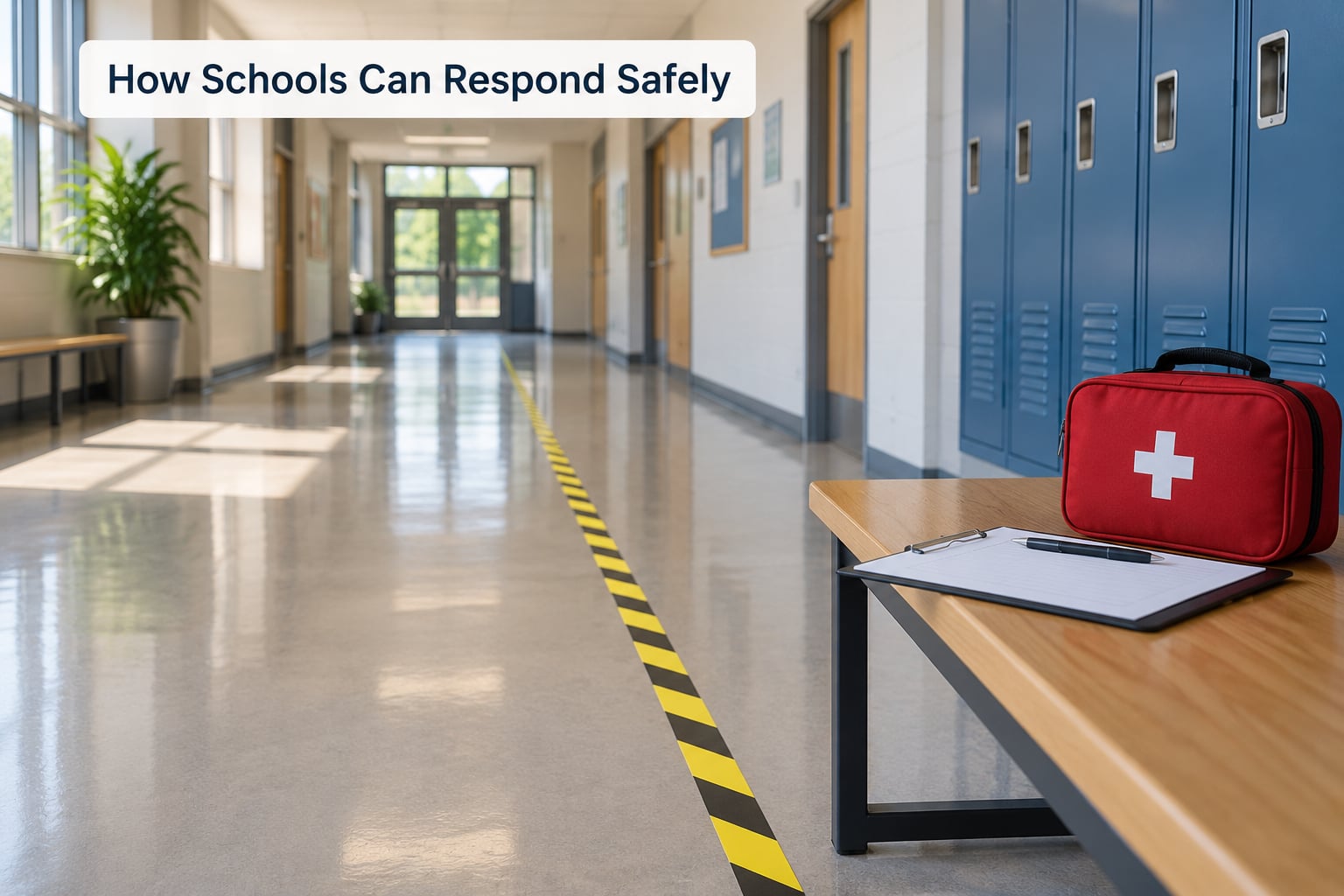
For a teacher in the moment, the useful sequence is short. Redirect first, privately if you can, then document what you saw, then tell the parent before the office does.
A few things make the response better. Separate the child who copied the move from the child who did not want to be on the receiving end, and the second one is usually the real victim. Avoid humiliating consequences in front of a class, since public shame tends to push the behaviour underground rather than end it. And check whether the same children have been sent to the office repeatedly before deciding this is a one-day suspension.
What tends not to work is a punitive reaction with no conversation attached. Parents reporting on parent forums describe the pattern clearly enough: the child learns that wrestling talk gets him attention at school, and the imitation continues.
What Makes Wrestling Imitation Dangerous?
Mostly the mismatch between what the child weighs and what the move assumes. A powerbomb or pile driver that looks survivable on television can compress a spine, and a DDT drives the back of the skull into a surface that was never meant to absorb it.
Playground settings make it worse. Concrete, climbing frames and desks do not forgive a bad landing, and there is no spotter, no referee and no coach. A move performed on a smaller child by a larger one is also just an assault with a wrestling name attached.
Under scholastic wrestling rules, moves with dangerous impact are restricted or banned outright, and the reason coaches drill them on mats with supervision is that they work on adults who have trained for years. For any injury question after an incident, the answer is a physician, not a school nurse’s guess. This is not wrestling instruction.
How School Kids Imitating Wrestling Moves Is Addressed Without Shaming Them
The conversation works better when the enthusiasm is left alone and only the behaviour is fenced in. Saying “I love that you watch this, and you cannot try those moves on people” gives a child nothing to argue with.
Talking to a child about wrestling imitation without turning it into a temptation
One parent on r/SantiZapVideos described the framing other wrestling-aware parents use: explain that the moves are dangerous without ever volunteering that they are scripted. It sidesteps the “so it was all fake” conversation, which a nine-year-old hears as a licence to try things at school, and it keeps the point on injury where you want it.
Teachers on parent groups describe a different escalation worth naming. The pattern they report starts as a wrestling personality, becomes chair-throwing, and ends with a behavior intervention plan. The wrestling is rarely the actual problem; it is the container for something else.
What Should Parents Do After an Incident?
Call the school the same day. A conversation before the written notice arrives usually produces a more accurate account than one after, and schools are far more flexible about how an incident is categorized when a parent is cooperative and asking questions.
Ask for the written incident report in writing. Then ask how the incident was coded, because the category decides the consequence. A single first offense and a repeated pattern often sit under the same heading with very different outcomes.
If you disagree with the response, most districts have a written appeal process, and using it is normal rather than adversarial. Keep your own dated notes of what your child says happened, and remember that two people recalling a thirty-second playground incident will not match on details.
It is fair to say the response felt disproportionate. Users on r/AskOldPeople and r/MMALabs describe suplexes and DDTs between friends as ordinary childhood play with no adult involvement and no injury. Schools cannot see that context, though. They see a report, a recording, or a student with a mark on them.
How Schools Can Prevent Repeat Incidents
Prevention is mostly supervision and clarity. Staff who supervise the playground should know that imitation is a known pattern rather than something to be surprised by, and physical education is the natural place to teach the difference between a scripted performance and a live match.
Zero-tolerance language is where it gets complicated. Those policies expanded widely through the 1990s, and schools have since scaled many of them back after research tied automatic suspension to disproportionate impact on Black and disabled students, and to lower graduation rates. Fighting-related provisions often survived the retrenchment, so a single fight-related incident can still trigger a mandatory removal in many districts.
Whether yours does comes down to your handbook. Read the fighting and assault definitions before you need them, and check whether it requires a pattern or treats one incident as sufficient.
Frequently Asked Questions
Can a school suspend a child for play fighting?
Yes, in many districts. Most codes of student conduct define fighting broadly enough to cover play that includes striking, shoving or throwing, and some list no intent requirement at all. A single incident can be enough if the handbook treats fighting as an immediate-offense rule. The variables you can raise are intent, whether anyone was hurt, and whether this child has a prior record.
How do I appeal a school suspension?
Start with the written appeal process in your district handbook, which normally sets a deadline of a few school days and names who reviews the decision, usually a principal, assistant principal or superintendent. Submit the appeal in writing with the incident report attached, your own dated account, and one specific request, such as reclassifying the incident or shortening the removal.
Are suplexes and DDTs illegal in high school wrestling?
A full suplex from standing with a fall to the mat is restricted in scholastic wrestling, and high-impact throws and moves with dangerous head or neck impact are limited or banned outright. Governing rules come from the state wrestling association, most of which work from the NFHS rule set. Coaches teach these moves only on mats, under supervision, to wrestlers who have trained for them.
Do schools still use zero-tolerance policies?
Many do, though the strict versions have been scaled back since the 2010s after research linked automatic suspension to disproportionate impact on Black students and students with disabilities, plus lower graduation rates. Fighting and assault provisions are the most durable part of the original rules. Whether a single incident triggers removal in your school depends entirely on the language in your own student handbook.
Should I tell my child that pro wrestling is fake?
Many wrestling-aware parents skip it. Explaining that the matches are scripted can land as permission to try moves safely, since a child hears the performances as unreal rather than as protected. Parents report that saying the moves are dangerous, without volunteering why, keeps the focus on injury and avoids that misread. Either way, be clear that nobody should attempt them on another person.
How do schools tell play imitation apart from bullying or aggression?
They look at several things together: whether the target consented, whether the behaviour repeated after being stopped, whether the same children are involved each time, and whether it continues outside the schoolyard. Bullying requires a power imbalance and repetition, while play imitation usually looks like a group event that stops when an adult appears. Assault is coded when injury or threat is involved, regardless of intent.
That is really the whole answer to how school kids imitating wrestling moves is addressed: a conduct process, a category, a consequence, and a handbook that decides all three. Start by finding your school’s fighting and assault definitions and reading them tonight, before you need them.
The safety side of this is not negotiable, whatever the intent was. Neck and back injuries from attempted moves are real, and any injury question belongs with a physician. On the policy side, the handbook is the document that decides your child’s outcome, and parents who read it in advance get better results than parents who read it after the phone call.