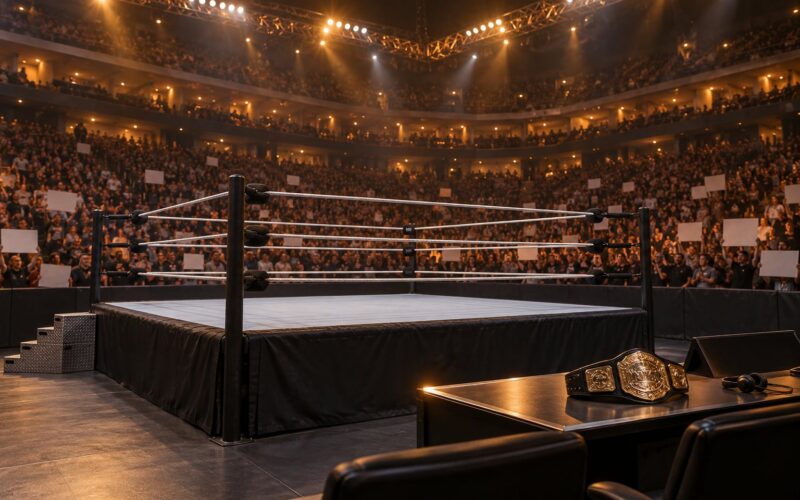
The fastest way to introduce a new fan to pro wrestling is to skip the weekly playlist and start with one big event where the stakes are obvious. Explain the format in about twenty seconds, name the four people in the main event, then let them watch. Everything else can wait.
Most first attempts fail for the same reason. Someone queues up three hours of Monday night television, and the new fan meets eight unrelated storylines with no idea who anyone is or why they should care. They shut it off at minute forty and tell you wrestling is boring.
That reaction is about packaging, not wrestling. Fix the packaging and most people get it. This guide covers what to set up before pressing play, a seven-step sequence that takes about three weeks, the vocabulary worth teaching on day one, and the mistakes that quietly kill a first impression.
Table of Contents
- What You Need
- Step-by-Step
- Explain the Format Before the Matches
- Start with a Memorable Main Event
- Teach the Basic Vocabulary
- Show How Storylines Connect
- Discuss Matches Instead of Correcting Them
- Branch Out to Other Promotions
- Use a Repeat Viewing Routine
- Common Mistakes
- Starting with Deep Lore Instead of a Clear Introduction
- Explaining Every Character Immediately
- Treating Wrestling Like a Normal Sporting Contest
- Quick Tips for Keeping the Introduction Fun
- Frequently Asked Questions
- What is the best wrestling match to show a beginner?
- How much history do I need to explain?
- How do I explain that wrestling results are predetermined?
- Which promotion is easiest for a total beginner?
- How long does it take for someone to become a wrestling fan?
- Conclusion
What You Need
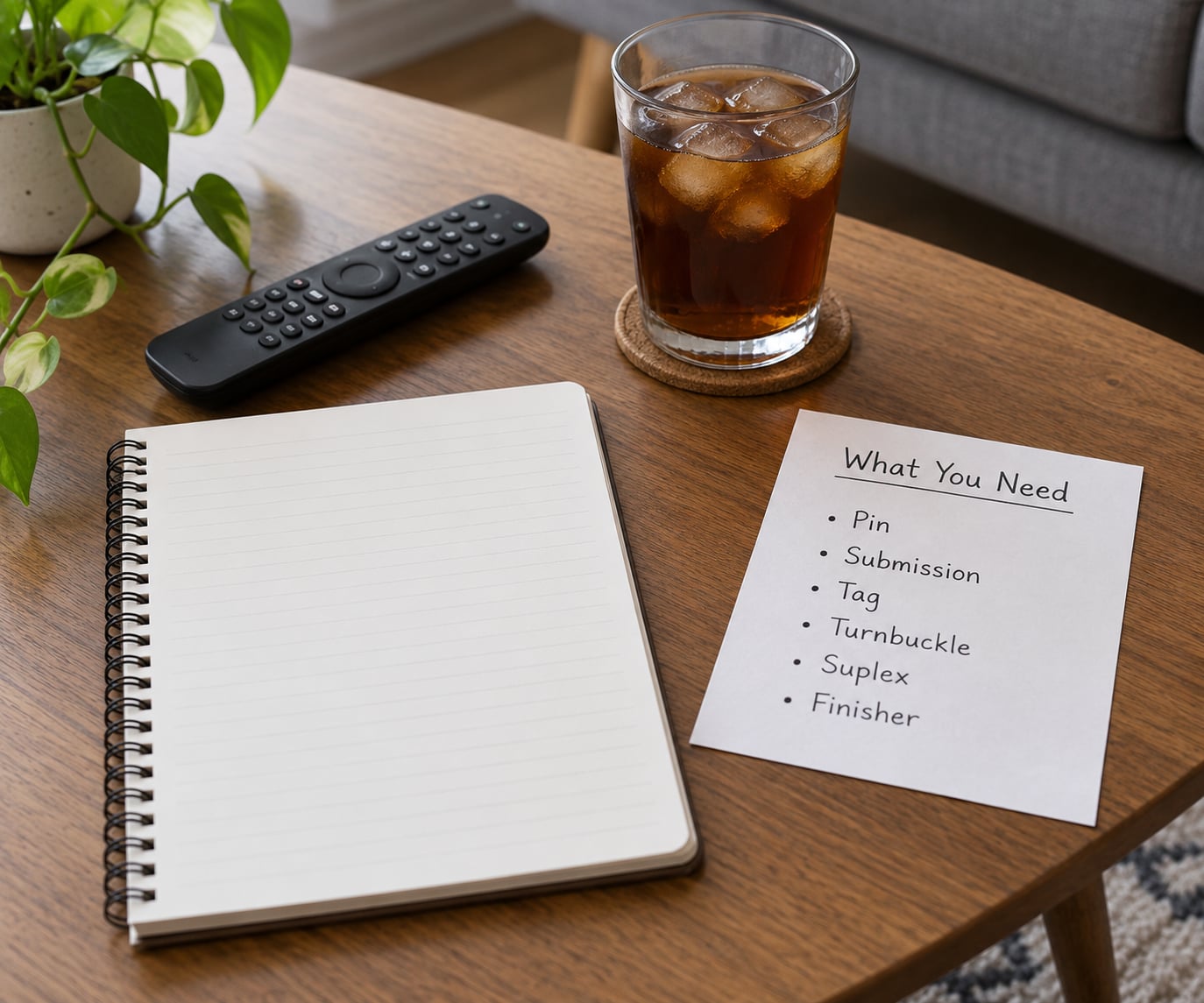
You need four things before the first match, and none of them is a subscription stack. Treat this as a beginner wrestling guide with a short checklist rather than a homework assignment.
- A viewing setup. A television or laptop that comfortably fits two people. If they can see the whole screen without leaning forward, the match will read better and you will spend less time explaining.
- One current program or event. Pick a single promotion and stay inside it for the first two weeks. Jumping between three shows teaches nothing, because the storylines do not connect.
- A short cast list. Four to six names with one sentence each: who they are, who they are feuding with, and whether the audience is meant to like them. Six is the ceiling.
- Twenty seconds of framing. Tell them in advance that outcomes are decided in advance. Hiding that creates a bad surprise later when they feel cheated.
That last one is where most introductions go wrong. Fans who learn on their own that the sport is predetermined tend to feel lectured. Fans who hear it from you in one calm sentence treat it as a fact of the format, the same way you would explain a soap opera.
Step-by-Step
Seven steps, roughly one week each, get someone from zero knowledge to watching on their own. You can compress the whole thing into a single long weekend if you would rather.
Explain the Format Before the Matches
Before anything airs, describe the shape of what they are about to see. Promotions are the companies that put on shows. A weekly show runs roughly two to three hours and builds toward a bigger event. A premium live event, commonly called a pay-per-view, is the season finale where the biggest feuds get settled. That is the whole skeleton.
Then define three more things in plain language. A match is a scripted athletic performance with a winner. An entrance is the short walk to the ring where the character sells who they are. A finish is the ending, and it is always choreographed before anyone walks out.
You will know this landed if they ask a question about the format before the bell rings. If they stay quiet through the first match, that is also fine — let the action do some of the teaching.
Start with a Memorable Main Event
Your first assignment should be a main event, not a full episode. Main events have one central conflict, two or three named wrestlers, and a finish that rewards the crowd. Long weekly shows ask for patience you have not earned yet.
Choose based on the person in front of you. Someone who watches action movies will respond to a big match with a clear villain and a violent finish. Someone who follows professional sports will respond to a rivalry with a scoreboard element, like a championship match. Someone who loves serialized drama will respond to anything with a heel turn at the end.
Give the preview in one sentence and stop there. “Two people who have hated each other for months are finally fighting over the title, and one of them is going to lose badly” is a complete setup. Anything longer and you have already told them the story.
Keep in mind that the same recommendation does not work for everyone. A sports fan and a drama fan watching the same main event will notice completely different things.
Teach the Basic Vocabulary
Ten terms cover most of what a beginner needs to follow a match. Teach these before or during the first viewing, not after.
- Babyface — the hero. The crowd is supposed to cheer.
- Heel — the villain. Cheering means you are meant to boo.
- Tweener — a character fans are free to cheer or boo.
- Kayfabe — the agreement that wrestlers pretend the action is real.
- Manager — a non-wrestling character who accompanies someone, usually to interfere or distract.
- Faction — a group of wrestlers who work together.
- Finisher — a wrestler’s signature finishing move.
- Face turn — when a heel becomes a hero.
- Heel turn — when a hero becomes a villain.
- Squash match — a match with no doubt about the winner, used to introduce someone to the roster.
You can say the word out loud while it happens. When the crowd boos someone throwing a towel at the referee, pause and say “that is the heel turn” and the vocabulary clicks in place.
Show How Storylines Connect
This is the part that converts a casual viewer into someone with a favorite. Explain that the match you are watching is one chapter, not the whole book. Before it, there was an attack or a betrayal. After it, something else happens. The reason they care about the next match is that the last one changed something.
When you sit down after, ask one question: did you want a specific person to win? If yes, they have just started following a storyline without knowing the word for it. That emotional investment is what keeps people watching for years.
Discuss Matches Instead of Correcting Them
New fans ask a lot of questions. Answer them. What you should not do is interrupt the match to explain every hold, or announce that a spot was missed, or complain about the booking while they are still forming an opinion.
A better pattern is to pause afterward and go around the match. Pacing, the crowd’s reaction, why a wrestler chose that move, whether the finish made sense. It reads like talking about a film, which is exactly the right frame — people defend films they have not seen yet all the time.
Corrections from the audience are fine. If they say a wrestler faked a knee injury and they are right, that is a genuine observation and worth agreeing with. Your job is conversation, not refereeing.
Branch Out to Other Promotions
After two or three weeks inside one promotion, widen the view. Different promotions make wrestling look genuinely different, and contrasting styles teach more than any glossary.
A large American promotion runs a long weekly schedule, heavy on promos and mixed rules, with a roster of around two hundred wrestlers and rotating storylines. A Japanese promotion presents long tournaments in front of large live audiences, with faster matches and more emphasis on striking. Independent shows in a local arena are smaller, cheaper and often more focused on a handful of established local performers.
Describe each one by feel rather than by name. “The one with the very long tournaments,” “the one where they talk more than they wrestle,” “the one in a room of two hundred people who all know each other.” That gives them a map they can fill in themselves.
Use a Repeat Viewing Routine
One long session rarely builds a fan. A short repeatable routine does. Pick a single weekly show and treat it like an appointment, the same way you would a season finale or a weekly podcast.
Keep a running list. Three columns is enough: wrestler names, the best match of the week, and one question you still have. Revisit the list each week and notice which names keep showing up.
Community is the other half of the routine. Reading a wrestling forum for ten minutes after an episode answers questions faster than any guide, and it gives them people to argue with. Podcast listeners tend to get more context before turning anything on, so an episode of a weekly wrestling podcast is a useful pre-show habit. Recent threads on r/Wrasslin and r/SquaredCircle are where most new fans report picking up the habit of following a promotion week to week.
Common Mistakes
Four failure modes account for most introductions that do not stick. Each has a straightforward fix.
Starting with Deep Lore Instead of a Clear Introduction
Decades of history are fun once someone is a fan. On day one, they are a wall. Someone who begins with a twenty-minute retrospective on an era nobody has heard of concludes that wrestling requires homework, and that conclusion is hard to undo.
Fix: start with one current rivalry and add history only when the story being watched makes it relevant. If a retired wrestler is about to be mentioned, explain that one name in a sentence. Skip everything else.
Explaining Every Character Immediately
The instinct is to prepare thoroughly, so you end up describing the entire roster before the entrance music starts. By the time the first match begins, the new fan has already forgotten half the names and is tired of being taught.
Fix: limit the introduction to the wrestlers in the match, their faction, any manager, and the one rival they need to know. Six names is the ceiling. Everything else arrives naturally over the following weeks.
Treating Wrestling Like a Normal Sporting Contest
This is the mistake that makes skeptics uncomfortable. If you let someone believe the outcome is a genuine contest, the ending feels like a lie and the whole thing reads as a con. That is a hard impression to walk back.
Fix: say plainly that results are planned, then explain why that matters. The moves are real, the injuries are choreographed to look real, and the outcomes are set weeks in advance for story reasons. Every major promotion runs on this. So do most television dramas, and nobody watches those assuming the actors picked the ending themselves.
Quick Tips for Keeping the Introduction Fun
A few habits keep the whole thing low-pressure. Let them pick their first favorite, even a bad one, because being attached to the wrong character is how most fans actually start. Pause whenever they ask something, since questions mean interest.
Avoid correcting pronunciation, correcting opinions, and revealing results from weeks ahead. Do not make them sit through an entire weekly show to prove you like the same show you do. And resist the urge to quiz them at the end — if they can name one wrestler they want to see again, the introduction worked.
Frequently Asked Questions
What is the best wrestling match to show a beginner?
Pick a main event with one clear rivalry and two named wrestlers rather than a full episode. A championship match with an established villain usually works well for a sports fan, while a match ending in a surprising heel turn suits someone who loves serialized drama. Give a one-sentence setup, name the four people involved, and let the match run without commentary. The finish should feel earned rather than random.
How much history do I need to explain?
Less than most people think. About six names covers a first match: the two wrestlers, their manager if there is one, their faction, and the rival behind the current conflict. Everything else can wait until the story being watched makes it relevant. History becomes useful as a tool later, when you want to explain why a wrestler turns on someone, but front-loading it usually ends the conversation early.
How do I explain that wrestling results are predetermined?
Say it before the first match, in one calm sentence, and explain why it is not a problem. Outcomes are decided in advance because the sport is a serialized story, and the ending is chosen to reward the character the audience has been following. Moves, timing and crowd reactions are performed for real. Comparing it to a soap opera or a stunt show tends to land better than defending the sport in a paragraph.
Which promotion is easiest for a total beginner?
Stay inside one promotion for the first month rather than sampling all of them, since no single show explains the others. Weekly shows are friendliest because the episodes are short and the storylines repeat, while long tournaments reward patience and live shows deliver the loudest crowd. Independent shows in a local arena are surprisingly accessible too, because the story is simpler and the venue is small enough to follow.
How long does it take for someone to become a wrestling fan?
For most people, three or four weeks of one weekly episode is enough to develop a favorite and want to see what happens next. A genuine long-term fandom takes longer, because following storylines properly means keeping up with months of episodes. The signal to watch for is not knowing the terminology but asking who wins next. That question is the whole hobby.
Conclusion
Choose one accessible main event, spend twenty seconds explaining that the format is a serialized story with planned outcomes, and name the four people in the ring. Then let them watch and ask questions afterward. Whatever they pick up from there, they will do the rest themselves.