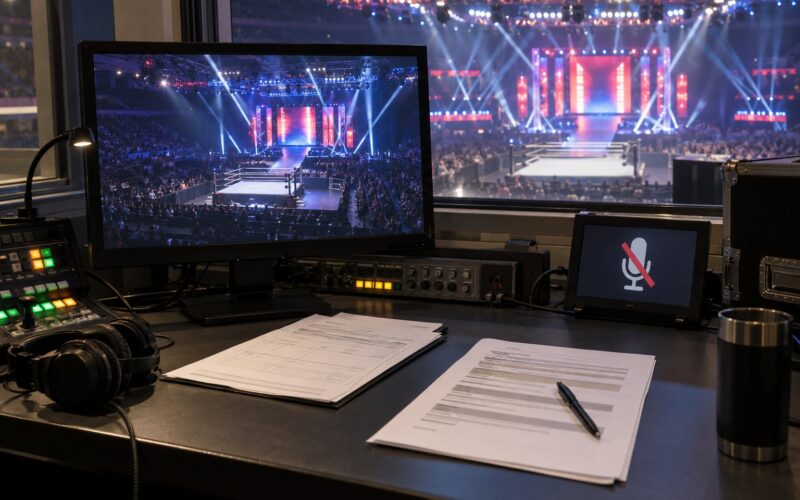
There is no single number called “wrestling subscribers,” and that is the key to understanding how wrestling streaming subscriber numbers are reported. Four separate systems publish wrestling audience figures, they measure different things, and almost none of them can be compared with another. As of October 2026, TKO still files WWE Network subscriber counts with the SEC, Netflix publishes hours viewed and a derived viewership figure, Nielsen measures linear television and some streaming, and AEW publishes promotional claims. Here is what each one actually tells you.
If you have ever read two wrestling sites on the same morning and found they disagreed about whether viewership was up or down, you have hit the problem this guide is built around. The disagreement is rarely about fans. It is about which counting system produced the figure.
Table of Contents
- What Does a Wrestling Streaming Subscriber Number Mean?
- How Wrestling Streaming Subscriber Numbers Are Reported
- Why wrestling streaming subscriber numbers are reported in four incompatible layers
- 1. Audited subscriber counts in company filings
- 2. Platform-reported viewership metrics
- 3. Third-party measurement panels
- 4. Analyst and independent estimates
- The worked example in one line
- What Is the Difference Between Subscribers, Viewers, and Users?
- Why a view is not a person
- Live+Same-day versus Live+7
- Which Wrestling Platforms Publish Subscriber Numbers?
- The bundle problem
- AEW’s private-company gap
- Why Do Wrestling Streaming Estimates Differ?
- How to Read a Wrestling Streaming Growth Announcement
- How Do Rumor Sites Verify Subscriber Claims?
- Frequently Asked Questions
- How does Netflix calculate viewership for WWE Raw?
- Does Netflix report how many subscribers watch WWE?
- How does Nielsen know what you are watching?
- Does Peacock report how many subscribers watch WWE?
- Why does WWE’s subscriber count drop in the third quarter?
- Is WWE bigger than AEW, and can the numbers prove it?
- Conclusion
What Does a Wrestling Streaming Subscriber Number Mean?

A wrestling streaming subscriber number is a count of paid accounts signed up to watch wrestling on a service, measured on a stated date or averaged over a stated period. In practice the term covers four unrelated things: audited subscriber counts, platform viewership metrics, third-party measured audiences, and analyst estimates. Only the first of those counts subscriptions at all.
That distinction matters more than anything else on this page. A subscriber count is a stock: how many accounts existed. A viewership figure is a flow: how many hours or minutes were consumed. Converting one into the other requires assumptions the publisher rarely publishes.
Two further habits keep you out of trouble. First, attach a date and a source to every number you repeat, because wrestling audience data goes stale in a quarter and gets restated without context constantly. Second, never carry a figure across a rights deal. A subscriber on one platform is not a subscriber on the next one, and the account may simply have moved.
How Wrestling Streaming Subscriber Numbers Are Reported
Why wrestling streaming subscriber numbers are reported in four incompatible layers
Each layer answers a different question, and each answers it on a different schedule. Layer one is company filings. Layer two is what a streaming platform chooses to publish about its own content. Layer three is third-party measurement, mostly Nielsen. Layer four is analyst work from firms such as Ampere Analysis and independent outlets like Wrestlenomics.
When a headline blends two of these layers, the number stops meaning anything. That is the pattern to watch for.
1. Audited subscriber counts in company filings
A dedicated wrestling streaming service has to tell the market how many accounts it has, because shareholders bought stock on the expectation of growth. WWE published average paid subscribers for WWE Network every quarter inside its earnings release and its Form 10-Q, and full-year ending subscriber counts in its Form 10-K.
The historical record shows why the two numbers deserve different weight. WWE Network ended 2020 at 1,469,700 paid subscribers, up from 1,391,000 at the end of 2019, a gain of about 6 percent on the year. In Q2 2020 the company reported 1.66 million average paid subscribers, down 1.5 percent. In Q3 2016 the average was 1.46 million against 1.52 million in Q2 2016, and that sequential dip is exactly what a Fox Business analysis of the report described at the time.
An average and an ending count can move in opposite directions inside the same quarter. Average smooths the whole period; ending captures one day. Read them as separate facts, never as substitutes.
2. Platform-reported viewership metrics
General streaming platforms do not report a wrestling subscriber count, and Netflix stopped reporting quarterly subscriber numbers entirely beginning in Q1 2025. What Netflix still publishes is engagement: a weekly Top 10 chart built on hours viewed, plus a twice-yearly viewership release that gives hours for individual wrestling programs.
The derivation is arithmetic, not measurement. Netflix defines a view as total hours viewed for a title divided by its total runtime. Take the Raw premiere on January 6, 2025: roughly 20 million hours viewed divided by the episode runtime produced a reported average viewership of about 6.9 million.
Do the same for the tent-pole nights from that release. WrestleMania 41 night one registered 9.6 million hours and night two 10.2 million, while the Royal Rumble came in at 13.3 million hours. Those are hours of content consumed, not accounts that exist.
3. Third-party measurement panels
Nielsen measures audiences it cannot see directly by combining a small opt-in panel of households with data contributed by participating services. For years that arrangement under-counted streaming, often by a wide margin, because a viewer watching on a smart TV was invisible unless their set had a panel meter installed.
Nielsen launched a redesigned Big Data + Panel system in September 2025, starting with the NFL and major sports. The stated purpose was to correct a streaming under-count it put at 5 to 20 percent. Data has come from Amazon Prime, Netflix and YouTube, with discussions underway involving ESPN+, Tubi, Peacock and Paramount. WWE and Netflix have also opted out of Nielsen and cited internal data plus VideoAmp instead.
That leaves wrestling’s linear ratings measured by one system and its streaming hours published by another, with no shared baseline. Comparing them directly is comparing a mile to a kilogram.
4. Analyst and independent estimates
Estimates fill the gap where no filing exists. Ampere Analysis has published wrestling viewing hours, ranks and retention figures. Wrestlenomics compiles Netflix and linear ratings into a consistent series. Dave Meltzer has publicly challenged the Netflix method for Raw, arguing that the hours-viewed approach can be used to manufacture an apparent rating, and that criticism has become a standing talking point in wrestling communities.
Estimates are useful when the direction is the point and the source is named. They are useless as exact counts, and worse than useless when quoted as if they were audited.
The worked example in one line
Hours viewed divided by runtime equals views, and views do not divide neatly into people. One fan watching the full three hours contributes three hours. Ten fans watching together on one account contribute thirty. The 6.9 million figure produced from 20 million hours is a derived rating-shaped number, not a headcount of 6.9 million viewers.
What Is the Difference Between Subscribers, Viewers, and Users?
The fastest way to lose an argument about wrestling audiences is to use two of these words in one sentence. Here is what each metric measures, who publishes it, and how it gets misread.
| Metric | What it actually measures | Who publishes it | Common misreading |
|---|---|---|---|
| Average paid subscribers | Mean number of paying accounts across a period | WWE in earnings releases and SEC filings | Read as a count of individual people |
| Ending paid subscribers | Accounts on the final day of the period | WWE annual report | Used to replace the quarterly average |
| Hours viewed | Total watching time in hours, summed over every screen | Netflix Top 10 and twice-yearly release | Read as a number of viewers |
| Views | Hours viewed divided by a title’s runtime | Netflix; compiled by Wrestlenomics | Read as unique viewers or households |
| Average minute audience | Average accounts watching each minute of a program | Nielsen, or VideoAmp for WWE and Netflix | Compared directly with hours viewed |
| Concurrent streams | Simultaneous plays at a given moment | Platform statements, analyst work | Read as unique people watching |
| Unique viewers | Deduplicated accounts inside a time window | Third parties, usually estimated | Read as a subscriber count |
| Live+Same-day and Live+7 | Linear windows that include viewing after the broadcast | Nielsen ratings reporting | Treated as a show’s final audience |
| Churn rate | Share of subscribers who cancel in a period | Analysts such as Ampere | Read as an audience size |
Why a view is not a person
Four things break the link between a view and a human being. One fan can binge an episode twice, doubling the hours. One account can run two streams at once, doubling the concurrent count. A household can share a login across three people. And a bundled subscriber who never opens the app still sits inside a platform’s total account figure.
Wrestling adds a fifth: tent-pole nights pull in casual viewers who subscribe, binge, and cancel. Ampere’s first-half 2025 work put 60-day churn for WWE Raw signups at 18.2 percent, against 25.6 percent for the Jake Paul versus Tyson fight and 27.2 percent for NFL Christmas games. A lower churn number is good news for retention and terrible news for any claim that converts signups into a stable subscriber base.
Live+Same-day versus Live+7
For linear television, the window changes the number dramatically. Dynamite has been cited at 903,000 same-day against 146,000 in a Live+7 framing in the same reporting cycle, which is the kind of gap that makes two outlets look like they are describing different shows. Early TV figures also tend to rise roughly 10 to 15 percent once finalized, a pattern wrestling readers already plan around.
Which Wrestling Platforms Publish Subscriber Numbers?
Very few of them publish a wrestling subscriber number, and none of the current streaming arrangements produce one on a schedule a reader can rely on. What follows is what each platform actually discloses.
| Platform | What is disclosed about wrestling | Frequency | Audited |
|---|---|---|---|
| WWE Network (historical, via TKO filings) | Average and ending paid subscribers | Quarterly and annual | Yes, in annual filings |
| Netflix | Hours viewed and derived viewership; no subscriber count | Weekly chart, twice-yearly release | No subscriber line |
| Peacock | Occasional reach statements about wrestling viewers | Ad hoc | No wrestling figure |
| ESPN Unlimited | Platform totals only, never a wrestling split | Quarterly parent reporting | No wrestling figure |
| AEW Plus | Promotional subscription claims | Ad hoc | No |
| Max | Platform subscriber reporting, no wrestling line | Quarterly parent reporting | No wrestling figure |
| FITE | Third-party estimates of pay-per-view and subscription buys | Ad hoc | No |
The bundle problem
Peacock and ESPN Unlimited sell bundles. A bundle has no line item for wrestling, so a subscriber who signs up for football and never watches Raw is counted in exactly the same way as a fan who watches every week. When a reach statement says around 3.5 million paying Peacock subscribers watched WWE content in January 2023, that is a statement about how many subscribers watched something. It is not a subscriber count for wrestling, and the difference is the whole dispute.
Netflix has the same shape of problem. WWE Raw was carried in 12 markets representing roughly 52 percent of Netflix’s subscriber base, while much of the rest of WWE’s catalog was non-US only. Ampere’s first-half 2025 report put WWE content past 300 million total viewing hours, 88.6 million total views on the hours-per-runtime definition, and about 6.5 million viewing hours for Raw in a typical week, with Raw ranked the third-most-watched Netflix series behind Adolescence and Squid Game. The same report noted penetration of Netflix subscriptions among US WWE viewers moving from 62 percent to 76 percent. These are reach and engagement measures, not subscriber counts, and the Raw figures in particular carry a geographic skew that most coverage drops.
AEW’s private-company gap
AEW is privately held, so it files nothing with the SEC and is under no obligation to publish an audited audience figure. What circulates instead is promotion: subscription claims from the company and estimates from third parties, including reports that AEW subscription video on demand purchases on FITE had more than doubled. Fans on Reddit’s r/SquaredCircle treat Wrestlenomics as the most credible independent estimator while flagging that estimates for privately held operations can be badly off.
That is why “who gets more viewers, WWE or AEW” has no clean answer from filings. One side published audited numbers when it had a dedicated service; the other never had to. Comparing them is comparing a filed number to a press release.
Why Do Wrestling Streaming Estimates Differ?
Even when two sources are both being honest, their figures diverge for structural reasons. Here are the ones that come up most.
Different windows. A quarterly average, a two-week premiere window and a year-end snapshot describe different periods. Netflix’s twice-yearly engagement release also creates a bias: a release from early January has longer to accumulate hours than one from late June before the window closes.
Bundles. Neither Peacock nor ESPN Unlimited isolates wrestling, so any wrestling number attached to those services is inferred from reach statements, not counted.
Trials and promotions. Free trials, student plans and promotional accounts inflate an account count without a single person paying. Whether a publisher includes them changes the result.
Churn and seasonality. Subscribers arrive for WrestleMania and the Royal Rumble and leave afterward, which is why WWE’s own averages have repeatedly shown a Q3 dip after tent-pole periods, including the 1.46 million average in Q3 2016 against 1.52 million in the prior quarter.
Regional availability. A program in 12 markets versus one in a single market produces incomparable totals, as the Raw split shows.
Carry-in on pay television. Before streaming, WWE’s audience arrived through pay-TV carriage. Wrestling-availability reporting on cable still shapes how people talk about reach, and that reach is not the same thing as a streaming subscriber.
Metric definitions. Hours viewed, views, average minute audience and concurrent streams are four different units. Two outlets can publish the same underlying data and produce headlines that contradict each other.
Methodology change. Nielsen’s Big Data + Panel rollout addressed a 5 to 20 percent streaming under-count. When a system corrects for a known miss, measured audiences can jump with no change in the actual audience. Wrestling ratings rebounding after that adjustment is the clearest recent example of a growth story that was partly a measurement story.
How to Read a Wrestling Streaming Growth Announcement
Growth announcements are written to sound like momentum. Five questions separate real growth from a reporting artifact, and you can answer all of them in under two minutes.
- Who is the source? Find the primary document. For WWE-era numbers it is a Form 10-Q or 10-K on SEC EDGAR or a TKO investor relations earnings release. For Netflix it is the Top 10 page or the twice-yearly engagement report. If the claim leads to a tweet and nothing else, it is not a measurement.
- What is the window? Note the exact period and whether the figure is an average or a single-day count. A premiere week and a full quarter are not interchangeable.
- Which metric is it? Name the unit out loud: subscribers, hours viewed, views, average minute audience or concurrent streams. If the sentence says “viewers” and the source says “views,” the headline is wrong.
- What is the baseline? Check whether the comparison is quarter over quarter or year over year. WWE’s 1.46 million average in Q3 2016 was up 24 percent year over year while falling quarter over quarter, and both were true.
- Did the method change? Ask whether the measurement system, the platform lineup or the market availability changed between the two data points. If any of those moved, part of the “growth” is methodology before it is audience.
One more habit pays off: write the comparison you actually care about before you read the number. “Did more people watch wrestling in the second half of 2025 than the first half” is a question the available data can roughly answer. “How many wrestling subscribers are there” is not, in the streaming era, and no headline can make it so.
How Do Rumor Sites Verify Subscriber Claims?
Trade outlets and independent analysts do not have privileged access to subscriber data, so they work by building an evidence chain. The chain usually has four links, and a claim missing any of them gets treated as a rumor.
The first link is a document. A filing, an earnings release, an engagement report or a published chart. Analysts such as Wrestlenomics publish their compilations so readers can retrace the underlying platform figures rather than trusting a summary. The second link is a named company statement, quoted and dated. The third is corroboration from a measurement firm, whether that is Nielsen, Ampere Analysis or VideoAmp. The fourth is a method note explaining what was actually measured, which is where most wrestling claims quietly fail.
Anonymous sourcing is the weak link, and in wrestling it is a particular problem, because the audience for a growth story and the audience for a decline story are the same people. Promotion channels supply claims to outlets that already want them, and private companies face no penalty for a number no auditor will check. Community readers are blunt about this: promotion-channel growth claims get treated as unaudited marketing, and figures with no date and no source get dismissed outright.
Readers can apply the same standard. Ask for the document, ask for the window, ask what was measured, and ask who checked it. A claim that survives all four is worth repeating with attribution. One that does not is a story about a number, not about wrestling.
Frequently Asked Questions
How does Netflix calculate viewership for WWE Raw?
Netflix divides total hours viewed for a title by its total runtime, then reports the result as an average viewership figure. The Raw premiere on January 6, 2025 drew roughly 20 million hours viewed, which produced a reported average of about 6.9 million. That is a derived rating-shaped number, not a count of people or households watching.
Does Netflix report how many subscribers watch WWE?
No. Netflix publishes engagement metrics only, and it stopped reporting quarterly subscriber numbers entirely beginning in Q1 2025. There is no WWE-attributable subscriber figure from Netflix, so any number claiming to show how many Netflix subscribers watch wrestling is an estimate built on viewing data rather than a reported count.
How does Nielsen know what you are watching?
Nielsen combines a panel of opted-in households with data contributed directly by participating streaming services, which lets it see viewing that a set-top box alone would miss. Its Big Data + Panel system, launched in September 2025, was designed to correct a streaming under-count it estimated at 5 to 20 percent. WWE and Netflix have instead relied on internal data and VideoAmp.
Does Peacock report how many subscribers watch WWE?
Peacock does not break out wrestling subscribers. It has published reach statements, such as around 3.5 million paying subscribers watching WWE content in January 2023, which count how many subscribers watched something rather than how many subscribe for wrestling. Because Peacock sells bundles, the service has no line item that isolates wrestling at all.
Why does WWE’s subscriber count drop in the third quarter?
Tent-pole events pull in casual viewers who subscribe for WrestleMania or the Royal Rumble and cancel soon after, so the average falls once the season’s biggest weeks pass. WWE’s own history shows the pattern, with a 1.46 million average paid subscriber figure in Q3 2016 against 1.52 million in the prior quarter, even though the year-over-year comparison was strongly positive.
Is WWE bigger than AEW, and can the numbers prove it?
Not with public data. WWE filed audited subscriber counts with the SEC when it ran WWE Network, while AEW is privately held and files nothing, so its figures are promotional claims plus third-party estimates. Comparing an audited past figure with an unaudited present claim is not a comparison. Linear ratings for Dynamite and Raw are measured on a common Nielsen basis, which is the only cleaner side-by-side available.
Conclusion
Start by naming the layer. If a number comes from a filing it is a subscriber count, and you can weight it heavily. If it comes from a streaming platform it is hours or derived views, and you can only compare it with other platform figures measured the same way. If it comes from Nielsen you are looking at a measured audience with its own window. If it comes from an analyst or a press release, treat it as a direction, not a quantity.
Then check four things before you repeat anything: the source document, the measurement window, the metric definition, and whether the methodology changed between the two points being compared. That last check is the one most stories skip, and it is the one that separates an audience change from a measurement change.
Wrestling audience data will keep arriving in fragments, and most of it will stay unverified for the private and bundled parts of the business. Knowing which fragment you are holding is worth more than the fragment itself.