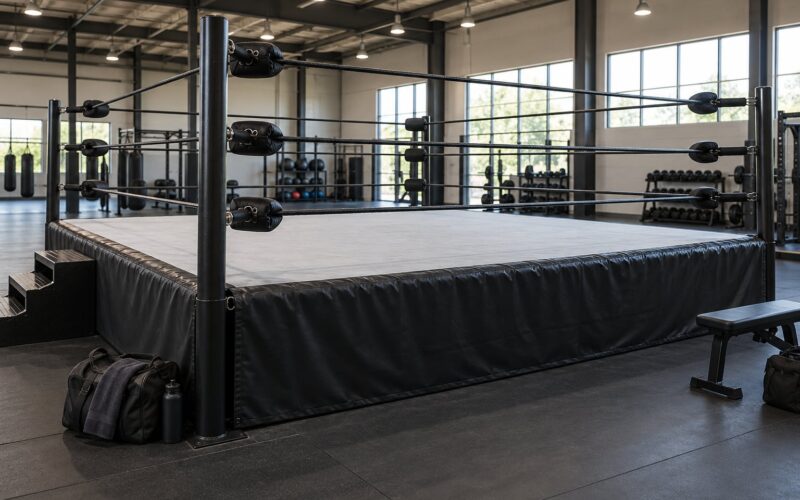
A wrestling tryout camp is a short intensive where a head coach and a group of trainers put aspiring wrestlers through a fixed daily structure so they can be watched, scored, and either invited to a showcase match or told what to work on next. The order is usually registration, check-in and weigh-in, conditioning, fundamentals, drilling, live in-ring work, and closing feedback. If you are the one paying, the details that matter most are the coach-to-athlete ratio, the safety record, and whether anyone from the camp actually advances.
Most first-timers arrive with one of two questions: what does the room actually feel like, and how do you get noticed in it. This guide answers both, in the order you will meet them.
Table of Contents
- What Happens at a Wrestling Tryout Camp?
- Before Tryout Day: Applications and Preparation
- Tryout camp, training school, or youth summer camp?
- A Typical Wrestling Tryout Camp Schedule
- Warm-Up, Conditioning, and Movement Testing
- How Coaches Teach Ring Fundamentals
- Promos, Character Work, and Interview Evaluation
- Live Matches and Performance Evaluation
- How a Wrestling Tryout Camp Is Judged
- What Happens After the Camp?
- How to Prepare for a Wrestling Tryout
- Frequently Asked Questions
- Do you need professional wrestling experience to attend a wrestling tryout camp?
- How long does a wrestling tryout camp usually last?
- What should I wear or bring to a wrestling tryout?
- Do wrestling tryouts always include a live match?
- Why was I not selected after a wrestling tryout camp?
- Conclusion
What Happens at a Wrestling Tryout Camp?
Answering your main question first: yes, a tryout camp runs as a repeating daily block built around observation. Every session exists to give a coach more material to judge you on, and coaches are usually keeping notes across the whole camp rather than forming an impression in the first ten minutes. A tryout camp also differs from a routine training class in one big way. In a class you are there to learn a skill. At a tryout you are on display, and the skill work doubles as an assessment.
Here is the lifecycle, stage by stage, which is roughly how a wrestling tryout camp is run from end to end:
- Application and registration. You submit details, sometimes a short video, sometimes a fee. Many camps set an attendance cap and confirm places in advance.
- Check-in and weigh-in. Paperwork, waivers, gear check, and usually a single weigh-in. Operators state plainly that the check-in weigh-in is often the only one during the camp.
- Conditioning and movement testing. A hard warm-up and running block that reveals endurance, coordination, and whether you can move safely when tired.
- Fundamentals instruction. Stance, footwork, bumps, and locks, taught in a deliberate sequence from simple to combined.
- Drilling and repetition. Supervised, repetitive partner work, often the longest block of the day and the clearest read on focus.
- Live in-ring work, promo and mic work. Controlled matches or scrimmages, plus speaking and character exercises in many pro tryouts.
- Selection, showcase match, and feedback. A small group wrestles in front of whoever came to watch, then names are announced or individual notes are given.
Harley Race described this structure from the inside when he ran the World League Wrestling camp in 2006, capping attendance at 60 and putting 12 to 14 people into a Saturday showcase. Those numbers are two decades old and belonged to one particular camp, but the shape of the thing has not changed much.
Before Tryout Day: Applications and Preparation
Anyone can walk into most of these camps. The usual gates are an age band, a weight band, a signed waiver, and payment. Commercial camps tend to publish their age range on the registration page, with a fee split between a day rate and an overnight rate, and overnight campers deal with room checks and a stricter schedule.
What organizers usually look at before you arrive is thin: a name, an age, a weight class, and sometimes a short video. Nobody is reading a training history. The one thing worth taking seriously is the paperwork. A missing medical form or waiver can end your morning at check-in, and you do not get a second attempt that day.
Tryout camp, training school, or youth summer camp?
These three get blended together constantly, and choosing wrong wastes real money. An elite youth summer wrestling camp is team-oriented, drill-heavy, and sold to parents of kids, usually ages 8 to 18. A pro wrestling tryout camp evaluates individuals and usually has people in the room whose job is to sign someone. A training school is the ongoing thing you attend weekly after the camp ends. Only one of the three is designed to change your career.
The honest version for a parent: ask directly how many campers were at the last session and how many were selected, and ask what happened to them in the six months afterward. A real operator answers both without hesitating.
A Typical Wrestling Tryout Camp Schedule
No two camps publish an identical timetable, but the block structure is stable. The table below is a general example of a full day, not a schedule from any specific camp, with the third column showing what a coach is usually watching while it happens.
| Time block | Activity | What coaches are watching |
|---|---|---|
| Morning, first 30 minutes | Check-in, waivers, weigh-in | Punctuality, paperwork, how you carry yourself before anything starts |
| Next 45 to 60 minutes | Warm-up, running, dynamic stretching, body-weight work | Endurance, recovery rate, willingness to work without complaining |
| Following 30 minutes | Top and bottom mat work, chain wrestling, mat return | Balance, posture, whether you can control your weight |
| Mid-morning to lunch | Fundamentals instruction | Learning speed and whether you repeat corrections |
| Late morning block | Supervised drilling and repetition | Focus under boredom, effort, partner communication |
| Midday | Lunch, video review, or a talent Q&A | Questions you ask, how you speak, sportsmanship |
| Afternoon, first 90 minutes | Live wrestling and in-ring work | Ring awareness, safety, escalation, teamwork |
| Late afternoon | Promo and mic work, interview style questions | Speaking ability, improvisation, consistency of a character idea |
| Final 30 minutes | Cool-down, notes, closing instructions | How you finish when nobody is scoring you |
Compare that with a competition-day routine. USA Wrestling has published a step-by-step guide for tournament days built on the same warm-up logic, jogging and dynamic stretching into neutral work and top and bottom, with push-ups, sit-ups, and air squats mixed through. Tryout camps borrow that logic and stretch it across days.
Warm-Up, Conditioning, and Movement Testing
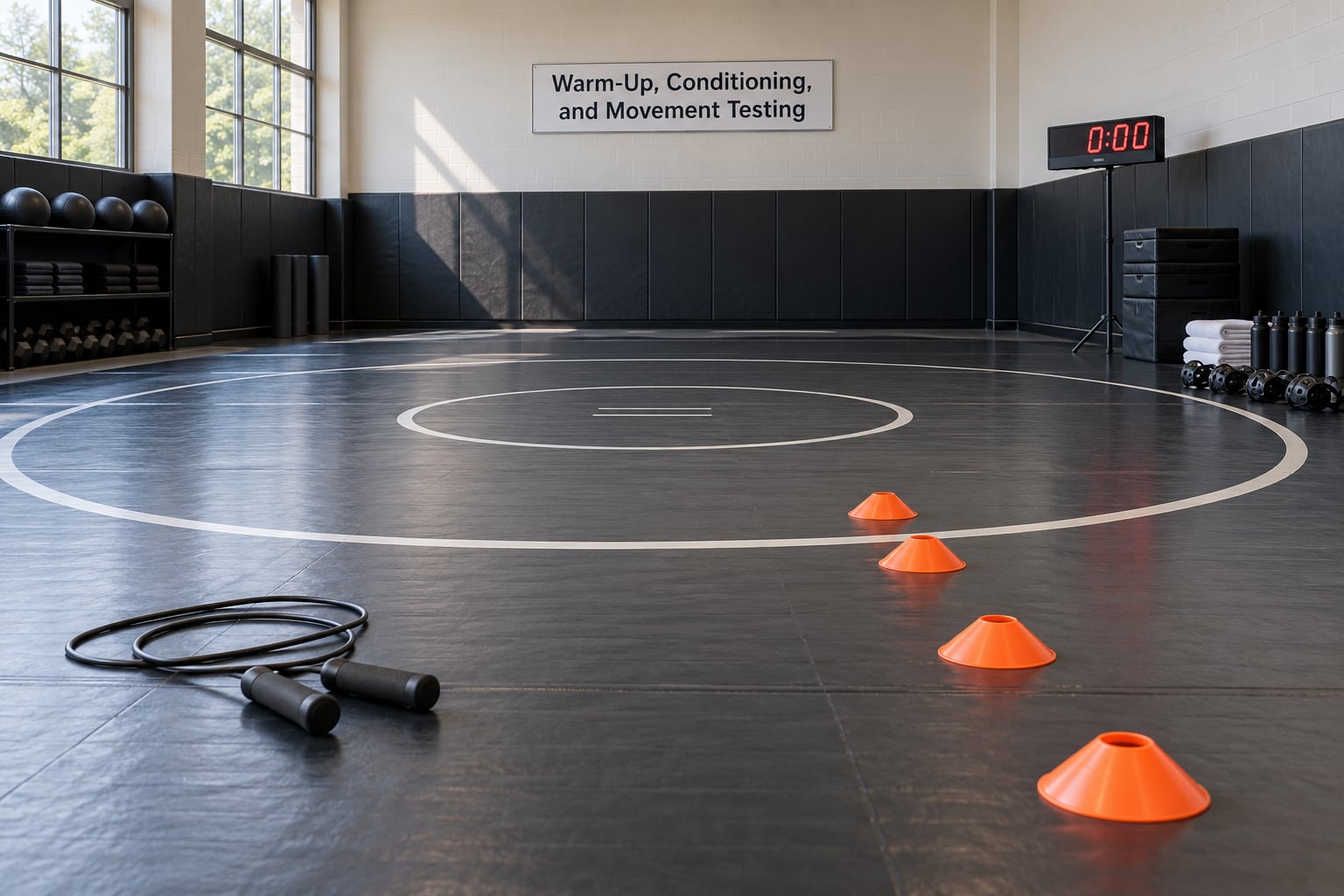
The opening block is where the least glamorous evaluation happens, and coaches take it seriously. A wrestler who cannot control their breathing by minute forty is a safety problem in the ring, not a fitness problem at the edge of the mat. Harley Race framed cardio that way when he explained the conditioning emphasis at his 2006 camp, and it is still the standard reasoning.
What gets recorded in this block is fairly boring to describe and easy to feel. How fast your heart rate comes down between efforts. Whether your movement stays controlled when you are tired. Whether you stop at the whistle or keep going on your own. And whether you listen, because a warm-up is also a low-stakes test of instruction-following with people who will be running the whole day.
One practical note for anyone coming from football, basketball, or MMA. Court and cage conditioning is not ring conditioning. Wrestling demands sustained isometric effort in awkward positions, and most newcomers find the first three-minute mat scramble harder than any run they have done.
How Coaches Teach Ring Fundamentals
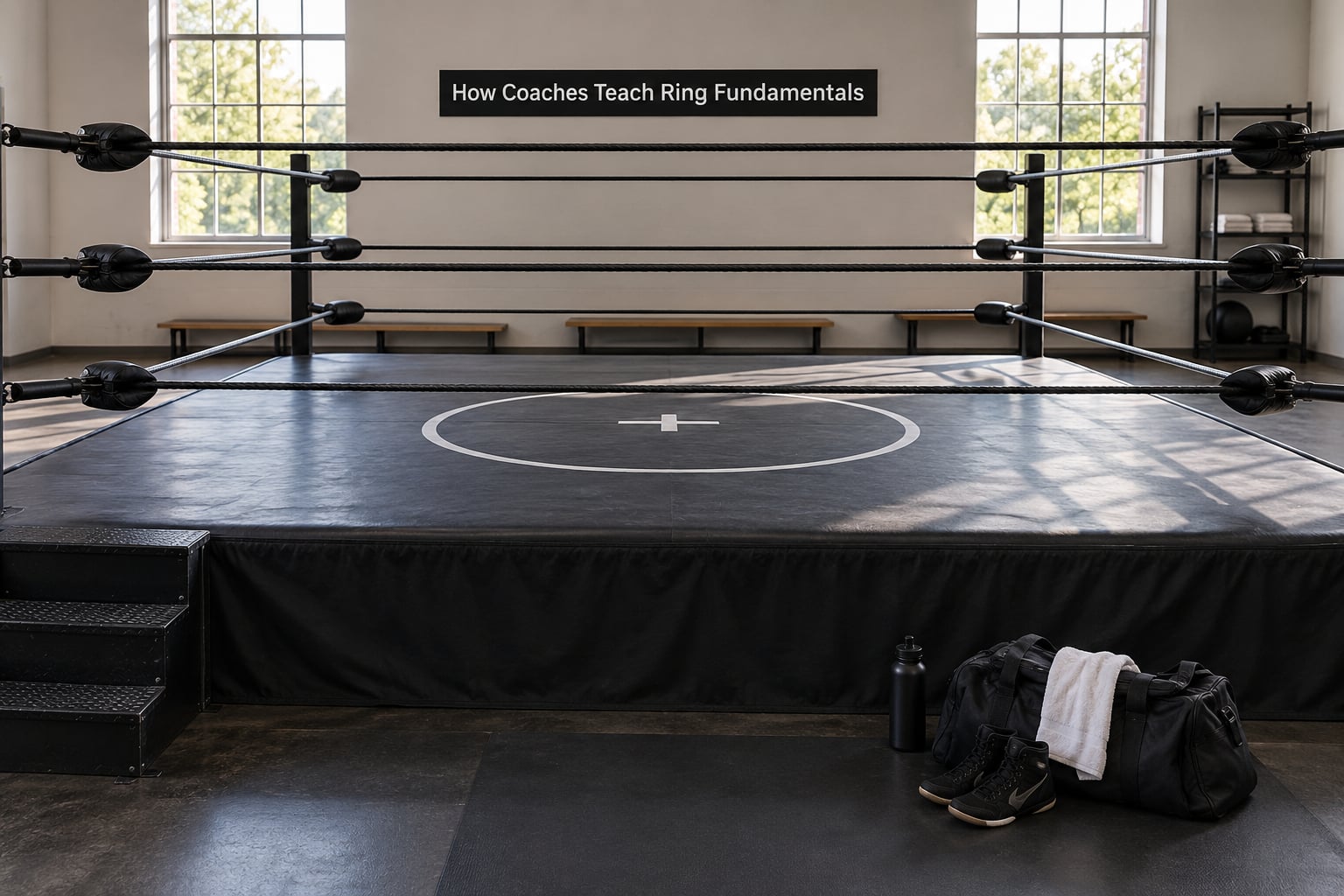
Fundamentals instruction is where a camp reveals whether it is being run carefully or just run. A coach worth listening to teaches a stance, then footwork, then the bump, then the lock, and only then combines them. Harley Race described that ladder as basics to complex combinations, and it is still how a serious camp orders the morning.
Observers are not looking for a highlight reel during this block. They are looking at posture in a tie-up, whether you step back to the mat instead of being dragged, whether you can stand up and turn under pressure, and whether a correction lands the first time. Repetitive fundamentals work is dull by design, and your attention during the dull part says more than anything you do in a match.
Rope running, chain wrestling, escapes from the bottom, and mat returns get drilled in the same session, usually with the coach walking the line making one adjustment at a time. Partner rotation happens on a clock, which means you will work with people you did not choose. Handling that without friction is part of what gets noticed.
Promos, Character Work, and Interview Evaluation
Plenty of written guides skip this entirely, which is a mistake for anyone aiming at professional wrestling. A current tryout schedule splits the day into morning performance evaluation, in-ring training, a promo session, and a talent Q&A, and the promo block is not a formality.
What is being tested is harder to fake than moves. Can you speak into a microphone without reciting? Can you take a prompt you did not prepare for and still say something interesting? Do you have a persona idea beyond a look? And is the person in front of you the same one you presented five minutes ago? Promos and character work sit alongside the physical evaluation, not after it.
How much weight this carries depends on the promotion. A developmental camp run by a training school may use mic work as a teaching exercise. A tryout with scouts in the room uses it as a filter. Ask before you go whether a promo session is on the schedule.
Live Matches and Performance Evaluation
Live work at a tryout is usually controlled, with pairings set by weight and experience rather than by skill, and coaches watching from the apron with a stopwatch mentality. It is a scrimmage with observers in it, which is a strange thing to be part of, and most people describe it as the most intense hour of the camp.
What gets watched is repeatable: ring awareness, whether you move your head before you move, safe mat landings, and whether you communicate with your partner. The good moments escalate. The bad ones are usually the same three things, every time. Standing still in the middle of a sequence, turning your back without a reason, and going stiff in a spot where someone has to catch your weight.
Selling matters more than people expect. A clean technical exchange that nobody reacted to scores lower than an honest sequence that built heat. Watch how the two people on either side of you handle their own segments, then do the same thing with your own style intact.
How a Wrestling Tryout Camp Is Judged
Coaches rarely score you against a rubric, but the criteria are consistent enough to list. In rough order of how much they usually matter: coachability, learning speed, work ethic, gas tank, ring awareness, safety, communication, and character sense. Existing skill sits further down than most campers assume.
- Coachability. Does a correction change what you do in the next repetition?
- Learning speed. How much of the session do you use well before the ideas land?
- Work ethic. Output in the last hour, when the novelty has worn off.
- Gas tank. In-ring endurance, the shorthand coaches use for it.
- Ring awareness and safety. Awareness of the other person, the mat, and the ropes.
- Communication. Talking to a partner and asking a coach a useful question.
- Character and mic ability. Where the tryout includes promo work.
One failed exercise does not end a candidacy. A bad ten minutes in the first conditioning block is recoverable across two more days, and camps are built to collect more than one impression. What ends a candidacy is a pattern across every session, not a single mistake.
It is worth saying that camps are not scouting the way NFL teams scout. Harley Race’s 2006 camp was capped at 60 with 12 to 14 going to the showcase, and among the names that came out of it were Kenny Omega and Trevor Murdoch. Read that as a selection rate, not a promise about any single year.
What Happens After the Camp?
There are four outcomes, and three of them are not a contract. Some campers are invited back for a callback or a second camp. Some are placed in a showcase match, which is the closest thing to a real audition and the last chance to change someone’s mind. Some receive developmental feedback and an invitation to train somewhere specific. And some hear nothing at all.
Getting booked on the independent circuit is the ordinary next step for most people who take this seriously, and it usually arrives through a training school or a promoter who watched the showcase, not through a contract handed over at camp. A signed developmental deal is the exception, not the expectation.
Silence usually means one of two ordinary things. You were not the fit this time, and the notes went to the coaching staff rather than to you. Or the camp ran, nobody was signed, and everyone went home. Before you pay for a second camp, ask the first one directly what happened to the last group.
How to Prepare for a Wrestling Tryout
Four weeks out, get in the habit of working positions under fatigue, not just during a good warm-up. Ride a bike or run hard three or four times a week and finish each session with five minutes of mat work. Wrestlers who arrive with a real gas tank spend the first hour of a camp catching up instead of learning.
Read the promoter’s own instructions carefully, and read them twice. Confirmation email, arrival time, waiver, weight class, payment, what to bring, and what the last day ends with. If anything is missing, ask the contact address rather than guessing. Half of a bad tryout morning is admin, and none of it is worth losing.
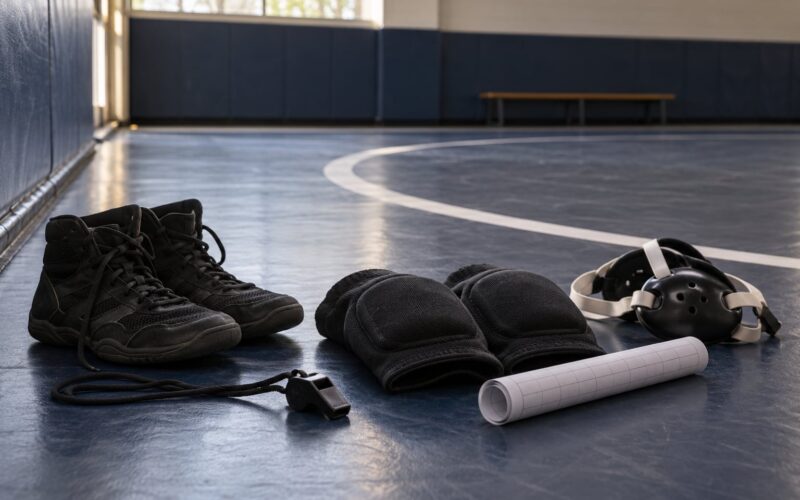
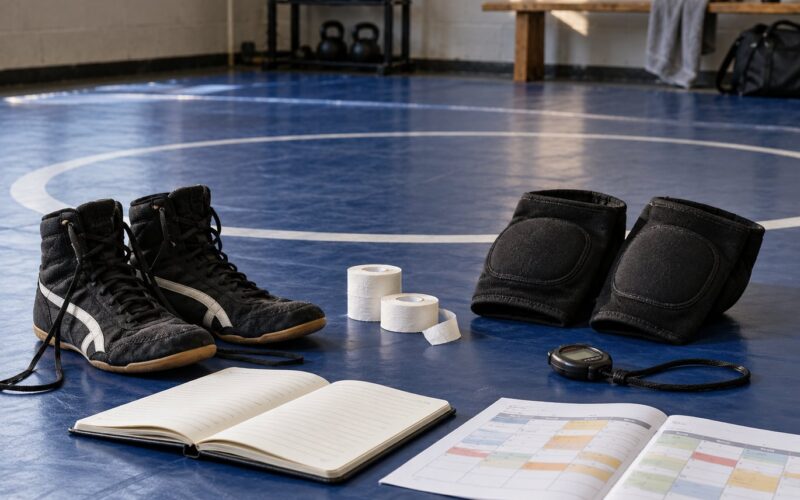
Pack like this: a competition singlet, wrestling shoes if you own them, headgear, shin guards, a mouthguard, knee pads, two changes of quick-dry clothing, socks, a towel, a refillable water bottle, any medication, a pen, a notebook, snacks for between blocks, and a printed copy of every form. For overnight campers add toiletries, a sleep mask, and whatever the venue charges as a deposit.
On the day, arrive thirty minutes early and eat beforehand. Warm up on your own for ten minutes before anyone asks you to, not during the group block. Watch the room for five minutes before the first whistle and figure out who the coaches are. Ask one good question at the Q&A, something you actually want the answer to. Being pleasant and on time is a low bar, and clearing it costs nothing.
What will not get you booked is a highlight reel of moves you cannot land, arriving in the last five minutes, or asking who signs you before anyone has seen you move. Be the person who is ready, repeatable, and easy to coach. That is the whole pitch.
Frequently Asked Questions
Do you need professional wrestling experience to attend a wrestling tryout camp?
No. Most tryout camps are built for athletes with no pro background at all, and many are aimed at wrestlers moving from another sport. What they cannot teach in two days is the position awareness and mat conditioning that come from years of amateur wrestling, so expect the first session to be mostly fundamentals. Prior experience changes your starting point, not whether you are allowed in the room.
How long does a wrestling tryout camp usually last?
Most run two to five consecutive days, with single-day sessions offered by some operators and overnight formats running longer. Multi-day camps exist because one session is not enough to judge someone, and because coaches want to see a second day. Check the published dates on the registration page before you plan travel, and confirm whether the last day ends earlier than the others.
What should I wear or bring to a wrestling tryout?
Wear a competition singlet, wrestling shoes, headgear, shin guards and a mouthguard, and bring knee pads, spare clothing, socks, a towel, a water bottle and a notebook. Pack a printed copy of your waiver and any medical forms. If you are not sure whether the headgear is mandatory, ask the contact address, since requirements differ between camps that supply gear and camps that do not.
Do wrestling tryouts always include a live match?
Almost always some form of live in-ring work, but the format varies. A developmental camp may run short controlled scrimmages with a coach stopping the action. A talent-scouted tryout usually builds to a showcase match in front of whoever came to watch. Some sessions pair people by weight and experience rather than by ability, so the match is a test rather than a showcase for most of the room.
Why was I not selected after a wrestling tryout camp?
It usually means the pattern across the whole camp did not match what the coaches were looking for, and promotions rarely give detailed reasons to everyone. Coaches tell you that coachability, learning speed, work ethic and safe movement matter more than existing skill, so the gap is often about how quickly you absorbed corrections. Asking for specific feedback before you leave is the one move that improves your next attempt.
Conclusion
A wrestling tryout camp is run as a repeating daily block, weighed in the ring as much as in the notebook, and judged on coachability and gas tank well before anyone asks whether you can work a match. The camp you attend next year will still be running the same sequence, and the coaches watching it in 2026 are watching for the same things Harley Race described two decades ago. Verify the promoter’s instructions, get your mat conditioning honest in the four weeks before you go, and arrive early enough to watch the room before you step into it.