What scouts look for at a wrestling tryout boils down to seven observable things: movement quality, believable ring work, a usable character, presence and communication, coachability, work ethic, and how you behave toward the other prospects when you are exhausted. Nobody is grading your highlight reel in that room. They are watching how you move when a coach tells you to do it again, slower.
That is worth saying plainly, because the tryout process is famously opaque. Tryout announcement posts name the prospects who are already coming and never explain how anybody else gets in. The rest of it — what happens on the day, what a scout actually writes down — gets described in fragments on forums and in a handful of dated news reports.
This guide pulls that together: what the evaluation covers, how the session runs from check-in to feedback, what gets a prospect released, and how to prepare without injuring yourself the week before. Updated for October 2026.
Table of Contents
- What Scouts Look for at a Wrestling Tryout
- How a Wrestling Tryout Evaluation Works
- Ring Awareness, Safety, and Control
- Movement Quality and Physical Readiness
- The Importance of Ring Skills
- Character, Style, and Marketability
- Coachability and Professional Attitude
- What to Wear and Bring to a Tryout
- How to Prepare Without Overtraining
- Independent, Regional, and Major-Company Tryouts
- What Happens After the Tryout
- Frequently Asked Questions
- Do I need professional wrestling experience to pass a tryout?
- What should I do if I do not know any wrestling moves?
- Can I get into WWE or AEW through an open tryout?
- How much do scouts care about the wrestling gear I bring?
- Should I follow up after a wrestling tryout if I hear nothing?
- Conclusion: Start With the Fundamentals
What Scouts Look for at a Wrestling Tryout
Scouts score a wrestling tryout on three axes — in-ring ability, physical conditioning, and mental composure — and then watch for the extras that separate a competent wrestler from a usable one: believable strikes and holds, character, presence, coachability, work ethic, and how you treat the person on the other side of the drill from you.
In practice that breaks into seven categories, and the order of importance usually changes from one promotion to the next:
- In-ring fundamentals — base, stance, hand fighting, safe falls, transitions between moves.
- Believability on camera — whether your strikes and holds read as real to a viewer who has never seen you wrestle before.
- Character and the it factor — who you are as a performer, and whether that reads in thirty seconds.
- Physical readiness — conditioning, flexibility, coordination, and the ability to keep working when you are gassed.
- Presence and communication — how you carry yourself, how you respond, how you speak into a microphone.
- Coachability and work ethic — whether a correction lands, and whether you keep trying after the correction.
- Composure under pressure — how you behave when the drill gets hard, when you are tired, and when someone is watching specifically.
WWE scout Gabe Sapolsky, who handles much of the company’s scouting and coordination, has framed the whole thing as a superstar business rather than a good-wrestler business. In his telling the credible wrestling gets you considered, and character, personality and individuality get you signed.
| Criterion | What the scout actually watches for | Signal strength |
|---|---|---|
| In-ring fundamentals | Safe falling, controlled pace, a base you can defend, clean transitions | High — a bad fall ends the evaluation early |
| Believability | Do strikes and holds look real when the tape is rolling | High — described publicly as the credibility test |
| Character and it factor | Individuality, personality, something an audience could latch onto | High — often the deciding factor |
| Physical readiness | Conditioning, flexibility, coordination, repeat effort late in the session | Medium — trainable, so rarely a hard gate |
| Presence | Confidence without showing off, eye contact, how you fill silence | Medium |
| Coachability and work ethic | Do you fix it when corrected, and do you help the person next to you | High — heavily weighted |
| Composure under fatigue | Behavior when drills turn brutal and everyone is watching | High — treated as a deliberate character test |
How a Wrestling Tryout Evaluation Works
A tryout is a comparison exercise. Prospects are split into groups, run through identical drills in front of the same evaluators, and watched side by side. A typical session brings together roughly 40 to 45 people from very different backgrounds, which is why standing out quietly matters as much as standing out loudly.
The day usually follows the same sequence:
- Check-in and sorting. Paperwork, waivers, height and weight recorded, bags stowed, prospects grouped by size and experience. In WWE’s case the current coordinating scout is Gabe Sapolsky.
- Group warm-up and athletic testing. Running, body weight movements, grip and flexibility work, general conditioning that tells the coaches what body you have to work with.
- Fundamentals with a partner. Basic strikes, holds, escapes and transitions, watched for control rather than flash.
- Drill sequences under fatigue. Combinations repeated until they degrade. This is where the session turns hard, and where behavior gets noted.
- Character and promo assessment. Microphone work and character presentation. NXT head writer Johnny Russo has talked about this publicly, stressing authentic delivery and movement that matches the words.
- Feedback and next steps. Corrections given on the spot, and for promising prospects, an invitation to come back or to stay for a second day.
Reports of the physical and drill phases describe them as intentionally brutal, a description that traces back to Triple H’s account of NXT evaluation — prospects pushed to the point of nausea and expected to keep going. Regardless of how extreme any single session gets, the principle holds: exhaustion is used as a lens, not as a filter for body type.
Ring Awareness, Safety, and Control
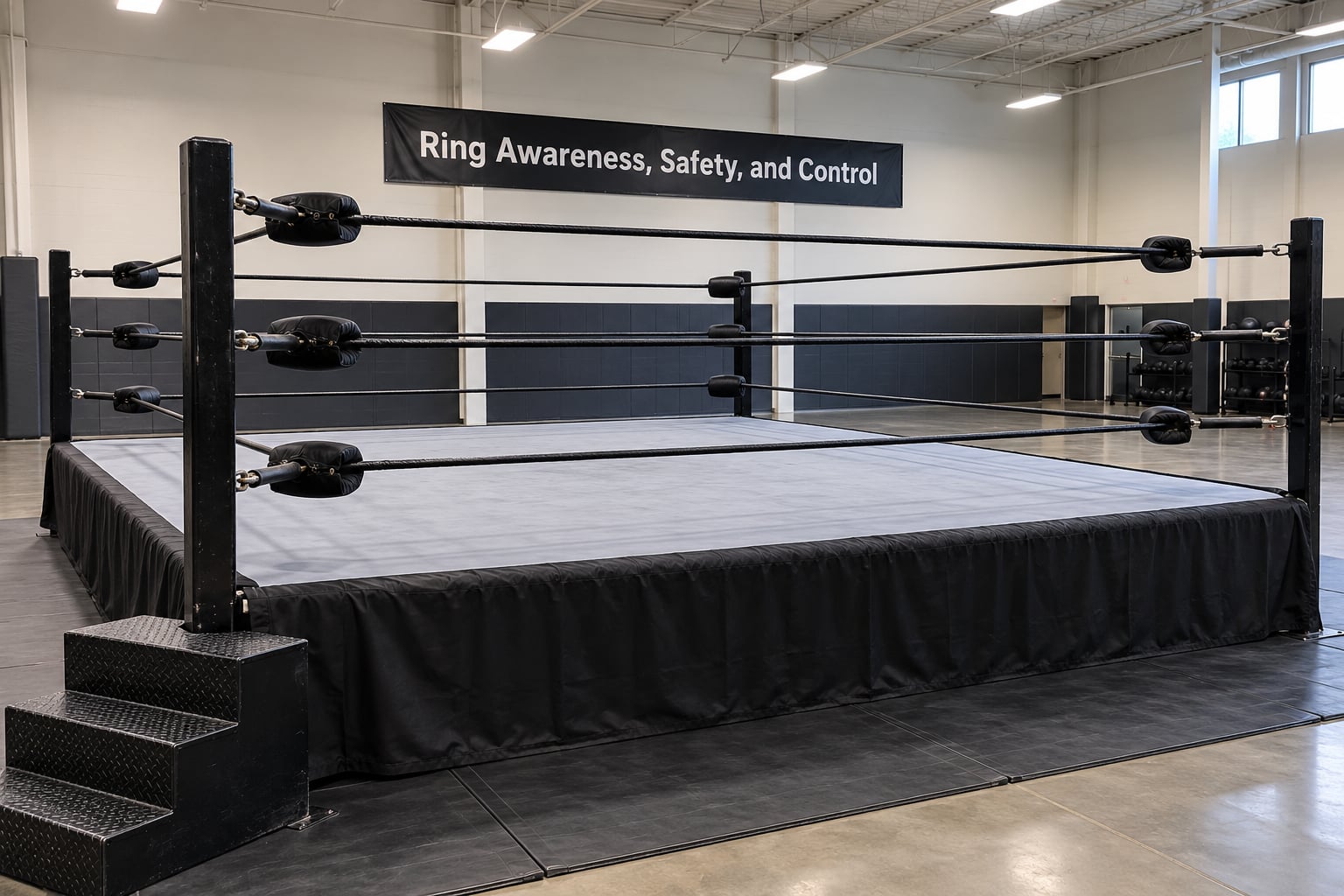
Ring awareness means knowing where everybody is before you move. Scouts watch whether you track your partner’s shoulder, whether you notice the other prospects working ringside, whether you keep your eyes open during a transition instead of shutting them at impact, and whether you respect the ropes and turnbuckles as objects rather than decoration.
Control is the same skill applied to force. A scout wants to see a move landed at the speed your partner can absorb, a hold applied and released cleanly, and a stop the instant somebody taps or says enough. The failure that ends evaluations early is almost never weak technique — it is a dropped person who gets up fast, or a partner left on the mat because nobody apologised.
Movement Quality and Physical Readiness
Balance, coordination, body control and the ability to keep moving safely are what get rewarded. Stamina matters because the drills are designed to run long enough that technique degrades, and what survives that point is the interesting part.
What does not get rewarded is an isolated impressive feat with no context. A prospect who launches a stunt in the first five minutes and cannot repeat it safely at minute forty has shown a scout something, just not usually something they can use. Flexibility matters more than most people expect; restricted hips and ankles get corrected before anything else.
The Importance of Ring Skills
Ring skills matter at a tryout because they are the only part of the evaluation a scout can verify on the spot. Character can be pitched, conditioning can be built, but the fundamentals either work in front of a partner or they do not.
What scouts may test from a beginner is a short list, and it is genuinely short: stance and base, a tie-up, a collar-and-elbow or headlock exchange, a front facelock, a clean breakfall, a running hip toss or arm drag landed safely, controlled strikes with visible sell, Irish whips, corner positioning, and a basic submission with an escape. Repeating the same six things accurately beats performing twenty different things badly.
What they are not expecting from a first session is a piledriver, a top-rope maneuver, a chain of submissions, or polished match pacing. Attempting advanced moves cold is the fastest way to get somebody hurt, and it is the fastest way to be released. Learn bumps with a coach, under supervision, weeks before the tryout rather than days.
Character, Style, and Marketability
A workable character can carry a candidate further than ring experience, particularly when the ring work is honest rather than exceptional. Scouts are looking for something an audience could follow: a personality, a point of view, a look and entrance idea, or a style of movement that is recognisably yours.
That is not the same thing as arriving with a finished gimmick. Almost nobody has one, and a tryout is not a character test with a right answer. It is a question about whether you can generate something on the spot and stay committed to it while you are tired and being told to do it again.
On the microphone, the standard described publicly is authenticity. Speak the way you talk, and let your body match your words rather than reciting a prepared monologue you have clearly memorised. Movement that contradicts what you are saying is the fastest way to break the illusion you just spent ten minutes building.
Coachability and Professional Attitude
Coachability is the easiest thing to demonstrate and the most common thing to fail. Scouts watch whether you arrive on time, whether you listen while the coach is talking, whether you attempt the correction rather than arguing for your version, and whether the second repetition looks different from the first.
The other half of it is professionalism toward everyone else in the room. Wrestlers repeatedly describe the lesson that treating the session as a showcase rather than a test is what ends a tryout early: hogging the drill, refusing to help a struggling partner, complaining about the format, or sulking when a prospect gets extended to a second day and you do not.
Triple H has argued that handling adversity is closer to the real differentiator than athletic ability, and that how you treat people around you when everyone is exhausted is the thing people remember. Promoters at smaller companies tend to agree with him, mostly because they will share a locker room with whoever they sign.
What to Wear and Bring to a Tryout
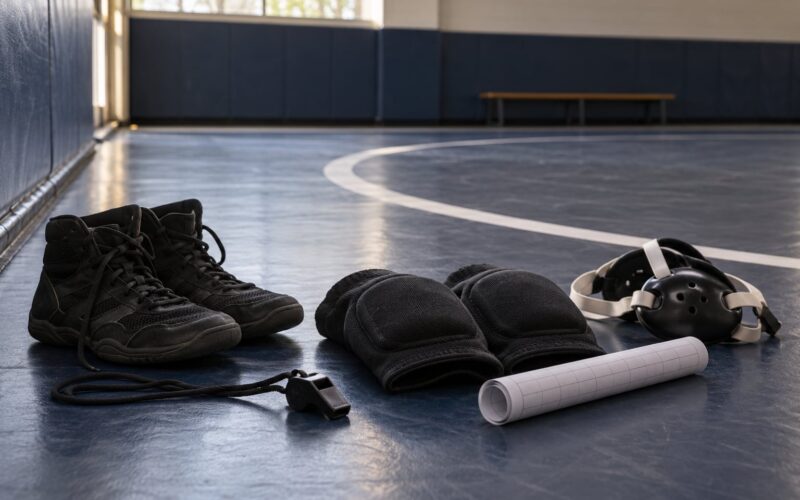
Bring gear you can move in, arrive in, and warm up in, and bring almost nothing else. Promotions generally provide what you need for the drills, and arriving with a full kit to change in wastes the time you should be using to move.
A sensible packing list:
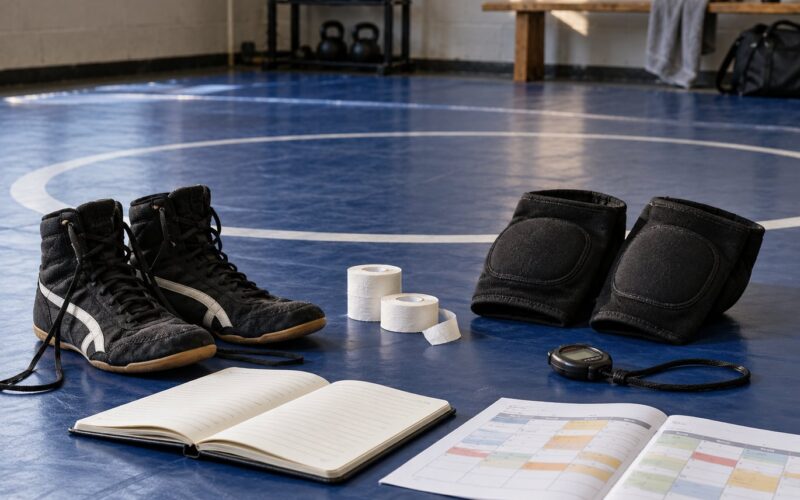
- Wrestling boots or training shoes that support your ankles and are already broken in
- Knee pads and elbow pads, plus wrist tape if you already work with it
- A change of clothes and socks for the warm-up
- Two filled water bottles, a towel, and a small snack
- Photo identification and any paperwork or medical information the promotion asked for in advance
- A small towel and hand sanitizer if you are sharing equipment
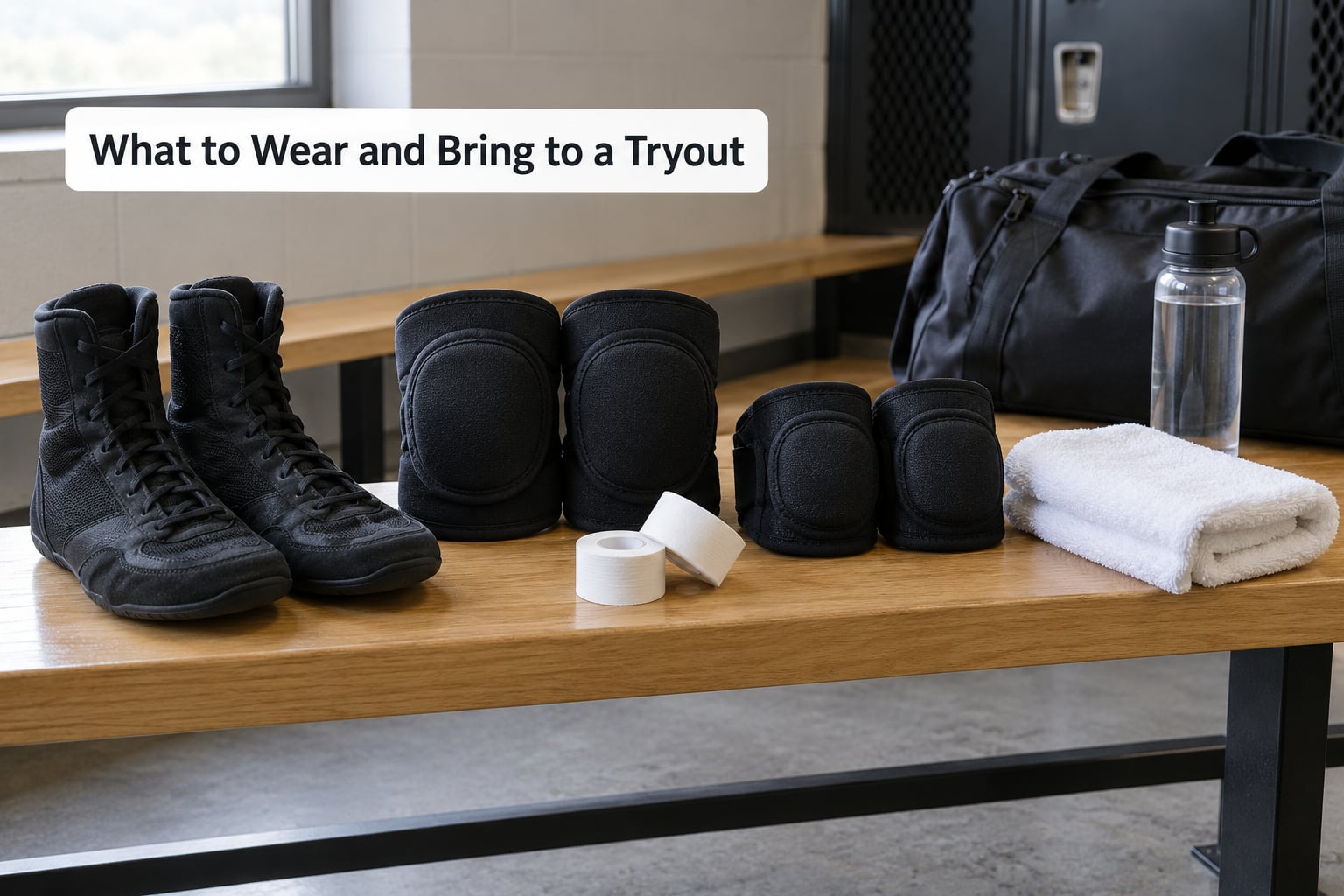
Do not wear unapproved protective equipment. Helmets, braces, and rigid supports hide the head and neck positions scouts are assessing, and some promotions will not let you work in them. Bracing a joint you genuinely need to protect is a conversation with the coaching staff on the day, not something to sort out silently in the corner.
Gear is also not a substitute. Nobody has ever been signed for the shape of their boots. Show up prepared and comfortable, then let the evaluation be about you.
How to Prepare Without Overtraining
Most people get hurt before a tryout, not during it, by trying to learn something new in the final week. Four to six weeks of sensible preparation is enough; the final three days should be almost nothing.
- Condition generally. Running, bodyweight work, and mobility for three or four sessions a week is enough. You are trying to arrive able to finish a long session, not to peak.
- Practice safe falls with supervision. Breakfalls and rolls, taught properly, are the highest-value skill you can own before an evaluation.
- Work the basics, not the highlights. Tie-ups, headlocks, wrist control, escapes, and controlled strikes will be tested. Your signature move will not.
- Rehearse the announced format, not a fantasy one. If the announcement says in-ring work and a promo, drill both out loud until the promo stops sounding written.
- Sleep, hydrate, and taper. A short easy session the day before, food you normally eat, and water in the bottle are worth more than a hard workout.
- Watch a full match, then take notes. Not to copy a wrestler, but to see pacing, sell, and how a promo connects to what just happened in the ring.
Worth adding for anyone still deciding whether to pay for training first: on r/WredditSchool and r/prowrestling, the recurring advice is to check a school’s alumni and weekly schedule before signing up, and to treat a school offering one session a week as a warning sign. Ask who is currently working, at what level, and what a typical four-month progression looks like.
Independent, Regional, and Major-Company Tryouts
No single look or style guarantees selection anywhere, and the biggest difference between tryouts is who is standing at the side of the ring watching. An independent promotion is hiring somebody for a Saturday night in front of four hundred people; a major company is spending developmental years on you first.
| Type of tryout | What the evaluator prioritises | What usually decides it |
|---|---|---|
| Independent promotion | Crowd-ready ability, reliability, safe partners, dates that actually work | Can you work a live room and take a bump on a hard floor |
| Regional school or territory | Athletic background, coachability, willingness to learn the local style | Fit with the existing roster and schedule |
| Major company (WWE-style evaluation) | Believable fundamentals, character, promo ability, adaptability across archetypes | Trainability and the it factor, not polished television skill |
| Video submission programme | Charisma, character work, camera presence | How you come across on tape; no in-ring work in the first round |
Note the last row. Independent development and video-submission routes, such as WWE’s ID programme, are evaluated on charisma and character first, because there is no ring to watch. Community advice is consistent on this: fans cannot evaluate someone they have never seen work, which is why a reputation on a reputable independent show travels so much further than a good home video.
What Happens After the Tryout
Most tryouts end with one of five outcomes, and only one of them is a contract. Being asked to return for a second day or an extended session is the strongest live signal, and it is not a decision. Being offered developmental work with a promotion or its training arm is the most common positive result, and it is not the main roster. Being referred to a trainer, an agent, or another promotion happens often enough to matter.
Plenty of prospects are simply released, and a smaller number get no decision at all. Silence is not a rejection, and it is not a pass either. Scouting pipelines run long; a released prospect who trains a year and books regularly is a much stronger file than the same prospect who disappeared.
If you want to follow up, do it once, briefly, and professionally. A short message thanking the promotion for their time is enough. Then get back to work in front of an audience, because the next opportunity will come from someone who has seen you work, not from someone who saw you once for an hour.
Frequently Asked Questions
Do I need professional wrestling experience to pass a tryout?
No. Promotions run tryouts specifically for people without professional ring experience, and reports of recent sessions note that officials typically look for athletic backgrounds, coachability and presence rather than polished television skills. You do need to be able to fall down safely and learn on command, which is a trainable skill rather than a credential. Training first helps, but it is not an entry requirement.
What should I do if I do not know any wrestling moves?
Say so in the first five minutes and ask the coach what he wants to see. Coaches running tryouts see unfamiliar athletes constantly and will give you a drill. Trying to hide it wastes the one moment where being honest is obviously in your favour. Learn a short list of fundamentals beforehand: stance, a tie-up, a headlock, a wrist lock, a breakfall and a controlled strike.
Can I get into WWE or AEW through an open tryout?
Open tryouts happen, but they are rarely the main route. Most people are invited after a promoter or trainer recommends them, after scouts have already been tracking them, or through a video-submission programme such as WWE ID, which is judged on charisma and character work rather than in-ring ability. Announcements usually list who is already attending, which is why the referral and submission routes matter far more than applying to turn up.
How much do scouts care about the wrestling gear I bring?
Barely, as long as you can move safely in it. Boots, knee pads, elbow pads, water, identification and any paperwork you were asked for cover the practical needs. Unapproved protective gear like helmets or rigid braces hides the head and neck positions coaches are assessing, and some promotions will not let you work in it. Nobody has ever advanced because of the shape of their boots.
Should I follow up after a wrestling tryout if I hear nothing?
Yes, once, and briefly. A short professional thank-you costs nothing and keeps your name in front of the people who watched you. After that, silence usually means the pipeline moved on rather than that you did something wrong. If you were not extended, the most useful thing you can do next is get booked on independent shows and build a record coaches can actually see.
Conclusion: Start With the Fundamentals
If you take one thing from this, take the boring version. Confirm what the tryout actually asks for, train the short list of fundamentals until they are boringly reliable, arrive early and in gear you can move in, and treat every correction as the evaluation rather than an interruption to it.
What scouts look for at a wrestling tryout is a version of the wrestler you would be on 2026: safe, coachable, repeatable, and interesting to watch. Believable fundamentals get you into the room. Character and composure decide what happens next. Nobody gets there in a week of new moves, and nobody has ever gotten there on gear alone.