Wrestlers build social media followings by treating character, match stories and fan conversation as one repeatable system: pick one platform, post on a schedule you can keep, and give people a reason to reply. Most guys who stall out are not posting enough, they are posting nothing that anyone outside their own locker room cares about.
The mechanics are simple enough to learn in a weekend. What takes longer is figuring out which version of yourself actually holds attention, and then protecting it long enough for the algorithm and the audience to catch on.
Table of Contents
- What You Need
- Step-by-Step
- Define Your Wrestling Identity and Ideal Fan
- Choose the Platform That Matches Your Goal
- Optimize the Profile Before Posting
- Build a Repeatable Content Engine
- Publish Consistently and Improve the Hooks
- Turn Comments and Live Interaction Into Growth
- Collaborate With Other Wrestling Accounts
- Measure Progress and Adjust the Strategy
- Common Mistakes
- Frequently Asked Questions
- Which social media platform is best for a wrestler?
- How often should a wrestler post?
- Is buying followers worth it for a wrestler?
- Should wrestlers break kayfabe on social media?
- How do I balance my wrestling character with my personal brand?
- Can wrestlers actually make money from social media?
- Conclusion
What You Need
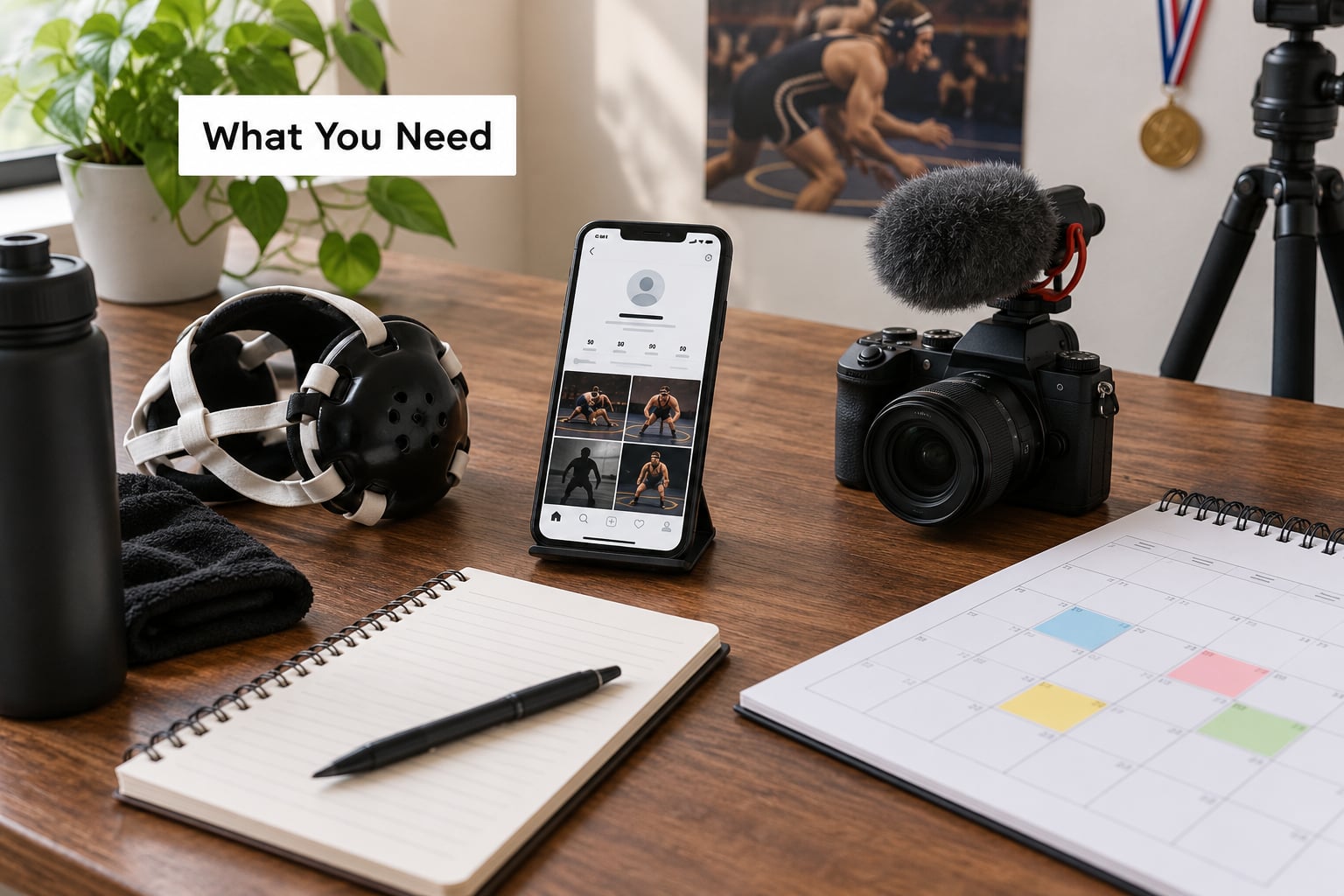
Six things, and you can line all of them up in one evening before you post anything publicly.
- A defined character. Not a vibe, not a mood. A short description of who you are in the ring that a stranger could repeat back to you after one clip.
- Brand positioning. The reason someone follows you instead of the next person on their feed. Purse snatcher, technician, underdog, talker, shoot-style workhorse.
- A finished profile. Name, photo, bio, link, banner. Everything a new visitor needs in under five seconds.
- Five to seven content themes. Recurring formats, not one-off ideas, so you never open the app with a blank screen.
- Access to your own analytics. Every platform gives it to you free. You just have to look.
- A schedule you can survive. Three posts a week you keep beats daily posting that dies in week three.
That last one matters more than the rest. Burnouts on social media usually start with an ambitious launch week, not with lazy posting.
Step-by-Step
Define Your Wrestling Identity and Ideal Fan
Write down your character in three sentences, then write down the person you are posting for. A 14-year-old who wants high spots and a 34-year-old who buys merch are two different audiences, and their feeds look nothing alike.
Then find the overlap between your strongest personality traits and what that audience rewards. If you are genuinely funny and loud, lean into promos and short arguments. If you are quiet and precise, lean into training and match breakdown. Fans can tell when you are performing a version of yourself that does not exist in the ring.
Choose the Platform That Matches Your Goal
There is no single best platform for wrestlers, only the right one for what you want to happen. Most successful accounts eventually run two, but they start with one.
- TikTok rewards short, rough-edged vertical video. Travel vlogs, training clips and hot takes on wrestling news do well here because the platform is built on discovery rather than on followers you already have.
- Instagram is where photos, Reels and merch live. It suits wrestlers with a visual identity and works well for promoting shows, drops and meet and greets.
- YouTube is the only platform where match footage and long-form opinions build something that keeps earning months later. Shorts can be used as a funnel for it.
- X is where wrestling conversation happens fastest. It suits promo writers, heel turns, and anyone who wants to be in the replies on a big night.
- Facebook still works for events, ticketing and older fans, and it is where a lot of independent shows actually sell their seats.
- Threads is useful as a low-effort second channel for opinions that would otherwise get buried.
Pick the one your ideal fan actually opens. Then stay there long enough to learn what works before you split your attention.
Optimize the Profile Before Posting
Your profile is a landing page, and most people bounce off it in seconds. Use the same name across platforms so people can find you, put the clearest thing about you in the bio, and use one link that goes somewhere you control.
Pin your three strongest posts. A newcomer who lands on a profile with no pinned posts has to guess whether you are a wrestler, a fan account or a spammer, and most of them guess wrong and leave.
Build a Repeatable Content Engine
Seven pillars cover almost everything that works for a wrestling account. Once you have them, you are never scrambling for ideas.
- Behind the scenes. Lacing boots in a car park at midnight. Unglamorous, and it travels further than anything else you will post.
- Match reactions. Your take on a match you were in, including the parts you were not proud of.
- Training updates. Progress over a specific stretch, like a six-week goal. Specific beats vague every time.
- Promos and character pieces. Short in-character clips that make people want to see what happens next.
- Fan questions. Answer five a week. Cheap content, and it makes people reply so the post reaches more accounts.
- Wrestling opinions. Hot takes on bookings and debuts. Careful here, see the mistakes section.
- Storyline beats. Hint at what is coming without confirming it. This is what pulls people into live events and stream views.
Publish Consistently and Improve the Hooks
Pick a rhythm you can hold for a year. Three quality posts a week beats a daily schedule that collapses by summer. Batch what you can: film ten clips on one training day and you have two weeks of material.
The first two seconds decide whether anything else you made matters. Start mid-action, start mid-sentence, start with the payoff, not the warm-up. And every caption should end with something a person can answer, a question or a choice, not a dead period.
Turn Comments and Live Interaction Into Growth
Reply to comments in the first hour after you post. Early replies push a post in front of people who have not seen it yet, and most accounts lose that window because they open the app the next morning.
Once you have any kind of audience, run a Q&A. Fifteen minutes of live video answering fan questions will outperform a week of static posts, and it gives people a reason to come back for the next one. Polls work well too, especially for match predictions, because they take four seconds and give people something to do.
Collaborate With Other Wrestling Accounts
Collaboration is the fastest route to an audience you did not earn. Interview a wrestler at a show. Trade weekly check-ins with someone at your level and promote each other. Co-host a stream about a card you are both on.
Keep it respectful and equal. Accounts that turn every collab into a favour they did another wrestler end up with a reputation, and in wrestling that matters as much as it does online.
Measure Progress and Adjust the Strategy
Check these five numbers instead of staring at follower count:
- Saves and shares, which tell you whether the post was worth keeping.
- Comments, and how many are from people who are not your friends.
- Watch time on video, especially the first three seconds.
- Profile visits that turn into follows, which measures your profile page.
- Link clicks, which are the number that matters when you have merch or a show to sell.
If a post underperforms, do not delete it. Look at where people stopped watching, rewrite the hook, and repost the same footage with a different opening two weeks later. That single habit fixes more weak posts than any new idea will.
Common Mistakes
Here is what goes wrong most often, and what to do instead.
- Buying followers. Fake numbers make your engagement rate look broken and scare off the promotions and sponsors you are trying to impress. Delete them and grow slowly.
- Copying another wrestler’s style. Borrowing a format is fine, borrowing a personality reads as fake in under ten seconds. Take the structure, keep your own voice.
- Posting only match results. If every post is an announcement, people unfollow, because announcements are not content. Aim for at least one non-announcement post per week.
- Using excessive hashtags. A pile of thirty tags makes a post look desperate and can push it into spam filters. Three to five relevant ones do more.
- Ignoring negative feedback. You cannot please everyone, but you can reply calmly, correct real errors and mute the accounts that are only there to argue.
- Changing character every few weeks. People follow a persona, not a mood. Consistency in tone matters more than being fresh, and a recognisable voice is what turns viewers into regulars.
- Measuring only follower totals. A thousand people who never see your posts is worth less than two hundred who comment on every clip.
A few tips that smooth out the whole process. Film vertical if you can, because most people watch on a phone. Keep captions short and readable. Repurpose: one good match clip can become a TikTok, a Reel, a Short and a four-image carousel without anyone seeing the same frame twice in a row.
Frequently Asked Questions
Which social media platform is best for a wrestler?
For most wrestlers, TikTok is the fastest platform for discovery because it shows your clips to people who do not follow you yet. Instagram works better for visuals, merch and event promotion, and YouTube is the only one that keeps earning months after you upload. Pick one, learn how it ranks, and only add a second once you have a few months of posts to reuse.
How often should a wrestler post?
Three posts a week is a realistic floor for most wrestlers with a day job and a full training schedule. Consistency matters more than volume, because the algorithm rewards accounts that show up on a predictable pattern. Batch filming on one day a week so the schedule takes an hour instead of eating into every evening.
Is buying followers worth it for a wrestler?
No. Bought followers almost never watch, which drags your engagement rate down, and promoters or sponsors who look closely will notice the number does not match the comments underneath it. You would also be paying for an audience you cannot show anything to. Put that money toward better filming or a small ad campaign aimed at wrestling fans in your area.
Should wrestlers break kayfabe on social media?
Mostly keep the character, with small cracks of real personality showing through. Fans are more forgiving about your life than your character, and mixing both is what makes an account feel like a real person. What usually backfires is spoiling a storyline, insulting a promoter, or posting anything you would have to take down before a show on Saturday.
How do I balance my wrestling character with my personal brand?
Run them side by side instead of merging them into one confusing voice. The character shows up in promos, match talk and merch, while the personal side carries travel, training and family life. Fans happily follow both, especially when the character is the version of you that would never admit to missing your grandmother’s birthday.
Can wrestlers actually make money from social media?
Yes, but rarely from follower count alone. The realistic income lines are merchandise, sponsorship work, subscription content for committed fans, meet and greets, and using your reach as leverage when you negotiate a contract or ask a promoter for better dates. The account gets you the meetings; the meetings are where the money happens.
Conclusion
Start with one platform, decide exactly who you are posting for, and write down three content pillars you can repeat for six months without running dry. Three posts a week, replies in the first hour, one new relationship with another wrestling account each month.
After thirty days, look at saves, comments, watch time and link clicks rather than the follower number. You will usually find one format doing most of the work and five posts doing nothing, and cutting the dead weight is what frees up the time to do more of the thing that worked.