How wrestlers become commentators after retiring usually comes down to three things: a working relationship with the promotion, real microphone experience, and an opening created by injury or a schedule gap. The wrestler fills in at a small show, the tape gets noticed, and the door to a bigger booth opens a step at a time. Nobody hands you a headset the day you hang up your boots.
The part that surprises people is how much of the job a ring career already trained you for. You have sat through the same storylines for years, you know which wrestler sells a shoulder injury and which one goes quiet, and you can tell a botched spot from a worked one. That is the raw material. The craft of calling a match is a separate skill, and it has to be built deliberately.
Below is the actual route, the roles that exist inside it, the skills you have to add, and the parts that catch out people who assume fame in the ring transfers directly to a microphone.
Table of Contents
- Why Do Retired Wrestlers Become Commentators?
- How Wrestlers Become Commentators After Retiring
- How Wrestlers Become Commentators After Retiring Step by Step
- What Does a Wrestling Commentator Actually Do?
- What Skills Make a Retired Wrestler a Good Commentator?
- How Can a Wrestler Prepare for a Broadcasting Audition?
- What Is the Career Path From Wrestling to Commentary?
- How Much Do Retired Wrestlers Earn as Commentators?
- Why Do Some Former Wrestlers Struggle in the Booth?
- Frequently Asked Questions
- Do retired wrestlers need broadcasting experience to become commentators?
- Can a wrestler become a commentator while still active?
- How do wrestlers prepare for a commentary audition?
- Are wrestling commentators expected to remain neutral?
- Can former wrestlers build a commentary career independently?
- Conclusion
Why Do Retired Wrestlers Become Commentators?
A wrestling career prepares you for commentary in four specific ways. Knowing what a match is doing, explaining why a wrestler made a decision, understanding the backstage picture, and holding an audience’s attention for two hours without a visual win condition.
Nobody else on the broadcast team understands why a wrestler stopped selling. Only someone who stood on the other side of the ring understands that the champion going three feet slower than he did last month is a storyline, not a decline. That knowledge is the whole reason promotions keep hiring former wrestlers instead of sports broadcasters who happened to like the product.
Name recognition travels with you, too. Fans who watched you wrestle for twelve years will accept your voice in the booth, which gives a promotion an instant audience it could not buy. Jim Ross carried fifteen years of crowd trust straight into a headset. Jerry Lawler, Michael Cole, Booker T, Tazz, Bobby Heenan and Byron Saxton all did the same thing in different eras.
Then there is the boring reason, which is employment. Commentary is a salaried weekly role that keeps a wrestler inside the company, on the payroll and near the talent, long after their body stops cooperating. Bryan Danielson described that side of it candidly when he moved into an AEW commentary role, pointing out that weekly travel and poor sleep were not a step up from wrestling.
Retirement itself is often a decision rather than an event. Neck injuries, knee damage and accumulated wear push people out earlier than they planned, and a body that cannot survive a Tuesday night in front of an audience can usually survive three hours of commentary. Others simply get tired of the schedule: 300 days a year, hotels on weekdays, and a home life that stays in the same timezone you keep leaving. Commentary trades some of that for office time and predictable hours, though it is not the quiet job outsiders assume.
How Wrestlers Become Commentators After Retiring
The transition runs through a predictable funnel, and almost every working commentator who came out of the ring entered it the same way: a short-term booking that turned into a regular spot.
Start at the bottom and work up. Fill-in duty at an independent show is the classic entry point, because a promoter needs a voice on the card and knows a former wrestler will not need much hand-holding. Danielson’s own route was unplanned: he was asked to step in when Taz had shoulder surgery, and the appearance led to a permanent seat.
From there, developmental and secondary brands function as a proving ground. NXT, studio programming built around live shows, and regional television all let a promotion test chemistry between two commentators without betting a flagship team on it. Booker T’s move into NXT commentary alongside Vic Joseph followed exactly that shape, and the pairing had to work before anyone was trusted with a bigger show.
Digital and podcast work is the parallel track that more wrestlers use than people assume. A weekly show builds a broadcast voice with no shift of schedule, and it produces a body of on-camera samples that a producer can actually watch. When a seat opens, a resume of clips beats a phone call almost every time.
The distinction that matters is between what you know and what you can do at a desk. Ring knowledge is transferable and largely free. Calling a match live, inside a headset, while a production crew cuts away and the crowd roars, is a trained skill. Treating the second as automatic is why some transitions stall.
How Wrestlers Become Commentators After Retiring Step by Step
- Pick the seat you actually want. Play-by-play is a different job from color. Decide early, because the practice you do will not be the same.
- Drill the vocabulary. Name every hold, strike and transition you would describe, out loud, in a sentence. If you stumble on the word, the crowd will too.
- Build a sample reel. Record three to five minutes of call on a real match, unedited. Quality matters less than consistency of audio.
- Get in front of indies. Small promotions book fill-in announcers constantly and rarely care about your CV. This is the cheapest rep available.
- Start a podcast or video show. Weekly episodes create a public archive and a recognizable voice, which is exactly what a producer wants to audition.
- Use your promotion contacts directly. Former agents, producers and publicists book commentators. A warm message beats a cold application every time.
- Take the small dates first. Weekend independents, dark matches, foreign-language guest spots. Turns add up into a roster of people who will vouch for you.
Seven steps, and step four is where almost everyone stalls. The point is not prestige, it is accumulated footage with your name attached.
The timetable varies wildly, so set expectations carefully. Someone with a decade of main-roster work and a good reputation can be on a broadcast in weeks. Someone without either will usually spend a couple of years on independents first, and there is no version of this where the work is skipped. Forum threads about breaking into commentary keep circling the same advice: build the voice somewhere public first, then let the promotions come to you.
What Does a Wrestling Commentator Actually Do?
The job splits into roles more distinct than most fans realise, and each has a different skill profile.
A play-by-play announcer describes movement in real time and carries the clock. Neutral tone, precise vocabulary, and the discipline to leave silence alone. A color commentator fills the space between calls with interpretation, backstory and reaction, and carries more of the personality. A ring announcer introduces competitors in a fixed promotional format with almost no analysis at all.
Beyond those three, the work has grown. Studio analysis means sitting in a studio after the fact, breaking down matches with footage. Backstage interviews are short segments shot on the fly. Digital and foreign-language broadcasts pay less and travel more, but they build reach. Ringside reporting puts you in the building at shows where the broadcast team does not travel.
Here is how the five core roles compare day to day.
| Role | Core job during a match | Main skill tested | Typical entry from the ring |
|---|---|---|---|
| Play-by-play | Describes every move, keeps the time and the crowd energy | Vocabulary and pacing | Independent fill-in dates, then a developmental brand |
| Color commentator | Explains the story, reacts, carries personality and backstory | Storytelling and improvisation | Promotional favourite with a strong mic, usually cast directly |
| Ring announcer | Delivers a scripted introduction with names and billing | Presence and clean delivery | Often a hosting or personality move inside the company |
| Studio analyst | Breaks down a finished match after the fact | Analytical clarity | Post-show shows and digital series |
| Backstage interviewer | Hosts short segments around the show | Conversational skill | Existing promo work, less about match knowledge |
Note the entry column. Color commentary is the most common landing spot for a well-known wrestler because the promotion already trusts their voice and knows they will carry personality. Play-by-play is the harder sell, because it depends on craft the promotion cannot verify from a match.
What Skills Make a Retired Wrestler a Good Commentator?
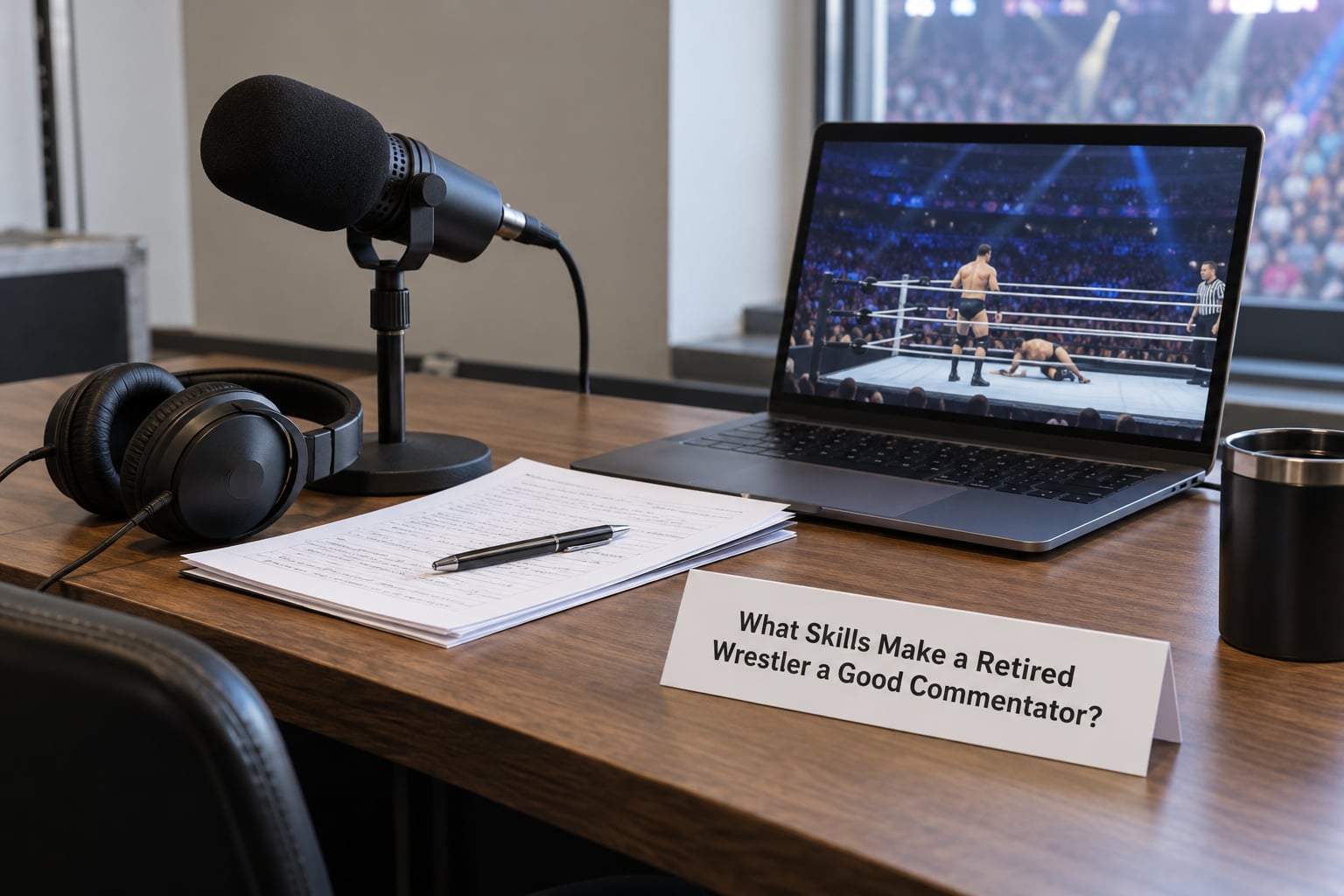
Clarity first. A viewer who cannot hear you over the crowd has no reason for you to exist, which makes audio levels and microphone distance a technical skill, not a detail.
Pacing separates good calls from exhausting ones. Silence during a hold, or during the half-second after a big move lands, does more for a broadcast than another sentence. Commentators who talk through every reaction leave the crowd nothing to react to.
Neutrality is a genuine skill for former heels. The instinct to call a match terrible because someone you dislike is in it is the fastest way to lose a job. Fans routinely raise the opposite complaint, that announcers protect the fiction too rigidly and refuse to acknowledge an obviously bad match, so the craft is a balance rather than a rule.
Preparation means research before the bell. Bryan Danielson compared the two jobs directly: agreeing a finish with an opponent became researching the main storyline and writing notes before going on air. A notebook matters more than charisma on most nights.
Storytelling, improvisation, crowd work and production awareness round out the list. Knowing what a headset does, understanding which camera they are on, and understanding that a producer may cut away mid-sentence are unglamorous and decisive.
One skill gets underrated. Converting technical wrestling into a sentence a casual viewer follows is harder than it sounds, because the instinct of a good wrestler is to skip the boring connective tissue between moves. The best calls name what just happened and what it means, in that order, without requiring the viewer to know what a Spanish suplex is.
Chemistry is the last one and the one nobody can practise alone. Most broadcast work happens in pairs, and the partner who asks a question, finishes your thought or simply stays quiet while you talk decides how the whole thing feels. Veteran teams like JR and Tony Schiavone or Michael Cole and Shawn Michaels worked for years on exactly this.
How Can a Wrestler Prepare for a Broadcasting Audition?
Auditions for commentary roles are short and practical. Expect to be handed a match clip, an event card, or a topic, and asked to run it live in front of a producer or a camera. Two minutes, no second take.
Do mock calls first. Record yourself describing footage you have already seen, which lets you focus on the call rather than the wrestling. Do three: one flat and accurate, one with crowd reaction, one that mixes in analysis. Compare them out loud and pick the one that sounds least like you talking.
Then fix the mechanics. Learn to work a headset, keep the microphone off your collar, and stop swallowing words before they come out. A producer will forgive an imperfect call and will not forgive bad audio.
Build the reference material that makes you useful in a meeting. Know the roster, the running angles and the last three months of results by promotion. When a producer asks what you would do with a talent who has gone quiet, a concrete answer beats any amount of ring experience.
Take feedback once and change one thing. Comments like “you are better” help nobody. Record every take, keep the best ones, and expect the first real date to be worse than the sample you auditioned with.
Turns also matter. Most people rehearse the match but not the questions. Sit with someone else and let them ask what a match means, why a wrestler changed tactics, or what happened backstage last week. It feels awkward twice and then stops feeling awkward, which is exactly the transition you need to make in a producer’s office.
What Is the Career Path From Wrestling to Commentary?
Seven routes cover almost every case I have come across, and most people use two of them at once.
Independent wrestling is the widest door. Promotions book fill-in announcers and will take a recent retiree with a name. Regional and territory television follows, where the travel pattern resembles wrestling more closely than most people expect.
Major-company digital media is where a lot of announcer careers actually start now, because a streaming roster needs voices and does not have to clear the same paperwork as a flagship show. Podcasts and video shows sit alongside it as the most common independent route, and Colt Cabana’s career is the version of this that got discussed most widely.
Post-event shows are steadier work with smaller audiences. Foreign-language broadcasts pay modestly and involve constant travel, but they hand a newcomer a microphone on a main stream. Freelance analysis for other sports, podcasts and regional outlets is the diversification most commentators add late in a career.
Movement between promotions is normal rather than disloyal. JR built a second life as the voice of New Japan Pro Wrestling after his WWE run ended. The indies-to-majorstream step, taken by the likes of Excalibur and Byron Saxton, is the one that takes the longest and usually requires surviving a developmental stint first.
There is also a reverse door worth knowing about. Bobby Heenan, Mr. Perfect, Tazz and Corey Graves all spent time in the booth and then went back to the locker room or the ring, sometimes successfully and sometimes not. A commentary seat is a stable holding position, and plenty of wrestlers treat it that way while they wait for the right opportunity to come back around.
How Much Do Retired Wrestlers Earn as Commentators?
Pay varies so widely by role, platform and audience that a single number would mislead you. Treat the table as planning bands rather than quotes, and expect them to shift as contracts are renegotiated and as the broadcast market changes.
| Route | Pay pattern | What drives the range |
|---|---|---|
| Independent fill-in dates | Low, per event | Travel distance, event size, whether travel is covered |
| Regional or territory television | Low to moderate, salaried | Territory size, broadcast hours, travel schedule |
| Major-company commentary | Moderate to high, salaried | Role on the team, contract structure, platform reach |
| Digital and streaming shows | Moderate, salaried or per episode | Audience size, whether the role is full-time or occasional |
| Podcasts and independent shows | Low to moderate, self-funded | Sponsorships, downloads, whether you also do live shows |
| Freelance analysis, other sports | Variable, per appearance | Outlet, broadcast window, union or non-union terms |
These are typical US ranges that vary by region and change over time, so treat them as a sense of order rather than a quote sheet. The real trade is workload against longevity: an in-ring career is short and physical, while a commentary contract can run into the fifties and keeps you on the road far less.
Why Do Some Former Wrestlers Struggle in the Booth?
Failure in this transition usually has a pattern rather than a cause, and fans can name every item on the list. Threads on r/SquaredCircle and r/WWE consistently raise the same complaints about commentary in wrestling.
The first is overpromotion of personal opinion. A former heel cannot call their old booking bad without ending the illusion the whole card depends on, and viewers notice the strain. The second is talking over the action, describing a move while the crowd is reacting to it, which is the single most common criticism of modern wrestling commentary.
Third is claiming backstage authority without proof. Saying a wrestler is hurt when nobody has confirmed it, or that a finish was agreed when it was not, ends careers quietly. Fourth is unfamiliarity with production: talking over the plug, losing the count, or continuing after the director has cut away.
Fifth is treating every match identically. A ten-minute technical bout and a thirty-second squash need completely different calls, and a commentator who uses one rhythm for both sounds like they are reading. The regular churn of announce teams adds another problem, since constant pairings give a broadcast team no time to develop chemistry.
The complaints from r/WWE threads deserve a fair hearing, because they are usually about craft rather than talent. Calling a scripted match is a performance job, and the ones that work treat the fiction as real without ever letting the audience feel manipulated.
None of these are about ability. They are habits, and habits are fixable with reps in a way that a neck injury is not.
Frequently Asked Questions
Do retired wrestlers need broadcasting experience to become commentators?
No. Promotions hire on wrestling knowledge and microphone ability first. Most people in the booth got there through fill-in dates, developmental brands and a small amount of on-camera work, not a broadcast degree. What you cannot skip is practice: someone who has never called a match live will usually need a few imperfect dates before handling a main stream.
Can a wrestler become a commentator while still active?
It happens, but it is unusual and most promotions hesitate. Handling weekly shows, travel and physical recovery alongside the booth burns time and energy you need for your own matches. Smaller commitments work better, such as a documentary series, a post-show segment or a podcast, which adds visibility without a full weekly schedule.
How do wrestlers prepare for a commentary audition?
Record mock calls on footage you have already seen, so you can focus on delivery rather than wrestling knowledge. Prepare one flat play-by-play version, one with crowd reaction and one that mixes in analysis. Learn headset technique and microphone handling before the day, and study the roster and running angles so you can answer questions about the show you are auditioning for.
Are wrestling commentators expected to remain neutral?
Largely, yes, especially in play-by-play. You describe what happens rather than what you think of it. Color commentators carry more personality and may react, but opinions are expected to serve the story rather than argue with it. Viewers react badly to announcers who criticise a match they are supposed to help sell.
Can former wrestlers build a commentary career independently?
Yes, and many do. Podcasts, video analysis shows, independent live events and foreign-language broadcasts all pay without a major-company contract. The trade is that you fund your own production and handle your own travel, audience and marketing. Most independent commentators eventually use that footage to get booked by a promotion.
Conclusion
The pipeline that shows how wrestlers become commentators after retiring is short and unglamorous: get in front of an independent crowd, record calls until your voice stops sounding like a promo, then let promoters and producers see the footage. Knowing what a match means gets you considered. Being able to describe it cleanly gets you booked.
Start tonight by recording two contrasting calls on the same match, one pure play-by-play and one built around analysis. Play them back and decide which one you would want to listen to for three years, because that is roughly how long the promotion will make you listen to it.