Wrestling action figures hold value for a simple reason: they are small, physical, and tied to a culture people keep coming back to. Scarcity, the condition of the figure and its card, how famous the wrestler on it was, and whether anyone can prove where it came from all feed into what a collector will actually pay. Get those four right and the figure is worth real money. Get them wrong and it is a shelf ornament.
Plenty of people ask this question with a cardboard box of dusty figures in front of them, and honestly most of what is in there is not worth much. But a handful in every box are, and the trick is knowing which ones before you sell.
Table of Contents
- Why Wrestling Action Figures Hold Value at a Glance
- What Is the Value of a Wrestling Action Figure?
- Sentimental worth is real, and it is not a resale number
- How Wrestler Popularity Affects Demand
- Why Rarity and Production Numbers Matter
- Condition, Accessories, and Packaging
- Vintage Releases, First Appearances, and Chase Figures
- Why Wrestling Action Figures Hold Value More Than Modern Releases
- How Collectors Verify a Figure Before Buying
- How Marketplace Demand and Recent Sales Affect Prices
- Frequently Asked Questions
- What is the most valuable wrestling action figure?
- Are unopened figures always worth more than loose ones?
- How do I tell if a wrestling action figure is rare?
- What documentation should I keep when I sell a figure?
- Should I grade a wrestling action figure?
- Conclusion
Why Wrestling Action Figures Hold Value at a Glance
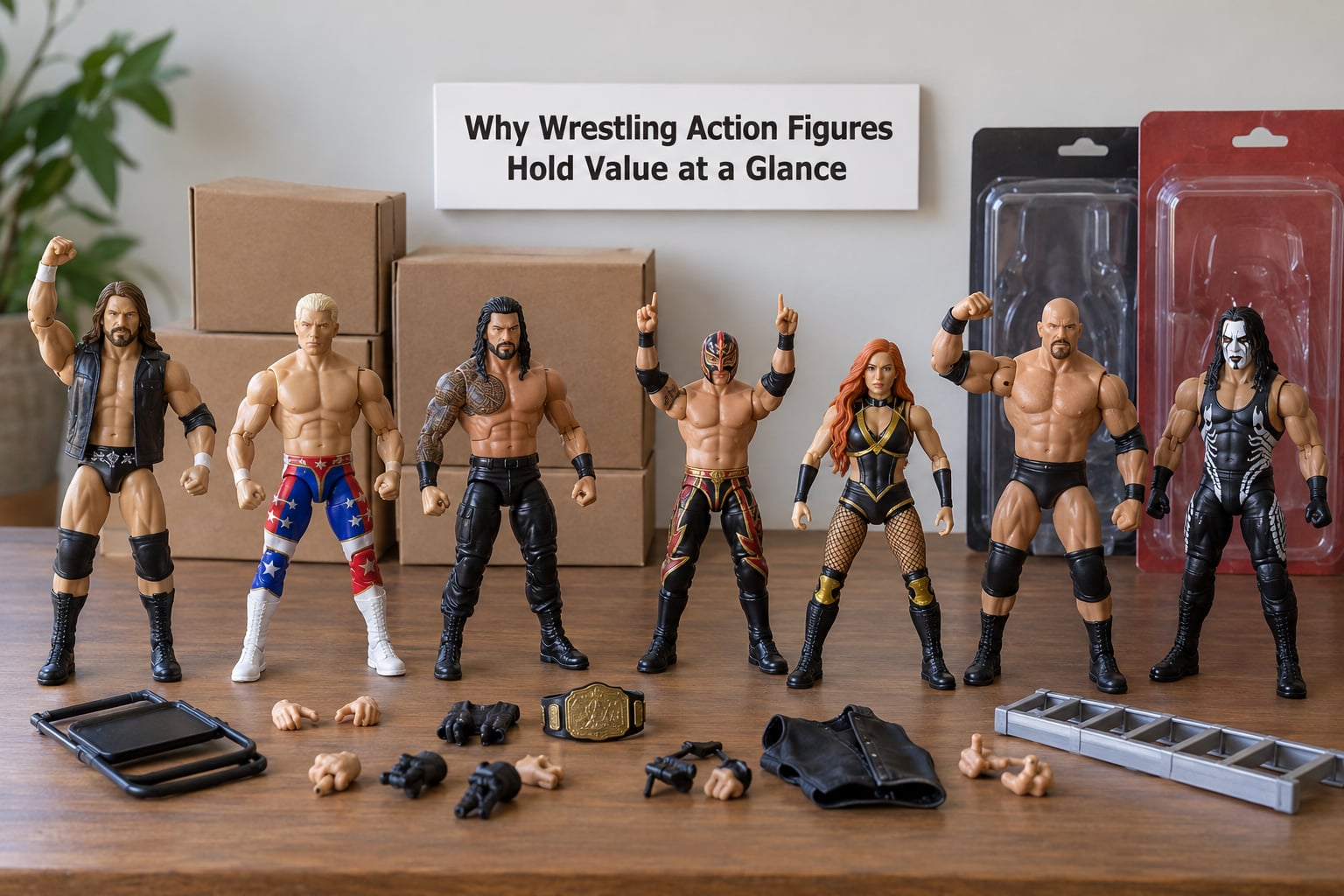
Value comes down to four forces pulling on the same figure: how rare it is, what condition it is in, how strong demand for that wrestler is, and how well its history can be documented. No single one of those carries a figure on its own. A scarce figure with heavy paint wear has already spent most of its premium.
| Value driver | What it means | How it moves the value | Weight |
|---|---|---|---|
| Scarcity | How many were made and how many survive | Fewer examples mean more buyers chasing the same figure | High |
| Condition and packaging | Figure condition plus card or box state | Clean paint and an intact card open the buyer pool | High |
| Wrestler demand | How many people care about that character | Popular wrestlers pull buyers from outside the toy world | High |
| Manufacturer and era | Which company made it and when | Retired lines shrink every year the company runs no more | Medium |
| Variant chase | Color, finish, error or event exclusive | Limited runs of a variant cut supply hard | Medium |
| Provenance | Ownership history, receipts, grading label | Proof of origin removes doubt and widens trust | Medium |
| Accessories | Everything that shipped in the package | A missing belt or title drops the piece into a lower tier | Medium |
One thing worth saying early: a figure that scores well on three of these and badly on the fourth still sells. It just sells for a fraction of what a clean example does.
What Is the Value of a Wrestling Action Figure?
Collectors use the word value for at least four different things, and mixing them up is what causes bad purchases. Resale value is what the figure clears for right now. Collector appeal is how badly a specific buyer wants it. Rarity is a supply fact. Sentimental worth is what the piece means to the person who owned it as a kid.
Those four rarely agree. The figure you remember most clearly from a Saturday morning cartoon might be a common release that sells for a few dollars, while a carded figure of a wrestler you never followed can be the one that pays the postage.
Sentimental worth is real, and it is not a resale number
The figure that got you into the hobby deserves a place on the shelf regardless. That attachment is why collections get built at all. Just keep it separate from the part of your collection you might sell one day, because sentiment is the one factor a buyer will never pay for twice.
How Wrestler Popularity Affects Demand
A wrestler with a memorable character, a strong entrance, and championship storylines brings in buyers who were never going to visit a wrestling toy forum. That larger pool is the single biggest reason a mainstream figure outperforms an obscure one from the same year and the same manufacturer.
Popularity is not the same thing as quality of likeness. A figure with stiff limbs and a smeared paint job can still outperform a clean sculpt, because demand is about the name on the card more than the plastic in the blister.
Two eras in particular keep producing buyers. The WWF-era figures carry nostalgia from cable broadcasts and magazine covers that most people in their forties and fifties remember vividly. The late 1990s and early 2000s period holds the figures collectors who were teens then still chase now that they have disposable income.
Popularity has a ceiling, though. Once demand is wide enough, an unlimited reissue pulls supply up and holds the figure down. That is why the scarce versions matter more than the name printed on them.
Why Rarity and Production Numbers Matter
Rarity matters because price is decided where supply and demand meet, and scarcity is the supply side of that equation. A figure with five known examples has five people competing for it. A figure with a million made has buyers who already own several.
Collectors judge rarity in this order: documented production quantity, whether the line was discontinued, whether the piece had a regional or card-back difference, and whether the variant was a deliberate chase or an accidental error.
- Documented runs. When a company or an auction house confirms how many were made, that number anchors everything.
- Discontinued lines. A line the company stopped making never gets a new batch, so scarcity grows on its own each year.
- Regional differences. Card backs and packaging that changed by country often split a line into separate populations.
- Error variants. A mistake on a short run is worth chasing; a mistake on a wide run is a curiosity.
Two myths do a lot of damage here. A low stamped number does not make a figure rare, because companies number runs they expect to fill. And the word rare means nothing without a quantity attached. If a seller cannot say how many exist, treat the claim as decoration.
Condition, Accessories, and Packaging
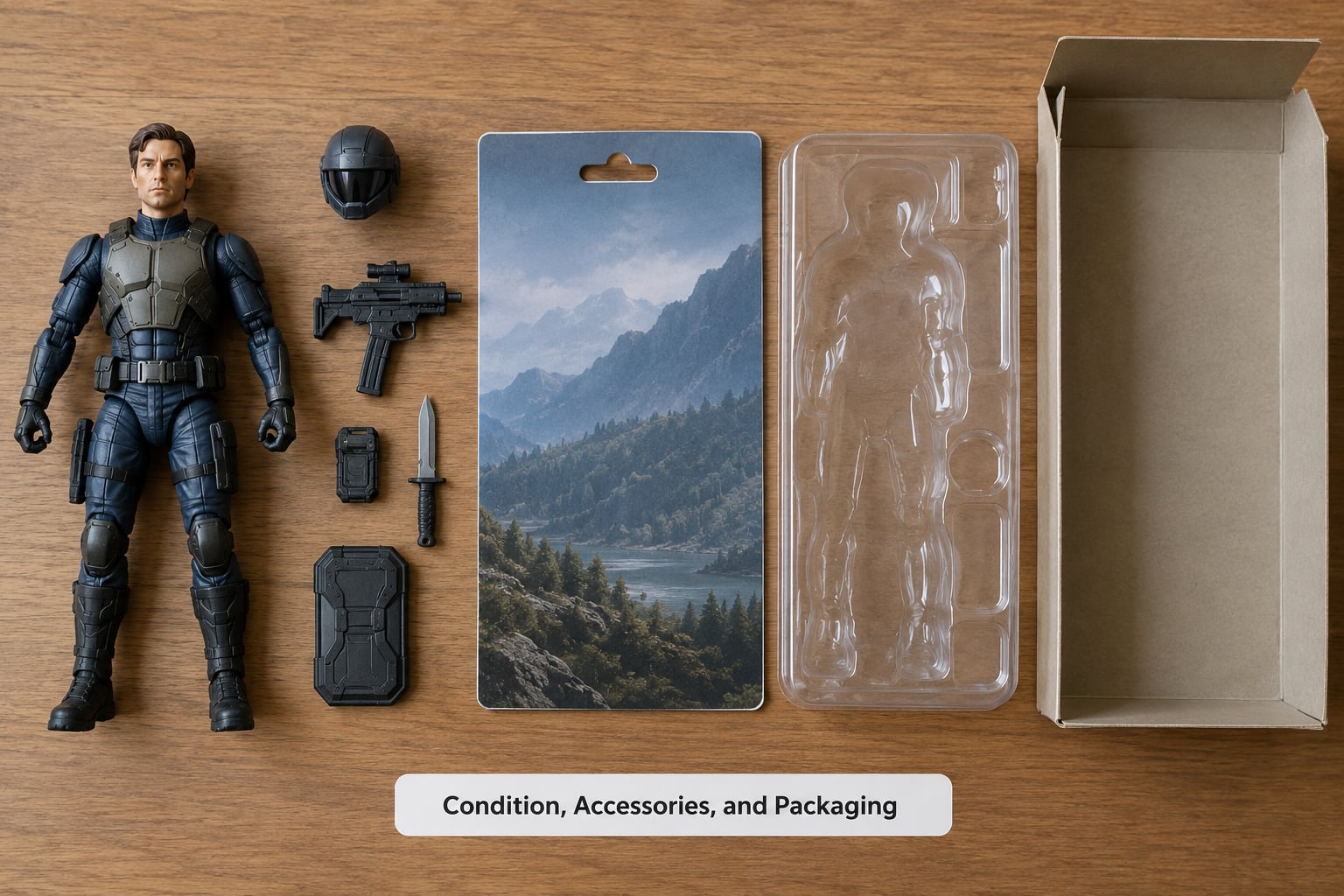
Condition decides which shelf a figure sits on. Collectors grade on a simple scale from mint down through near mint, excellent, very fine, good and fair, and both the figure and its card get graded separately. A near mint figure on a creased card does not grade well overall, because most buyers want both pieces clean.
| Presentation | Typical buyer | Effect on value | Best for |
|---|---|---|---|
| Sealed blister | Completeness seekers | Strongest when the card is crisp and the seal intact | Newer lines and mass-market releases |
| Carded (mint on card) | Display collectors | Holds a premium over loose for most retired figures | Retired lines with strong character recognition |
| Loose, unboxed | Collectors who pose and display | Wide range, since paint wear and joint looseness vary by example | Vintage pieces with weak packaging but great sculpts |
| Third-party graded and slabbed | Remote buyers who want certainty | Adds a trusted label; fee and turnaround cost you margin | High-value single figures |
Run through this list before you buy or sell anything.
- Paint. Look at the arms, torso, knees and boots first. Those take the rubbing in a display case.
- Joints. Bent arms and snapped hips are the most common reason a figure drops a grade.
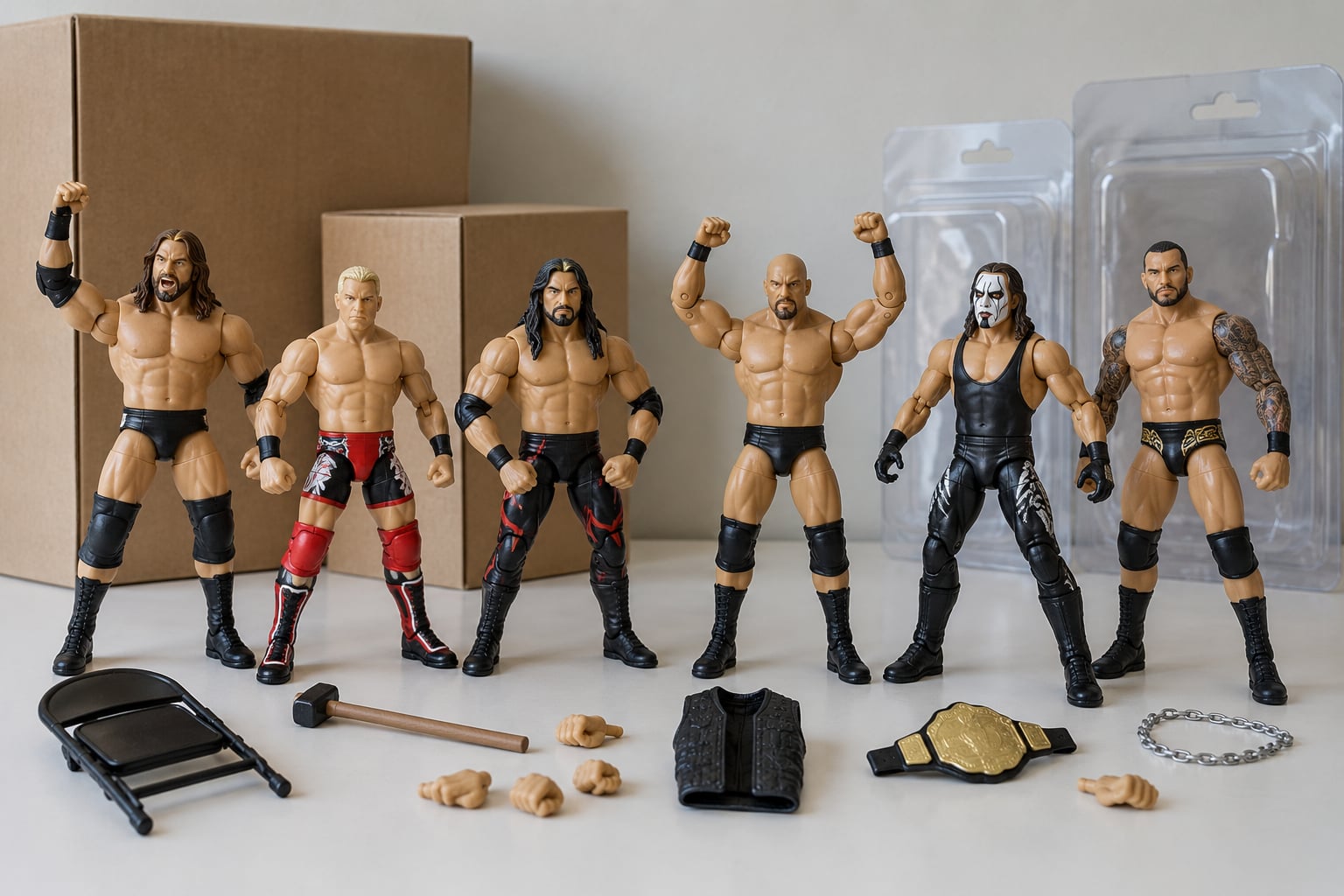
- Accessories. Every piece that shipped in the package counts. Belts, titles, weapons, kendo sticks and removable hair all matter.
- Card. Creases along the fold line, edge wear, price sticker residue and a re-stick blister seam are all visible flaws.
- Colors. Compare the card printing and the figure’s paint to reference photos of the same release.
One point that surprises people: loose does not always lose. Collectors report loose examples of older figures sometimes outselling carded ones, because the card stock was flimsy and often survived worse than the figure. Check the actual sales history for that specific figure rather than trusting a rule of thumb.
Vintage Releases, First Appearances, and Chase Figures
The releases collectors examine most often fall into a handful of familiar groups: figures of wrestlers who have retired from the ring, the earliest action figure formats for a given wrestler, alternate color and material variants, event and convention exclusives, and limited chase editions with numbered runs.
Why Wrestling Action Figures Hold Value More Than Modern Releases
Modern lines from the biggest manufacturers are produced in enormous quantities, restocked for years, and reprinted whenever a wrestler is relevant again. Supply keeps up with demand, so those pieces usually trade near what you paid for them. Older lines went out of production, and each passing year removes a few more examples from circulation.
That gap is also why a mid-card wrestler from a retired line can outperform a headline figure from a live one. Collectors regularly note that a scarce figure from a forgotten roster can beat a famous one that everybody already owns several of.
Chase variants need the same discipline as everything else. A metallic or glow-in-the-dark figure is only worth a premium if the run was small enough to matter. If the company made hundreds of thousands, the finish is decoration, not scarcity.
How Collectors Verify a Figure Before Buying
Verification is a repeatable process, and it takes about ten minutes once you know the order of operations. Work through it in this sequence and you will catch most problems before money changes hands.
- Identify the figure and the line. Match the sculpt, the outfit and the card art to the company that released it. Several companies have made figures of the same wrestler.
- Note the figure number and year. Numbers on the card and on the figure itself tell you which release you are holding.
- Establish the production run. Look for a stated quantity on the packaging, a limited edition number, or a figure number that collectors know only ran briefly.
- Check the accessories against the run. A number on the box usually lists the contents. Anything missing should be priced in.
- Look for molds and marks. Compare the mold codes, copyright lines and country-of-origin marks against reference photos of known originals.
- Pull completed sales. Filter listings to sold and completed only, then look for figures from the same line sold in the same condition within the last year.
If the seller cannot produce photos of the actual item, its packaging and its flaws, that tells you something too.
How Marketplace Demand and Recent Sales Affect Prices
Asking prices tell you almost nothing. A seller listing a figure at a wild number is describing their optimism, not the market. Completed sales are the only useful number, and even those need context: the condition, whether postage was included, and how long the sale took.
Compare at least three recent transactions for the same figure before you commit. If two sold quickly and one stalled for months, the median tells you more than the average.
Where a collection sells also changes the money you keep. Collectors note that low-value pieces do better sold in lots of two or three, because the postage and listing fees on a single cheap figure eat the whole margin. The same posters say mainline figures move reliably at toy shows, while smaller independent lines depend on an online audience.
Shipping is the other practical difference. Figures are easier to move than statues because they are lighter and tougher, and a dented box on a carded figure does far less damage than a chipped limb does on a statue.
Frequently Asked Questions
What is the most valuable wrestling action figure?
The most valuable figures are usually prototypes, early releases from retired WWF-era lines, and short-run chase variants attached to a widely recognised wrestler. Value comes from how few examples are known to exist, not from the wrestler alone. An obscure figure from a short run can beat a common release of a bigger star, because supply decides who is actually competing for it.
Are unopened figures always worth more than loose ones?
Not always. Sealed packaging usually protects a figure and protects its card, so most retired releases earn more carded or sealed. The exception is older lines with fragile card stock, where collectors report loose examples sometimes outselling carded ones because the figure survived better. Check completed sales for that specific figure rather than following a general rule.
How do I tell if a wrestling action figure is rare?
Look for four things: a stated production quantity on the packaging, a line the company discontinued, a regional or card-back difference, and a deliberate chase variant such as a limited colour or finish. A stamped number on the base does not make a figure rare on its own. If nobody can tell you roughly how many were made, treat the rarity claim as unproven.
What documentation should I keep when I sell a figure?
Photograph the figure, every accessory, the card and the box, including any flaws. Note the figure number, the release year and where you bought it, and keep the receipt. If it came graded, keep the slab and label. If it is signed, keep the certificate of authenticity. That evidence is what settles disputes and convinces a buyer the listing is honest.
Should I grade a wrestling action figure?
Grading makes sense when a single figure is worth enough that the fee is a small share of the outcome, and when you want the piece to sell to buyers you cannot meet. Forum collectors report paying a flat fee per carded figure, so the arithmetic only works on the better pieces. For low-value figures, sell them directly and keep the margin. A slab also locks in condition, so a bad grade costs you twice.
Conclusion
Start with identification. Look at the figure number, the card art and the copyright line to work out which company and which year you are holding, then compare paint, joints and accessories against reference photos of that release. Next, grade the condition honestly for both the figure and the card, and note anything missing. Finally, check completed sales for that same figure in that same condition before you accept any number, and sell the low-value pieces in small lots so the fees do not eat the difference.
Most wrestling figures are not worth much, and knowing that quickly is what lets you enjoy the handful that are.